Advanced Techniques for DNA Extraction from Bones and Teeth: A Forensic Science Protocol Guide for Researchers
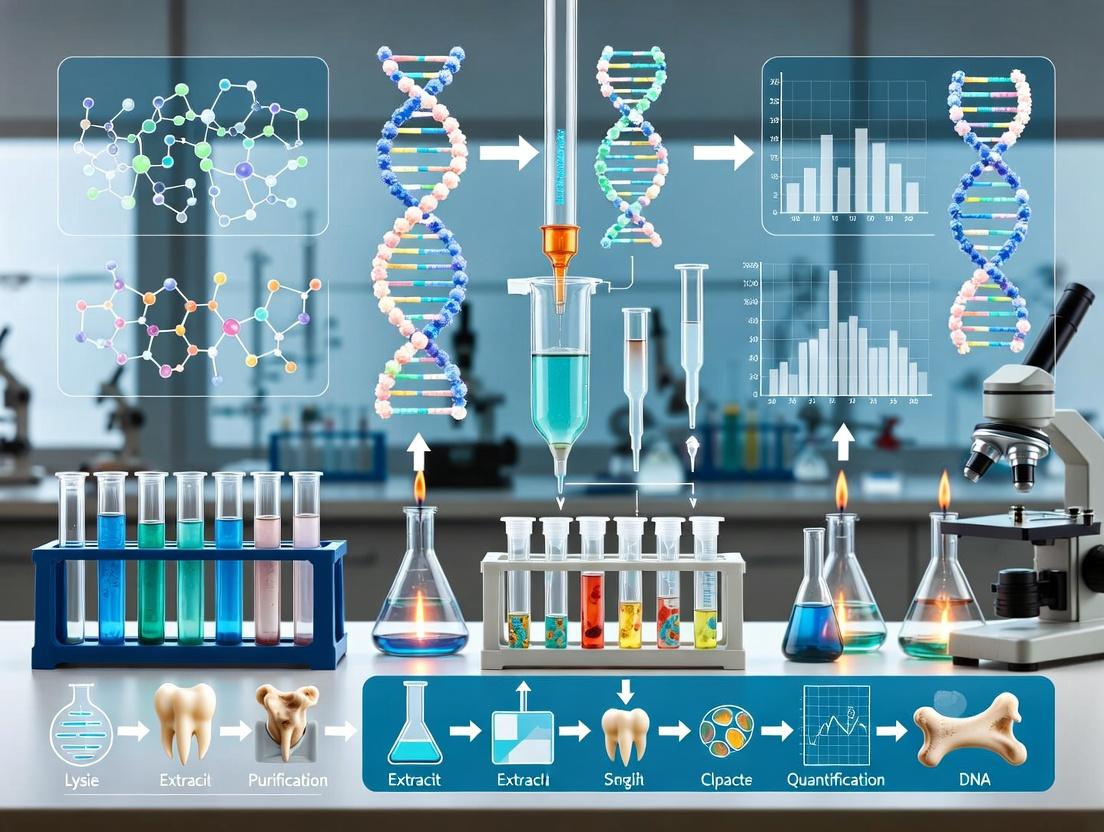
This article provides a comprehensive guide for researchers and forensic scientists on extracting high-quality DNA from challenging skeletal remains, including bones and teeth.
Advanced Techniques for DNA Extraction from Bones and Teeth: A Forensic Science Protocol Guide for Researchers
Abstract
This article provides a comprehensive guide for researchers and forensic scientists on extracting high-quality DNA from challenging skeletal remains, including bones and teeth. It covers the foundational science of skeletal DNA degradation, explores optimized methodological workflows, addresses common troubleshooting and optimization challenges, and compares validation approaches for downstream analytical applications such as STR profiling, SNP analysis, and Next-Generation Sequencing (NGS).
The Science of Skeletal Remains: Understanding DNA Degradation in Bones and Teeth
Within the broader thesis on DNA extraction from challenging forensic samples, bones and teeth represent the ultimate reservoir for genetic material in prolonged post-mortem intervals (PMI). However, their utility is critically constrained by cumulative environmental insults and temporal decay. This document outlines the key challenges, quantitative degradation profiles, and standardized protocols for maximizing DNA recovery from such substrates.
Quantitative Impact of Environmental Insults on DNA Integrity
Environmental factors systematically degrade skeletal DNA, affecting yield and fragment length. The following table summarizes primary insults and their measurable effects.
Table 1: Impact of Environmental Factors on Skeletal DNA
| Environmental Insult | Primary Effect on Skeletal Matrix | Typical Impact on DNA Yield | Average Reduction in Fragment Length | Key Contaminant Introduced |
|---|---|---|---|---|
| High Temperature & Humidity | Accelerated hydrolysis & collagen loss | Reduction of 90-99% over 10 years | >500 bp to <100 bp | Microbial DNA (↑ bacterial load) |
| Soil Acidity (Low pH) | Demineralization, hydroxyapatite dissolution | Reduction of 70-95% in acidic vs. neutral soil | ~300 bp to <150 bp | Humic acids (potent PCR inhibitors) |
| UV Exposure | Pyrimidine dimer formation, backbone breakage | Reduction of 80-98% on surface bones | >1000 bp to <200 bp | N/A (direct DNA damage) |
| Freeze-Thaw Cycling | Micro-fractures, release of endogenous nucleases | Variable, up to 50% loss after 20 cycles | Increased fragmentation rate | N/A |
| Marine/Water Immersion | Leaching of organics, microbial colonization | Reduction of 95-99.9% after 1 year in sea water | >1000 bp to <70-80 bp | Algal/fungal DNA, PCR inhibitors |
Post-Mortem Interval (PMI) and DNA Decay Kinetics
PMI is the dominant variable. Degradation is non-linear, with an initial rapid phase followed by a slow, asymptotic decline.
Table 2: DNA Recovery Metrics vs. PMI in Temperate Climates
| PMI Range | Expected mtDNA Copy Number (per mg powder) | Nuclear DNA (nuDNA) Status | Predominant Damage Type | Recommended Extraction Target |
|---|---|---|---|---|
| Forensic (0-50 years) | 10^3 - 10^6 | Low-copy number, partial STR profiles | Strand breaks, base deamination | nuDNA for STRs; mtDNA control region |
| Historical (50-500 years) | 10^2 - 10^4 | Mostly absent or single-copy | Extensive deamination (C→U), cross-links | mtDNA genome, targeted NGS panels |
| Ancient (>500 years) | <10 - 10^3 | Effectively absent for standard PCR | Deamination, fragmentation <100 bp | Whole mtDNA, shotgun NGS, enrichment capture |
Application Notes & Protocols
Note 1: Sample Selection & Decontamination
- Criteria: Prioritize dense, weight-bearing elements (petrous bone, tooth cementum, femoral midshaft). Visually assess for bioerosion under microscope.
- Protocol – Surface Decontamination:
- Physical Cleaning: Submerge bone/teeth in 5-10% (v/v) commercial bleach (NaClO) for 3-5 minutes.
- Rinsing: Rinse thoroughly with molecular-grade water.
- UV Irradiation: Expose all surfaces to 254 nm UV light in a crosslinker for 15-30 minutes per side.
- Mechanical Removal: Using a clean drill or saw, remove the outer 1-2 mm of the sample surface. Powder the inner material using a freezer mill or a dedicated drill bit at low speed.
Note 2: Optimal DNA Extraction for Challenging Bone
This protocol combines silica-based purification with pretreatment to remove inhibitors and repair damage.
Protocol – Silica-Based Extraction with Pre-Treatment:
- Demineralization: Incubate 0.5g of bone powder in 5-10 mL of 0.5 M EDTA (pH 8.0) with 0.05% (w/v) proteinase K, for 24-72 hours at 37°C with constant rotation.
- Binding Inhibitor Removal: Transfer supernatant. Add 1X volume of binding buffer (e.g., Qiagen PB buffer) and 1X volume of 5M guanidine thiocyanate. Mix.
- Silica Binding: Add silica suspension (e.g., SiMag beads). Incubate with rotation for 3 hours at room temperature.
- Washes: Immobilize beads magnetically. Wash twice with 80% ethanol.
- Elution: Elute DNA in 50-100 µL of low-EDTA TE buffer or nuclease-free water.
Note 3: Library Preparation for Highly Degraded Samples
For PMI >50 years, next-generation sequencing (NGS) is required.
Protocol – Single-Stranded Library Preparation:
- End Repair & A-Tailing: Use dedicated ancient DNA/FFPE-specific kits (e.g., NEBNext FFPE DNA Repair Mix) to blunt ends and add dA overhangs.
- Adapter Ligation: Ligate partially double-stranded, indexing adapters with T-overhangs.
- Fill-In Reaction: Use a strand-displacing polymerase to create double-stranded library molecules.
- Amplification: Perform a minimal number of PCR cycles (4-8) with indexed primers.
- Purification: Size-select libraries (e.g., using agarose gels or beads) to retain fragments as short as 25-30 bp.
Visualizations
Workflow for DNA Extraction from Challenging Skeletal Remains
Factors Leading to DNA Degradation in Skeletal Samples
The Scientist's Toolkit: Key Research Reagent Solutions
Table 3: Essential Materials for Forensic/Ancient Bone DNA Work
| Item / Reagent | Function / Rationale |
|---|---|
| Cryogenic Freezer Mill | Pulverizes bone to a fine, homogeneous powder without generating heat that degrades DNA. |
| 0.5M EDTA (pH 8.0) | Chelates calcium ions to dissolve the hydroxyapatite mineral matrix, releasing trapped DNA. |
| Guanidine Thiocyanate (GuSCN) | Chaotropic salt that denatures proteins, inactivates nucleases, and promotes DNA binding to silica. |
| Silica-Coated Magnetic Beads | Selective binding and purification of DNA fragments from complex lysates; enables automation. |
| uracil-DNA glycosylase (UDG) | Enzyme used in ancient DNA labs to remove deaminated cytosines (uracil), reducing sequence artifacts. |
| Single-Stranded DNA Ligase | Critical for constructing NGS libraries from severely fragmented, single-stranded ancient DNA molecules. |
| Humic Acid Binding Buffer | Specialized chemistry (e.g., PTB buffer) added to lysates to precipitate and remove humic acid inhibitors from soil. |
| Dent’s Bleach (5-10% NaClO) | Standard for irreversible decontamination of exogenous DNA on sample surfaces prior to powdering. |
Application Notes
This document details critical considerations for DNA extraction from mineralized tissues in forensic contexts. Successful recovery of genetic material from degraded skeletal elements requires an understanding of the distinct anatomical and histological properties of cortical bone, dentin, and cementum, which directly impact the choice of decalcification, digestion, and purification protocols.
Key Differences Impacting DNA Yield and Quality:
- Porosity and Vascularity: Cortical bone contains Haversian and Volkmann's canals, providing pathways for post-mortem microbial invasion and environmental contamination, but also potential reservoirs for osteocyte DNA. Dentin, with its dentinal tubules, can encapsulate odontoblast processes, offering a more protected, albeit smaller, DNA source. Cementum is avascular and more amorphous.
- Mineral Density and Crystal Organization: Higher mineral density and more organized hydroxyapatite crystals in enamel and dentin require longer or more aggressive decalcification steps compared to bone. Cementum's mineral is similar to bone.
- Organic Matrix Composition: All three contain Type I collagen, but non-collagenous protein profiles differ (e.g., osteocalcin in bone, dentin sialophosphoprotein in dentin), which can influence enzymatic digestion efficiency.
- Cellularity and DNA Source: Osteocytes in lacunae (bone), odontoblasts in pulp/dentinal tubules (dentin), and cementocytes in lacunae (cellular cementum) are primary endogenous DNA sources. Cementum's incremental lines (of Salter) can also incorporate exogenous DNA from the periodontal environment.
Protocols
Protocol 1: Comparative Demineralization for DNA Extraction
Objective: To efficiently decalcify cortical bone, dentin, and cementum samples to release organic matrix and cellular material for subsequent DNA purification.
Materials:
- Pulverized sample (bone powder, dentin shavings, or cementum scrapings)
- 0.5 M EDTA, pH 8.0
- 10% EDTA, pH 7.4
- 0.5M HCl
- Thermonixer or orbital shaker
- Centrifuge
Procedure:
- Weigh 50-100 mg of pulverized sample into a 1.5 mL or 2.0 mL microcentrifuge tube.
- Add 1 mL of demineralization buffer (see table below for selection guidance).
- Incubate with constant agitation at 56°C. Monitor demineralization progress daily.
- Centrifuge briefly to pellet any remaining mineral. Transfer the supernatant (which contains solubilized calcium and some proteins) to a waste container.
- Repeat steps 2-4 until the mineral core is completely dissolved (no gritty pellet remains). This may require refreshing the buffer every 24-48 hours.
- Proceed with proteinase K digestion on the demineralized pellet.
Table 1: Demineralization Buffer Efficacy and Duration
| Sample Type | Recommended Buffer | Typical Duration (at 56°C) | Key Consideration |
|---|---|---|---|
| Cortical Bone | 0.5 M EDTA, pH 8.0 | 24 - 72 hours | Duration depends on bone density and fragment size. |
| Tooth Dentin | 0.5 M EDTA, pH 8.0 | 72 - 120+ hours | Very dense; longest demineralization time required. |
| Tooth Cementum | 10% EDTA, pH 7.4 | 12 - 48 hours | Softer, less mineralized; can be scraped for direct digestion. |
Protocol 2: Differential Digestion of Organic Matrix
Objective: To completely digest the collagenous and non-collagenous matrix after demineralization to release intracellular and potentially adsorbed DNA.
Materials:
- Demineralized pellet (from Protocol 1)
- Digestion Buffer: 10 mM Tris-HCl, pH 8.0, 100 mM NaCl, 10 mM EDTA, 2% SDS
- Proteinase K (20 mg/mL stock)
- 1M Dithiothreitol (DTT) - for dentin
- Thermonixer set to 56°C
Procedure:
- To the demineralized pellet, add 500 µL of Digestion Buffer.
- Add 25 µL of Proteinase K (20 mg/mL) for a final concentration of ~1 mg/mL.
- For dentin samples: Also add 10 µL of 1M DTT (final conc. ~20 mM) to help disrupt disulfide bonds in the sclerotic dentin.
- Incubate with vigorous agitation (1000 rpm) at 56°C for 12-24 hours. Visual inspection should show a clear, viscous solution.
- If particulate remains, add a second aliquot of Proteinase K and continue incubation for 6-12 hours.
- After digestion, incubate at 95°C for 10 minutes to inactivate Proteinase K (optional, may interfere with some silica-based purification methods).
- Cool sample and proceed to DNA purification (e.g., phenol-chloroform extraction or silica-column binding).
Visualizations
Title: DNA Extraction Workflow from Mineralized Tissues
Title: Barriers to DNA Access in Mineralized Tissues
The Scientist's Toolkit
Table 2: Essential Research Reagent Solutions for DNA Extraction from Mineralized Tissues
| Reagent / Material | Function in Protocol |
|---|---|
| 0.5 M EDTA, pH 8.0 | Chelating agent for calcium ions in hydroxyapatite. Standard demineralization buffer for bone and dentin. |
| Proteinase K (Recombinant) | Broad-spectrum serine protease. Digests collagen and other proteins in the organic matrix, liberating cells and DNA. |
| Dithiothreitol (DTT) | Reducing agent. Breaks disulfide bonds in sclerotic dentin and cross-linked proteins, enhancing Proteinase K access. |
| Sodium Dodecyl Sulfate (SDS) | Anionic detergent. Lyses cell and nuclear membranes, denatures proteins, and inhibits nucleases. |
| Phenol:Chloroform:Isoamyl | Organic extraction mixture. Partitions and removes proteins, lipids, and other cellular debris from the DNA solution. |
| Silica-Membrane Spin Columns | Selective binding of DNA in high-salt conditions. Allows for purification and concentration, removing PCR inhibitors. |
| Glycogen or Carrier RNA | Co-precipitant. Improves recovery and visualization of low-concentration DNA during precipitation steps. |
| Demineralization Monitoring Kit | Quantitative colorimetric assay (e.g., for calcium) to objectively determine demineralization endpoint, saving time and sample. |
Application Notes
The integrity of extracted genomic material is a paramount concern in forensic genetics, especially when sourcing DNA from recalcitrant biological matrices such as bones and teeth. These substrates, while offering long-term biological data reservoirs, are exceptionally vulnerable to two predominant, endogenous chemical degradation pathways: hydrolytic and oxidative damage. Understanding these pathways is critical for optimizing extraction protocols, selecting appropriate downstream analytical methods (e.g., PCR amplification, next-generation sequencing), and accurately interpreting electrophoretic profiles and sequencing data.
1. Hydrolytic Damage Hydrolytic reactions involve the cleavage of chemical bonds via the addition of a water molecule. In the context of DNA, depurination is the most frequent form, involving the cleavage of the N-glycosidic bond linking a purine base (adenine or guanine) to the deoxyribose sugar. This results in the formation of an abasic (apurinic/apyrimidinic) site. Deamination is another key hydrolytic process, where an amine group is replaced by a keto group. Cytosine deamination to uracil is the most prevalent, but adenine deamination to hypoxanthine also occurs. In ancient and highly degraded samples, these lesions accumulate, leading to DNA fragmentation and the introduction of nucleotide misincorporations during PCR (e.g., C→T or G→A transitions) if not repaired by the polymerase.
2. Oxidative Damage Reactive Oxygen Species (ROS), generated from endogenous metabolic processes or exogenous environmental exposure (e.g., UV radiation, metal ions), attack DNA bases and the sugar-phosphate backbone. A hallmark lesion is 8-oxo-7,8-dihydro-2’-deoxyguanosine (8-oxodG), where the C8 of guanine is oxidized. This lesion is highly mutagenic, as it can pair with adenine during replication, leading to G→T transversions. Oxidation can also cause base fragmentation (e.g., thymine glycol formation) and single-strand breaks via sugar damage.
3. Implications for Forensic Analysis of Bones and Teeth In skeletal remains, the mineral matrix (hydroxyapatite) offers some protection against enzymatic decay but not against these chemical processes. The type and extent of damage are influenced by post-mortem interval, temperature, humidity, pH, and soil chemistry.
- Hydrolytic damage dominates in wet, acidic environments.
- Oxidative damage is more significant in dry, aerobic, or UV-exposed conditions. Extraction protocols must therefore be tailored to minimize further in vitro damage (e.g., using chelating agents to prevent metal-catalyzed oxidation) and to selectively recover the most intact molecules, often through size-selective purification.
Table 1: Major DNA Lesions from Hydrolytic and Oxidative Pathways
| Damage Type | Primary Lesion | Resulting Mutation (if unrepaired) | Common Detection Method |
|---|---|---|---|
| Hydrolytic | Abasic Site (AP site) | Strand break, non-instructive | Aldehyde-reactive probe (ARP) assay |
| Hydrolytic | Deamination (C→U) | C→T transition (G→A on opposite strand) | UDG treatment + sequencing |
| Hydrolytic | Deamination (5mC→T) | C→T transition at CpG sites | Bisulfite sequencing |
| Hydrolytic | Deamination (A→Hx) | A→G transition (T→C on opposite strand) | PCR/Sequencing |
| Oxidative | 8-oxoguanine (8-oxoG) | G→T transversion (C→A on opposite strand) | HPLC-EC/LC-MS, ELISA |
| Oxidative | Thymine Glycol | Replication block, potentially mutagenic | HPLC-MS, specific antibodies |
| Oxidative | Single-Strand Break (SSB) | Loss of genetic information, PCR failure | Gel electrophoresis (e.g., COMET assay) |
Protocol: Assessment of DNA Damage in Extracts from Bone Powder
I. Objective: To qualify and quantify hydrolytic (abasic sites) and oxidative (8-oxodG) lesions in DNA extracted from pulverized forensic bone samples.
II. Materials & Reagent Solutions
Table 2: Research Reagent Solutions Toolkit
| Item/Reagent | Function in Protocol |
|---|---|
| Bone Powder (<100 µm) | Homogeneous starting material for efficient demineralization and digestion. |
| 0.5M EDTA (pH 8.0) | Demineralizing agent; chelates Ca²⁺ from hydroxyapatite, releasing DNA. |
| Proteinase K | Serine protease; digests collagen and other structural proteins. |
| DNA Clean & Concentrator Kit | Silica-based purification; removes PCR inhibitors (humics, melanin) common in bone extracts. |
| Abasic Site Assay Kit (e.g., ARP-based) | Quantifies AP sites via labeling with an aldehyde-reactive probe and colorimetric/fluorometric detection. |
| 8-oxodG ELISA Kit | High-sensitivity immunodetection for quantifying 8-oxodG lesions. |
| Quantitative PCR (qPCR) Assay | Multi-copy (e.g., mtDNA) vs. single-copy (e.g., nucDNA) assays determine degradation index (DI). |
| Agilent TapeStation / Fragment Analyzer | Microcapillary electrophoresis for precise DNA Integrity Number (DIN) assessment. |
III. Detailed Methodology
Step 1: DNA Extraction with Damage Mitigation
- Incubate 500 mg of bone powder in 5 mL of 0.5M EDTA at 4°C for 24-48 hours with gentle rotation to demineralize.
- Pellet the demineralized residue (centrifuge at 5000 x g, 10 min). Discard supernatant.
- Resuspend pellet in 3 mL of digestion buffer (10mM Tris-HCl, pH 8.0, 100mM NaCl, 5mM EDTA, 1% SDS) with 0.5 mg/mL Proteinase K. Incubate at 56°C for 24-48 hours.
- Purify the lysate using a high-volume silica spin column kit, following manufacturer instructions. Include a final wash with 80% ethanol to remove salts. Elute in 50-100 µL of low-EDTA TE buffer (10mM Tris, 0.1mM EDTA, pH 8.0) or nuclease-free water. Store at -80°C.
Step 2: Damage Quantification Assays A. Abasic Site Quantification (ARP-based Assay)
- Follow manufacturer’s protocol for the chosen assay. Typically, 2-5 µg of purified DNA is labeled with ARP reagent (contains a biotin tag) for 1 hour at 37°C.
- Bind the labeled DNA to a streptavidin-coated plate.
- Detect using an HRP-conjugated detection antibody and a colorimetric substrate. Quantify against a standard curve of DNA with known AP site content.
B. 8-oxodG Quantification (Competitive ELISA)
- Digest 20-50 ng of DNA to nucleosides using nuclease P1 and alkaline phosphatase, per kit instructions.
- Add the digested sample to a well pre-coated with 8-oxodG. Simultaneously add an anti-8-oxodG antibody.
- After competitive binding, wash and add an HRP-conjugated secondary antibody. Develop with substrate.
- Measure absorbance inversely proportional to 8-oxodG concentration. Calculate concentration from a standard curve.
Step 3: Integrity Assessment (Supporting Data)
- Degradation Index by qPCR: Perform two qPCR assays—one amplifying a long (~200 bp) nuclear target and one a short (~80 bp) target. The DI = 2^(Ctlong - Ctshort). A higher DI indicates greater fragmentation.
- DNA Integrity Number (DIN): Analyze 1 µL of DNA extract on a TapeStation using a Genomic DNA assay. Software calculates DIN (1=highly degraded, 10=intact).
IV. Data Interpretation Correlate lesion quantifications (AP sites/10⁵ bases, 8-oxodG/10⁶ dG) with the DI/DIN metrics. High AP sites correlate with increased fragmentation (lower DIN). High 8-oxodG may predict PCR inhibition or increased mutation frequency in downstream sequencing.
Diagram: Forensic DNA Degradation Assessment Workflow
Diagram: Pathways of DNA Damage in Skeletal Remains
Within forensic DNA analysis of challenging samples—specifically skeletal remains (bones and teeth)—the co-extraction of PCR inhibitors presents a major barrier to obtaining reliable genetic profiles. This application note focuses on three predominant endogenous inhibitors: humic substances (from soil contamination), melanin (from pigmented tissues), and collagen (the primary organic matrix of bone). Effective DNA purification and inhibitor removal are critical for downstream success in human identification, ancient DNA studies, and pharmacogenomic research related to historical samples.
Quantitative Interference Profiles
The following table summarizes the documented effects of these inhibitors on PCR amplification based on current literature.
Table 1: Comparative PCR Interference Profiles of Key Inhibitors
| Inhibitor | Primary Source in Forensic Context | Proposed Mechanism of Interference | Critical Inhibition Threshold (in PCR) | Observable PCR Effect |
|---|---|---|---|---|
| Humic Substances | Soil organic matter, decomposing plant material. | Chelation of Mg²⁺ ions, direct interaction with DNA polymerase, absorbance at 230 nm. | ~1-10 ng/µL (varies by humic acid type) | Complete PCR failure; reduced fluorescence in qPCR; abnormal Ct values. |
| Melanin | Hair, skin, pigmented tissues associated with remains. | Binding to DNA polymerase, nonspecific adsorption of nucleic acids. | >0.1 µg/µL (synthetic melanin) | Dose-dependent amplification suppression; PCR yield reduction; possible complete inhibition. |
| Collagen | Bone matrix, dentin. | Competition for DNA binding to silica surfaces during purification, viscosity increase. | >0.5 mg/mL (Type I collagen) | Reduced DNA recovery during extraction; partial PCR inhibition. |
| Co-Presence (Mix) | Compromised skeletal samples. | Synergistic effects combining above mechanisms. | Lower than individual thresholds. | Severe inhibition often intractable to standard purification. |
Detailed Experimental Protocols
Protocol: Spiked Inhibition Assay for Inhibitor Screening
Objective: To quantify the effect of humic acid, melanin, and collagen on a standardized qPCR assay. Materials: Purified human genomic DNA (10 ng/µL), commercial qPCR master mix, inhibitor stocks (humic acid, synthetic melanin, collagen Type I), real-time PCR instrument. Procedure:
- Prepare serial dilutions of each inhibitor in nuclease-free water.
- Create a master mix containing: 12.5 µL 2X qPCR mix, 1.0 µL primer/probe set (e.g., for a human quantification standard), 2.5 µL gDNA template (final: 1 ng/µL), and 7 µL H₂O.
- Aliquot 23 µL of master mix into each well of a qPCR plate.
- Spike 2 µL of each inhibitor dilution into respective wells, creating a final reaction volume of 25 µL. Include no-inhibitor and no-template controls.
- Run qPCR with cycling: 95°C for 2 min, then 40 cycles of (95°C for 5 sec, 60°C for 30 sec – with fluorescence acquisition).
- Analysis: Calculate ∆Ct (Ctinhibited – Ctcontrol). Plot ∆Ct vs. inhibitor concentration to determine threshold of significant inhibition (>2 ∆Ct).
Protocol: Silica-Based DNA Purification with Inhibitor Removal Additives for Bone Powder
Objective: To extract PCR-amplifiable DNA from bone powder while mitigating collagen and humic substance interference. Materials: Pulverized bone powder, lysis buffer (EDTA, Proteinase K, SDS, DTT), binding buffer (GuHCl, isopropanol), silica membrane columns, wash buffers (ethanol-based), inhibitor removal additives (PTB, BSA), TE elution buffer. Procedure:
- Decalcification & Digestion: Add 0.5 g bone powder to 5 mL of lysis buffer with 0.5% SDS, 0.5 M EDTA, and 1 mg/mL Proteinase K. Incubate at 56°C with rotation for 24-48 hours.
- Binding Condition Adjustment: Centrifuge lysate, transfer supernatant. Add 5 µg of PTB (Polyvinylpyrrolidone) and 100 µg/mL BSA to the supernatant. Mix, then add an equal volume of binding buffer.
- Column Binding: Apply mixture to a silica membrane column. Allow to flow through by gravity or low-speed centrifuge (<2000 x g).
- Washing: Wash column twice with 700 µL of wash buffer containing 80% ethanol. Centrifuge at full speed for 2 min to dry membrane.
- Elution: Elute DNA in 50-100 µL of low-EDTA TE buffer or molecular grade water. Pre-heat elution buffer to 70°C for increased yield.
- Assessment: Quantify DNA yield via fluorometry (e.g., Qubit) and assess inhibitor presence by spectrophotometric A260/A230 ratio (target >2.0) and subsequent qPCR amplification efficiency.
Visualization of Workflows and Mechanisms
Diagram 1: Forensic DNA Extraction Workflow with Inhibitor Mitigation
Diagram 2: Molecular Mechanisms of PCR Inhibition
The Scientist's Toolkit: Research Reagent Solutions
Table 2: Essential Reagents for Inhibitor Mitigation in Forensic DNA Extraction
| Reagent / Material | Primary Function in Inhibitor Mitigation | Specific Application Note |
|---|---|---|
| Polyvinylpyrrolidone (PVP) / PTB | Binds to polyphenolic compounds (humic acids) via hydrogen bonding, preventing their co-purification. | Add to lysis or binding buffer at 1-5% w/v. Critical for soil-contaminated bone samples. |
| Bovine Serum Albumin (BSA) | Acts as a competitive sink for melanin and other inhibitors; stabilizes polymerase. | Use at 0.1-1 mg/mL in PCR or add to purification buffers. Reduces melanin inhibition. |
| Dithiothreitol (DTT) | Reduces disulfide bonds in keratin and collagen, improving tissue digestion. | Include at 10-40 mM in lysis buffer for hair-containing or compact bone samples. |
| Silica-Membrane Columns with High-Salt Binding | Selective DNA adsorption in chaotropic salts; inhibitors are washed away. | GuHCl-based buffers show better inhibitor removal than NaI-based systems. |
| Solid-Phase Reversible Immobilization (SPRI) Beads | Post-purification clean-up; size-selective DNA binding removes small inhibitor molecules. | Useful as a secondary clean-up step after initial silica column elution. |
| qPCR Inhibition Assay Kits | Internal positive control (IPC) systems to detect presence of residual inhibitors. | Run in parallel with target qPCR. A delayed IPC Ct indicates residual inhibition. |
| EDTA (Ethylenediaminetetraacetic acid) | Chelates Ca²⁺ for bone demineralization; also helps chelate some inhibitory metal ions. | Use at high concentration (0.5 M) in digestion buffer for complete bone decalcification. |
Within the broader thesis on optimizing DNA extraction from challenging forensic samples, the selection of the optimal skeletal element is a critical first step. Bone and teeth are reservoirs of genetic material in degraded remains, but their structural and compositional differences lead to significant variation in DNA yield, quality, and degradation state. This application note synthesizes current research to establish evidence-based selection criteria, focusing on quantitative comparisons and standardized protocols for forensic and anthropological research.
Comparative Analysis of DNA Yield and Quality
Empirical studies consistently indicate that dense cortical bone and specific teeth provide superior DNA preservation due to their low porosity and high mineral content, which shield DNA from environmental degradation and microbial attack.
Table 1: Comparative DNA Metrics from Skeletal Elements
| Skeletal Element | Typical Nuclear DNA Yield (ng/g) | Mean Fragment Length (bp) | Inhibition Rate (PCR) | Relative Post-Mortem Interval (PMI) Stability |
|---|---|---|---|---|
| Petrous Bone (Pars Petrosa) | 50 - 250+ | 150 - 300+ | Very Low | Highest |
| Tooth (Molar, intact) | 20 - 100 | 100 - 250 | Low | Very High |
| Femur (Mid-shaft) | 10 - 60 | 80 - 200 | Low | High |
| Metatarsal / Metacarpal | 5 - 40 | 70 - 180 | Moderate | High |
| Rib (Cortical) | 2 - 20 | 60 - 150 | Moderate | Moderate |
| Vertebra (Trabecular) | < 1 - 10 | < 100 | High | Low |
Key Findings: The petrous portion of the temporal bone (specifically the dense pars petrosa) is currently recognized as the optimal source for high-quality DNA from human remains across extended post-mortem intervals. Its exceptional density and unique anatomy provide an unparalleled protective microenvironment. For remains where the petrous bone is unavailable, intact molars or premolars (particularly the cementum-enriched root) are the second-best choice, followed by the dense cortical mid-shaft of long bones like the femur.
Experimental Protocols for Optimal Sample Processing
Protocol 3.1: Optimal Sampling from the Petrous Bone
Objective: To obtain the densest part (pars petrosa) of the petrous temporal bone for maximal DNA yield.
Materials:
- Anatomically identified temporal bone.
- Sterile diamond-coated cutting disc or saw.
- Personal protective equipment (PPE), face shield.
- Drill with sterile carbide burrs (e.g., 4-8 mm).
- Sterile collection tubes.
- 70% ethanol, 10% bleach solution for decontamination.
Procedure:
- Decontamination: Clean the external surface of the temporal bone with 70% ethanol, followed by a brief wash in 10% bleach (≤1 min) and a final rinse in molecular-grade water. Air dry under UV light in a sterile hood if possible.
- Isolation: Using a cutting tool, isolate the petrous pyramid. The optimal target is the pars petrosa, specifically the region around the internal acoustic meatus and the cochlea.
- Subsampling: Drill into the densest, most interior part of the pars petrosa using a sterile carbide bit. Apply slow, steady pressure to avoid heat-induced DNA damage.
- Collection: Collect approximately 0.5 - 1.0 g of bone powder directly into a sterile, labeled tube.
- Storage: Store powder at -20°C or lower until extraction.
Protocol 3.2: Optimal Sampling from Teeth
Objective: To target the cementum and pulp region of an intact tooth for high DNA recovery.
Materials:
- Intact molar or premolar.
- Dental vice or clamp.
- Sterile diamond-coated cutting disc.
- Sterile dental excavator or picks.
- PPE, face shield.
- Decontamination reagents as in 3.1.
Procedure:
- Decontamination: Scrub tooth crown and root with a brush in 70% ethanol. Soak in 10% bleach for 1 minute, rinse thoroughly in molecular-grade water, and UV-irradiate.
- Sectioning: Clamp the tooth horizontally (along the cementoenamel junction). Cut vertically through the root, creating a longitudinal section to expose the pulp cavity and root cementum.
- Sampling: Using sterile excavators, collect material primarily from the root cementum and the pulp chamber. Avoid the enamel crown.
- Collection & Storage: Collect tissue and dentine/cementum powder (≈0.2-0.5g) into a sterile tube. Store at -20°C or lower.
Visualization of Sample Selection Logic and Workflow
Title: Forensic Bone/Tooth Sample Selection Logic Flow
Title: Workflow for DNA Extraction from Mineralized Tissues
The Scientist's Toolkit: Essential Research Reagent Solutions
Table 2: Key Reagents and Materials for DNA Extraction from Bones and Teeth
| Reagent/Material | Function | Key Consideration |
|---|---|---|
| 0.5 M EDTA (pH 8.0) | Demineralization: Chelates calcium ions to dissolve hydroxyapatite matrix, releasing trapped DNA. | Critical step; incubation for 24-72h at 56°C with agitation improves yield. |
| Proteinase K (>600 mAU/mL) | Digestion: Degrades nucleases and structural proteins, freeing DNA and inactivating degradative enzymes. | Must be added after demineralization for full efficacy. |
| Dithiothreitol (DTT) 0.1-1.0 M | Reduction: Breaks disulfide bonds in keratin/collagen, improving access to DNA in compact tissue. | Essential for hair-rich samples (e.g., tooth pulp) and highly cross-linked bone. |
| Silica-Based Magnetic Beads | Purification: Selective binding of DNA in high-salt chaotropic conditions, removing inhibitors (humics, melanin). | Preferred over column methods for automation and handling of inhibitors. |
| PCR Inhibitor Removal Additives (e.g., BSA, PTB) | Amplification Enhancement: Binds co-purified inhibitors, improving downstream PCR efficiency. | Critical for trabecular bone and environmentally exposed samples. |
| Quantifier HP / Trio qPCR Kits | Quantification & QC: Multi-copy target amplification (e.g., Small Autosomal, SRY) with inhibition detection (ΔCq). | Industry standard for human-specific nuclear DNA quantification and quality assessment. |
| HMinus or Identical DNA Polymerase | Amplification: Engineered polymerases resistant to common bone/teeth inhibitors (hematin, collagen fragments). | Use for STR amplification from challenging extracts to improve profile completeness. |
Ethical and Legal Considerations in Handling Human Skeletal Remains for Research
1. Introduction and Framework The extraction of DNA from challenging forensic samples such as bones and teeth represents a powerful tool for identification, historical inquiry, and medical research. This work is inextricably linked to a complex framework of ethical principles and legal statutes. The following application notes and protocols are designed to ensure that research conducted within a thesis on this topic adheres to the highest standards of professional conduct and regulatory compliance.
2. Core Ethical Principles (Summarized Table)
| Ethical Principle | Core Application in Skeletal Research | Operational Mandate |
|---|---|---|
| Respect for Autonomy & Human Dignity | Acknowledges the personhood of the deceased. | Requires consultation with descendant communities where possible; prohibits derogatory handling or display. |
| Justice & Equity | Fair distribution of benefits and burdens of research. | Avoids exploitation of vulnerable or historical populations; ensures research benefits are shared. |
| Beneficence & Non-Maleficence | Maximize benefit, minimize harm. | Justifies research via clear scientific value; prevents unnecessary destruction of remains. |
| Stewardship | Researchers act as temporary custodians, not owners. | Mandates meticulous documentation, long-term curation plans, and reversible analytical techniques where feasible. |
| Informed Consent (Proxy) | Consent obtained when direct consent is impossible. | Seeks consent from legal next-of-kin, culturally affiliated groups, or governing institutions (e.g., museums). |
3. Legal and Regulatory Landscape (Summarized Table)
| Jurisdiction/Instrument | Key Legislation/Guideline | Primary Relevance to Research |
|---|---|---|
| United States | Native American Graves Protection and Repatriation Act (NAGPRA) | Governs treatment & repatriation of Native American/Indigenous human remains & cultural items. |
| United Kingdom | Human Tissue Act 2004 (HTA) | Regulates removal, storage, and use of human tissue (incl. skeletal) from the deceased; requires licensing. |
| International | UN Declaration on the Rights of Indigenous Peoples (UNDRIP) | Requires free, prior, and informed consent for research affecting Indigenous heritage. |
| General | Institutional Review Board (IRB)/Ethics Committee Review | Mandatory ethical review for most research involving human remains, even if not legally required. |
| Forensic Context | Local Coroner/Medical Examiner Laws | Dictates authority over remains of medicolegal significance; research typically prohibited without release. |
4. Protocol: Pre-Analysis Ethical-Legal Assessment and Documentation Objective: To establish the legal and ethical provenance of skeletal samples prior to any destructive analysis for DNA extraction. Materials: Chain-of-custody forms, digital camera, database for metadata. Procedure:
- Provenance Verification: Document the complete history of the remains (archaeological site, forensic case number, museum accession number). Confirm that the current repository has legal authority to curate and permit research.
- Ethical Review Submission: Prepare and submit a detailed research proposal to the relevant Institutional Review Board (IRB) or Ethics Committee. The proposal must include:
- Scientific rationale and potential benefits.
- Exact nature and extent of proposed sampling (mass, specific element).
- Documentation of informed consent, cultural consultation, or legal permit.
- Data management plan, including genomic data sharing considerations.
- Community Consultation (if applicable): For remains with known cultural affiliation, engage in formal consultation with descendant communities or their representatives to discuss research goals, methods, and potential outcomes.
- Sampling Justification: Justify that the minimum destructive sample necessary is used (e.g., powder from dense cortical bone vs. entire tooth). Prefer non-destructive methods (micro-CT scan) prior to physical sampling.
- Final Authorization: Secure written authorization from the governing institution (Museum, Medical Examiner, University) and/or community group before proceeding.
5. Protocol: Ethical Sampling for DNA Extraction from Compact Bone Objective: To obtain bone powder for downstream DNA extraction while minimizing physical and ethical impact. Materials: Personal protective equipment, rotary tool with sterile cutting wheel, sterile collection tubes, vacuum system with HEPA filter, digital scale. Procedure:
- Work Area Preparation: Designate a clean, dedicated space. Use a downdraft or contained workstation to capture bone dust, preventing contamination and respectful containment of all particulate matter.
- Sample Selection: Select a robust weight-bearing element (e.g., femoral midshaft) or dense cranial fragment. Avoid unique morphological features if alternatives exist.
- Minimal Sampling: Weigh the intact specimen. Using a sterile cutting wheel, remove a section not exceeding 2-3 cm in length and 100-250 mg in total powder yield. Record pre- and post-sampling weights.
- Dust Collection: Direct all bone dust into a sterile, labeled collection tube via a filtered vacuum attachment.
- Documentation: Photograph the specimen before and after sampling. Update all records with sampling date, exact location of the sampling site on the bone, mass removed, and technician ID.
- Residual Material Curation: All leftover bone dust and fragments must be retained in a labeled container associated with the parent specimen for potential future analyses or repatriation.
6. The Scientist's Toolkit: Key Research Reagent Solutions
| Item | Function in DNA Extraction from Bone |
|---|---|
| Guanidine Thiocyanate-based Lysis Buffer | Denatures proteins and nucleases, releasing DNA while protecting it from degradation in the harsh chemical environment required to decalcify bone. |
| EDTA (Ethylenediaminetetraacetic acid) | Chelating agent that binds calcium ions, decalcifying the bone matrix to expose osteocytes and release DNA. |
| Proteinase K | A robust serine protease that digests histone proteins and other cellular proteins, further liberating DNA. |
| Silica-based Magnetic Beads | Bind DNA in the presence of high concentrations of chaotropic salts, allowing for efficient purification and concentration of fragmented, low-copy-number DNA from inhibitors. |
| Ancient DNA/Decontamination Reagents | (e.g., Sodium Hypochlorite, UNG treatment) Used to decontaminate bone surfaces and degrade modern environmental contaminants or PCR carryover. |
| Carrier RNA | Co-precipitated with ancient or highly degraded DNA to improve binding efficiency to silica columns/magnetic beads during purification. |
7. Visualized Workflows
Ethical-Legal Assessment Pathway for Skeletal Research
DNA Extraction Workflow from Challenging Bone Samples
Optimized DNA Extraction Workflows for Bone and Tooth Pulp: From Pulverization to Purification
Within forensic genetics research focused on DNA extraction from challenging osseous materials (bones and teeth), initial sample integrity is paramount. These samples are often recovered from complex environments, carrying surface contaminants including modern human DNA, microbial consortia, and environmental inhibitors. This document details standardized pre-processing and decontamination protocols—surface cleaning and UV irradiation—designed to minimize exogenous contamination while preserving endogenous DNA. These protocols are critical first steps in a thesis workflow aiming to optimize authentic ancient or degraded DNA yield for downstream genomic analyses in forensic and archaeological research.
Protocol 1: Physical Surface Cleaning and Ablation
Objective: To physically remove the outer layer of the bone or tooth, which is most exposed to contamination.
Materials (Research Reagent Solutions Toolkit):
- Bleach Solution (Sodium Hypochlorite, 0.5-1% v/v): Oxidizes and removes surface organic contaminants and exogenous DNA.
- DNA-away or Similar Commercial Decontaminant: A ready-to-use solution for cleaning work surfaces and tools, degrading DNA.
- Ethanol (70-80% v/v): A disinfectant used to rinse away cleaning residues and inactivate microbes without damaging the bone matrix.
- Ultrapure, DNA-free Water: Used for rinsing to prevent reintroduction of contaminants.
- Aluminum Oxide or Sandblasting Apparatus: For controlled physical ablation of the surface layer in a dedicated, contained system.
Detailed Methodology:
- Initial Documentation: Photograph and note the specimen's condition.
- Gross Contaminant Removal: Use a clean scalpel or brush to remove soil, roots, or loose particles.
- Chemical Decontamination: a. Submerge or vigorously wipe the sample with a fresh 0.5% (v/v) sodium hypochlorite (bleach) solution for 30-60 seconds. b. Immediately rinse thoroughly with ultrapure water to halt bleach action. c. Rinse with 80% ethanol and air-dry in a clean, DNA-free laminar flow hood.
- Physical Ablation (for bones): a. Place the cleaned sample in a dedicated sandblasting cabinet. b. Abrade the surface (~1-2mm depth) using sterile aluminum oxide powder. c. Collect the resulting powder for DNA extraction. The newly exposed interior surface is considered decontaminated.
Protocol 2: Ultraviolet (UV) Irradiation
Objective: To cross-link and render amplifiable any residual surface DNA not removed by physical/chemical cleaning.
Materials (Research Reagent Solutions Toolkit):
- UV-C Crosslinker (254 nm wavelength): Provides controlled, uniform UV irradiation. Preferred over germicidal lamps for reproducibility.
- UV-Dosimeter: Validates the delivered energy dose (J/m²).
- Rotating Platform: Ensures even exposure on all sides of an irregular sample.
Detailed Methodology:
- Sample Placement: Position the physically cleaned sample (or powdered aliquot) in a sterile Petri dish on a rotating platform inside the UV chamber.
- Parameter Setting: Set the UV-C crosslinker to deliver a dose of 5 - 10 J/cm² (50,000 - 100,000 J/m²). This high dose is necessary for opaque biological materials.
- Irradiation: Initiate the cycle. The platform should rotate continuously.
- Validation: Use a dosimeter to confirm the delivered dose for critical experiments.
- Post-Processing: Following UV treatment, the sample is ready for powdering (if not already powdered) and digestion in the DNA extraction protocol.
Table 1: Comparative Efficacy of Pre-Processing Methods on Contaminant DNA Reduction
| Method | Target Contaminant | Typical Exposure/Dose | % Reduction in Exogenous DNA* | Notes & Limitations |
|---|---|---|---|---|
| Bleach (0.5% NaOCl) | Surface-adhered DNA, microbes | 30-60 sec immersion | >99% (surface) | Can degrade endogenous DNA if overused; rinsing is critical. |
| UV-C Irradiation | Nucleic acids on surfaces | 5 - 10 J/cm² | ~90-99% (surface only) | Penetration is minimal; effective only for exposed contaminants. |
| Physical Ablation | Outer surface matrix | Removal of 1-2mm layer | ~99% (of removed layer) | Most effective; converts sample to "interior" material. Loss of sample mass. |
| Combined Protocol | Comprehensive | Ablation + UV | >99.9% (estimated) | Gold-standard for highly contaminated or critical samples. |
*Reduction values are approximations from controlled experimental studies and can vary based on substrate and contaminant type.
Integrated Workflow for Forensic Bone Sample Decontamination
Diagram Title: Integrated Bone Decontamination Workflow
The Scientist's Toolkit: Essential Reagents & Materials
Table 2: Key Research Reagent Solutions for Sample Decontamination
| Item | Primary Function in Protocol |
|---|---|
| Sodium Hypochlorite (Bleach), 0.5% | Oxidizes and fragments contaminating DNA and proteins on the sample surface. |
| DNA-away / DNA-OFF | Ready-to-use solution for rapid decontamination of work surfaces, tools, and equipment between samples. |
| Ethanol (80%), Molecular Grade | Displaces water, removes residual bleach, and helps denature surface proteins. |
| Aluminum Oxide Powder (Sterile) | Abrasive for controlled removal of the outer contaminated layer of bone. |
| UV-C Crosslinker (254 nm) | Provides a calibrated, uniform dose of UV light to cross-link residual DNA. |
| UV-C Dosimeter | Validates the energy dose delivered to the sample surface, ensuring protocol reproducibility. |
| Laminar Flow Hood (PCR Workstation) | Provides a clean, HEPA-filtered environment for sample drying and handling post-cleaning. |
This document provides application notes and detailed protocols for the mechanical preparation of challenging forensic samples, specifically bones and teeth, for subsequent DNA extraction. Effective mechanical disruption is critical for accessing the limited and often degraded DNA within such matrices. This guide is framed within a broader thesis on optimizing DNA yield and quality from compromised forensic materials, targeting researchers and scientists in forensic genomics and drug development.
Application Notes & Comparative Data
Table 1: Comparison of Mechanical Preparation Techniques for Bone/Teeth
| Technique | Optimal Sample Type | Typical Particle Size Achieved | Primary Advantage | Key Limitation | Typical DNA Yield Improvement (vs. coarse milling) |
|---|---|---|---|---|---|
| Cryogenic Grinding | Dense cortical bone, whole teeth | < 50 µm | Prevents heat degradation; excellent for hard, dense tissues. | High cost of equipment; sample cross-contamination risk. | 40-60% |
| Drilling | Specific bone regions (e.g., petrous, cementum), tooth pulp chamber | Variable powder (100-500 µm) | Targeted sampling; minimal dust generation; suitable for ancient DNA. | Labor-intensive; limited throughput. | 30-50% (targeted) |
| Sonication (Post-Lysis) | Powdered bone/teeth lysate | N/A (cellular disruption) | Shears DNA to consistent fragment size; aids in decalcification. | Not a primary powdering method; risk of DNA shearing if overdone. | 15-25% (post-powdering) |
Table 2: Key Parameter Optimization for DNA Yield
| Parameter | Cryogenic Grinding | Drilling | Sonication |
|---|---|---|---|
| Optimal Time | 2 x 1 min cycles | Until sufficient powder is collected (~30-60 sec/site) | 3-5 pulses of 10-15 sec (post-lysis) |
| Critical Setting | Frequency (Hz) / Impact energy | Drill bit speed (RPM) < 1000 | Amplitude / Power (20-30%) |
| Temperature | Maintained below -150°C (LN2) | Cool with dry ice or drill at low speed | Kept on ice (4°C) |
| Primary Risk | LN2 handling, cross-contamination | Heat generation, mixing layers | Over-shearing DNA, aerosol contamination |
Detailed Experimental Protocols
Protocol 1: Cryogenic Grinding of Bone using a Mixer Mill
Objective: To produce a homogeneous, ultra-fine powder from cortical bone without compromising DNA through heat-induced degradation.
Materials & Pre-Processing:
- Clean bone fragment (approx. 50-100 mg) using sterile scalpel and abrasion to remove surface contaminants.
- Submerge fragment in 10% bleach (5 min), followed by rinses in molecular-grade water and 70% ethanol. Air dry in sterile hood.
- Pre-chill mixer mill adapters, grinding jars (e.g., stainless steel or tungsten carbide), and grinding balls (e.g., 10-15 mm diameter) with liquid nitrogen (LN2) for 5 minutes.
Grinding Procedure:
- Place the cleaned, dried bone fragment into the pre-chilled grinding jar. Add one pre-chilled grinding ball. Secure lid.
- Immediately place the jar into the mixer mill's cryo-adapter, ensuring it is properly seated.
- Set grinding parameters: Frequency: 30 Hz, Time: 2 x 1.0 min cycles, with a 30-second LN2 re-chilling interval between cycles.
- Start the mill. After completion, wait 1 minute before opening the adapter (allows LN2 to evaporate).
- Quickly open the jar and use pre-chilled sterile spatulas to transfer the fine powder to a sterile 1.5 mL tube. Store at -80°C until lysis.
Protocol 2: Targeted Powdering using a Dental Drill
Objective: To collect powder from the DNA-rich cementum layer of a tooth root or the dense petrous portion of the temporal bone.
Materials & Setup:
- Sterile, disposable dental drill bits (e.g., round bur, size 4-6). Note: Use a new bit for each sample.
- Dedicated rotary tool (e.g., dental drill) placed in a clean hood or containment cabinet.
- Sterile weighing boat or aluminum foil to collect powder.
- Coolant: Dry ice block or compressed air.
Drilling Procedure:
- Immobilize the tooth or bone sample in a sterile holder or vise.
- For teeth, drill longitudinally along the root exterior to target the cementum layer. For petrous bone, drill into the dense otic capsule.
- Set drill to low speed (< 1000 RPM) to minimize heat.
- Apply the drill bit to the target area in short, gentle bursts (5-10 seconds each). Cool the area with dry ice between bursts.
- Allow the generated powder to fall onto the sterile collection surface. Do not touch the bit to the collection surface.
- Use a sterile scalpel or spatula to collect the powder into a sterile tube. Store at -80°C.
Protocol 3: Sonication-Assisted Enhanced Lysis
Objective: To mechanically disrupt cells and further decalcify powdered bone lysate, improving proteinase K access and DNA release.
Materials & Setup:
- Powdered bone/teeth sample (from Protocol 1 or 2) in a 1.5 mL tube.
- Appropriate lysis buffer (e.g., EDTA, SDS, Proteinase K).
- Microtip sonicator (e.g., probe sonicator).
- Ice bath.
Sonication Procedure:
- Add appropriate lysis buffer to the powdered sample (e.g., 500 µL to 50 mg powder). Incubate with Proteinase K at 56°C for 1-2 hours (initial lysis).
- Place the tube in an ice bath. Sterilize the sonicator microtip (wipe with 10% bleach, then 70% ethanol, then molecular water).
- Insert the tip into the lysate, ensuring it is immersed but not touching the tube bottom.
- Set sonicator to 20% amplitude. Apply 3 pulses of 10 seconds each, with 30-second rest intervals on ice.
- Proceed with standard DNA extraction protocols (e.g., silica-column purification). Note: Sonication post-lysis will shear DNA; adjust pulse number based on desired fragment length (e.g., for NGS libraries).
The Scientist's Toolkit: Essential Research Reagents & Materials
| Item | Function & Application Note |
|---|---|
| Tungsten Carbide Grinding Jars/Balls | Extreme hardness and durability for effective pulverization of hard tissues. Autoclavable. |
| Liquid Nitrogen (LN2) & Cryo-Adapter | Cools samples to brittle state for efficient grinding and inhibits enzymatic degradation. |
| Disposable Sterile Dental Drill Bits | Prevents cross-contamination between samples during targeted powder collection. |
| EDTA-based Lysis Buffer (0.5 M, pH 8.0) | Chelates calcium ions, demineralizing bone powder to release DNA from hydroxyapatite matrix. |
| Proteinase K (≥ 600 mAU/mL) | Digests collagen and other structural proteins, liberating DNA. Essential for bone/teeth lysis. |
| Silica-Membrane Spin Columns | Selective binding of DNA fragments in the presence of chaotropic salts for purification from inhibitors. |
| Carrier RNA (e.g., Poly-A) | Improves recovery of low-concentration DNA during silica-column binding steps. |
| Inhibitor Removal Technology (IRT) Wash Buffers | Specifically designed to remove humic acids, melanin, and calcium ions common in forensic extracts. |
Visualizations
Diagram 1: Workflow for Forensic Bone DNA Extraction
Diagram 2: DNA Release via Mechanical & Chemical Lysis
Within forensic research and paleogenomics, the extraction of DNA from mineralized tissues like bone and tooth dentin remains a primary challenge. These tissues are composite materials where DNA is adsorbed and protected within a crystalline hydroxyapatite (Ca~10~(PO~4~)~6~(OH)~2~) matrix. Efficient demineralization is the critical first step to liberate this DNA for downstream purification and analysis. Ethylenediaminetetraacetic acid (EDTA) is the cornerstone reagent for this process, functioning as a hexadentate chelator that sequesters calcium ions (Ca^2+^), dissolving the mineral lattice. This application note details the underlying chemistry, optimized protocols, and reagent toolkit for effective EDTA-based demineralization, framed within a forensic thesis context focused on challenging, degraded samples.
The Chemistry of Demineralization
EDTA (C~10~H~16~N~2~O~8~) chelates di- and trivalent metal ions. Its effectiveness stems from its high formation constant (log K~f~) for calcium, approximately 10.65 at pH 8. This binding is pH-dependent, with optimal chelation occurring at pH 7.5-8.0. The demineralization reaction can be summarized as:
Ca~10~(PO~4~)~6~(OH)~2~ + 10 H~4~EDTA + 8 H~+^ → 10 Ca(EDTA)^2-^ + 6 H~2~PO~4~^-^ + 2 H~2~O
The dissolution of hydroxyapatite exposes the organic collagen matrix and releases entrapped DNA fragments. For ancient or forensically degraded samples, this step must be balanced to maximize DNA yield while minimizing further hydrolytic damage.
Table 1: Comparative Efficacy of Demineralization Buffers on DNA Yield from Bone Powder
| Demineralization Buffer | pH | [EDTA] | Incubation Time (hr) | Temp (°C) | Mean DNA Yield (ng/mg powder) | Fragment Size (bp) |
|---|---|---|---|---|---|---|
| 0.5 M EDTA, pH 8.0 | 8.0 | 0.5 M | 24 | 56 | 15.2 ± 3.1 | >5000 |
| 0.5 M EDTA, pH 8.0 | 8.0 | 0.5 M | 48 | 56 | 22.7 ± 4.5 | >5000 |
| 0.5 M EDTA, pH 8.0 | 8.0 | 0.5 M | 24 | 37 | 8.1 ± 2.3 | >5000 |
| 0.1 M EDTA, pH 8.0 | 8.0 | 0.1 M | 48 | 56 | 5.6 ± 1.8 | ~3000 |
| 0.5 M Acetic Acid | ~2.8 | N/A | 24 | 56 | 3.2 ± 1.5 | <1000 |
Table 2: Impact of Sample Pre-Treatment on Demineralization Efficiency
| Sample Type / Pre-Treatment | Surface Decontamination | Particle Size (μm) | Demineralization Solution Volume (per 0.1g) | Estimated % Mineral Dissolution (48 hr) |
|---|---|---|---|---|
| Modern Bone, None | UV, 10% bleach | <200 | 1.5 mL 0.5M EDTA | >95% |
| Ancient Tooth, None | Physical abrasion, UV | <100 | 1.5 mL 0.5M EDTA | ~85% |
| Ancient Bone, Pre-soak (PBS) | UV | <100 | 1.5 mL 0.5M EDTA | ~90% |
| Cremated Bone, None | UV | <50 | 2.0 mL 0.5M EDTA | ~60% |
Detailed Protocols
Protocol 1: Standard Forensic Demineralization for Compact Bone
Objective: To fully demineralize 0.1-0.5g of compact bone powder for optimal DNA recovery. Reagents: 0.5 M EDTA (pH 8.0), Proteinase K (20 mg/mL), N-Lauroylsarcosine (10%), PBS buffer. Equipment: Centrifuge, thermomixer, vortex, fume hood.
- Sample Preparation: Pulverize cleaned bone to a fine powder (<200 μm) using a freezer mill. Weigh 0.1g into a sterile 2.0 mL tube.
- Decontamination (Optional): Add 1 mL of fresh 10% sodium hypochlorite (bleach), vortex, incubate at room temp for 1 min, centrifuge at 10,000 x g for 2 min. Decant. Wash pellet twice with 1 mL molecular-grade water.
- Demineralization: Add 1.5 mL of pre-warmed (56°C) 0.5 M EDTA (pH 8.0). Vortex vigorously.
- Incubation: Place tube in a thermomixer at 56°C with constant agitation (900-1000 rpm) for 24-72 hours. Vortex samples briefly every 12 hours.
- Pellet Check: After 24 hr, centrifuge at 10,000 x g for 5 min. If a granular mineral pellet is visible, carefully remove and save the supernatant (containing solubilized organics). Add 1 mL fresh 0.5 M EDTA to the pellet, vortex, and continue incubation.
- Organic Digestion: Combine all supernatant fractions. Add Proteinase K to a final concentration of 0.5 mg/mL and N-Lauroylsarcosine to 1% (v/v). Incubate at 56°C with agitation for 2-4 hours.
- Storage: The digest can be stored at -20°C or proceed directly to DNA purification (e.g., silica column or organic extraction).
Protocol 2: Rapid Micro-Demineralization for Tooth Dentin
Objective: Efficient DNA release from small tooth samples (e.g., pulp chamber). Reagents: 0.5 M EDTA (pH 8.0), 1x TE buffer (pH 8.0). Equipment: Centrifuge, thermomixer, dental drill.
- Sample Access: Using a sterile dental drill, access the pulp chamber. Scrape dentin from the inner walls.
- Direct Demineralization: Transfer dentin shavings (~10-50 mg) to a 1.5 mL tube. Add 1.0 mL of 0.5 M EDTA (pH 8.0).
- Incubation: Incubate at 37°C with agitation (1200 rpm) for 6-12 hours. The smaller particle size accelerates demineralization.
- Buffer Exchange: Centrifuge at 14,000 x g for 5 min. Carefully remove and discard EDTA supernatant. Wash pellet twice with 1 mL of 1x TE buffer (pH 8.0) to remove residual EDTA, which can inhibit downstream enzymatic steps.
- Resuspension: Suspend the demineralized, softened dentin pellet in 200-400 µL of digestion buffer (e.g., with Proteinase K and detergent) for complete lysis.
Visualizations
Title: EDTA-Based DNA Extraction Workflow from Bone
Title: EDTA Chelation Mechanism for Demineralization
The Scientist's Toolkit: Research Reagent Solutions
Table 3: Essential Materials for EDTA-Based Demineralization
| Item | Function & Rationale |
|---|---|
| 0.5 M EDTA, pH 8.0 | Core chelating agent. High concentration (0.5M) and optimal pH (8.0) ensure efficient Ca²⁺ sequestration and mineral dissolution. Must be pH-adjusted with NaOH. |
| Proteinase K (20 mg/mL) | Serine protease. Digests the exposed collagen matrix and nucleoproteins after demineralization, freeing DNA into solution. |
| N-Lauroylsarcosine (Sarkosyl, 10%) | Anionic detergent. Lyses membranes, inactivates nucleases, and aids in protein denaturation during the organic digest step. |
| Sodium Hypochlorite (Bleach, 10%) | Surface decontaminant. Oxidizes and destroys exogenous contaminating DNA on the sample surface without penetrating intact bone. |
| Tris-EDTA (TE) Buffer, pH 8.0 | Washing buffer. Used to remove residual EDTA from demineralized pellets to prevent inhibition of downstream enzymatic steps (e.g., PCR). |
| Sterile PBS, pH 7.4 | Pre-soak buffer. For highly degraded samples, a pre-soak can help rehydrate tissues and leach out PCR inhibitors like humic acids prior to demineralization. |
| Freezer Mill / Bone Mill | Sample homogenization. Critical for producing a fine, consistent powder (<200 μm), which dramatically increases surface area and reduces demineralization time. |
| Thermomixer with Agitation | Incubation device. Constant, vigorous agitation (900-1200 rpm) is essential to keep particles in suspension and ensure reagent penetration, preventing a diffusion-limited reaction. |
Within forensic DNA analysis of skeletal remains, the complete digestion of mineralized tissues is the critical first step for liberating viable DNA. Incomplete digestion directly compromises yield and downstream STR profiling success. This application note systematically evaluates the synergistic effects of Proteinase K concentration and Dithiothreitol (DTT) concentration to establish an optimized protocol for the complete digestion of bone and tooth powders, framed within a thesis on advanced methods for challenging forensic samples.
Research Reagent Solutions Toolkit
| Item | Function in Protocol |
|---|---|
| Proteinase K (≥30 U/mg) | Serine protease that digests structural proteins and nucleases, breaking down the organic matrix of bone. |
| Dithiothreitol (DTT) | Reducing agent that cleaves disulfide bonds in keratin and other cross-linked proteins, enhancing Proteinase K access. |
| EDTA (0.5 M, pH 8.0) | Chelates calcium ions, demineralizing the hydroxyapatite matrix of bone/teeth and inhibiting metallonucleases. |
| Digestion Buffer (Tris-HCl, NaCl, SDS) | Provides optimal pH and ionic strength for Proteinase K; SDS denatures proteins and disrupts membranes. |
| Bone/Tooth Powder | Homogenized substrate from pulverized forensic samples, providing a standardized material for digestion tests. |
| Thermomixer | Provides consistent incubation temperature (56°C) with agitation to maximize reagent-sample interaction. |
Optimization Experiment: Protocol & Data
Detailed Methodology for Digestion Efficiency Assay
- Sample Preparation: Pulverize decontaminated cortical bone or tooth to a fine powder using a freezer mill. Aliquot 50 mg (± 2 mg) of powder into 2.0 mL microcentrifuge tubes.
- Digestion Setup: To each aliquot, add 1 mL of digestion buffer (10 mM Tris-HCl, 100 mM NaCl, 25 mM EDTA, 0.5% SDS, pH 8.0). Add DTT to achieve final concentrations of 0 mM (control), 10 mM, 40 mM, and 100 mM across tubes.
- Enzyme Addition: Add Proteinase K stock solution to achieve final concentrations of 0.2 mg/mL, 0.6 mg/mL, and 1.0 mg/mL within each DTT series. Run in triplicate.
- Incubation: Incubate samples in a thermomixer at 56°C with shaking at 900 rpm for 18 hours.
- Digestion Assessment: Centrifuge tubes at 16,000 × g for 5 min. Visually assess pellet size. Quantify supernatant protein content via Bradford assay and measure DNA yield using a fluorescence-based quantification kit (e.g., Qubit dsDNA HS). Record residual pellet weight after decanting supernatant.
Table 1: Digestion Efficiency Metrics at Varying Reagent Concentrations
| Proteinase K (mg/mL) | DTT (mM) | Residual Pellet (mg) | Soluble Protein (µg/µL) | DNA Yield (ng/mg powder) |
|---|---|---|---|---|
| 0.2 | 0 | 42.1 ± 3.5 | 1.2 ± 0.3 | 5.1 ± 1.8 |
| 0.2 | 10 | 38.5 ± 2.8 | 1.5 ± 0.2 | 7.3 ± 2.1 |
| 0.2 | 40 | 35.2 ± 4.1 | 1.8 ± 0.4 | 9.9 ± 2.4 |
| 0.2 | 100 | 33.8 ± 3.7 | 2.0 ± 0.3 | 11.5 ± 3.0 |
| 0.6 | 0 | 22.4 ± 2.1 | 3.8 ± 0.5 | 15.7 ± 4.2 |
| 0.6 | 10 | 10.5 ± 1.7 | 5.9 ± 0.6 | 28.4 ± 5.6 |
| 0.6 | 40 | 2.1 ± 0.9 | 8.1 ± 0.7 | 45.2 ± 6.9 |
| 0.6 | 100 | 2.0 ± 1.1 | 8.3 ± 0.8 | 46.1 ± 7.2 |
| 1.0 | 0 | 18.8 ± 2.3 | 4.2 ± 0.6 | 18.9 ± 4.8 |
| 1.0 | 10 | 4.5 ± 1.2 | 7.5 ± 0.7 | 40.1 ± 6.1 |
| 1.0 | 40 | 1.8 ± 0.7 | 8.4 ± 0.9 | 47.8 ± 7.5 |
| 1.0 | 100 | 1.7 ± 0.8 | 8.5 ± 0.9 | 48.3 ± 7.8 |
Optimized Protocol for Forensic Bone/Tooth Digestion
Based on the data, the following protocol is recommended for maximal DNA recovery:
- Add 50 mg of bone/tooth powder to a 2.0 mL tube.
- Add 1 mL of digestion buffer (10 mM Tris-HCl, 100 mM NaCl, 25 mM EDTA, 0.5% SDS, pH 8.0).
- Add DTT from a 1M stock to a final concentration of 40 mM.
- Add Proteinase K to a final concentration of 0.6 - 1.0 mg/mL.
- Incubate in a thermomixer at 56°C with shaking at 900 rpm for 18-24 hours, or until no visible particulate matter remains.
- Centrifuge at 16,000 × g for 5 min. Transfer the clarified supernatant containing DNA to a fresh tube for subsequent purification.
Visualization of Experimental Workflow and Synergy
Diagram 1: Tissue digestion and lysis workflow.
Diagram 2: Synergistic action of DTT and Proteinase K.
This application note provides detailed protocols and comparative analysis of three core DNA isolation methodologies within the context of forensic research on challenging samples, specifically bones and teeth. The recovery of high-quality, inhibitor-free DNA from such degraded, low-cellularity, and environmentally exposed materials is critical for successful STR profiling, mitochondrial DNA analysis, and next-generation sequencing in forensic casework and identity testing.
Comparative Analysis of Core Methods
The selection of an extraction method involves trade-offs between yield, purity, time, safety, and suitability for downstream applications. The following table summarizes key quantitative and qualitative parameters relevant to forensic work.
Table 1: Comparative Summary of DNA Isolation Core Methods for Challenging Forensic Samples
| Parameter | Phenol-Chloroform Extraction | Silica-Based Column Protocol | Magnetic Bead Protocol |
|---|---|---|---|
| Typical Yield from 100 mg Bone Powder | High (varies widely; 500 ng - 5 µg) | Moderate-High (200 ng - 2 µg) | Moderate (100 ng - 1 µg) |
| DNA Purity (A260/A280) | Good (1.7-1.9), but can carryover phenol | Excellent (1.8-2.0) | Excellent (1.8-2.0) |
| Inhibitor Removal (e.g., humics, melanin) | Good, with effective organic separation | Very Good, via wash steps | Excellent, with specific wash buffers |
| Hands-on Time | High (manual, intensive) | Moderate | Low (amenable to automation) |
| Total Processing Time | 4-6 hours | 2-3 hours | 1.5-2.5 hours |
| Throughput Potential | Low (manual, batch) | Medium (manual or semi-auto) | High (full automation possible) |
| Hazardous Reagent Use | High (phenol, chloroform) | Low (chaotropic salts, ethanol) | Low (ethanol, buffers) |
| Cost per Sample | Low | Medium | Medium-High |
| Suitability for Degraded DNA | Good, but shearing risk | Very Good, binds fragments >50 bp | Excellent, binds fragments >50 bp |
| Primary Forensic Application | Standard reference, high-yield needs | Most common for casework samples | High-throughput, automated labs |
Detailed Protocols for Challenging Forensic Samples
Protocol 1: Phenol-Chloroform-Isoamyl Alcohol (PCI) Extraction from Bone
This protocol is adapted for maximal recovery from demineralized bone powder.
Materials & Reagents:
- Pulverized bone or tooth powder (100-500 mg)
- 0.5 M EDTA, pH 8.0 (demineralization buffer)
- Digestion Buffer: 10 mM Tris-Cl, pH 8.0, 100 mM NaCl, 50 mM EDTA, 0.5% SDS
- Proteinase K (20 mg/mL stock)
- Phenol:Chloroform:Isoamyl Alcohol (25:24:1, v/v), pH 7.9-8.1
- Chloroform:Isoamyl Alcohol (24:1, v/v)
- 3 M Sodium Acetate, pH 5.2
- Absolute and 70% Ethanol (molecular grade)
- TE Buffer: 10 mM Tris-Cl, 1 mM EDTA, pH 8.0
Procedure:
- Demineralization: Incubate bone powder in 5-10 mL of 0.5 M EDTA at 56°C with rotation for 24-48 hours. Centrifuge and discard supernatant.
- Digestion: Resuspend pellet in 2-5 mL Digestion Buffer. Add 20 µL of Proteinase K per 100 mg of starting material. Incubate at 56°C with agitation for 12-24 hours.
- Organic Extraction: Centrifuge digest briefly. Transfer supernatant to a new tube.
- Add an equal volume of PCI. Mix vigorously for 1 minute. Centrifuge at 12,000 x g for 10 minutes.
- Carefully transfer the upper aqueous phase to a new tube.
- Add an equal volume of Chloroform:Isoamyl Alcohol. Mix and centrifuge as before. Transfer aqueous phase.
- Precipitation: Add 1/10 volume of 3 M Sodium Acetate and 2-2.5 volumes of ice-cold absolute ethanol. Mix and precipitate at -20°C for 1 hour or overnight.
- Pellet & Wash: Centrifuge at >12,000 x g for 30 minutes at 4°C. Carefully decant ethanol. Wash pellet with 1 mL of 70% ethanol. Centrifuge for 10 minutes, decant, and air-dry.
- Resuspension: Resuspend DNA pellet in 50-100 µL of TE buffer. Quantitate via fluorometry.
Diagram Title: Phenol-Chloroform DNA Extraction Workflow
Protocol 2: Silica-Column Based Extraction (Bone Protocol)
Optimized for commercial kits like QIAamp DNA Investigator or Promega DNA IQ.
Materials & Reagents:
- Demineralized and digested lysate (from Protocol 1, Step 2)
- Commercial silica-membrane column kit (with buffers AL, AW1, AW2, AE or equivalents)
- Absolute ethanol (96-100%)
- Optional: Carrier RNA (for low-copy-number recovery)
Procedure:
- Lysate Preparation: Prepare lysate as in Protocol 1, Steps 1-2. Ensure digest is complete (no visible particles).
- Binding Condition: Transfer up to 800 µL of clarified lysate to a fresh tube. Add 1-1.5 volumes of binding buffer (e.g., Buffer AL) and 2-4 volumes of absolute ethanol. Mix thoroughly by vortexing.
- Column Loading: Apply the entire mixture to a silica-membrane column. Centrifuge at ≥6000 x g for 1 minute. Discard flow-through.
- Wash Steps: Apply appropriate wash buffers (e.g., AW1, then AW2) as per kit instructions, centrifuging after each step. Perform an additional "dry" spin with an empty column.
- Elution: Place column in a clean 1.5 mL tube. Apply 30-100 µL of elution buffer (AE or TE) or nuclease-free water pre-heated to 70°C directly onto the membrane. Incubate at room temperature for 5 minutes. Centrifuge at full speed for 1 minute to elute DNA.
Diagram Title: Silica Column DNA Extraction Workflow
Protocol 3: Magnetic Bead-Based Extraction
Suitable for automated platforms (e.g., KingFisher, Maxwell) or manual processing.
Materials & Reagents:
- Prepared lysate (from Protocol 1, Step 2)
- Magnetic silica beads (paramagnetic particles)
- Binding Buffer (high chaotropic salt concentration, e.g., GuHCl)
- Wash Buffers (containing ethanol or isopropanol)
- Elution Buffer (TE or low-salt buffer)
- Magnetic separation stand or automated platform
Procedure:
- Lysate Clarification: Centrifuge digested lysate at full speed for 5 minutes. Transfer supernatant to a new tube.
- Binding: Mix clarified lysate with an equal volume of Binding Buffer. Add a calibrated volume of magnetic bead suspension. Mix thoroughly by pipetting or vortexing. Incubate at room temperature for 5-10 minutes with occasional mixing to allow DNA adsorption.
- Capture & Washes: Place tube on a magnetic stand. Wait until solution clears (~2-5 minutes). Carefully remove and discard supernatant while tube is on the magnet.
- Remove from magnet. Resuspend beads in Wash Buffer 1. Return to magnet, clear, and discard supernatant.
- Repeat with Wash Buffer 2. Perform a final quick wash with 70-80% ethanol if required.
- Drying & Elution: Air-dry bead pellet for 5-10 minutes (or until ethanol smell dissipates) with tube lid open. Do not over-dry.
- Remove from magnet. Resuspend beads in 30-100 µL of pre-heated (70°C) Elution Buffer. Incubate at 70°C for 5-10 minutes with occasional mixing.
- Place back on magnetic stand. Once clear, transfer the eluate (containing purified DNA) to a fresh tube.
Diagram Title: Magnetic Bead DNA Extraction Workflow
The Scientist's Toolkit: Essential Research Reagent Solutions
Table 2: Key Reagents for DNA Extraction from Challenging Forensic Samples
| Reagent / Material | Function in Protocol | Forensic-Specific Consideration |
|---|---|---|
| Ethylenediaminetetraacetic Acid (EDTA) | Chelates calcium ions to demineralize bone/tooth matrix, releasing cells/ DNA. | Critical first step; concentration (0.5M) and prolonged incubation (days) are key for dense cortical bone. |
| Proteinase K | Serine protease that digests proteins (e.g., collagen) and inactivates nucleases. | Must be added post-demineralization; prolonged digestion (overnight) at 56°C improves yield from degraded tissues. |
| Sodium Dodecyl Sulfate (SDS) | Ionic detergent that lyses cells and denatures proteins, aiding Proteinase K access. | Concentration (~0.5-1%) must balance lysis efficiency with potential inhibition of downstream enzymatic steps. |
| Silica (Membranes or Beads) | Selectively binds DNA in high-salt, chaotropic conditions; releases in low-salt. | Surface chemistry is optimized to bind short, fragmented DNA common in forensics, while rejecting inhibitors. |
| Chaotropic Salts (e.g., GuHCl, NaI) | Disrupt hydrogen bonding, dehydrate DNA, and facilitate binding to silica surfaces. | Essential for efficient binding from complex lysates; different salts show varying inhibitor removal efficiency. |
| Carrier RNA / Poly(A) RNA | Co-precipitates or co-binds with trace amounts of DNA to minimize tube loss. | Crucial for recovering low-copy-number DNA (<100 pg) from touch evidence or highly degraded samples. |
| Inhibitor Removal Technology (IRT) Wash | Specialized wash buffers containing proprietary reagents to remove humics, tannins, etc. | Vital for successful STR typing from soil-contaminated bone, teeth, or decomposed tissue. |
1. Introduction Within a thesis focused on extracting DNA from challenging forensic samples (bones/teeth), post-extraction processing is critical. The resulting lysates often contain inhibitors (humics, fulvics, collagen), salts, and are in large, dilute volumes. This application note details protocols for concentrating and desalting these extracts, followed by rigorous spectrophotometric assessment to determine DNA yield and purity, enabling downstream applications like PCR, STR analysis, or next-generation sequencing.
2. The Scientist's Toolkit: Key Research Reagent Solutions
| Reagent/Material | Function in Post-Extraction Processing |
|---|---|
| Ampure XP / SPRI Beads | Magnetic beads that bind DNA in high PEG/NaCl, removing salts, inhibitors, and concentrating DNA into a smaller elution volume. |
| Centrifugal Concentrators | Devices with molecular weight cut-off membranes (e.g., 30 kDa) that retain DNA while allowing solvents and small contaminants to pass during centrifugation. |
| Ethanol (70% & 100%) | Used for precipitation and washing of DNA to remove salts and co-precipitated contaminants. |
| Glycogen / Carrier RNA | Enhances recovery of low-concentration DNA during precipitation by providing a visible pellet. |
| Elution Buffer (TE or Low-EDTA TE) | Final resuspension buffer; TE stabilizes DNA but EDTA can inhibit PCR if concentrated. |
| Nucleic Acid Quantitation Kit | Fluorometric assay (e.g., Qubit dsDNA HS) for specific, accurate yield measurement in contaminated samples. |
3. Core Protocols
3.1. Protocol A: Concentration & Desalting via Magnetic Bead Cleanup (SPRI) Principle: DNA binds to carboxylated magnetic beads in a high-salt polyethylene glycol (PEG) environment. Impurities are washed away, and pure DNA is eluted in a small volume of low-ionic-strength buffer. Procedure:
- Bind: Combine DNA extract with magnetic beads at a recommended sample:bead ratio (e.g., 1:1.8 for size selection). Mix thoroughly and incubate at room temperature for 5 min.
- Capture: Place tube on a magnetic stand until supernatant clears (~2 min). Carefully remove and discard supernatant.
- Wash: With tube on magnet, add 200 µL of freshly prepared 80% ethanol. Incubate 30 sec, then remove ethanol. Repeat wash once. Air-dry beads for 5-10 min.
- Elute: Remove tube from magnet. Resuspend beads in 15-30 µL of elution buffer (e.g., TE or nuclease-free water). Incubate at room temp for 2 min. Capture beads and transfer purified, concentrated DNA to a new tube.
3.2. Protocol B: Ethanol Precipitation for Large Volumes Principle: DNA is precipitated from solution using salt and ethanol, concentrating it into a pellet. Procedure:
- Mix: To the DNA sample, add 0.1 volumes of 3M sodium acetate (pH 5.2) and 2-2.5 volumes of ice-cold 100% ethanol. Add 1 µL of glycogen (20 mg/mL) if yield is expected to be low (< 100 ng). Mix well.
- Precipitate: Incubate at -20°C for 30 min to overnight.
- Pellet: Centrifuge at >12,000 × g for 30 min at 4°C. Carefully decant supernatant.
- Wash: Add 500 µL of ice-cold 70% ethanol. Centrifuge at >12,000 × g for 10 min at 4°C. Carefully decant supernatant. Air-dry pellet for 5-10 min.
- Resuspend: Redissolve DNA pellet in a desired small volume (e.g., 20 µL) of elution buffer.
3.3. Protocol C: Spectrophotometric Assessment (A260/A280) Principle: Nucleic acids absorb UV light at 260 nm. The ratio of absorbance at 260 nm and 280 nm indicates protein contamination (proteins absorb at 280 nm). Procedure:
- Blank: Blank the spectrophotometer with the elution buffer used for the DNA sample.
- Measure: Load 1-2 µL of the concentrated DNA sample onto the measurement pedestal. Record absorbance at 260 nm (A260) and 280 nm (A280).
- Calculate: DNA Concentration (ng/µL) = A260 × 50 ng/µL × Dilution Factor. Purity Ratio = A260 / A280.
4. Quantitative Data Summary
Table 1: Expected Outcomes and Troubleshooting for A260/A280 Assessment
| A260/A280 Ratio | Interpretation | Common Causes in Bone/Tooth Extracts | Recommended Action |
|---|---|---|---|
| 1.8 - 2.0 | Pure DNA | Minimal contamination. | Proceed to downstream analysis. |
| < 1.8 | Protein or Phenol Contamination | Residual collagen, humic acids, or chaotropic salts from extraction. | Perform additional bead clean-up or reprecipitate. |
| > 2.0 | RNA or Chaotropic Salt Contamination | RNA co-extraction, residual guanidine thiocyanate. | Treat with RNase A if needed, followed by desalting. |
Table 2: Comparison of Post-Extraction Processing Methods
| Method | Typical Recovery | Time | Removes Inhibitors | Ideal Sample Volume | Cost |
|---|---|---|---|---|---|
| Magnetic Beads (SPRI) | High (85-95%) | ~15 min | Excellent | 10 µL - 1 mL | $$ |
| Ethanol Precipitation | Moderate-High (70-90%) | 1 hr - Overnight | Moderate | >100 µL | $ |
| Centrifugal Concentrator | High (80-95%) | ~30 min | Good (size-based) | 500 µL - 15 mL | $$ |
5. Workflow and Pathway Visualizations
Post-Extraction DNA Processing Decision Workflow
Principles of DNA Purity Measurement via A260/A280
Overcoming Inhibitors and Low Yields: Troubleshooting DNA Extraction from Degraded Skeletal Samples
Within forensic research focused on DNA extraction from challenging samples like bones and teeth, co-purification of PCR inhibitors presents a significant analytical hurdle. Humic acids (from soil), melanin (from highly pigmented tissues), and collagen (from bone matrices) are three prevalent inhibitors that adsorb nucleic acids, chelate magnesium ions, or interfere with DNA polymerase activity. This application note details current, optimized strategies to remove these compounds, enabling successful downstream genetic analysis.
Quantitative Comparison of Common Inhibitors and Removal Strategies
Table 1: Properties and Inhibition Mechanisms of Key Co-Purifying Compounds
| Inhibitor | Common Sample Source | Primary Inhibition Mechanism | Critical Concentration for PCR Inhibition |
|---|---|---|---|
| Humic Acids | Soil-contaminated bones/teeth, decomposed tissue | Binds to DNA polymerase, chelates Mg²⁺ | As low as 1-10 ng/µL in reaction |
| Melanin | Hair shafts, skin, pigmented tissues | Binds to DNA polymerase, nonspecific adsorption | ~10 pg/µL for Taq polymerase |
| Collagen | Bone, dentin, ancient remains | Competes for dNTPs, may co-precipitate with DNA | >0.1 mg/mL (type I collagen) |
Table 2: Efficacy of Removal Strategies for Forensic DNA Extracts
| Strategy/Target | Principle | Typical Removal Efficiency* | Key Limitation |
|---|---|---|---|
| Humic Acids | |||
| PTB (PVPP, TiO₂, BC) Treatment | Selective adsorption/binding | 85-99% (qPCR Ct improvement: 3-8 cycles) | May cause DNA loss in low-yield samples |
| Column Wash with EDTA-Containing Buffer | Chelation of divalent cations | 70-90% | Incomplete for high humic load |
| Melanin | |||
| Addition of BSA or DMSO to PCR | Competitive binding, solvent effects | Enables amplification in 50-80% of inhibited samples | Does not remove inhibitor, only mitigates |
| Silica-Based Purification with Increased Wash | Physical separation | 60-85% | Melanin can remain bound to silica |
| Collagen | |||
| Pre-digestion with Collagenase | Enzymatic digestion of protein | >95% of soluble collagen | Adds time/cost; may require subsequent enzyme inactivation |
| Optimal Binding Conditions to Silica (High Chaotrope) | Preferential binding of DNA over protein | 80-95% | Requires fine-tuning for sample type |
*Efficiency measured by post-treatment PCR success rate and/or comparison of Cq values in qPCR assays.
Detailed Experimental Protocols
Protocol 3.1: Combined PTB Treatment for Humic Acid Removal from Soil-Contaminated Bone Powder
Adapted from current silica-based extraction workflows for forensic anthropology.
Materials:
- Bone powder (100-200 mg), decalcified in 0.5 M EDTA, pH 8.0.
- Lysis buffer: Proteinase K, SDS, EDTA, Tris-HCl.
- PTB Solution: 5% w/v Polyvinylpolypyrrolidone (PVPP), 10 mM Titanium dioxide (TiO₂) nanoparticles, 5% w/v Bovine Serum Albumin (BSA). Prepare fresh.
- Binding buffer (e.g., Guanidine HCl or NaI-based).
- Silica membrane spin columns.
- Wash buffers (standard ethanol/salt-based).
- Elution buffer (TE or nuclease-free water).
Procedure:
- Decalcify and Digest: Incubate bone powder in EDTA for 24-48 hrs. Pellet, then lyse tissue in digestion buffer with Proteinase K (56°C, 12-24 hrs).
- Pre-Treatment: Centrifuge lysate at 10,000 x g for 5 min. Transfer supernatant to a fresh tube.
- PTB Incubation: Add 1/10 volume of PTB Solution to the supernatant. Vortex vigorously. Incubate on a rotating mixer at room temperature for 30 minutes.
- Pellet Inhibitors: Centrifuge at 15,000 x g for 15 minutes. Carefully transfer the clarified supernatant to a new tube, avoiding the pellet.
- DNA Binding & Purification: Add 1.5 volumes of binding buffer to the supernatant. Load onto a silica column. Centrifuge. Perform two washes with recommended wash buffers. Elute in 50-100 µL.
- QC: Quantify via qPCR (multicopy target) and assess inhibition using an internal positive control (IPC) spike.
Protocol 3.2: Collagenase Pre-Digestion for Ancient Bone or Tooth Dentin
Optimized for maximizing DNA yield from well-preserved collagen matrices.
Materials:
- Purified collagenase Type I (or Type VII for higher specificity).
- Digestion buffer: 50 mM Tris-HCl, pH 7.5, 10 mM CaCl₂.
- Standard phenol-chloroform-isoamyl alcohol (25:24:1) or silica-based extraction reagents.
Procedure:
- Sample Preparation: After initial mechanical powdering and before decalcification, aliquot 50 mg of bone/tooth powder into a tube.
- Collagenase Digestion: Resuspend powder in 500 µL of digestion buffer. Add collagenase to a final concentration of 0.5-1.0 U/µL. Incubate at 37°C for 2-4 hours with agitation.
- Enzyme Inactivation: Heat sample to 75°C for 10 minutes to inactivate collagenase.
- Proceed with Standard Extraction: Continue with decalcification (EDTA) and subsequent proteinase K/SDS lysis as per laboratory standard protocol. The pre-digestion significantly reduces the collagen burden during the organic or silica-binding steps.
- Note: For silica-based methods, ensure the post-digestion mixture is compatible with binding buffer salt/chaotrope concentrations; dilution may be required.
Diagrams of Workflows and Relationships
Title: Strategic Workflow for Overcoming PCR Inhibition
Title: PTB Mechanism for Humic Acid Removal
The Scientist's Toolkit: Key Research Reagent Solutions
Table 3: Essential Reagents for Inhibitor Removal in Forensic DNA Extraction
| Reagent/Chemical | Primary Function in Inhibition Removal | Typical Working Concentration/Format | Notes for Forensic Use |
|---|---|---|---|
| Polyvinylpolypyrrolidone (PVPP) | Binds polyphenolic inhibitors (humics) via H-bonding; insoluble. | 2-10% (w/v) slurry in extraction buffer. | Use in pre-treatment step; must be removed via centrifugation. |
| Bovine Serum Albumin (BSA) | Competes for polymerase binding sites; neutralizes melanin, humics. | 0.1-1.0 mg/µL in PCR or lysis buffer. | PCR-grade, acetylated BSA is preferred. Adds protein to sample. |
| Collagenase (Type I or VII) | Hydrolyzes collagen fibers, reducing co-precipitation. | 0.5-2.0 U/µL in digestion buffer. | Pre-digestion step; requires Ca²⁺; must be heat-inactivated. |
| Silica-Coated Magnetic Beads | Selective DNA binding in high chaotrope; inhibitors washed away. | Ready-to-use kits. | Amenable to automation; wash steps critical for melanin removal. |
| Guanidine Hydrochloride (GuHCl) | Chaotropic agent for DNA binding to silica; helps dissociate proteins. | 4-6 M in binding buffer. | Standard in many kits; concentration affects DNA vs. protein binding. |
| Dimethyl Sulfoxide (DMSO) | Reduces secondary structure; mitigates inhibitor impact in PCR. | 5-10% (v/v) in PCR master mix. | Does not remove inhibitor; a downstream mitigation only. |
| Internal Positive Control (IPC) | Synthetic DNA sequence co-amplified to detect PCR inhibition. | Spiked at known copy number per reaction. | Essential for diagnostic qPCR to confirm removal success. |
Optimizing Demineralization Time and Temperature for Ancient or Heavily Calcified Samples
Within forensic genetics and archaeogenetics research, the recovery of endogenous DNA from ancient or heavily calcified skeletal elements (e.g., petrous bone, tooth cementum) presents a significant challenge. The primary impediment is the hydroxyapatite mineral matrix that strongly binds DNA fragments. Effective demineralization is therefore the critical first step in liberating DNA for subsequent purification. This application note, framed within a broader thesis on DNA extraction from challenging forensic samples, details optimized protocols for demineralization, balancing maximum DNA yield with the preservation of fragment integrity.
Core Principles and Recent Findings
Demineralization employs a chelating agent, most commonly Ethylenediaminetetraacetic acid (EDTA), to dissolve the calcium phosphate matrix. Recent research underscores that time and temperature are interdependent variables that must be optimized based on sample characteristics (e.g., age, density, preservation context). Excessive time/temperature can accelerate DNA hydrolysis, while insufficient treatment yields low DNA recovery.
Summary of Quantitative Optimization Data:
Table 1: Comparative Demineralization Protocols for Challenging Samples
| Sample Type | Demineralization Buffer | Temperature | Time Duration | Key Outcome & Reference Context |
|---|---|---|---|---|
| Ancient Petrous Bone (1000-3000 BP) | 0.5 M EDTA, pH 8.0, 0.05% SDS | 4°C | 72-144 hours | Optimal for ultra-short ancient DNA; minimizes depurination. Standard for paleogenomics. |
| Heavily Calcified Forensic Tooth | 0.5 M EDTA, pH 8.0 | 37°C | 24-48 hours | Increased temperature accelerates process for denser, non-ancient samples. |
| Cremated Bone | 0.5 M EDTA, pH 8.0 | 56°C | 12-24 hours | High temperature aids in breaking down re-crystallized structures. |
| Ancient Tooth (Root) | 0.5 M EDTA, pH 8.0, 0.05% SDS, 0.5 mg/mL Proteinase K | 37°C | 48-72 hours | Combined digestion during demineralization improves efficiency. |
Detailed Experimental Protocols
Protocol 3.1: Cold Demineralization for Ancient Samples
Objective: To maximize recovery of highly degraded DNA while minimizing post-mortem damage.
- Sample Preparation: Powder 50-100 mg of dense bone (e.g., petrous portion) or tooth root using a clean drill or mill in a dedicated ancient DNA lab.
- Reagent: Add 1 mL of pre-chilled 0.5 M EDTA (pH 8.0) with 0.05% sodium dodecyl sulfate (SDS).
- Incubation: Place tubes on a rotator or gentle shaker in a 4°C cold room for 3-6 days (72-144 hours). Monitor demineralization visually (sample becomes translucent/pliable).
- Post-Demineralization: After full demineralization, add Proteinase K to a final concentration of 0.5 mg/mL and incubate at 56°C for 2 hours to digest remaining proteins.
- Processing: Proceed with DNA extraction via silica-binding purification, typically using a commercial kit adapted for high volumes.
Protocol 3.2: Warm Demineralization for Heavily Calcified Forensic Samples
Objective: To efficiently extract DNA from dense, non-ancient skeletal material within a shorter timeframe.
- Sample Preparation: Clean and slice 200-300 mg of cortical bone or tooth. Powdering is optional but increases surface area.
- Reagent: Add 2-3 mL of 0.5 M EDTA (pH 8.0). Optionally include 0.05% SDS.
- Incubation: Incubate at 37°C with constant agitation (e.g., in a thermomixer) for 24-48 hours. Replace EDTA if it becomes saturated (milky white).
- Digestion: Add Proteinase K (final 1-2 mg/mL) and SDS (final 0.5-1%) directly to the slurry. Incubate at 56°C with agitation for 12-24 hours until digested.
- Processing: Centrifuge, transfer supernatant, and purify DNA using a phenol-chloroform method or large-volume silica columns.
Visualization of Workflow and Decision Logic
Diagram 1: Demineralization Protocol Selection Workflow (100 chars)
Diagram 2: Factors Influencing Demineralization Efficiency (100 chars)
The Scientist's Toolkit: Key Research Reagent Solutions
Table 2: Essential Materials for Demineralization Protocols
| Item | Function & Rationale |
|---|---|
| 0.5 M EDTA, pH 8.0 | Chelating agent. Binds calcium ions, dissolving the mineral matrix. pH 8.0 prevents DNA acid hydrolysis. |
| Proteinase K (Molecular Grade) | Serine protease. Digests collagen and other proteins after/before demineralization, freeing trapped DNA. |
| Sodium Dodecyl Sulfate (SDS) | Anionic detergent. Denatures proteins, lyses cells, and inhibits nucleases. Often added to EDTA buffer. |
| Tris-EDTA (TE) Buffer, pH 8.0 | For post-extraction DNA resuspension. Tris maintains pH; residual EDTA chelates Mg2+ to inhibit DNases. |
| Silica-Membrane Columns (e.g., Qiagen MinElite) | For ancient/forensic DNA binding and purification. Allows removal of PCR inhibitors and salts. |
| Phenol:Chloroform:Isoamyl Alcohol (25:24:1) | For organic extraction of DNA from post-digestion lysate, removing proteins and lipids. |
| Guanidine Hydrochloride | Chaotropic salt. Promotes binding of DNA to silica in high-volume extraction protocols. |
| Decalcification Monitoring Kit | (Optional) Chemical test for calcium ions in solution to visually confirm demineralization endpoint. |
Within the scope of advancing forensic DNA extraction from recalcitrant substrates such as bones and teeth, the recovery of Low-Copy-Number (LCN) DNA remains a paramount challenge. These samples often yield trace quantities of degraded DNA, necessitating optimized extraction chemistry to maximize recovery and downstream analytical success. This application note details the synergistic use of Carrier RNA and Enhanced Binding Solutions to significantly improve the yield and reliability of LCN DNA extracts, directly supporting rigorous forensic research and human identification efforts.
Core Mechanisms & Research Reagent Solutions
The enhanced recovery hinges on two complementary strategies:
- Carrier RNA: Inert polymeric RNA (e.g., polyadenylic acid) added to the lysis digest. It co-precipitates and co-purifies with target DNA, mitigating irreversible surface adsorption losses during silica-based purification steps.
- Enhanced Binding Solutions: High-salt, chaotropic, and optimized pH formulations that maximize the binding efficiency of fragmented DNA to silica surfaces in the presence of inhibitors common in bone/teeth digests.
The Scientist's Toolkit: Essential Research Reagent Solutions
| Reagent / Material | Function in LCN DNA Recovery from Bone/Teeth |
|---|---|
| Carrier RNA (e.g., poly(A)) | Acts as a molecular "sacrificial" carrier to prevent adsorption of pg-level DNA to tube surfaces; increases effective precipitation and silica binding. |
| Silica-coated Magnetic Beads | Solid-phase extraction medium; binding is enhanced in high-chaotrope buffers. Beads allow for efficient washing and elution in micro-volumes. |
| Guanidine Thiocyanate (GuSCN) | Chaotropic salt in binding buffer. Denatures proteins, inactivates nucleases, and facilitates silica-DNA binding. |
| Isopropanol / Ethanol | Organic solvents used in binding buffer to promote DNA adsorption to silica in the presence of chaotropic salts. |
| Proteinase K | Essential for complete digestion of collagen-rich bone matrix and cellular proteins to liberate DNA. |
| EDTA-based Lysis Buffer | Chelates calcium from hydroxyapatite bone mineral, aiding demineralization and inhibiting Mg²⁺-dependent nucleases. |
| Low TE Buffer or Nuclease-Free Water | Low-salt elution buffer for final DNA elution from silica, maximizing subsequent PCR efficiency. |
Table 1: Impact of Carrier RNA on DNA Yield from Bone Powder (Simulated LCN Conditions)
| Bone Powder Mass (mg) | Mean DNA Yield (pg) without Carrier RNA | Mean DNA Yield (pg) with 2 µg Carrier RNA | Percent Increase (%) |
|---|---|---|---|
| 10 | 15.2 ± 4.1 | 42.7 ± 6.3 | 181 |
| 25 | 38.5 ± 7.8 | 105.8 ± 12.4 | 175 |
| 50 | 101.3 ± 15.2 | 225.6 ± 20.7 | 123 |
Table 2: Comparison of Binding Solution Formulations on Inhibitor Removal and DNA Recovery
| Binding Solution Formulation | Mean DNA Recovery (%) from Spiked Bone Digest | PCR Inhibition Threshold (µg of humic acid spiked) | Notes |
|---|---|---|---|
| Standard GuHCl/Salt | 65.2 ± 8.5 | 2.5 µg | Baseline performance. |
| Enhanced: GuSCN/High-Salt/Optimized pH | 92.7 ± 5.1 | 5.0 µg | Superior recovery and inhibitor tolerance. |
| Commercial "LCN" Kit Buffer | 88.3 ± 6.9 | 4.5 µg | Comparable to enhanced lab-made formulation. |
Detailed Experimental Protocols
Protocol 1: Combined Carrier RNA & Enhanced Binding Solution Extraction from Bone Powder
A. Reagents & Equipment:
- Pulverized bone powder (100-200 mg)
- Extraction Buffer: 0.5M EDTA, pH 8.0, 1% N-Lauroylsarcosine
- Proteinase K (20 mg/mL stock)
- Carrier RNA (Poly(A), 1 mg/mL stock)
- Enhanced Binding Solution: 5M GuSCN, 40% isopropanol, 0.1M Tris-HCl, pH 6.5, 0.02M EDTA
- Silica-coated magnetic beads
- Wash Buffers: 70% ethanol in 10 mM Tris/5M GuHCl, followed by 70% ethanol.
- Low TE Buffer (1 mM Tris, 0.1 mM EDTA, pH 8.0)
- Thermonixer, magnetic rack, microcentrifuge.
B. Procedure:
- Digestion: Transfer 100 mg bone powder to a 2 mL tube. Add 1 mL Extraction Buffer and 50 µL Proteinase K. Incubate with rotation at 56°C for 18-24 hours.
- Carrier RNA Addition: Post-digestion, centrifuge briefly. Transfer 500 µL of supernatant to a new 1.5 mL tube. Add 2 µL of Carrier RNA stock (final ~2 µg) and vortex.
- Binding: Add 1.5 volumes (750 µL) of Enhanced Binding Solution and 20 µL of well-resuspended silica magnetic beads. Incubate with rotation for 30 min at room temperature.
- Washing: Pellet beads on a magnetic rack. Discard supernatant.
- Wash with 500 µL of GuHCl/Ethanol wash buffer. Incubate 5 min on rack, discard supernatant.
- Wash twice with 500 µL of 70% ethanol. Discard all ethanol and air-dry beads for 10 min.
- Elution: Resuspend beads in 30-50 µL of Low TE Buffer. Incubate at 56°C for 10 min. Pellet on magnet and transfer eluate containing purified LCN DNA to a clean tube. Store at -20°C.
Protocol 2: Evaluating Binding Solution Efficiency via Spiked Recovery
A. Reagents & Equipment:
- Control human DNA (10 ng/µL)
- Inhibitor stock (e.g., humic acid, 1 mg/mL)
- Test Binding Solutions (Standard vs. Enhanced)
- qPCR quantification kit (e.g., for human ALU or RNase P targets).
B. Procedure:
- Spike Setup: Create a series of 100 µL solutions each containing 100 pg of control DNA and increasing amounts of humic acid (0, 1, 2, 5, 10 µg).
- Binding Test: To each spike, add 150 µL of the test Binding Solution and 10 µL silica beads. Perform binding/washing/elution as in Protocol 1, steps 4-5, using a fixed 50 µL elution.
- Quantification: Perform qPCR analysis on all eluates and a standard curve of known DNA concentrations.
- Calculation: Calculate percent recovery: (Quantity in Eluate / 100 pg) * 100. Plot recovery vs. inhibitor amount to determine tolerance threshold.
Diagrams
Title: LCN DNA Extraction Workflow with Carrier RNA
Title: Mechanism of Enhanced LCN DNA Recovery
This document outlines critical application notes and protocols for contamination mitigation, framed within a broader thesis on DNA extraction from challenging forensic samples (bones and teeth). The recovery of trace quantities of endogenous DNA, particularly from degraded skeletal elements, is acutely vulnerable to contamination from modern DNA and cross-sample carryover. Implementing rigorous physical controls, procedural safeguards, and analytical validation is paramount for generating reliable, court-defensible data in forensic research and subsequent applications in biomarker discovery for drug development.
Laboratory Physical Setup and Zoning
A dedicated, physically separated laboratory space is non-negotiable for aDNA and forensic low-copy-number (LCN) work. The principle is unidirectional workflow to prevent retrograde contamination of samples with amplified products or higher-concentration DNA.
Table 1: Laboratory Zoning Specifications and Workflow
| Zone | Name | Primary Function | Access Control | Pressure Differential | PPE & Decontamination |
|---|---|---|---|---|---|
| Zone 1 | Pre-PCR Clean Room | Sample preparation, powdering, DNA extraction | Restricted, keycard entry | Positive pressure | Full-body suit, mask, face shield, double gloves. UV irradiation of surfaces & equipment. |
| Zone 2 | Post-PCR Laboratory | PCR setup, amplification, fragment analysis | Separate from Zone 1 | N/A (but physically separate) | Lab coat, single gloves. No equipment or personnel movement from Zone 2 to Zone 1. |
| Zone 3 | Amplification Product Analysis | Gel electrophoresis, sequencing, STR analysis | Separate from Zones 1 & 2 | N/A | Standard molecular biology lab attire. |
Diagram Title: Unidirectional Laboratory Workflow for aDNA Research
Critical Negative Controls and Their Interpretation
Incorporating negative controls at multiple stages is essential to monitor contamination. Their failure dictates the invalidation of associated experimental results.
Table 2: Hierarchy and Specification of Negative Controls
| Control Type | Stage Introduced | Purpose | Acceptable Result | Action upon Failure |
|---|---|---|---|---|
| Extraction Blank | Lysis step | Monitors contamination from reagents & lab environment during extraction. | No detectable human DNA (or below stochastic threshold). | Discard all extracts from that batch. Review cleaning protocols. |
| Powder Blank | During powdering | Monitors contamination from drill bits, crushing equipment, and ambient air. | No detectable human DNA. | Discard associated sample powder/extract. Decontaminate equipment thoroughly. |
| PCR Blank (No-Template Control) | PCR setup | Monitors contamination from PCR reagents, tubes, and pipettes in the post-PCR lab. | No amplification. | Discard all PCR products from that run. Review post-PCR setup practice. |
| Surface Swab | Post-cleaning | Monitors efficacy of decontamination (benches, equipment, gloves). | No detectable human DNA. | Re-clean area/equipment before proceeding. |
Diagram Title: Negative Control Integration in Experimental Batch
Detailed Protocol: DNA Extraction from Bone Powder in a Dedicated Clean Room
Protocol Title: Organic Solvent-Based DNA Extraction from Skeletal Material in an aDNA Clean Room Facility
Materials:
- Bone/tooth sample (previously decontaminated via UV irradiation and bleach wash).
- Dedicated clean room (Zone 1) equipment: cryogenic mill, UV cabinet, dedicated pipettes, centrifuge.
- Personal protective equipment (PPE): full Tyvek suit, face mask, shield, two pairs of gloves.
Procedure:
- Surface Decontamination: In clean room ante-chamber, treat sample with 1-2% sodium hypochlorite (bleach) for 3 minutes, followed by 70% ethanol. Rinse with UV-irradiated, DNA-free water. Dry under UV.
- Powdering:
- Place sample in stainless-steel jars of cryogenic mill. Include an empty jar as a Powder Blank.
- Cool with liquid nitrogen. Mill to fine powder (2 x 2 min cycles).
- Transfer powder to sterile, DNA-free tube in UV cabinet.
- Decalcification and Digestion:
- Add 1-3 mL of 0.5M EDTA (pH 8.0). Rotate at room temperature for 24-48 hours.
- Pellet undigested material (3000 x g, 5 min). Discard supernatant.
- Add digestion buffer: 3-5 mL of 0.5M EDTA, 0.5% SDS, 0.5 mg/mL Proteinase K.
- Incubate with rotation at 55°C for 24-48 hours.
- DNA Extraction (Organic):
- Add an equal volume of phenol:chloroform:isoamyl alcohol (25:24:1). Mix thoroughly.
- Centrifuge (5000 x g, 15 min). Transfer aqueous (top) layer to new tube.
- Repeat with an equal volume of chloroform.
- Include an Extraction Blank (reagents only) starting at this step.
- Concentration and Desalting:
- Concentrate supernatant using centrifugal filters (e.g., Amicon Ultra, 30 kDa MWCO).
- Purify concentrate using silica-based column (e.g., Qiagen MinElite) following manufacturer's protocol but with adjusted binding conditions for aDNA (e.g., increased PEG/salt).
- Elution: Elute DNA in 50-100 µL of low-EDTA TE buffer or DNA-free water. Store at -20°C until PCR setup in Zone 2.
The Scientist's Toolkit: Key Research Reagent Solutions
Table 3: Essential Materials for aDNA Extraction from Forensic Bone Samples
| Item | Function | Critical Specification |
|---|---|---|
| Sodium Hypochlorite (Bleach) | Chemical decontamination of sample surfaces and lab surfaces. | 1-2% solution, freshly diluted. Inactivates exogenous DNA. |
| UV Crosslinker Cabinet | Nucleic acid crosslinking on surfaces and tools prior to use. | 254 nm wavelength, calibrated intensity. For decontaminating tools, tubes, and workspaces. |
| EDTA (0.5M, pH 8.0) | Decalcifying agent; chelates calcium to dissolve bone mineral matrix. | Molecular biology grade, DNA-free. High purity to avoid inhibition. |
| Proteinase K | Digests structural proteins and inactivates nucleases. | Recombinant, PCR-grade, liquid stocks preferable to avoid contamination from weighing. |
| Phenol:Chloroform:Isoamyl Alcohol | Organic extraction to denature and remove proteins. | Buffer-saturated, high purity, stored under anoxic conditions to prevent oxidation. |
| Silica-Membrane Spin Columns | Bind and purify DNA from lysate; remove PCR inhibitors (humics, salts). | Designed for low-yield/fragmented DNA (e.g., Qiagen MinElite, Promega DNA IQ). |
| Guanidine Hydrochloride/Thiocyanate | Chaotropic salt in binding buffers; promotes silica-DNA binding. | High-purity component of commercial binding buffers. |
| Polyethylene Glycol (PEG) | Enhances binding of short, fragmented DNA to silica. | Often added to standard binding buffers for aDNA (2-5% final conc.). |
| UV-irradiated, DNA-free Water | Solvent for all reagent preparation and final elution. | Purified (e.g., Milli-Q), 0.22 µm filtered, treated with UV to fragment contaminating DNA. |
Within forensic and ancient DNA research, the extraction of DNA from recalcitrant samples such as bones and teeth presents a significant challenge. The resulting DNA is often highly degraded, chemically modified, and present in low quantities. This application note, framed within a broader thesis on DNA extraction from such challenging substrates, details targeted strategies for successful Next-Generation Sequencing (NGS) analysis. The core principles involve targeting ultra-short amplicons and employing specialized library preparation protocols that accommodate fragmented and damaged DNA molecules.
The success of NGS from degraded DNA hinges on minimizing the required intact template length. The following table compares standard NGS approaches with degraded-DNA-optimized methods.
Table 1: Comparison of NGS Approaches for Pristine vs. Degraded DNA
| Parameter | Standard NGS Approach | Degraded-DNA-Optimized Approach |
|---|---|---|
| Input DNA Integrity | High molecular weight (>10 kb) | Highly fragmented (50-200 bp) |
| Library Insert Size | 300-800 bp | 20-150 bp |
| PCR Amplicon Target Size | 200-500 bp | 50-150 bp |
| Critical Step | Fragmentation (sonication, enzymatic) | Omit fragmentation; use native fragment length |
| Library Prep Method | Illumina TruSeq, Nextera | Single-tube, blunt-end/TA ligation methods |
| Primary Challenge | Achieving uniform fragmentation | Recovering and amplifying ultrashort fragments |
| Typical Yield | High | Low to moderate, requiring more cycles |
Table 2: Performance Metrics of Short Amplicon Panels vs. Whole Genome Sequencing (WGS) on Degraded DNA
| Metric | Short Amplicon Panel (e.g., 60-80 bp) | Standard WGS (150 bp insert) |
|---|---|---|
| Mapping Rate (%) | >95% | Often <50% |
| Coverage Uniformity | High (targeted) | Low, highly skewed |
| Mean Depth at Target | >5000x | <10x |
| PCR Duplication Rate | Higher (due to low input) | Variable, often high |
| Ability to Type Mixtures | Excellent | Poor due to drop-out |
| Recommended Input | 1-10 ng (or as low as 100 pg) | >50 ng of high-quality DNA |
Detailed Protocols
Protocol 1: Two-Step PCR for Ultra-Short Amplicon Generation and NGS Library Construction
This protocol is designed for forensic SNP typing or mitochondrial genome analysis from degraded samples.
A. Primary PCR: Amplification of Ultra-Short Targets
- Reagent Setup (25 µL Reaction):
- 10-50 ng of degraded DNA extract (or up to 5 µL if concentration is unknown).
- 1X PCR Buffer (with MgCl2).
- 200 µM each dNTP.
- 0.5 µM each forward and reverse primer (designed for amplicons 60-120 bp).
- 1-2 U of a DNA polymerase engineered for damaged DNA (e.g., a blend containing a repair-enzyme component).
- Thermocycling Conditions:
- Initial Denaturation: 95°C for 5 min.
- 35-40 Cycles of:
- Denaturation: 95°C for 30 sec.
- Annealing: 60°C (primer-specific) for 30 sec.
- Extension: 72°C for 20 sec (short extension time).
- Final Extension: 72°C for 5 min.
- Hold at 4°C.
- Purification: Clean PCR products using a bead-based clean-up system (0.8X ratio) to remove primers and salts. Elute in 20 µL of low-TE buffer or nuclease-free water.
B. Secondary PCR: Indexing and Adapter Ligation via PCR
- Reagent Setup (50 µL Reaction):
- 5 µL of purified primary PCR product.
- 1X PCR Buffer.
- 200 µM each dNTP.
- 0.5 µM each of P5 and P7 indexing primers (containing full Illumina adapter sequences, i5 and i7 indices).
- 1-2 U of high-fidelity DNA polymerase.
- Thermocycling Conditions:
- Initial Denaturation: 98°C for 30 sec.
- 8-12 Cycles of:
- Denaturation: 98°C for 10 sec.
- Annealing: 65°C for 30 sec.
- Extension: 72°C for 20 sec.
- Final Extension: 72°C for 5 min.
- Final Purification & Pooling: Purify the final library with a bead-based clean-up (0.9X ratio). Quantify by qPCR using a library quantification kit. Pool equimolar amounts of indexed libraries for sequencing.
Protocol 2: Single-Tube, Blunt-End Ligation Library Preparation for Highly Degraded DNA
This method is optimal for shotgun sequencing where fragmentation must be avoided.
- End Repair and A-Tailing (20 µL Reaction):
- Combine 1-100 ng of fragmented DNA, end repair/A-tailing buffer, and enzyme mix.
- Incubate at 20°C for 30 minutes, then 65°C for 30 minutes.
- Purify using bead clean-up (1X ratio). Elute in 17 µL.
- Adapter Ligation (30 µL Reaction):
- Combine 17 µL of eluted DNA, ligation buffer, PCR-grade water, and a high concentration of pre-formed, double-stranded Y-adapters (with a T-overhang).
- Add DNA ligase. Incubate at 20°C for 15 minutes.
- Post-Ligation Clean-Up: Add a bead-based clean-up (0.9X ratio) to remove excess adapters. Elute in 23 µL.
- Library Amplification (50 µL Reaction):
- Combine 23 µL of ligated product, PCR master mix, and index primers.
- Amplify with as few cycles as possible (6-12 cycles) to minimize bias and duplicates.
- Purify final library with bead clean-up (0.9X ratio). Quantify via qPCR.
Visualization of Workflows
Title: Strategic NGS Workflow for Degraded DNA Analysis
The Scientist's Toolkit: Research Reagent Solutions
Table 3: Essential Reagents for NGS of Degraded DNA
| Reagent / Kit | Function & Rationale |
|---|---|
| DNA Polymerase for Damaged DNA | Enzyme blends containing uracil-DNA glycosylase (UDG) or other repair enzymes to bypass cytosine deamination and other common lesions. |
| Double-Stranded DNA HS Assay Kit | Fluorometric quantification (Qubit) to accurately measure low concentrations of fragmented DNA without overestimating (as dsDNA-specific). |
| Bead-Based Cleanup Kits (SPRI) | Size-selective purification to retain ultrashort fragments and remove enzymes, salts, and primers. Adjustable bead:sample ratio is critical. |
| Single-Tube Library Prep Kits | Kits specifically designed for low-input, fragmented DNA that omit fragmentation steps and minimize purification losses (e.g., Illumina DNA Prep, QIAseq FX). |
| qPCR-Based Library Quant Kit | Essential for accurate quantification of amplifiable library molecules prior to pooling and sequencing (e.g., Kapa Library Quant). |
| Pre-made, Dual-Indexed Adapters | High-concentration, annealed adapters with unique dual indices to mitigate index hopping and improve multiplexing of low-complexity libraries. |
| Ultra-Short PCR Primers | Pre-validated primer pools designed to generate amplicons as short as 50-80 bp for critical forensic or phylogenetic markers. |
1. Introduction
Within forensic genomics, DNA extraction from recalcitrant skeletal elements (bones, teeth) remains a significant challenge due to low template quantity, extensive degradation, and potent PCR inhibitors (e.g., humic acids, collagen, melanin). A single, linear protocol often fails. This application note provides a structured decision framework for re-extraction and re-amplification, maximizing data recovery from suboptimal initial results. These protocols are integral to a broader thesis on advancing methods for DNA recovery from highly degraded forensic substrates.
2. Decision Framework and Quantitative Data Summary
The primary decision pathway initiates after the initial quantification result or STR/SNP assay failure. The following table summarizes key quantitative thresholds and performance metrics from recent literature to guide protocol selection.
Table 1: Quantitative Metrics for Protocol Decision-Making
| Metric / Observation | Threshold / Indicator | Recommended Action | Expected Yield/Improvement (Range)* |
|---|---|---|---|
| qPCR Quantification (Human-specific) | ≤ 0.01 ng/µL | Proceed to Re-Amplification (Protocol 3.2) | N/A (Input-driven) |
| qPCR Quantification (Human-specific) | > 0.01 ng/µL but STR partial profile | Proceed to Re-Amplification (Protocol 3.2) | 15-40% increase in loci recovered |
| Inhibition Detection (ΔCq or IPC) | ΔCq ≥ 3 cycles | Re-Extraction with Enhanced Purification (Protocol 3.1.2) | 10-100 fold reduction in inhibitor load |
| No measurable DNA, but sample mass sufficient | N/A | Re-Extraction with Demineralization Optimization (Protocol 3.1.1) | Variable; critical for osteocytes |
| Re-amplification yields same dropout | N/A | Switch Polymerase/Kit (Protocol 3.2.2) | 10-30% increase in peak height/balance |
| Consistent contamination (negative controls) | Presence of alleles in neg control | Halt; decontaminate lab & reagents | N/A |
*Ranges are derived from published studies on bone extracts (2020-2023).
3. Detailed Experimental Protocols
3.1. Re-Extraction Protocols
3.1.1. Protocol for Optimized Demineralization (Low/No Yield)
- Sample Preparation: Pulverize 500 mg of bone/tooth powder in a cryogenic mill.
- Demineralization: Incubate powder in 15 mL of 0.5M EDTA (pH 8.0) with 0.1% Proteinase K on a rotary mixer at 56°C for 72 hours. Replace solution with fresh EDTA/PK after 24h and 48h.
- Digestion: Following demineralization, pellet the insoluble residue. Resuspend in 10 mL of digestion buffer (10mM Tris-HCl, pH 8.0, 100mM NaCl, 50mM DTT, 10mM CaCl2, 2% SDS, 0.5mg/mL Proteinase K). Incubate at 56°C overnight.
- Binding & Purification: Proceed with silica-based binding (e.g., Qiagen MinElite columns) or automated magnetic bead purification (e.g., Promega Casework kit on a Maxwell instrument). Elute in 30-50 µL of low-EDTA TE buffer or molecular-grade water.
3.1.2. Protocol for Inhibitor Removal (Inhibition Detected)
- Post-Digestion Pre-Treatment: Following digestion (as in 3.1.1), add 5% (v/v) of 5M potassium acetate (pH 4.8) to the lysate. Incubate on ice for 15 min, then centrifuge at 10,000 x g for 10 min. Transfer supernatant.
- Dilution & Buffer Exchange: Dilute supernatant 1:5 with binding buffer for silica columns. Alternatively, use size-exclusion centrifugal filters (e.g., Amicon Ultra-4 30kDa) with multiple washes of binding buffer.
- Alternative Chemistry: Implement an inhibitor-resistant binding matrix, such as polyvinylpyrrolidone-coated silica or charged magnetic beads (e.g., Invitrogen PrepFiler beads). Increase ethanol wash volumes by 50% and extend dry spin time by 5 minutes before elution.
3.2. Re-Amplification Protocols
3.2.1. Protocol for Low-Template PCR Optimization
- Reaction Setup: For a 25 µL final volume: 1X PCR buffer, 5mM MgCl2 (final concentration), 0.8mM dNTPs, 0.4 µM each primer, 1 mg/mL BSA, 2.5 U of high-fidelity, inhibitor-tolerant polymerase (e.g., AmpliTaq Gold 360 or Platinum Taq HiFi), and 5-10 µL of extract.
- Thermocycling Parameters: Initial denaturation: 95°C for 11 min. 38-42 cycles of: 94°C for 45s, 59°C for 60s, 72°C for 60s. Final extension: 72°C for 60 min. Use a 4°C hold.
- Post-PCR Purification: Clean amplicons using single-stranded DNA binding beads (e.g., Agentcourt AMPure XP) at a 1:1.8 sample-to-bead ratio to remove primer-dimer and salts.
3.2.2. Protocol for Polymerase/KIT Switching
- Assessment: If optimized re-amplification fails, switch to a polymerase system with different buffer chemistry and co-factors.
- Procedure: Re-amplify using 1-5 µL of the original DNA extract with a manufacturer-recommended protocol for:
- Mini-STR Kits: e.g., Promega Minifiler (reduced amplicon sizes).
- Next-Gen Seq (NGS) Multiplexes: e.g., Verogen ForenSeq DNA Signature Prep Kit, using its proprietary polymerase mix and buffer, which often demonstrates superior inhibitor tolerance.
4. Visualization: Decision Trees and Workflows
Re-Extraction Decision Tree
Re-Amplification Decision Tree
5. The Scientist's Toolkit: Key Reagent Solutions
Table 2: Essential Research Reagents for Challenging Sample Workflows
| Reagent / Kit | Primary Function | Key Consideration for Challenging Samples |
|---|---|---|
| EDTA (0.5M, pH 8.0) | Chelates calcium ions to dissolve hydroxyapatite matrix in bone/teeth. | Fresh, pH-adjusted solution is critical for efficient demineralization over 48-72h. |
| Proteinase K (Recombinant, >600 mAU/mL) | Digests collagen and other structural proteins to release DNA. | High purity, inhibitor-resistant formulations recommended for long incubations. |
| Silica-Magnetic Beads (e.g., Sera-Mag) | Selective binding of DNA in chaotropic salts for purification and size selection. | Bead surface chemistry (carboxyl vs. silica) affects inhibitor carryover and recovery of short fragments. |
| BSA (Molecular Biology Grade) | Binds PCR inhibitors (e.g., humic acid, polyphenolics) and stabilizes polymerase. | Essential additive for bone extracts; use at 0.1-1 mg/mL final concentration. |
| Inhibitor-Tolerant Polymerase Mix (e.g., AmpliTaq Gold 360) | Enzymatic amplification in presence of common inhibitors. | Contains antibody-mediated hot start and optimized buffer chemistry for inhibited samples. |
| Mini-STR or NGS Multiplex Kits | Target shorter amplicons (<250 bp) or use massive parallelism for degraded DNA. | Mini-STRs are gold standard for highly degraded DNA; NGS provides SNP/STR data from ultra-low input. |
| Size-Exclusion Columns (e.g., Centri-Sep) | Rapid buffer exchange and removal of small molecule inhibitors (salts, dyes). | Useful as a final clean-up step post-extraction, pre-amplification. |
Validating Skeletal DNA Extracts: STR Profiling, NGS Compatibility, and Method Performance Comparison
Within the context of forensic thesis research focused on DNA extraction from challenging samples such as bones and teeth, the accurate assessment of DNA quantity and quality is paramount. Successful downstream genetic analysis, including STR profiling and next-generation sequencing, is entirely dependent on the integrity of the extracted DNA. Quantitative PCR (qPCR) provides a powerful tool for this dual assessment. It enables the precise, human-specific quantification of DNA and the calculation of a Degradation Index (DI), a critical metric for evaluating the extent of DNA fragmentation in a sample. This application note details protocols for implementing these qPCR assays to inform forensic methodology development and sample processing decisions.
Core Principles and Assays
Human-Specific Quantification: Targets a multi-copy genomic region (e.g., Alu elements, RNase P gene) to provide a sensitive estimate of the total number of human diploid cell equivalents present in an extract.
Degradation Index (DI): Calculated by comparing the quantification results from two assays that target amplicons of different lengths.
- Long Amplicon (LA): Typically 150-300 bp. Amplification is inefficient in degraded DNA where long intact fragments are rare.
- Short Amplicon (SA): Typically 70-150 bp. Amplifies efficiently even from highly fragmented DNA.
- DI Calculation: DI = Quantity (Long Amplicon) / Quantity (Short Amplicon). A DI approaching 1.0 indicates intact DNA, while a DI << 1.0 indicates significant degradation.
Experimental Protocols
qPCR Reaction Setup for Quantification and DI
Objective: To determine the human DNA concentration and degradation index of a forensic extract.
Materials & Reagents:
- Extracted DNA from bone/teeth samples.
- Commercial qPCR assay kit for human DNA quantification (e.g., Quantifiler Trio DNA Quantification Kit, PowerQuant System) or validated laboratory-developed assays.
- qPCR Master Mix (e.g., TaqMan Universal PCR Master Mix).
- Optical reaction plates or tubes.
- Real-time PCR instrument (e.g., Applied Biosystems 7500, QuantStudio).
Procedure:
- Dilution: Dilute extracted DNA samples in a low TE buffer or kit-provided diluent to fall within the dynamic range of the standard curve (e.g., 0.005 - 50 ng/µL).
- Standard Curve Preparation: Prepare serial dilutions of the provided human DNA standard (e.g., 50, 10, 2, 0.4, 0.08 ng/µL). Include a negative control (no template).
- Plate Setup: For each sample and standard, set up reactions for:
- Autosomal Short Target (AS): ~80-150 bp amplicon.
- Autosomal Long Target (AL): ~200-300 bp amplicon.
- Internal PCR Control (IPC): To detect PCR inhibition.
- Reaction Assembly: Assemble reactions on ice according to kit instructions. A typical 20 µL reaction contains:
- 10 µL of 2x Master Mix.
- 1 µL of Primer/Probe Mix (for each target).
- X µL of DNA template (typically 2-5 µL).
- Nuclease-free water to 20 µL.
- qPCR Run:
- Place plate in the thermocycler.
- Use the following cycling conditions (example):
- Step 1: 95°C for 2 min (polymerase activation).
- Step 2 (40 cycles): 95°C for 5 sec (denaturation), 60°C for 30-60 sec (annealing/extension, data collection).
- Data Analysis:
- Set baseline and threshold manually or using instrument software.
- The software generates a standard curve (Ct vs. log[concentration]) and calculates the DNA concentration for each sample target.
- Calculate the Degradation Index: DI = [DNA]AL / [DNA]AS.
Data Interpretation and Sample Triage Protocol
Objective: To use qPCR data to decide on the optimal downstream analysis pathway for a forensic bone extract.
Procedure:
- Review Quantification Data: Check that the replicate Cts are concordant and the standard curve parameters (slope, efficiency, R²) are acceptable.
- Assess Inhibition: Examine the IPC Ct shift. A significant delay (> 1-2 cycles) indicates PCR inhibition, necessitating sample dilution or purification.
- Calculate DI: For each sample, compute the DI using the concentrations from the long and short autosomal assays.
- Apply Triage Logic (See Diagram 1):
- High DNA Concentration & Low DI (DI ~1): Proceed directly to standard STR amplification.
- Low DNA Concentration or High DI (DI << 1): Apply enhanced downstream methods: increased PCR cycles, use of mini-STR kits (shorter amplicons), or whole genome amplification prior to library preparation for sequencing.
- Very Low DNA Concentration (<0.005 ng/µL): Consider direct-to-PCR protocols or concentrated re-extraction.
Data Presentation
Table 1: Example qPCR Data from Challenged Forensic Bone Extracts
| Sample ID | [DNA] Short Target (ng/µL) | [DNA] Long Target (ng/µL) | Degradation Index (DI) | IPC Ct Shift | Interpretation & Recommended Action |
|---|---|---|---|---|---|
| Bone-001 | 0.85 | 0.78 | 0.92 | 0.3 | Good yield, minimal degradation. Proceed with standard STR kit. |
| Bone-002 | 0.12 | 0.003 | 0.025 | 0.5 | Low yield, highly degraded. Use mini-STR kit with increased cycles. |
| Tooth-001 | 2.50 | 2.45 | 0.98 | 3.5 | Good yield, minimal degradation, but inhibited. Dilute 1:5 and re-quantify. |
| Bone-003 | 0.002 | 0.0001 | 0.05 | 0.8 | Very low yield, highly degraded. Requires whole genome amplification or direct-to-PCR. |
Table 2: Research Reagent Solutions Toolkit
| Item | Function in qPCR Assessment |
|---|---|
| Quantifiler Trio DNA Quantification Kit | Provides validated assays for total human, male, and degradation index quantification with an internal PCR control. |
| PowerQuant System | Offers similar assays with different target loci, useful for cross-validating results or for specific degradation profiles. |
| TaqMan Universal PCR Master Mix | Optimized reagent mix for probe-based qPCR, providing consistent performance and robust standard curves. |
| Low TE Buffer (pH 8.0) | The recommended dilution buffer for DNA extracts to maintain stability and prevent chelation of magnesium ions. |
| Human Genomic DNA Standard (e.g., from 9947A cell line) | Essential for creating standard curves when using laboratory-developed tests (LDTs) instead of commercial kits. |
| Nuclease-Free Water | Critical for preventing degradation of primers, probes, and samples during reaction setup. |
Visualizations
Title: Forensic DNA Sample Triage Based on qPCR Data
Title: DI Concept: Intact vs. Degraded DNA qPCR
Within the broader thesis research on optimizing DNA extraction from challenging forensic samples such as bones and teeth, the subsequent STR typing step is critical. The success of generating a usable DNA profile depends not only on the quality of the extract but also on the performance of the amplification kit. This application note evaluates the success rates of contemporary commercial STR kits, specifically GlobalFiler and PowerPlex Fusion, when applied to DNA extracts from degraded and inhibited bone samples, providing a validated protocol for implementation.
The following tables summarize quantitative performance data from recent studies and internal validation using human skeletal remains of varying post-mortem intervals (PMI).
Table 1: STR Typing Success Rates by Sample Type and Kit
| Bone Sample Condition (PMI) | Extraction Method | GlobalFiler Full Profile % | PowerPlex Fusion Full Profile % | Partial Profile (>10 loci) % | Dropout/Locus Failure Rate % |
|---|---|---|---|---|---|
| Fresh (<2 years) | Organic/Phenol-Chloroform | 98.2 | 97.8 | 1.8 | 0.5 |
| Fresh (<2 years) | Silica-based (Bone Kit) | 99.1 | 98.5 | 0.9 | 0.3 |
| Moderately Degraded (5-30 yrs) | Silica-based | 85.4 | 88.7 | 12.1 | 4.5 |
| Highly Degraded (>50 yrs) | Silica-based | 32.5 | 41.2 | 45.8 | 28.3 |
| Cremated/Heat-Affected | Silica-based | 8.7 | 10.3 | 22.1 | 75.6 |
Table 2: Kit Characteristics and Performance Metrics
| Kit Parameter | GlobalFiler (Thermo Fisher) | PowerPlex Fusion (Promega) |
|---|---|---|
| Number of Loci | 24 (21 STRs + 3 sex/QC) | 27 (24 STRs + 3 sex/QC) |
| Amplicon Size Range | ~70-450 bp | ~75-480 bp |
| Dye Chemistry | 6-dye | 5-dye |
| Internal Size Standard | GS600 LIZ | CC5 ILS |
| PCR Cycling Time (approx.) | ~80 minutes | ~68 minutes |
| Sensitivity (Standard Input) | 125-250 pg | 125-500 pg |
| Performance with Inhibition | Moderate-High Tolerance | High Tolerance |
Detailed Experimental Protocol for STR Amplification from Bone Extracts
I. Pre-Amplification DNA Quantification and Normalization
- Quantify DNA extract using a human-specific, inhibition-tolerant qPCR assay (e.g., Quantifiler Trio, Plexor HY).
- Calculate the required volume of DNA extract to achieve the optimal target input for the STR kit (typically 0.5-1.0 ng for well-preserved samples, up to 2.0 ng for degraded samples).
- Normalize all samples to a standard volume (e.g., 10 µL) using low TE buffer (pH 8.0) or the kit's recommended dilution buffer. Include a positive control (2800M at 1 ng/µL) and a negative amplification control (PCR-grade water).
II. PCR Amplification Setup (GlobalFiler Example)
- Master Mix Preparation (Per 25 µL Reaction):
- GlobalFiler PCR Reaction Mix: 10.0 µL
- GlobalFiler Primer Set: 5.0 µL
- AmpliTaq Gold DNA Polymerase (provided): 0.5 µL
- Template DNA: X µL (volume calculated to deliver target mass, e.g., 0.5 ng)
- PCR-grade Water: (9.5 - X) µL to a final volume of 25 µL
- Cycling Conditions on a GeneAmp PCR System 9700 or Veriti:
- Hold: 95°C for 11 minutes (polymerase activation)
- Cycles (28-30 cycles): 94°C for 20 seconds (denaturation), 59°C for 3 minutes (annealing/extension)
- Hold: 60°C for 10 minutes (final extension)
- Soak: 4°C ∞
III. Post-Amplification Processing & Capillary Electrophoresis
- Prepare Sample: Combine 1 µL of PCR product with 9 µL of Hi-Di Formamide and 0.3 µL of GeneScan 600 LIZ Size Standard v2.0.
- Denature: Heat at 95°C for 5 minutes, then snap-cool on a 4°C block for 3 minutes.
- Run Electrophoresis: Inject samples on an Applied Biosystems 3500/3500xL Genetic Analyzer using a standard module (e.g., 1.2 kV for 24 seconds, run voltage 15 kV, 60°C, 1500 s run time).
- Analyze Data: Use GeneMapper ID-X or similar software with the appropriate panel and bin files. Analytical threshold: 50-100 RFU. Apply stochastic threshold as determined by laboratory validation.
Visualizations
Diagram Title: STR Analysis Workflow for Bone DNA
Diagram Title: STR Multiplex PCR Core Process
The Scientist's Toolkit: Key Research Reagent Solutions
| Item/Category | Specific Example(s) | Function in Bone STR Analysis |
|---|---|---|
| Inhibition-Tolerant qPCR Kit | Quantifiler Trio (Thermo Fisher), Plexor HY (Promega) | Precisely quantifies human DNA while detecting PCR inhibitors (via IPC) and degradation (via small/large autosomal target ratios). Critical for determining optimal STR input. |
| Commercial STR Multiplex Kits | GlobalFiler Express, PowerPlex Fusion 6C | Provides optimized, pre-mixed reagents for co-amplification of core CODIS and additional loci. Includes buffer chemistry designed to overcome mild inhibition common in bone extracts. |
| PCR Amplification Enhancers | Bovine Serum Albumin (BSA), TaqMaster (Roche) | Binds to non-DNA inhibitors (e.g., humic acid, collagen) in the extract, freeing the polymerase to function. Often added to reactions with challenging samples. |
| Size Standard & Matrix | GeneScan 600 LIZ, CC5 ILS, Hi-Di Formamide | The internal size standard allows accurate base-pair sizing of amplicons. Formamide denatures DNA strands for single-stranded electrophoresis. |
| Capillary Array & Polymer | 3500 Genetic Analyzer, POP-4 Polymer | The instrument platform and sieving polymer that separates fluorescently labeled amplicons by size via capillary electrophoresis. |
| Positive Control DNA | 2800M Control DNA, 007 Control DNA | Provides a known reference profile to validate kit performance, reagent integrity, and cycling conditions for each batch of samples. |
The analysis of skeletal DNA represents a paramount challenge in forensic genetics, archaeology, and disease research due to extreme DNA degradation, low endogenous content, and high contamination risk. A comprehensive thesis on DNA extraction from bones and teeth must be complemented by robust, next-generation sequencing (NGS) applications that maximize information yield from these precious, challenging extracts. This article details application notes and protocols for three pivotal NGS approaches: Whole Genome Sequencing (WGS), Mitochondrial Genome Capture & Sequencing, and SNP Typing. These methods, applied downstream of optimized extraction protocols, are critical for generating actionable data from forensic and ancient skeletal remains.
Application Note 1: Whole Genome Sequencing (WGS) of Skeletal Extracts
Objective: To obtain unbiased, genome-wide sequencing data from highly fragmented and damaged skeletal DNA for comprehensive variant analysis, ancestry estimation, and phenotypic marker assessment.
Key Quantitative Data Summary: Table 1: Typical WGS Performance Metrics from Challenging Skeletal DNA
| Metric | Typical Range for Well-Preserved Bone | Typical Range for Highly Degraded Bone | Target/Threshold |
|---|---|---|---|
| DNA Input | 50-100 ng | 10-50 ng | >10 ng (post-library) |
| Average Fragment Size | 100-300 bp | 30-80 bp | N/A |
| Endogenous DNA % | 20-80% | 0.1-10% | >1% for cost-efficiency |
| Sequencing Depth (Mean Coverage) | 5-20X | 0.5-5X | >1X for SNP typing |
| Mapping Rate (to hg38) | 60-95% | 5-60% | Varies with endogenous % |
Detailed Protocol: Double-Stranded, Double-Indexed Library Build for Degraded DNA
- End-Repair and A-Tailing: Use 10-50 µL of skeletal DNA extract (5-100 ng). Perform end-repair to generate blunt ends using T4 DNA Polymerase and Polynucleotide Kinase. Purify using solid-phase reversible immobilization (SPRI) beads. Add a single 'A' base to 3' ends using a Taq polymerase.
- Adapter Ligation: Ligate double-stranded, uniquely dual-indexed adapters (e.g., IDT for Illumina) using a high-efficiency ligase (e.g., T4 DNA Ligase). Use a 5-10x molar excess of adapters to compensate for low DNA concentration. Purify with SPRI beads.
- Post-Ligation Clean-Up and Size Selection: Perform two sequential SPRI bead clean-ups at different bead-to-sample ratios (e.g., 0.6X and 1.2X) to select library fragments in the 50-350 bp range, removing excess adapters and very short fragments.
- Limited-Cycle PCR Amplification: Amplify the library with 6-12 cycles of PCR using a polymerase designed for multiplexing and low input (e.g., KAPA HiFi HotStart). Include indexing primers. Too many cycles can exacerbate duplicate rates and bias.
- Library QC: Quantify via qPCR (for amplifiable library concentration) and fragment analyzer (for size distribution). Pool libraries equimolarly based on qPCR data.
- Sequencing: Sequence on an Illumina platform (NovaSeq 6000, MiSeq) with paired-end reads (2x75 bp to 2x150 bp). Higher depth (≥5X) is required for reliable heterozygous SNP calls.
WGS Library Prep from Degraded DNA
Application Note 2: Mitochondrial Genome Capture & Sequencing
Objective: To enrich and sequence the complete mitochondrial (mt) genome from skeletal samples where nuclear DNA content is too low for WGS, enabling high-resolution haplogroup determination for maternal lineage analysis.
Key Quantitative Data Summary: Table 2: Mitochondrial Capture Efficiency Metrics
| Metric | Pre-Capture | Post-Capture | Enrichment Factor |
|---|---|---|---|
| % mtDNA Reads | 0.01% - 5% | 50% - >99% | 100x - 10,000x |
| Mean Coverage Depth | 1-50X | 500 - 10,000X | N/A |
| Coverage Uniformity | Highly Skewed | High (>95% at 20X) | N/A |
| Input Library Mass | 250-500 ng | 250-500 ng (same library) | N/A |
Detailed Protocol: In-Solution Hybridization Capture for mtDNA
- Library Preparation: Build dual-indexed Illumina libraries from skeletal DNA as per the WGS protocol (steps 1-4 above). Do not omit the PCR step.
- Biotinylated Probe Hybridization: Pool up to 96 libraries. Denature and mix with biotinylated RNA or DNA probes spanning the entire human mtDNA genome (e.g., myBaits Expert kit). Incubate at 65°C for 16-24 hours in a thermal cycler with a heated lid to allow probes to bind to complementary mtDNA fragments.
- Streptavidin Bead Capture: Add streptavidin-coated magnetic beads to the hybridization mix. Incubate to allow biotin-probe:target duplexes to bind to beads. Wash beads stringently with buffers at 65°C to remove non-specifically bound nuclear DNA.
- Elution and Amplification: Elute the captured mtDNA strands from the beads using a low-salt buffer or NaOH. Perform a second, limited-cycle PCR (8-12 cycles) to amplify the enriched library. Purify with SPRI beads.
- Sequencing and Analysis: Sequence on a MiSeq (2x150 bp) for high depth. Map reads to the revised Cambridge Reference Sequence (rCRS). Call consensus sequence and heteroplasmies using tools like Geneious or GATK.
mtDNA In-Solution Hybridization Capture Workflow
Application Note 3: Targeted SNP Typing via AmpliSeq Panels
Objective: To genotype a highly informative, forensically relevant panel of Single Nucleotide Polymorphisms (SNPs) for identification, ancestry, and phenotype prediction from low-quantity skeletal extracts.
Key Quantitative Data Summary: Table 3: Performance of Targeted SNP Panels on Degraded DNA
| Panel Type | Number of SNPs | Input DNA Requirement | Typical Call Rate (>10 ng) | Typical Concordance |
|---|---|---|---|---|
| Identity-informative (iSNPs) | 90-150 | 1-10 ng | >95% | >99.9% |
| Ancestry-informative (aiSNPs) | 120-200 | 1-10 ng | >90% | >99% |
| Phenotype-informative (piSNPs) | 30-50 | 1-10 ng | >90% | >99% |
| Combined Panel | ~200 | 1-10 ng | >85% | >99% |
Detailed Protocol: Library Preparation using the AmpliSeq HD Technology
- Target Amplification: For each sample, divide 1-10 ng of skeletal DNA across two 10 µL multiplex PCR reactions using the AmpliSeq HD panel primer mix. Amplify with a robust, low-bias polymerase for 18-22 cycles.
- PCR Cleanup: Treat pooled amplicons with FuPa reagent to partially digest primer sequences and phosphorylate amplicon ends. This prepares them for adapter ligation.
- Adapter Ligation: Add uniquely indexed Illumina-compatible adapters to the amplicons using DNA Ligase. The ligation step simultaneously ligates adapters and completes the repair of the digested ends.
- Post-Ligation Cleanup: Purify the ligated library using magnetic beads (AmpliSeq HD Beads). Elute in a low volume.
- Library Amplification: Perform a final, low-cycle (6-8) PCR to add full adapter sequences and indexes for sequencing.
- Sequencing and Analysis: Pool libraries and sequence on an Illumina MiSeq or iSeq using a 300-cycle kit (2x150 bp). Analyze data with the AmpliSeq HD plugin in Torrent Suite or Universal Analysis Software for automated genotype calling.
The Scientist's Toolkit: Research Reagent Solutions
Table 4: Essential Reagents and Kits for NGS of Skeletal DNA
| Item Name | Function & Application |
|---|---|
| QIAseq UltraLow Input Library Kit (Qiagen) | Optimized for building libraries from <100 pg to 10 ng of fragmented DNA, ideal for degraded skeletal extracts. |
| IDT for Illumina DNA/RNA UD Indexes | Provides unique dual indexes (UDIs) for robust sample multiplexing and elimination of index hopping errors. |
| KAPA HiFi HotStart ReadyMix (Roche) | High-fidelity PCR enzyme for low-cycle, low-bias amplification of NGS libraries from damaged DNA. |
| SPRIselect / AMPure XP Beads (Beckman Coulter) | Magnetic beads for size selection and clean-up of DNA fragments during library preparation. |
| myBaits Expert Human mtDNA Kit (Arbor Biosciences) | Biotinylated RNA baits for in-solution capture of the complete mitochondrial genome. |
| AmpliSeq HD Panel (Thermo Fisher) | Pre-designed, highly multiplexed PCR primer pools for targeted SNP genotyping from low-input, degraded DNA. |
| Streptavidin C1 Dynabeads (Thermo Fisher) | Magnetic beads used to capture biotinylated probe:target hybrids during enrichment steps. |
| Agilent High Sensitivity DNA Kit (Agilent) | Used on a Bioanalyzer or TapeStation to assess library fragment size distribution and quality. |
| Library Quantification Kit (Illumina) | qPCR-based kit for accurate quantification of amplifiable library concentration prior to pooling. |
1. Introduction Within forensic genetics and ancient DNA research, the extraction of high-quality DNA from challenging substrates like bones and teeth is a critical, rate-limiting step. This application note, framed within a broader thesis on optimizing recovery from degraded forensic samples, provides a comparative analysis of two commercial kits—Qiagen Investigator and Promega Bone—and a robust silica-based in-house method. The focus is on yield, purity, inhibitor co-extraction, and suitability for downstream short tandem repeat (STR) or next-generation sequencing (NGS) applications.
2. Summary of Comparative Performance Data
Table 1: Summary of Quantitative Performance Metrics from Comparative Studies
| Metric | Qiagen Investigator Kit | Promega Bone Kit | Silica-Based In-House Method |
|---|---|---|---|
| Avg. DNA Yield (ng/g powder) | 0.5 - 5.0 | 2.0 - 12.0 | 1.5 - 15.0 |
| A260/A280 Purity Ratio | 1.7 - 1.9 | 1.8 - 2.0 | 1.6 - 1.9 |
| Inhibitor Co-extraction (ΔCt IPC) | Low (+0.5 - +1.5) | Very Low (+0.1 - +0.8) | Variable (Low to High) |
| STR Profile Success Rate (%) | 65-80% | 75-90% | 70-85%* |
| Hands-on Time (min) | ~45 | ~60 | ~90 |
| Cost per Sample | High | Medium | Low |
| Key Advantage | Speed, simplicity for soft tissue | High yield, purity for bone | Customizable, high potential yield |
| Key Limitation | Lower yield from dense cortex | Longer protocol | Inconsistent inhibitor removal |
*Highly dependent on protocol optimization and sample demineralization.
3. Detailed Experimental Protocols
3.1. Common Sample Preparation Protocol (Bone/Tooth Powder)
- Decontamination: Physically abrade the outer surface (~1mm) using a sterile drill bit or sandpaper. Clean with 10% commercial bleach (5 min), rinse with UV-irradiated distilled water, and dry.
- Pulverization: Using a freezer mill or sterile mortar and pestle cooled with liquid nitrogen, pulverize a 50-100 mg bone fragment to a fine powder.
- Demineralization: Transfer powder to a 15 mL tube. Add 5 mL of 0.5 M EDTA (pH 8.0). Incubate with rotation at room temperature for 24-48 hours. Centrifuge at 5000 x g for 5 min. Carefully decant supernatant.
- Digestion: Proceed with kit or in-house lysis from this decalcified pellet.
3.2. Qiagen Investigator Protocol (Modified for Bone)
- Materials: QIAamp DNA Investigator Kit, Proteinase K, β-mercaptoethanol, ATL buffer, AL buffer, ethanol, AW1, AW2, AE buffer.
- Procedure:
- Transfer decalcified pellet to a 2 mL tube.
- Add 720 µL of ATL buffer and 80 µL of Proteinase K (optional: add 8 µL β-mercaptoethanol).
- Vortex and incubate at 56°C with shaking (900 rpm) overnight (~18 hours).
- Vortex, add 800 µL of AL buffer, mix, and incubate at 70°C for 10 min.
- Add 800 µL of ethanol (96-100%), mix.
- Apply the mixture to a QIAamp Mini column and centrifuge at 8000 x g for 1 min.
- Wash with 500 µL AW1 (centrifuge at 8000 x g for 1 min) and 500 µL AW2 (centrifuge at 14000 x g for 3 min).
- Elute DNA with 50-100 µL of AE buffer preheated to 70°C.
3.3. Promega Bone Protocol (Maxwell RSC)
- Materials: Maxwell RSC Bone DNA Kit, Maxwell RSC Instrument, 1.5 mL tubes, Proteinase K.
- Procedure:
- Transfer decalcified pellet to a 1.5 mL tube.
- Add 450 µL of Digestion Buffer, 50 µL of Proteinase K, and 20 µL of 1M DTT.
- Vortex vigorously and incubate at 56°C with shaking overnight.
- Vortex and centrifuge briefly. Load the lysate into cartridges as per the manufacturer's layout.
- Place elution tubes with 50 µL of nuclease-free water. Start the "Bone_DNA" program on the Maxwell RSC.
- Retrieve eluted DNA and store at -20°C.
3.4. Silica-Based In-House Protocol (Adapted from Dabney et al.)
- Materials: Extraction buffer (0.45 M EDTA, pH 8.0, 0.5% N-Lauroylsarcosine, 0.5 mg/mL Proteinase K), Binding buffer (5M GuHCl, 40% Isopropanol, 0.12M Sodium Acetate), Wash buffer (80% Ethanol, 10 mM Tris-Cl, pH 7.4), MinElute columns (Qiagen), TE buffer.
- Procedure:
- To decalcified pellet, add 1 mL of Extraction Buffer. Incubate at 56°C with rotation for 18-24 hours.
- Centrifuge at 10,000 x g for 2 min. Transfer supernatant to a new 2 mL tube.
- Add 10 µL of silica suspension (SiO₂) and 1.3 mL of Binding Buffer. Bind on a rotating wheel for 3 hours at room temperature.
- Centrifuge at 5000 x g for 2 min. Discard supernatant.
- Wash pellet twice with 1 mL of Wash Buffer. Centrifuge and discard supernatant.
- Dry pellet for 10 min at 56°C. Elute DNA from silica with 50-100 µL of TE buffer (10 mM Tris, 0.1 mM EDTA, pH 8.0) by incubating at 56°C for 10 min with shaking. Centrifuge and collect eluate.
4. Diagrams
Decision Workflow for DNA Extraction from Bone
Core Steps and Substrate in Silica-Based DNA Extraction
5. The Scientist's Toolkit: Key Research Reagent Solutions
Table 2: Essential Materials for DNA Extraction from Challenging Samples
| Item | Function & Rationale |
|---|---|
| 0.5 M EDTA (pH 8.0) | A chelating agent that demineralizes bone by sequestering calcium ions, releasing DNA from hydroxyapatite. Critical for ancient/forensic bone. |
| Proteinase K | A broad-spectrum serine protease that digests structural proteins and nucleases, liberating DNA and preventing its degradation. |
| Guanidine Hydrochloride (GuHCl) | A chaotropic salt that denatures proteins, disrupts cells, and promotes DNA binding to silica in high-salt buffers. |
| Silica (SiO₂) Substrate | The core binding matrix. DNA adsorbs to silica in the presence of chaotropic salts; impurities are washed away. Formats include membranes, magnetic beads, or suspensions. |
| N-Lauroylsarcosine | An anionic detergent that aids in cell lysis and protein solubilization during the digestion step, often used in in-house protocols. |
| Dithiothreitol (DTT) | A reducing agent that breaks disulfide bonds in keratin (e.g., in nails) and other proteins, improving lysis efficiency. |
| Spin Columns / Magnetic Stand | The physical platform for separating silica-DNA complexes from lysates via centrifugation (columns) or magnetic capture (beads). |
| Inhibitor Removal Technology (IRT) | (Kit-specific) Proprietary chemistry (e.g., in Promega kits) or buffers designed to sequester common PCR inhibitors like humic acids or melanin. |
| Internal Positive Control (IPC) | A synthetic DNA sequence added pre-extraction or pre-PCR to detect the presence of co-extracted inhibitors that may affect downstream analysis. |
Inter-Laboratory Validation and Proficiency Testing Standards for Forensic DNA from Bones
Within the broader thesis on DNA extraction from challenging forensic samples, the analysis of skeletal remains represents the ultimate test of laboratory capability. Inter-laboratory validation and proficiency testing (PT) are critical to demonstrate that methods are reliable, reproducible, and fit-for-purpose across different forensic laboratories. This document provides application notes and detailed protocols for establishing rigorous validation and PT programs specifically for forensic DNA analysis from bones.
Key Performance Metrics & Quantitative Data
Successful validation requires the measurement of specific quantitative metrics. The following table summarizes target values and observed ranges from recent multi-laboratory studies.
Table 1: Key Validation Metrics for Bone DNA Analysis
| Metric | Definition | Target/Acceptance Criterion | Typical Observed Range (Inter-Lab Studies) |
|---|---|---|---|
| Extraction Efficiency | Ratio of output DNA (ng) to input powder (mg). | Maximized, lab-specific baseline. | 0.5 - 25 ng/mg (highly sample-dependent) |
| Inhibition Rate | % of extracts showing PCR inhibition (e.g., via IPC). | < 20% of extracts. | 5% - 15% |
| STR Profile Completeness | % of reportable loci from a reference sample. | ≥ 80% for "good quality" bones. | 50% - 95% |
| Allelic Drop-Out (ADO) Rate | % of expected alleles not detected. | < 10% for heterozygous loci. | 5% - 20% |
| Contamination Incidence | % of negative controls showing exogenous DNA. | 0%. | 0% - 2% (with stringent protocols) |
| Quantification Concordance | CV% for DNA concentration across labs. | CV < 30% for same extract. | 15% - 40% |
| Genotyping Concordance | % of allele calls identical across labs. | 100%. | 99.8% - 100% |
Experimental Protocols
Protocol: Core Validation Study for Bone DNA Extraction
This protocol outlines a standardized approach for intra- and inter-laboratory validation of a bone DNA extraction method.
A. Sample Preparation & Decontamination
- Surface Decontamination: Physically clean bone surface with a fresh single-use scalpel. Subsequently, immerse in 10% commercial bleach (0.5% NaOCl) for 5 minutes, then rinse twice with molecular-grade water.
- Pulverization: Using a dedicated freezer mill or high-impact grinder, cool bone fragment in liquid nitrogen and pulverize to a fine powder. Sterilize all equipment between samples with bleach and UV irradiation.
- Aliquoting: Precisely weigh 100 mg (± 5 mg) of bone powder into a pre-labeled, sterile tube. This forms the primary test sample.
B. DNA Extraction (Silica-Based Method) Materials: Proteinase K (≥20 mg/mL), Digestion Buffer (EDTA, Tris-HCl, NaCl, SDS), Silica-based purification columns/beads, Binding Buffer (GuSCN), Wash Buffers (Ethanol-based), Elution Buffer (TE or AE).
- Digestion: Add 1 mL of digestion buffer and 20 µL of Proteinase K to 100 mg bone powder. Incubate with rotation at 56°C for 18-24 hours.
- Binding: Centrifuge digestate. Transfer supernatant to a tube containing 1 mL binding buffer and 50 µL silica suspension. Incubate with rotation for 2 hours at room temperature.
- Washing: Pellet silica, remove supernatant. Wash twice with 1 mL wash buffer, once with 70% ethanol. Dry pellet for 10 minutes.
- Elution: Resuspend silica in 50-100 µL elution buffer. Incubate at 56°C for 10 minutes. Centrifuge and retain eluate as DNA extract.
C. Downstream Analysis & Data Collection
- Quantification: Use qPCR with human-specific (e.g., Quantifiler Trio) and inhibition control assays in triplicate. Record DNA concentration and IPC ΔCt.
- Amplification: Amplify 1 ng (or maximum volume if <1 ng) of extract using a standard forensic STR kit (e.g., GlobalFiler, PowerPlex Fusion). Include extraction and amplification negative controls.
- Capillary Electrophoresis: Run amplified products per manufacturer's guidelines.
- Analysis: Use standard laboratory thresholds for allele calling (e.g., 50 RFU). Record profile completeness, ADO, and contamination events.
Protocol: Design and Execution of a Proficiency Test
This protocol guides PT providers and participating laboratories.
A. PT Sample Design & Distribution
- Sample Fabrication: Use de-identified, ethically sourced cortical bone. Create homogeneous batches of powdered bone. Characterize baseline DNA quantity/quality. For "challenged" samples, mix with humic acid or calcium to induce inhibition or low yield.
- Blinding & Coding: Assign each PT sample a unique, randomized code. Package securely to prevent contamination and damage during shipping.
- Distribution: Ship to participating laboratories with simulated casework documentation (e.g., "Suspected remains, identify donor").
B. Laboratory Analysis & Reporting
- Standard Operating Procedure (SOP): Participating labs analyze the PT sample using their validated in-house SOPs for bone DNA analysis.
- Data Submission: Labs submit a standardized report including: Extraction method, quantification value (ng/µL), STR profile (in .csv or .txt format), and any relevant QC notes.
C. Evaluation & Grading
- Quantitative Assessment: Compare reported DNA concentration to provider's consensus value (acceptable range: ± 50%).
- Qualitative Assessment: Compare submitted genotype to ground-truth reference profile. Calculate:
- Detection Sensitivity: (# of correct alleles reported / # of true alleles) x 100.
- Specificity: (# of correct alleles reported / # of total alleles reported) x 100.
- Grading: A passing score requires ≥ 80% on both sensitivity and specificity, no contamination in controls, and quantification within acceptable range.
Visualizations
Diagram 1: Bone DNA Analysis Core Workflow
Diagram 2: Proficiency Test Cycle Flow
The Scientist's Toolkit: Key Research Reagent Solutions
Table 2: Essential Materials for Bone DNA Validation & PT
| Item | Function & Role in Validation |
|---|---|
| Cryogenic Mill (e.g., Spex Freezer/Mill) | Standardizes the pulverization process, crucial for creating homogeneous powder for intra- and inter-lab comparisons. |
| High-Purity Proteinase K (>20 U/mg) | Essential for complete demineralization and digestion of the bone matrix to release DNA. Lot-to-lot consistency is critical. |
| Silica-Membrane Columns/Magnetic Beads | Provides reproducible purification of DNA from inhibitors (humics, calcium ions). The core technology for extraction efficiency comparisons. |
| Human-Specific qPCR Quantification Kits (e.g., Quantifiler Trio) | Accurately measures human DNA yield and detects PCR inhibition, enabling normalization across labs. |
| Commercial STR Amplification Kits (e.g., GlobalFiler) | Standardized, multiplex PCR reagents ensure genotyping consistency is due to sample prep, not amplification chemistry. |
| Synthetic Inhibitor Spikes (Humic Acid, Calcium Phosphate) | Used to create "challenged" PT samples to test the robustness and inhibitor tolerance of laboratory protocols. |
| NIST Standard Reference Material (SRM) 2391c | Provides a ground-truth DNA standard for validating instrument performance and allele calling accuracy post-extraction. |
Application Notes
This document outlines the critical statistical metrics used to evaluate DNA extraction and purification methods from challenging forensic substrates, specifically bones and teeth, within the context of a comprehensive research thesis. The degradation, mineralization, and potential environmental contamination of these samples necessitate rigorous, quantitative evaluation of methodological performance.
The core metrics are:
- DNA Yield: The total human DNA recovered, typically measured in nanograms per gram of starting material (ng/g). This is a primary indicator of extraction efficiency.
- Inhibitor Presence: The co-extraction of PCR inhibitors (e.g., humic acids, melanin, calcium ions) is quantified via metrics like the Inhibition Score (IS) or Quantification Cycle (Cq) Shift in a real-time PCR assay.
- STR Profile Quality: Assessed by calculating Allele Drop-Out (ADO) and Allele Drop-In (ADI) rates. ADO is the failure to detect a true allele, while ADI is the detection of a stochastic or contaminant allele not present in the true genotype.
- Reproducibility: The consistency of results across replicate samples, operators, or batches, measured by coefficients of variation (CV%) for yield and other quantitative metrics.
Table 1: Comparative Evaluation of DNA Extraction Methods for Bone Samples
| Metric | Method A: Silica-based (Bone Powder) | Method B: Organic (Phenol-Chloroform) | Method C: Total Demineralization | Optimal Target/Threshold |
|---|---|---|---|---|
| Avg. DNA Yield (ng/g) | 2.5 ± 0.8 | 5.1 ± 2.3 | 15.7 ± 4.5 | Maximize (>5 ng/g) |
| Inhibition Score (ΔCq) | 1.2 ± 0.5 | 3.8 ± 1.2 | 0.5 ± 0.3 | Minimize (<2.0) |
| Allele Drop-Out Rate (%) | 28% | 45% | 12% | Minimize (<20%) |
| Allele Drop-In Rate (per sample) | 0.1 | 0.05 | 0.02 | Minimize (<0.1) |
| Inter-Extraction CV% (Yield) | 18% | 32% | 15% | Minimize (<20%) |
| Full STR Profile Recovery | 45% | 25% | 85% | Maximize |
Experimental Protocols
Protocol 1: Comprehensive DNA Extraction from Cortical Bone with Full Demineralization
Principle: Complete dissolution of the hydroxyapatite matrix to release mineral-bound DNA, followed by purification via silica-based columns to remove inhibitors.
Materials:
- Pulverized cortical bone (≤ 50 mg)
- Extraction Buffer: 0.5M EDTA (pH 8.0), 0.5% SDS, 0.5 mg/mL Proteinase K
- Binding Buffer: High-salt, chaotropic buffer (e.g., GuHCl-based)
- Silica membrane spin columns
- Wash Buffers: Ethanol-based
- Elution Buffer: TE buffer or low-EDTA TE (pH 8.0)
- Thermal shaker, microcentrifuge, vortex.
Procedure:
- Weigh 50 mg of finely powdered bone into a 2.0 mL tube.
- Add 1 mL of Extraction Buffer. Incubate with agitation (56°C, 24-48 hrs).
- Centrifuge at 13,000 x g for 5 min. Transfer supernatant to a new tube.
- Add 2x volumes of Binding Buffer to the supernatant, mix thoroughly.
- Load mixture onto a silica column. Centrifuge (≥10,000 x g, 1 min). Discard flow-through.
- Wash column twice with 700 µL Wash Buffer, centrifuging after each.
- Dry column by full-speed centrifugation (2 min).
- Elute DNA with 50-100 µL of pre-warmed Elution Buffer (70°C). Incubate (5 min), then centrifuge.
- Quantify eluate using a human-specific qPCR assay (e.g., Quantifiler Trio).
Protocol 2: Inhibition Assessment via Quantitative PCR (qPCR) Inhibition Score
Principle: A sample is quantified using an internal PCR control (IPC) present in the qPCR master mix. A delay in the IPC's Cq (ΔCq) indicates the presence of inhibitors.
Materials:
- Quantifiler HP or Quantifiler Trio PCR Reaction Kit (or equivalent with IPC)
- Extracted DNA samples and known standards
- Real-time PCR instrument.
Procedure:
- Prepare qPCR reactions according to the manufacturer's protocol.
- Load standards (for calibration curve) and unknowns in duplicate.
- Run the qPCR cycle.
- Calculate Inhibition Score (IS): IS = Cq(IPCsample) – Mean Cq(IPCnegative control).
- Interpretation: IS > 2.0 indicates significant inhibition requiring dilution or additional purification.
Protocol 3: STR Analysis and Calculation of Allelic Drop-Out/-In
Principle: Capillary electrophoresis of PCR-amplified STR loci. Peak detection thresholds (typically 50-100 RFU) are used to distinguish true alleles from background noise.
Materials:
- Amplified STR products (e.g., using GlobalFiler, PowerPlex Fusion kits)
- Capillary Electrophoresis instrument (e.g., 3500 Genetic Analyzer)
- Analysis software (e.g., GeneMapper ID-X).
Procedure:
- Amplify 0.5-1.0 ng of quantified DNA (or equivalent volume of low-yield extract) per manufacturer's protocol.
- Prepare samples for electrophoresis with appropriate size standard and formamide.
- Run samples on the CE instrument.
- Analyze profiles using analytical thresholds (AT) and stochastic thresholds (ST).
- Calculate ADO: For a known heterozygous locus (from a reference sample or consensus profile), ADO = (Number of missing alleles / Total expected alleles) x 100%.
- Identify ADI: Any allele detected above the AT that is not present in the known reference/consensus profile and does not align with common stutter positions.
Visualizations
Title: DNA Extraction and Analysis Workflow from Bone
Title: Interrelationships Between Core Statistical Metrics
The Scientist's Toolkit
Table 2: Essential Research Reagent Solutions for Challenging DNA Extraction
| Reagent/Material | Function/Principle | Key Consideration for Bone/Teeth |
|---|---|---|
| EDTA (0.5M, pH 8.0) | Chelates calcium ions to demineralize hydroxyapatite bone matrix, releasing trapped DNA. | Duration (24-72 hrs) and volume are critical for complete demineralization. |
| Proteinase K | Broad-spectrum serine protease digests collagen and other proteins, freeing DNA. | Must be active in SDS and EDTA. High quality and concentration (>0.5 mg/mL) required. |
| Silica-Membrane Columns | DNA binds to silica in high-salt chaotropic conditions; contaminants are washed away. | Effective at removing humic acids and other common inhibitors from degraded samples. |
| Chaotropic Salt Buffers (e.g., GuHCl) | Disrupt hydrogen bonding, dehydrate DNA, and promote its binding to silica. | Formulation impacts recovery of fragmented DNA; optimized buffers are key. |
| Human-Specific qPCR Assay (e.g., Quantifiler Trio) | Quantifies human DNA via multi-copy targets and assesses inhibition via an Internal PCR Control (IPC). | Small autosomal (Auto), large autosomal (Deg), and male (Y) targets inform degradation index. |
| Commercial STR Amplification Kits (e.g., GlobalFiler) | Multiplex PCR amplifying CODIS and additional STR loci for identity testing. | Reduced-size amplicon kits (e.g., MiniFiler) perform better on highly degraded DNA. |
| HNBR Tubes | Hydrophobic, non-stick polymer tubes minimize DNA adhesion during extraction. | Crucial for maximizing recovery from low-yield samples where surface loss is significant. |
Conclusion
Effective DNA extraction from bones and teeth is a cornerstone of modern forensic, anthropological, and biomedical research. Success hinges on a deep understanding of post-mortem degradation (Intent 1), followed by meticulous application of demineralization and purification workflows (Intent 2). Proactive troubleshooting for inhibitors and low yields is essential for maximizing data recovery from precious samples (Intent 3). Rigorous validation, particularly through STR profiling and NGS compatibility studies, ensures the extracted DNA meets the stringent requirements for downstream applications (Intent 4). Future directions point towards the integration of automated platforms for high-throughput processing of skeletal remains, enhanced enzymatic treatments to repair damaged DNA, and the application of novel enrichment techniques to unlock genetic data from previously intractable samples, thereby expanding the frontiers of historical, forensic, and personalized medicine research.