DNA Stable Isotope Probing: A Comprehensive Guide for Microbial Functional Analysis in Biomedicine
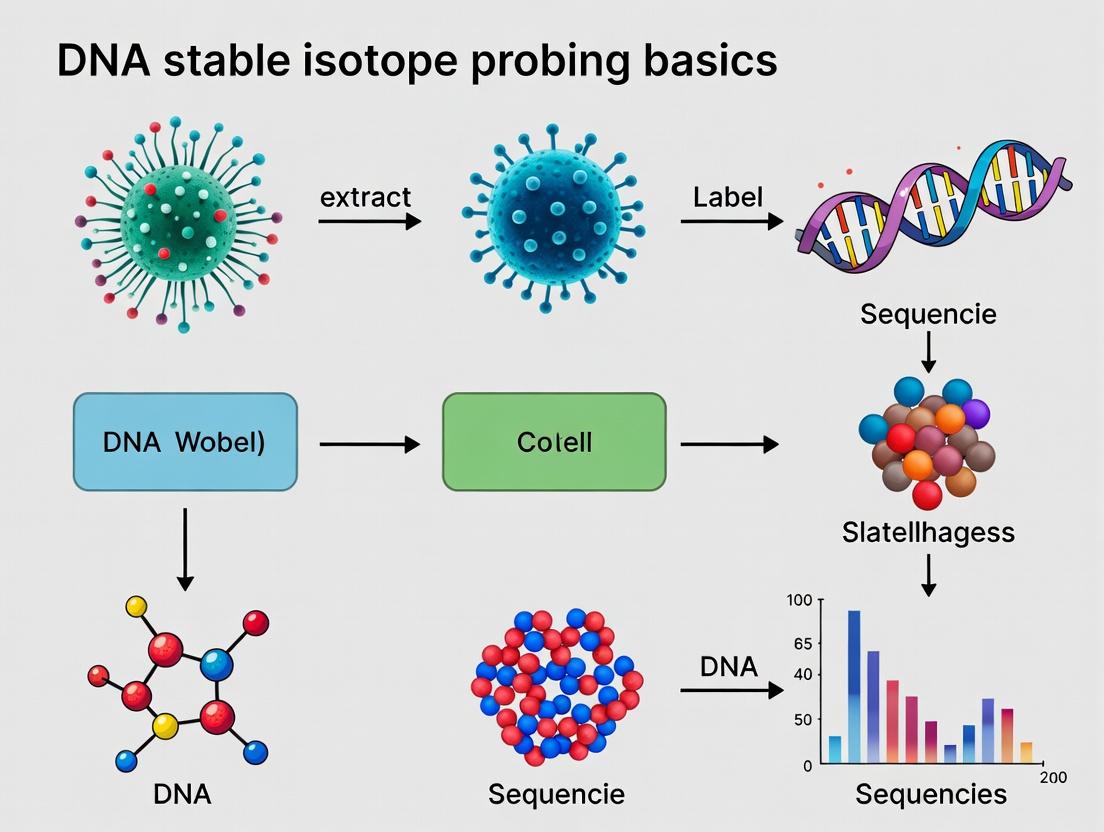
This article provides a comprehensive guide to DNA Stable Isotope Probing (DNA-SIP), a powerful technique linking microbial identity to function in complex ecosystems.
DNA Stable Isotope Probing: A Comprehensive Guide for Microbial Functional Analysis in Biomedicine
Abstract
This article provides a comprehensive guide to DNA Stable Isotope Probing (DNA-SIP), a powerful technique linking microbial identity to function in complex ecosystems. Designed for researchers, scientists, and drug development professionals, the article covers foundational principles, step-by-step methodologies, and troubleshooting protocols. We explore its critical applications in studying microbiomes, biodegradation, and pathogen metabolism, while comparing it to alternative functional genomics tools and validating its findings. The content synthesizes current best practices to enable accurate, high-resolution functional profiling of microbial communities in biomedical and clinical research contexts.
What is DNA-SIP? Demystifying the Core Principles for Precise Microbial Tracking
Within the foundational research on DNA stable isotope probing (DNA-SIP) basics, a critical challenge is unambiguously linking phylogenetic identity to specific metabolic functions in complex microbial communities. This technical guide details advanced methodologies that integrate stable isotope probing with high-throughput sequencing and computational analysis to achieve this linkage, enabling researchers to pinpoint which microorganisms are actively catalyzing processes of interest in environments ranging from soils to the human gut.
DNA Stable Isotope Probing is a technique that allows for the identification of microorganisms actively assimilating a particular substrate labeled with a stable isotope (e.g., ¹³C, ¹⁵N). The core principle involves tracking the incorporation of the heavy isotope into microbial DNA, which can then be separated from light DNA via density-gradient centrifugation. The fundamental thesis of ongoing DNA-SIP basics research is to move beyond cataloging community composition to establishing causative links between specific microbial taxa and their in situ biochemical roles, a prerequisite for targeted therapeutic or biotechnological intervention.
Quantitative Data: Key Metrics in DNA-SIP Research
Table 1: Common Stable Isotopes and Applications in DNA-SIP
| Isotope | Labeled Substrate Examples | Target Metabolic Processes | Typical Enrichment (%) | GC Content Bias Note |
|---|---|---|---|---|
| ¹³C | Glucose, CH₄, CO₂, Phenol | Heterotrophy, Methanotrophy, Autotrophy | 1-20 (Atom %) | High-GC DNA denser; can affect separation |
| ¹⁵N | Ammonium, Nitrate, Amino Acids | Nitrification, Assimilatory Nitrate Reduction | 1-50 (Atom %) | Less sensitive to GC bias |
| ¹⁸O | H₂¹⁸O | CO₂ fixation, lipid synthesis, growth | 10-50 (Atom %) | Requires careful control |
Table 2: Comparison of Nucleic Acid Biomarkers for SIP
| Biomarker | Advantage | Disadvantage | Typical Resolution |
|---|---|---|---|
| DNA | Phylogenetic & potential genomic data; stable | Requires cell replication; slower signal | Species to Genus level |
| rRNA | High turnover; rapid signal | Multiple operons; difficult for full genomes | Genus to Family level |
| mRNA (RT-SIP) | Direct link to gene expression | Technically challenging; low stability | Functional gene level |
Experimental Protocols
Protocol 3.1: High-Resolution DNA-SIP with ¹³C-Labeled Substrates
Objective: To identify bacteria assimilating a specific ¹³C-labeled carbon source in an environmental sample.
Materials:
- Environmental inoculum (soil, water, sludge)
- ¹³C-labeled substrate (e.g., ¹³C-glucose, 99 atom%)
- Ultra-clean centrifugation tubes (e.g., Beckman Quick-Seal)
- Gradient buffer: 100 mM Tris-HCl, 100 mM KCl, 1 mM EDTA (pH 8.0)
- CsCl stock solution (density ~1.8 g/mL in gradient buffer)
- Ultracentrifuge with vertical rotor (e.g., Beckman Coulter Optima XE with VTi 65.2)
- Fractionation system (e.g., syringe pump, needle, fraction collector)
- DNA purification kit (e.g., QIAamp DNA Micro Kit)
- PCR primers for 16S rRNA gene amplification
- Reagents for quantitative PCR (qPCR) and next-generation sequencing (NGS)
Procedure:
- Microcosm Incubation: Incubate the environmental sample with the ¹³C-labeled substrate under conditions mimicking the natural environment. Include a parallel control with ¹²C substrate.
- DNA Extraction: Harvest cells at multiple time points. Extract total community DNA using a standardized kit, ensuring high molecular weight and purity.
- Density Gradient Centrifugation: a. Prepare a CsCl/gradient buffer solution with a refractive index (RI) of ~1.4040 (density ~1.725 g/mL) containing 1-5 µg of DNA. b. Load into ultracentrifuge tubes, seal, and balance precisely. c. Centrifuge at 177,000 x g (e.g., 45,000 rpm in VTi 65.2) at 20°C for 36-48 hours.
- Fractionation & Analysis: a. Fractionate the gradient by bottom puncture or displacement, collecting 12-15 equal fractions. b. Measure the density of each fraction using a refractometer. c. Purify DNA from each fraction.
- Target Detection & Sequencing: a. Perform qPCR on all fractions using universal 16S rRNA gene primers to generate "density vs. abundance" profiles. b. Fractions where ¹³C-DNA is enriched will show a density shift (~0.036 g/mL heavier) compared to the ¹²C control. c. Pool "heavy" and "light" DNA fractions separately. d. Prepare NGS libraries (e.g., Illumina 16S rRNA gene amplicon or shotgun metagenomic) for comparative analysis.
Protocol 3.2: Complementary RNA-SIP for Active Community Members
Objective: To identify microorganisms transcribing genes related to a metabolic function using ¹³C-labeling. Note: RNA-SIP gradients are steeper due to the higher buoyant density of RNA. Use a CsTFA density medium. Follow RNA-specific extraction (RNase-free environment) and reverse transcription protocols after fractionation. Target functional gene transcripts (mRNA) for analysis.
Visualizing Workflows and Relationships
Title: DNA-SIP Core Experimental Workflow
Title: Multi-Omics Integration to Fulfill Core Thesis
The Scientist's Toolkit: Key Research Reagent Solutions
Table 3: Essential Reagents and Materials for DNA-SIP Research
| Item | Function & Importance | Example Product/Brand |
|---|---|---|
| ¹³C/¹⁵N-Labeled Substrates | High-purity isotopic tracer is critical for clear signal detection and avoiding cross-feeding artifacts. | Cambridge Isotope Laboratories (CLM-); Sigma-Aldrich (¹³C6-Glucose) |
| Ultra-Pure CsCl or CsTFA | Forms the density gradient. Must be nuclease-free and of high chemical purity for optimal separation. | MilliporeSigma; Promega (for RNA-SIP) |
| DNA/RNA Shield | Preservation buffer for immediate stabilization of nucleic acids at the point of sample collection, preserving in vivo state. | Zymo Research DNA/RNA Shield |
| High-Efficiency Nucleic Acid Extraction Kit | For challenging environmental samples, must efficiently lyse diverse cell types and recover high-molecular-weight DNA/RNA. | DNeasy PowerSoil Pro Kit (QIAGEN); RNeasy PowerMicrobiome Kit (QIAGEN) |
| PCR Inhibitor Removal Beads | Essential for clean downstream PCR from complex samples like soil or feces after density gradient fractionation. | OneStep PCR Inhibitor Removal Kit (Zymo Research) |
| High-Fidelity Polymerase Mix | For accurate amplification of target genes (16S rRNA, functional genes) from low-biomass gradient fractions. | Q5 High-Fidelity DNA Polymerase (NEB); Platinum SuperFi II (Thermo Fisher) |
| Dual-Indexed NGS Library Prep Kit | Enables multiplexing of many gradient fractions for cost-effective sequencing. Must be sensitive for low-input DNA. | Illumina Nextera XT; Swift 2S Turbo |
| Stable Isotope Analysis Standards | Calibrators for mass spectrometry if quantifying isotope incorporation into biomarkers (e.g., PLFAs, proteins). | USGS reference materials |
This in-depth technical guide details the complete workflow for DNA-based Stable Isotope Probing (DNA-SIP), a powerful cultivation-independent method used to link microbial identity with function in complex environments. Framed within the broader thesis of DNA-SIP basics research, this whitepaper provides researchers and drug development professionals with the methodologies to identify microorganisms actively assimilating specific isotopic substrates (e.g., (^{13}\text{C}), (^{15}\text{N}), (^{18}\text{O})). The core principle relies on the incorporation of heavy isotopes into microbial DNA, followed by physical separation of "heavy" labeled DNA from "light" unlabeled DNA via density gradient ultracentrifugation for subsequent molecular analysis.
Core Experimental Workflow
The DNA-SIP workflow consists of four main phases: Incubation, Nucleic Acid Extraction, Density Gradient Centrifugation, and Fraction Analysis.
Diagram Title: DNA-SIP Core Four-Phase Workflow
Phase 1: Isotope Incorporation via Incubation
Objective: To facilitate the assimilation of a heavy isotope (e.g., (^{13}\text{C})) from a labeled substrate into the DNA of active microorganisms.
Protocol: Microcosm Incubation with (^{13}\text{C})-Substrate
- Sample Preparation: Homogenize environmental sample (e.g., soil, sediment, water) in an appropriate buffer. Distribute aliquots into replicate incubation vessels (e.g., serum bottles, microcosms).
- Substrate Addition: To experimental vessels, add the (^{13}\text{C})-labeled substrate (e.g., (^{13}\text{C})-glucose, (^{13}\text{C})-phenol; typical isotopic purity >98%). Critical Control: Prepare parallel vessels with an identical amount of (^{12}\text{C}) (natural abundance) substrate.
- Incubation Conditions: Incubate under conditions mimicking the in situ environment (temperature, light, etc.) for a defined period (hours to weeks). The duration must be sufficient for multiple rounds of cell division to ensure detectable (^{13}\text{C})-DNA synthesis.
- Termination: Preserve samples by immediately freezing at -80°C or adding a stop solution (e.g., ethanol, SDS) to halt microbial activity.
Key Considerations
- Substrate Concentration: Must be sufficient to induce labeling but not cause toxic shifts or community changes. Typical range: µg to mg per g of sample.
- Incubation Time: Optimized to prevent cross-feeding (secondary labeling of non-target microbes via metabolic products). Shorter incubations target primary utilizers.
Phase 2: Nucleic Acid Extraction & Purification
Objective: To obtain high-quality, high-molecular-weight DNA from incubated samples for density separation.
Protocol: High-Yield DNA Extraction
- Cell Lysis: Use a combination of mechanical (e.g., bead beating) and chemical/enzymatic lysis (e.g., SDS, proteinase K, lysozyme) to ensure complete disruption of diverse cell walls.
- Purification: Remove contaminants (proteins, humic acids, RNA) via sequential organic extraction (phenol:chloroform:isoamyl alcohol) or using commercial kits designed for environmental samples.
- Precipitation & Quantification: Precipitate DNA with isopropanol or ethanol, wash with 70% ethanol, and resuspend in TE buffer or nuclease-free water. Quantify using a fluorometric assay (e.g., Qubit) for accuracy.
- Quality Check: Verify DNA integrity via gel electrophoresis (e.g., 0.8% agarose).
Phase 3: Density Gradient Centrifugation & Fractionation
Objective: To separate (^{13}\text{C})-labeled "heavy" DNA from (^{12}\text{C}) "light" DNA based on buoyant density (BD) differences.
Principle & Reagents
Gradients are formed using cesium salts. The choice of salt depends on the isotope used.
Table 1: Density Gradient Medium for Different Isotopes
| Isotope Target | Gradient Medium | Typical Buoyant Density (g/mL) | Function |
|---|---|---|---|
| (^{13}\text{C}), (^{15}\text{N}) | Cesium Chloride (CsCl) | Light DNA: ~1.695, Heavy DNA: ~1.730 | BD difference is sensitive to GC content; requires isopycnic centrifugation. |
| (^{18}\text{O}) | Cesium Trifluoroacetate (CsTFA) | Light DNA: ~1.620, Heavy DNA: >1.620 | More chaotropic, better for high GC DNA, inhibits nucleases. |
Protocol: CsCl Density Gradient Ultracentrifugation for (^{13}\text{C})-DNA
- Gradient Preparation: Mix 1-5 µg of purified DNA with a CsCl stock solution (e.g., 7.163 M CsCl in TE, refractive index ~1.4040) and a fluorescent intercalating dye (e.g., GelGreen). Adjust final density to ~1.725 g/mL using refractometry. Load into a 5.1 mL ultracentrifuge tube (e.g., Beckman Polyallomer).
- Ultracentrifugation: Seal tubes and centrifuge in a vertical or near-vertical rotor (e.g., Beckman Vit 65.2) at 177,000 × g (avg) at 20°C for 36-48 hours. This achieves isopycnic equilibrium.
- Fractionation: Collect ~12-15 fractions (each ~300 µL) from the bottom of the tube using a peristaltic pump or syringe pump. Simultaneously measure the density of every fraction using a refractometer.
- DNA Recovery: Precipitate DNA from each fraction by adding glycogen (as carrier), PEG 6000 solution, and isopropanol. Wash pellet with 70% ethanol and resuspend in nuclease-free water.
Diagram Title: Principle of Isopycnic Separation in a CsCl Gradient
Phase 4: Analysis of Gradient Fractions
Objective: To identify fractions containing labeled DNA and determine the microbial taxa responsible for substrate assimilation.
Protocol: Quantitative PCR & Sequencing
- Screening: Perform quantitative PCR (qPCR) of the 16S rRNA gene on all gradient fractions from both (^{13}\text{C}) and (^{12}\text{C}) treatments. Plot gene copies against buoyant density.
- Identification of "Heavy" Fractions: "Heavy" (^{13}\text{C})-DNA is indicated by a shift in the peak of gene abundance to higher density in the (^{13}\text{C})-treatment compared to the (^{12}\text{C})-control.
- Microbial Community Analysis: Amplify and sequence 16S rRNA genes from the identified "heavy" fractions (and corresponding "light" controls) using Illumina MiSeq or similar platforms.
- Bioinformatics: Process sequences (QIIME2, MOTHUR) to determine operational taxonomic units (OTUs). Compare the community composition in "heavy" vs. "light" fractions to identify taxa enriched with (^{13}\text{C}) label.
Table 2: Typical Quantitative Data from a (^{13}\text{C})-Glucose SIP Experiment
| Fraction # | Buoyant Density (g/mL) | 16S rRNA Gene Copies (qPCR) / µL (x10^3) | Notes |
|---|---|---|---|
| 1 (Bottom) | 1.735 | 125.6 | Peak for 13C-incubation |
| 2 | 1.725 | 98.2 | Contains heavy DNA |
| 3 | 1.715 | 45.1 | |
| ... | ... | ... | |
| 8 | 1.685 | 12.5 | Peak for 12C-control |
| 9 | 1.675 | 8.7 | Contains light DNA |
| 10 (Top) | 1.665 | 3.1 |
The Scientist's Toolkit: Essential Research Reagents & Materials
Table 3: Key Reagent Solutions for DNA-SIP Experiments
| Item | Function & Specification | Example Product/Catalog # |
|---|---|---|
| (^{13}\text{C})-Labeled Substrate | Tracer for microbial assimilation. Isotopic purity >98% is critical for clear separation. | Cambridge Isotope Laboratories (e.g., CLM-1396 for (^{13}\text{C}_6)-Glucose) |
| Cesium Chloride (CsCl) | Forms the density gradient for ultracentrifugation. Molecular biology grade. | Sigma-Aldrich (C4036) or Qiagen (19051) |
| Gradient Buffer (TE, pH 8.0) | Provides a stable chemical environment for DNA during centrifugation. | 10 mM Tris-HCl, 1 mM EDTA, pH 8.0 |
| Fluorescent Nucleic Acid Stain | Allows visualization of DNA bands under UV light during fractionation. | GelGreen (Biotium 41005) or SYBR Safe |
| DNA Extraction Kit (Soil) | For efficient lysis and purification of DNA from complex matrices, removing PCR inhibitors. | DNeasy PowerSoil Pro Kit (Qiagen 47014) |
| Refractometer | Accurately measures the density of CsCl solutions and collected fractions. | Reichert Digital Handheld Refractometer |
| Ultracentrifuge & Rotor | Equipment for high-speed, long-duration centrifugation. Requires a vertical or near-vertical rotor. | Beckman Coulter Optima XE with VTi 65.2 rotor |
| Fraction Recovery System | For precise collection of gradient fractions from the centrifuge tube. | Brandel or Labconco fractionator, or syringe pump. |
Within the expanding field of DNA stable isotope probing (DNA-SIP) basics research, stable isotopes serve as indispensable tools for tracing metabolic pathways, quantifying biochemical fluxes, and elucidating the functional roles of microbial communities and host cells. Unlike their radioactive counterparts, these non-radioactive tracers provide a safe means to study complex biological systems in vivo. This guide details the biomedical applications of four cornerstone isotopes—13C, 15N, 18O, and 2H—framing their utility within the methodological and analytical workflows central to advanced SIP research.
Core Isotope Properties and Biomedical Applications
Table 1: Key Properties and Primary Applications of Stable Isotopes in Biomedicine
| Isotope | Natural Abundance (%) | Key Application in Biomedicine | Common Tracer Form(s) | Typical Detection Method |
|---|---|---|---|---|
| 13C | 1.11 | Metabolic flux analysis, drug metabolism studies, SIP for microbial function | [13C]Glucose, [13C]Acetate, 13C-Urea | GC-MS, LC-MS, NMR, IRMS |
| 15N | 0.37 | Protein turnover studies, amino acid metabolism, nitrogen assimilation pathways | 15N-Ammonium, 15N-Glycine, 15N-Urea | GC-MS, LC-MS, IRMS |
| 18O | 0.20 | Water turnover, metabolic rate studies, oxygenase reaction tracing | H218O, 18O2 | IRMS, LC-MS |
| 2H (D) | 0.0115 | Lipid metabolism, glycogen dynamics, protein synthesis (deuterium oxide) | D2O, [2H]Palmitate, [2H]Leucine | NMR, GC-MS, LC-MS |
Table 2: Comparison of Detection Sensitivities and Resolution in SIP Experiments
| Isotope | Minimum Enrichment Detectable (DNA-SIP) | Optimal Gradient Density (g/mL) for SIP | Key Challenge in Biomedicine |
|---|---|---|---|
| 13C | ~20 atom% | 1.72-1.75 (CsCl) | High cost of universally labeled substrates |
| 15N | ~30 atom% | 1.72-1.74 (CsCl) | Lower sensitivity due to lower mass difference |
| 18O | Not typically used in DNA-SIP | N/A | Rapid exchange with water in biological systems |
| 2H (D) | ~10-15 atom% | 1.71-1.73 (CsCl) | Potential kinetic isotope effects altering metabolism |
Experimental Protocols
Protocol 1: DNA Stable Isotope Probing (SIP) with 13C-Labeled Substrates
Objective: To identify active microorganisms assimilating a specific 13C-labeled substrate within a complex community (e.g., gut microbiome).
- Incubation: Incubate environmental or clinical samples (e.g., fecal slurry, biofilm) with the target 13C-substrate (e.g., [13C]propionate) and an unlabeled 12C-control. Maintain appropriate physiological conditions.
- DNA Extraction: After an incubation period (hours to days), extract total genomic DNA using a phenol-chloroform method or commercial kit.
- Density Gradient Centrifugation:
- Prepare a cesium chloride (CsCl) solution with a buoyant density of ~1.725 g/mL containing gradient buffer and DNA-binding dye (e.g., SYBR Green I).
- Add extracted DNA to the CsCl solution and transfer to ultracentrifugation tubes.
- Centrifuge in an ultracentrifuge (e.g., Beckman Coulter Optima XE) at ~180,000 x g at 20°C for 36-48 hours.
- Fractionation: Fractionate the gradient by displacing it from the bottom of the tube. Collect 10-15 fractions of equal volume.
- Analysis: Measure DNA concentration and 13C enrichment (via qPCR targeting 16S rRNA genes and IRMS, respectively). "Heavy" DNA (13C-enriched) will be in higher-density fractions compared to the 12C-control.
- Sequencing: Purify DNA from "heavy" and "light" fractions and perform 16S rRNA gene amplicon or metagenomic sequencing to identify active, substrate-assimilating taxa.
Protocol 2: In Vivo Protein Turnover Measurement using 2H2O (D2O) Labeling
Objective: To measure the synthesis rate of proteins, including plasma biomarkers or specific tissue proteins.
- Labeling Initiation: Administer a bolus dose of 99.9% D2O in saline (e.g., 30 mL/kg body weight) to the subject (animal model).
- Maintenance: Provide ad libitum drinking water containing 4-8% D2O for the duration of the experiment (days to weeks) to maintain a steady body water deuterium enrichment (~2-5%).
- Sampling: Collect serial blood (for plasma proteins) or tissue biopsies at multiple time points.
- Protein Hydrolysis and Derivatization: Isolate the target protein via immunoprecipitation or gel electrophoresis. Hydrolyze to constituent amino acids. Derivatize amino acids (e.g., as N-acetyl methyl esters) for GC-MS analysis.
- GC-MS Analysis: Measure the mass isotopomer distribution of alanine or other amino acids. The incorporation of deuterium into non-exchangeable hydrogens is proportional to the protein synthesis rate.
- Kinetic Modeling: Calculate fractional synthesis rates (FSR, %/day) using precursor (body water D-enrichment) and product (protein-bound alanine D-enrichment) data.
Signaling and Metabolic Pathway Visualization
Stable Isotope Incorporation Pathways in Biomedicine
DNA Stable Isotope Probing (SIP) Experimental Workflow
The Scientist's Toolkit: Research Reagent Solutions
Table 3: Essential Materials for Stable Isotope Probing Experiments
| Item | Function | Example/Supplier |
|---|---|---|
| 13C/15N-Labeled Substrates | High-purity metabolic tracers for targeted probing of specific pathways. | Cambridge Isotope Laboratories (CLM), Sigma-Aldrich (Icon Isotopes). |
| Deuterium Oxide (D2O), 99.9% | For in vivo labeling of body water to measure protein/lipid synthesis. | MilliporeSigma, Cambridge Isotope Laboratories. |
| Cesium Chloride (CsCl), Ultra Pure | Forms the density gradient for separation of labeled ("heavy") and unlabeled ("light") nucleic acids in SIP. | Beckman Coulter, Thermo Fisher Scientific. |
| DNA-Binding Gradient Dye | Enables visualization of DNA bands in centrifugation gradients (e.g., SYBR Green I). | Invitrogen (Thermo Fisher). |
| Ultracentrifuge & Rotors | Essential for isopycnic centrifugation (e.g., Optima XE, VTi 65.2 rotor). | Beckman Coulter. |
| Fraction Recovery System | Precisely collects density gradient fractions from the centrifuge tube. | Brandel, Beckman Coulter. |
| Isotope Ratio Mass Spectrometer (IRMS) | Gold-standard for precise measurement of bulk 13C/15N/18O enrichment in samples. | Thermo Scientific (Delta V series), Sercon. |
| GC-MS or LC-HRMS System | For compound-specific isotope analysis and metabolomics (measuring isotopologues). | Agilent, Thermo Scientific (Q Exactive), Sciex. |
| Stable Isotope Analysis Software | Processes complex mass spectral data for metabolic flux analysis. | MetaQuant, Xcalibur, IsoCor. |
Ultracentrifugation using cesium chloride (CsCl) and bis-benzimide (Hoechst 33258) density gradients is a foundational, preparative technique in molecular biology. Within the context of DNA Stable Isotope Probing (DNA-SIP) basics research, this method is critical for the physical separation of isotopically labeled ("heavy") DNA from unlabeled ("light") DNA. DNA-SIP links microbial identity to function by tracking the incorporation of stable isotopes (e.g., ¹³C, ¹⁵N) from substrates into genomic DNA. The minute difference in buoyant density caused by isotopic enrichment is resolved and exploited using equilibrium density gradient ultracentrifugation, enabling the retrieval of functionally active populations from complex microbial communities for downstream analysis (e.g., sequencing, PCR).
Theoretical Principles of Isopycnic Separation
In isopycnic (or equilibrium) centrifugation, molecules are separated solely based on their buoyant density in a gradient medium under a strong centrifugal force. Molecules migrate until their density equals that of the surrounding gradient medium.
- CsCl as Gradient Medium: CsCl forms a self-generating, stable density gradient under centrifugal force (typically >200,000 g). The equilibrium density range for DNA in CsCl is approximately 1.65–1.75 g/mL.
- Role of Bis-Benzimide: This fluorescent, AT-selective DNA-binding dye (Hoechst 33258) binds preferentially to AT-rich regions of DNA. Upon binding, it significantly decreases the buoyant density of the DNA-dye complex. Crucially, the magnitude of this density shift is inversely proportional to the DNA's GC content. This allows for the resolution of DNA molecules with different base compositions within a single CsCl gradient, a principle central to separating community DNA in SIP.
Core Quantitative Data
Table 1: Key Parameters for CsCl/Bis-Benzimide Density Gradient Ultracentrifugation
| Parameter | Typical Value / Range | Notes |
|---|---|---|
| CsCl Starting Density | 1.55 - 1.60 g/mL | Adjusted refractive index (RI) to ~1.3860-1.3880. |
| Bis-Benzimide Concentration | 0.1 - 0.5 mg/mL | From a 10 mg/mL stock in H₂O. Light-sensitive. |
| Ultracentrifuge Speed | 45,000 - 50,000 rpm | Using a vertical or near-vertical rotor (e.g., Beckman NVT90). |
| Run Time | 36 - 48 hours | Time to reach equilibrium at maximum speed. |
| Centrifugal Force | 180,000 - 250,000 g | |
| Temperature | 18 - 20 °C | Critical for density stability and dye binding. |
| Typical DNA Load | 2 - 5 µg per gradient | Higher loads can cause band broadening. |
| Density Shift (Δρ) per % GC | ~0.0005 g/mL | With saturating bis-benzimide. |
| ¹³C-Labeling Density Shift | ~0.016 - 0.020 g/mL | Shift for fully ¹³C-labeled DNA vs. ¹²C-DNA. |
Table 2: Effect of Bis-Benzimide on Buoyant Density of DNA
| DNA Type | Approx. GC% | Buoyant Density in CsCl (g/mL) | Buoyant Density in CsCl + Bis-Benzimide (g/mL) |
|---|---|---|---|
| E. coli (¹²C) | 50% | ~1.710 | ~1.560 |
| Micrococcus luteus (¹²C) | 72% | ~1.731 | ~1.590 |
| Fully ¹³C-Labeled DNA | 50% | ~1.730 | ~1.580 |
| "Heavy" ¹³C-DNA from SIP | Variable | ~1.720 - 1.725 | ~1.570 - 1.575 |
Detailed Experimental Protocols
Protocol 1: Preparation and Fractionation of CsCl/Bis-Benzimide Gradients for DNA-SIP
Objective: To separate ¹³C-labeled "heavy" DNA from ¹²C "light" DNA derived from an environmental SIP experiment.
Materials: See "The Scientist's Toolkit" below. Method:
- DNA Sample Preparation: Extract total community DNA from your SIP microcosm. Purify via standard phenol-chloroform or kit-based methods. Determine DNA concentration and purity (A260/A280 ~1.8).
- Gradient Mix Preparation: In a sterile ultracentrifuge tube (e.g., Quick-Seal), combine:
- Target amount of DNA (2-5 µg).
- CsCl stock solution to achieve a final volume of ~5.5 mL and a refractive index (RI) of 1.3865 (density ~1.55 g/mL).
- Bis-benzimide stock to a final concentration of 0.25 mg/mL.
- Gradient buffer (10 mM Tris, 1 mM EDTA, pH 8.0) to adjust final volume/RI.
- Seal and Balance: Seal tubes carefully, weigh to within 0.01 g, and balance pairs precisely.
- Ultracentrifugation: Place tubes in a pre-chilled vertical rotor (e.g., Beckman NVT90). Centrifuge at 45,000 rpm (∼180,000 g avg) at 18°C for 48 hours. Use slow acceleration and deceleration (no brake) to preserve gradient integrity.
- Fractionation:
- Visualization: Illuminate the stationary rotor/tube with long-wave UV light (365 nm). DNA bands will fluoresce blue-white.
- Collection: Puncture the tube bottom or top with a fractionation system. Collect 150-200 µL fractions sequentially (∼30-35 fractions total) into a microtiter plate or tubes.
- Post-Processing:
- Measure the refractive index of every 3rd-5th fraction to calculate density.
- Dilute fractions 3:1 with sterile water or TE buffer.
- Extract bis-benzimide by adding an equal volume of water-saturated isopropanol, vortexing, and discarding the upper (organic) phase. Repeat 3-4 times until no pink color remains.
- Desalt and concentrate DNA using centrifugal filter units (e.g., 30 kDa MWCO) or ethanol precipitation.
Protocol 2: Identification of "Heavy" ¹³C-DNA Fractions
Objective: To pinpoint fractions containing the isotopically enriched DNA. Method:
- Quantitative PCR (qPCR): Perform qPCR on all fractions using universal 16S rRNA gene primers. Plot the Cq value (or gene copy number) against fraction number. A bimodal distribution will appear: a primary "light" peak (higher fraction number, lower density) and a secondary "heavy" peak (lower fraction number, higher density).
- Density Calculation: Use the measured refractive index (η) and the equation: ρ (25°C) = (10.8601 * η) – 13.4974 to calculate the density (g/mL) for each fraction.
- Pooling: Pool fractions constituting the "heavy" DNA peak for downstream metagenomic or 16S rRNA gene sequencing.
Visualization: Workflow and Pathway
Diagram Title: DNA-SIP Workflow: CsCl/Bis-Benzimide Gradient Separation
The Scientist's Toolkit: Key Research Reagent Solutions
Table 3: Essential Materials for CsCl/Bis-Benzimide Density Gradients
| Item | Function / Specification | Notes |
|---|---|---|
| Cesium Chloride (CsCl) | Ultra-pure grade, molecular biology grade. Forms the self-generating density gradient. | Handle with care; hygroscopic. Prepare as saturated stock solution (~1.9 g/mL). |
| Bis-Benzimide (Hoechst 33258) | Fluorescent, AT-selective DNA stain. Induces GC-content dependent density shifts. | Light-sensitive. Prepare 10 mg/mL stock in sterile H₂O, store in foil-wrapped tube at -20°C. |
| Vertical or Near-Vertical Rotor | e.g., Beckman Coulter NVT90, Vit65.2. Enables short pathlength for rapid equilibrium. | Must be compatible with ultracentrifuge and sealable tubes. |
| Ultracentrifuge Tubes | Heat-sealable or screw-top polyallomer tubes (e.g., Beckman Quick-Seal). | Must withstand >200,000 g. |
| Tabletop Ultracentrifuge | e.g., Beckman Optima MAX-XP, MLA-130 rotor. Capable of >45,000 rpm. | Precise temperature control (18-20°C) is critical. |
| Refractometer | Digital or analog. Measures refractive index (RI) to calculate gradient density. | Calibrate with distilled water. |
| Long-Wave UV Lamp (365 nm) | For visualization of DNA-bis-benzimide bands within the centrifuge tube. | Wear appropriate UV eye protection. |
| Gradient Fractionation System | e.g., Brandel or Beckman fractionator. Precisely collects gradient from top or bottom. | Alternative: Manual piercing and dripping. |
| Water-Saturated Isopropanol | For extraction of bis-benzimide dye from fractionated DNA. | Mix equal parts H₂O and isopropanol, use upper phase. |
| Gradient Buffer (TE or Tris-EDTA) | 10 mM Tris-HCl, 1 mM EDTA, pH 8.0. Provides stable pH and chelates divalent cations. | Prevents DNA degradation and aggregation. |
| Centrifugal Filter Units (30kDa MWCO) | For desalting and concentrating DNA post-fractionation. | Preferable to ethanol precipitation for small volumes. |
This technical guide examines the historical evolution of high-throughput methodologies, framed within the paradigm shift of DNA Stable Isotope Probing (DNA-SIP) basics research. DNA-SIP, a cornerstone technique for linking microbial identity to function in complex environments, has itself undergone a profound transformation. It evolved from a low-throughput, concept-validation tool to a modern, high-throughput application integrated with next-generation sequencing (NGS) and advanced analytics. This evolution mirrors a broader trend across molecular biology, where manual, single-sample techniques have been superseded by automated, multiplexed platforms, enabling systems-level understanding of microbial community function and interactions—a critical advancement for drug discovery targeting microbial pathways and environmental bioremediation.
Historical Progression of DNA-SIP and Associated Technologies
The table below summarizes the key evolutionary phases from concept to modern high-throughput applications in DNA-SIP and related functional genomics.
Table 1: Evolutionary Timeline of DNA-SIP Methodologies
| Era (Approx.) | Phase | Core Technology/Concept | Throughput (Samples/Experiment) | Key Limitation | Enabling Innovation |
|---|---|---|---|---|---|
| 1990-2000 | Conceptual Foundation | Density Gradient Centrifugation with ¹³C/¹⁵N substrates | 1-4 | Labor-intensive, requires large amounts of isotope, low resolution. | Development of ultracentrifugation for nucleic acid separation. |
| 2000-2010 | Molecular Integration | Coupling with Fingerprinting (DGGE, T-RFLP) | 6-12 | Semi-quantitative, identifies only dominant "heavy" populations. | PCR-based profiling methods. |
| 2010-2015 | First High-Throughput Leap | Integration with Pyrosequencing (454) & Microarrays | 48-96 | Cost, gradient fractionation remains a bottleneck. | Emergence of NGS platforms. |
| 2015-Present | Modern Omics Integration | Coupling with Illumina Sequencing & Automation | 384+ (with robotics) | Complex bioinformatics, high computational demand. | Automated liquid handlers, high-speed centrifuges, metagenomic binning algorithms. |
| Present-Future | Single-Cell & Ultra-High-Resolution | Chip-Based SIP, NanoSIMS, Raman-Activated Cell Sorting | 1000+ (for single cells) | Extremely specialized, expensive equipment. | Microfluidics, high-resolution mass spectrometry imaging. |
Detailed Experimental Protocols for Key Evolutionary Stages
Protocol A: Traditional Isopycnic Centrifugation for DNA-SIP (Circa 2005)
This protocol established the foundational methodology for separating ¹³C-labeled ("heavy") from ¹²C-labeled ("light") DNA.
Materials:
- CsCl gradient buffer (1.55 g/mL final density)
- Gradient Fractionator (e.g., Brandel or similar)
- Ultracentrifuge with vertical rotor (e.g., Beckman Coulter VT165.2)
- Fixed-angle microcentrifuge
- SYBR Green I nucleic acid stain
Procedure:
- Nucleic Acid Extraction: Extract total community DNA from ¹³C-amended and ¹²C-control samples using a phenol-chloroform-based method.
- Gradient Preparation: Mix ~5 µg of DNA with CsCl gradient buffer to a final volume of 5.5 mL and a refractive index of 1.3990 (±0.0005). Transfer to a 5.1 mL ultracentrifuge tube. Balance pairs to within 0.01 g.
- Ultracentrifugation: Centrifuge at 177,000 x g (avg) at 20°C for 36-48 hours in a vertical rotor. Decelerate without brake.
- Fractionation: Puncture the tube bottom. Collect 12-15 equal fractions (~300 µL each) using a fractionator.
- Detection & Pooling: Measure DNA density of each fraction refractometrically. Visualize DNA via SYBR Green I staining under UV light. Pool "heavy" and "light" fractions based on density shift (typically ~0.038 g/mL for ¹³C-DNA).
- DNA Recovery: Purify DNA from CsCl by PEG precipitation or dialysis.
- Analysis: Amplify 16S rRNA genes from heavy and light fractions for clone library construction and Sanger sequencing.
Protocol B: High-Throughput DNA-SIP coupled with Illumina Sequencing (Modern)
This streamlined protocol incorporates automation and NGS for multiplexed analysis.
Materials:
- Automated liquid handling system (e.g., Hamilton STARlet)
- 96-well format ultracentrifuge rotor (e.g., Beckman Coulter VitroTubes)
- High-sensitivity dsDNA assay kit (e.g., Qubit)
- Illumina Nextera XT DNA Library Prep Kit
- Gradient collection system compatible with multiwell plates
Procedure:
- High-Throughput Extraction: Extract DNA from 96+ microcosm experiments (varying substrates/treatments) using bead-beating and magnetic bead-based purification on an automated platform.
- Micro-Ultracentrifugation: For each sample, mix 100-500 ng DNA with CsTFA gradient medium in a VitroTube. Centrifuge in a 96-well rotor at 205,000 x g for 24 hours.
- Automated Fractionation: Use an automated fractionator to collect 10-12 fractions directly into a 96-well PCR plate.
- High-Throughput Quantification: Quantify DNA in each well using a plate-reader fluorometer.
- Bioinformatic Fraction Identification: Calculate buoyant density. Use quantitative data to identify ¹³C-enriched fractions via statistical comparison (e.g., ΔBD) to ¹²C controls, rather than visual inspection.
- Library Prep & Sequencing: Pool identified "heavy" DNA fractions from multiple treatments. Prepare sequencing libraries using a tagmentation-based kit (e.g., Nextera XT) with dual indexing to allow multiplexing of hundreds of samples on a single Illumina MiSeq or HiSeq run for 16S rRNA gene amplicon or shot-gun metagenomic analysis.
Visualization of Workflows and Logical Relationships
Title: Evolution of DNA-SIP from Low to High-Throughput
Title: Bioinformatics Pipeline for High-Throughput SIP Data
The Scientist's Toolkit: Key Research Reagent Solutions
Table 2: Essential Materials for Modern High-Throughput DNA-SIP Experiments
| Item / Reagent | Function in DNA-SIP | Example Product / Specification |
|---|---|---|
| Stable Isotope-Labeled Substrates | Provides the "heavy" label (¹³C, ¹⁵N, ¹⁸O) for active microbes to incorporate. | ¹³C-Glucose (99 atom % ¹³C), ¹⁵N-Ammonium Chloride. |
| High-Density Gradient Medium | Forms the density gradient for separating nucleic acids by buoyant density. | Cesium TFA (for micro-ultracentrifugation), Cesium Chloride. |
| Automated Nucleic Acid Extraction Kit | Enables high-throughput, consistent isolation of total community DNA from many samples. | DNeasy 96 PowerSoil Pro Kit (QIAGEN) for soil; KingFisher systems for automation. |
| Fluorometric DNA Quantitation Kit | Accurately measures low DNA concentrations in gradient fractions for high-throughput analysis. | Quant-iT PicoGreen dsDNA Assay (Thermo Fisher) in plate-reader format. |
| Dual-Indexed NGS Library Prep Kit | Prepares hundreds of "heavy" DNA samples for multiplexed, pooled sequencing. | Illumina Nextera XT DNA Library Prep Kit. |
| Size Selection Beads | Cleans and size-selects DNA post-library preparation to ensure optimal insert size. | SPRISelect magnetic beads (Beckman Coulter). |
| Bioinformatics Software Pipeline | Processes raw sequencing data into taxonomic and functional profiles. | QIIME 2 (amplicon), ATLAS or metaWRAP (metagenomics). |
| Positive Control Spike-Ins | Validates gradient separation efficiency. Can be ¹³C-labeled genomic DNA from a pure culture not present in the sample. | ¹³C-E. coli genomic DNA. |
This guide, framed within the broader thesis of DNA stable isotope probing (DNA-SIP) basics research, details the fundamental principles of microbial growth kinetics and substrate assimilation. Accurate quantification of these prerequisites is essential for designing and interpreting SIP experiments that link microbial identity to metabolic function in complex environments.
Microbial Growth Kinetics: Quantitative Foundations
Microbial growth, the increase in cell number or biomass, is governed by substrate availability and environmental conditions. The Monod equation is the cornerstone model:
μ = μ_max * (S / (K_s + S))
Where:
- μ = Specific growth rate (h⁻¹)
- μ_max = Maximum specific growth rate (h⁻¹)
- S = Substrate concentration (mg/L)
- Ks = Half-saturation constant (mg/L); substrate concentration at which μ = μmax/2
Table 1: Representative Monod Kinetic Parameters for Key Microbial Groups
| Microbial Group / Substrate | μ_max (h⁻¹) | K_s (mg/L) | Yield Coefficient (Y) [g biomass/g substrate] | Reference Conditions |
|---|---|---|---|---|
| Escherichia coli / Glucose | 0.8 - 1.2 | 2 - 4 | 0.4 - 0.5 | Aerobic, 37°C |
| Pseudomonas putida / Phenol | 0.4 - 0.6 | 0.5 - 1.5 | 0.6 - 0.7 | Aerobic, 30°C |
| Nitrosomonas europaea / Ammonia (NH₃) | 0.04 - 0.08 | 0.1 - 0.5 (as N) | 0.08 - 0.12 | Aerobic, 28°C |
| Methanobacterium formicicum / H₂/CO₂ | 0.05 - 0.1 | 0.01 - 0.05 (for H₂) | 2.0 - 3.0 (g biomass/mol H₂) | Anaerobic, 37°C |
| Activated Sludge Community / Acetate | 0.15 - 0.3 | 5 - 20 | 0.4 - 0.6 | Aerobic, 20°C |
Substrate Uptake and Assimilation Pathways
Substrate utilization involves transport, catabolism for energy, and anabolism for biomass synthesis. The fate of a labeled substrate ([¹³C] or [¹⁵N]) is determined by these pathways, which SIP seeks to trace.
Diagram 1: Core pathways for substrate assimilation and labeling.
Critical Experimental Protocol: Determining Growth Parameters for SIP
Objective: Quantify μmax and Ks for a target microbe on a substrate to inform SIP incubation duration and labeling concentration.
Protocol: Batch Growth Kinetics
- Medium Preparation: Prepare a defined minimal medium with the target substrate as the sole, limiting carbon/nitrogen source. Prepare a sterile stock solution of the substrate (e.g., 100 mM).
- Inoculum: Grow a pre-culture of the target organism to mid-exponential phase in the same medium. Wash cells twice in substrate-free medium to remove residual carbon.
- Experimental Setup: Inoculate a series of batch flasks (or multi-well plates) containing the same medium volume with identical inoculum density (e.g., OD600 ~0.05). Vary the initial substrate concentration (S₀) across a wide range (e.g., 0.1x to 10x the estimated K_s).
- Monitoring: Incubate under optimal conditions. Monitor growth (OD600, cell counts, or protein assay) at regular intervals (e.g., every 30-60 min).
- Data Analysis:
- For each S₀, plot the natural log of biomass (X) against time during exponential phase. The slope is the specific growth rate (μ) for that S₀.
- Plot μ against the corresponding initial substrate concentration (S₀).
- Fit the Monod equation (μ = μmax * S / (Ks + S)) to the data using non-linear regression software (e.g., R, Prism) to solve for μmax and Ks.
SIP Application: Use the derived μmax to estimate the generation time (td = ln2/μmax). SIP incubations should typically span 3-5 generations to ensure sufficient isotopic label incorporation into DNA.
The Scientist's Toolkit: Key Reagents for Growth & SIP Studies
Table 2: Essential Research Reagents and Materials
| Item | Function in Microbial Growth / SIP Studies |
|---|---|
| ¹³C- or ¹⁵N-Labeled Substrates | Isotopically heavy tracers (e.g., [¹³C₆]-glucose, [¹³C]-acetate) used to track substrate assimilation into microbial biomass and nucleic acids. |
| CsCl (Cesium Chloride), Ultra-Pure | Forms the density gradient for isopycnic centrifugation in SIP, separating nucleic acids by buoyant density (which shifts upon heavy isotope incorporation). |
| SYBR Green or Gradient Fractionation Dye | Fluorescent nucleic acid stain used to visualize the DNA band within the CsCl density gradient after centrifugation. |
| Defined Minimal Media Salts | (e.g., M9, Basal Salt Media). Provide essential inorganic nutrients while allowing precise control of the labeled substrate as the sole target element source. |
| DNA Extraction Kit (for Environmental Samples) | Robust, high-yield kits (e.g., MoBio PowerSoil) to lyse diverse microbes and extract high-quality, PCR-amplifiable DNA from complex matrices for downstream SIP fractionation. |
| Restriction Enzymes (e.g., AluI) | Used in High-Resolution SIP (HR-SIP) to shear community DNA into fragments, increasing resolution for detecting organisms with lower levels of label incorporation. |
| Isopropanol & Ethanol (Molecular Grade) | Used for precipitation and washing of DNA recovered from CsCl gradient fractions to remove salts and concentrate the nucleic acid. |
| qPCR Master Mix (SYBR Green-based) | Quantifies total bacterial/archaeal 16S rRNA genes in each density gradient fraction to identify the "heavy" DNA peak containing label-incorporating organisms. |
Mastering the DNA-SIP Protocol: From Lab Setup to Data Generation
DNA-based stable isotope probing (DNA-SIP) is a cornerstone technique in molecular microbial ecology, enabling the direct linkage of microbial phylogenetic identity to metabolic function in complex communities. Within a broader thesis on DNA-SIP basics, this protocol details the core wet-lab workflow: the incubation of environmental samples with an isotopically labeled substrate ((^{13}\text{C}) or (^{15}\text{N})), the subsequent extraction of total nucleic acids, and the critical fractionation of "heavy" labeled DNA from "light" unlabeled DNA via isopycnic ultracentrifugation. This guide provides an in-depth, technical execution manual for these fundamental steps, ensuring reproducibility for researchers aiming to identify active substrate-utilizing microorganisms in drug discovery (e.g., for biocatalyst discovery) and environmental biotechnology.
Detailed Experimental Protocols
Incubation with Isotopically Labeled Substrate
Objective: To introduce a stable isotope-labeled compound ((^{13}\text{C}) or (^{15}\text{N})) into a microbial community under environmentally relevant conditions, allowing its incorporation into the DNA of metabolically active organisms.
Materials:
- Environmental sample (soil, sediment, water, sludge).
- (^{13}\text{C})-labeled substrate (e.g., (^{13}\text{C})-acetate, (^{13}\text{C})-glucose, (^{13}\text{C})-phenol; ≥99 atom %).
- Appropriate sterile incubation medium (e.g., buffer, minimal salts).
- Serum bottles or incubation vials with seals (butyl rubber stoppers).
- Anaerobic chamber or gas manifold (if required).
Procedure:
- Sample Preparation: Homogenize the sample (e.g., soil) under aseptic conditions. Distribute a relevant mass (e.g., 1-10 g wet weight) into multiple incubation vials.
- Substrate Addition: Prepare a concentrated stock solution of the labeled substrate. Spike the experimental vials with the (^{13}\text{C})-substrate at a concentration deemed relevant to the ecosystem (typically 1-10 mg substrate per g sample). For controls, prepare parallel vials with an equivalent amount of natural abundance ((^{12}\text{C})) substrate.
- Incubation Setup: Add a minimal amount of sterile medium or buffer to maintain moisture without creating waterlogged conditions. Seal vials. For aerobic incubations, flush the headspace with air or an O(2)/CO(2) mix. For anaerobic work, flush with N(2)/CO(2).
- Incubation: Incubate in the dark at in situ temperature for a duration determined by substrate turnover rates (hours to weeks). Periodically sacrifice replicate vials for time-series analysis.
- Termination: After incubation, immediately freeze the entire sample at -80°C or process directly for DNA extraction.
Total Nucleic Acid Extraction
Objective: To efficiently and quantitatively co-extract DNA (and often RNA) from the incubated sample with minimal shearing and bias, suitable for subsequent ultracentrifugation.
Materials:
- Lysis buffer (e.g., CTAB, SDS-based).
- Proteinase K.
- Lysozyme and/or other cell wall-disrupting enzymes.
- Phenol:Chloroform:Isoamyl Alcohol (25:24:1).
- Isopropanol and 70% ethanol.
- TE buffer or nuclease-free water.
Procedure (Modified CTAB/Phenol-Chloroform Method):
- Cell Lysis: Transfer 0.5 g of sample to a bead-beating tube. Add 0.5-1.0 mL of pre-warmed (60°C) CTAB lysis buffer and 10 µL of proteinase K (20 mg/mL). Vortex.
- Mechanical Disruption: Beat the sample in a bead beater at maximum speed for 45-60 seconds. Place on ice for 2 minutes. Repeat bead-beating twice.
- Incubation: Incubate the lysate at 60°C for 30 minutes, inverting tubes every 10 minutes.
- Organic Extraction: Add an equal volume of Phenol:Chloroform:Isoamyl Alcohol. Mix thoroughly by inversion for 2 minutes. Centrifuge at 12,000 x g, 4°C, for 10 minutes.
- Aqueous Phase Recovery: Carefully transfer the upper aqueous phase to a new tube.
- Precipitation: Add 0.7 volumes of isopropanol, mix by inversion, and incubate at -20°C for ≥1 hour. Centrifuge at 16,000 x g, 4°C, for 30 minutes to pellet nucleic acids.
- Wash: Discard supernatant. Wash pellet with 1 mL of ice-cold 70% ethanol. Centrifuge at 16,000 x g, 4°C, for 10 minutes. Carefully discard ethanol.
- Resuspension: Air-dry pellet for 5-10 minutes and resuspend in 50-100 µL of TE buffer or nuclease-free water. Quantify DNA using a fluorometric assay (e.g., Qubit).
Isopycnic Ultracentrifugation for DNA Fractionation
Objective: To separate "heavy" (^{13}\text{C})-labeled DNA from "light" (^{12}\text{C})-DNA based on buoyant density differences in a cesium chloride (CsCl) gradient.
Materials:
- Ultracentrifugation grade Cesium Chloride (CsCl).
- Gradient Buffer: 0.1 M Tris-HCl, 0.1 M EDTA, pH 8.0.
- SYBR Green I or GelGreen nucleic acid stain.
- Ultracentrifuge with a vertical or near-vertical rotor (e.g., Beckman Coulter Vit 65.2).
- Polyallomer or quick-seal ultracentrifuge tubes.
- Fraction recovery system (e.g., needle puncture, piston gradient fractionator).
Procedure:
- Gradient Preparation: For each sample, combine in an ultracentrifuge tube:
- 1-5 µg of extracted DNA.
- Gradient buffer to adjust final volume.
- CsCl to achieve a final average density of 1.725 g/mL (for (^{13}\text{C})-DNA).
- 2-3 µL of SYBR Green I (10,000X stock diluted 1:10).
- Tube Sealing & Balancing: Seal tubes according to manufacturer instructions. Weigh and balance opposing tubes to within 0.01 g.
- Ultracentrifugation: Place tubes in a pre-cooled rotor. Centrifuge at 180,000 x g (avg) at 20°C for 36-48 hours. Ensure no brake is applied at the end of the run.
- Fractionation:
- Visualize the DNA bands under blue light illumination. The "heavy" ((^{13}\text{C})) band will appear lower in the tube than the prominent "light" ((^{12}\text{C})) band.
- Recover fractions (typically 10-15 fractions of ~200 µL each) from the top or bottom of the gradient using a fraction recovery system.
- Desalting & Quantification: Purify DNA from each fraction using a silica-membrane-based cleanup kit to remove CsCl. Elute in a small volume (e.g., 30 µL). Quantify DNA in each fraction fluorometrically.
Data Presentation
Table 1: Key Quantitative Parameters for DNA-SIP Ultracentrifugation
| Parameter | Typical Value / Range | Purpose & Rationale |
|---|---|---|
| CsCl Gradient Density | 1.725 g/mL (avg) | Optimal density for resolving (^{12}\text{C})- and (^{13}\text{C})-DNA. Must be adjusted for GC-content extremes. |
| Ultracentrifugation Speed | 180,000 x g (avg) | Provides the g-force necessary to form a stable, linear CsCl density gradient. |
| Ultracentrifugation Time | 36-48 hours | Allows sufficient time for DNA molecules to migrate to their isopycnic positions. |
| Centrifugation Temperature | 20°C | Maintains CsCl solubility and density; prevents cold denaturation of DNA. |
| DNA Load per Gradient | 1-5 µg | Prevents overloading which causes band broadening and poor resolution. |
| Fraction Number | 10-15 | Provides adequate resolution to distinguish heavy from light DNA peaks. |
Table 2: Expected Buoyant Density Ranges for DNA Types in CsCl
| DNA Type | Approximate Buoyant Density (g/mL) | Notes |
|---|---|---|
| (^{12}\text{C})-DNA (Natural Abundance) | ~1.710 - 1.730 | Density varies with GC content (~1.66g/mL for AT-rich, ~1.74g/mL for GC-rich). |
| (^{13}\text{C})-Labeled DNA (Fully Substituted) | ~1.723 - 1.743 | Shift of +0.016 to +0.045 g/mL relative to (^{12}\text{C})-DNA, depending on labeling degree. |
| (^{15}\text{N})-Labeled DNA | ~1.731 - 1.751 | Shift of ~+0.021 g/mL relative to (^{14}\text{N})-DNA. |
Visualizations
Title: DNA-SIP Core Experimental Workflow
Title: CsCl Density Gradient & DNA Band Separation
The Scientist's Toolkit: Essential Research Reagents & Materials
| Item / Reagent Solution | Primary Function in DNA-SIP Protocol |
|---|---|
| 99 atom % (^{13}\text{C})-Labeled Substrate | The functional tracer; incorporated into biomass of active microbes, enabling their identification. |
| Cesium Chloride (CsCl), Ultracentrifugation Grade | Forms the density gradient for isopycnic separation of nucleic acids based on isotopic composition. |
| CTAB Lysis Buffer | A cationic detergent effective in lysing a wide range of microbial cells, especially in soil/sediment, and stabilizing released DNA. |
| Proteinase K | A broad-spectrum serine protease that digests contaminating proteins and nucleases during cell lysis. |
| Phenol:Chloroform:Isoamyl Alcohol (25:24:1) | Organic mixture used to denature and remove proteins, lipids, and polysaccharides from the nucleic acid extract. |
| SYBR Green I Nucleic Acid Stain | A fluorescent dye used to visualize DNA bands within the CsCl gradient during fractionation. |
| Vertical or Near-Vertical Rotor (e.g., Vit 65.2) | An ultracentrifuge rotor that shortens the path length for DNA migration, drastically reducing centrifugation time. |
| Fluorometric DNA Quantification Kit (e.g., Qubit) | Provides highly specific and sensitive quantification of dsDNA concentration, essential for assessing gradient fraction DNA content. |
| Gradient Fraction Recovery System | A device (e.g., needle puncture apparatus, piston fractionator) for accurately collecting small-volume fractions from the ultracentrifuge tube. |
1. Introduction within a DNA-SIP Research Thesis
DNA-based stable isotope probing (DNA-SIP) is a cornerstone technique in microbial ecology for linking phylogenetic identity to metabolic function. The core thesis of any DNA-SIP study posits that microorganisms actively assimilating a substrate enriched with a heavy stable isotope (e.g., ¹³C, ¹⁵N, ¹⁸O) will incorporate that isotope into their biomolecules, including DNA. This incorporation produces "heavy" DNA with a higher buoyant density than the "light" DNA from microorganisms not utilizing the substrate. The critical experimental validation of this thesis hinges on the physical separation and recovery of these nucleic acid populations. This guide details the advanced protocols for fractionating and recovering isotopically labeled DNA, a decisive step in translating isotopic enrichment into meaningful genomic data.
2. Foundational Principle: Buoyant Density Centrifugation
The separation is achieved through isopycnic ultracentrifugation in a density gradient medium, traditionally cesium chloride (CsCl) with gradient-stabilizing additives like Hoechst 33258 bis-benzimide for GC-rich DNA.
- Density Gradient Formation: Under ultracentrifugal force (e.g., >180,000 x g for 36-48 hours), Cs+ ions form a density gradient. DNA molecules migrate to their isopycnic point where their buoyant density equals that of the surrounding CsCl solution.
- Isotopic Shift: The incorporation of ¹³C or ¹⁵N increases the buoyant density of DNA by approximately 0.037 g mL⁻¹ and 0.016 g mL⁻¹ per 100% heavy atom enrichment, respectively. This shift, though small, is sufficient for separation in a high-resolution gradient.
Table 1: Buoyant Density Ranges for DNA in CsCl Gradients
| DNA Type | Approximate Buoyant Density (g mL⁻¹) | Key Characteristics |
|---|---|---|
| Light DNA (¹²C, ¹⁴N) | ~1.695 - 1.700 | Baseline density, depends on GC content. |
| ¹³C-Labeled DNA | ~1.732 - 1.740 | Density increase of ~0.037 g mL⁻¹ for fully labeled. |
| ¹⁵N-Labeled DNA | ~1.711 - 1.716 | Density increase of ~0.016 g mL⁻¹ for fully labeled. |
| GC-Rich DNA | Higher within range | Binds more Hoechst dye, increasing density shift. |
3. Detailed Experimental Protocol: Fractionation & Recovery
A. Gradient Fractionation Post-Centrifugation
Materials & Setup: Ultracentrifugation tube containing equilibrated gradient; Fractionation system (needle-pump peristaltic or piston displacement); UV-Vis spectrophotometer with flow cell (260 nm); Fraction collector; Low-binding microcentrifuge tubes.
Procedure:
- Secure the ultracentrifugation tube in the fractionation stand.
- For bottom-puncture systems, place a needle at the tube bottom. For top-collection systems, insert a capillary tube to the bottom.
- Connect the outlet to the UV flow cell and then to the fraction collector.
- Initiate displacement (pump or piston) to push the gradient upward at a constant, slow rate (e.g., 0.5-1.0 mL min⁻¹).
- Monitor the UV absorbance (260 nm) in real-time. The trace will show one or more peaks corresponding to DNA populations.
- Collect fractions (typically 150-300 µL per fraction) across the entire gradient, ensuring high-resolution sampling through and around UV peaks.
- Label all fractions sequentially.
B. Recovery and Desalting of Nucleic Acids
Method: Ethanol-Glycogen Precipitation
- To each fraction, add:
- 2 volumes of molecular-grade PEG/NaCl solution (e.g., 20% PEG 6000, 2.5 M NaCl) OR 0.7 volumes of isopropanol.
- 1 µL of molecular-grade glycogen (20 mg mL⁻¹) as a co-precipitant.
- Mix thoroughly and incubate at -20°C for ≥2 hours or overnight.
- Centrifuge at >15,000 x g, 4°C for 45-60 minutes to pellet nucleic acids.
- Carefully decant the supernatant. Wash the pellet with 500 µL of ice-cold 70% ethanol.
- Centrifuge again at 15,000 x g, 4°C for 15 minutes. Carefully aspirate the ethanol.
- Air-dry the pellet for 5-10 minutes and resuspend in a suitable buffer (e.g., TE pH 8.0, nuclease-free water).
4. Critical Validation and Downstream Analysis
Following fractionation, quantitative PCR (qPCR) of a universal 16S rRNA gene target across all fractions is mandatory to generate a biphasic density distribution profile. This confirms isotopic enrichment and identifies the "heavy" and "light" fraction pools for subsequent genomic sequencing (amplicon, metagenomic) or hybridization-based analyses.
DNA-SIP Workflow: Fractionation to Analysis
Table 2: Research Reagent Solutions Toolkit
| Item | Function & Technical Note |
|---|---|
| Cesium Chloride (CsCl), UltraPure | Forms the isopycnic density gradient. Must be of high purity to avoid inhibition in downstream applications. |
| Hoechst 33258 Dye | Gradient-stabilizing agent. Binds preferentially to AT-rich DNA, amplifying density differences. Light-sensitive. |
| Density Gradient Buffer | Typically Tris-EDTA (TE) at pH 8.0. Maintains DNA stability and provides uniform chemical background. |
| PEG 6000/NaCl Solution | Effective precipitant for low-concentration DNA in high-salt CsCl fractions. More specific than isopropanol. |
| Molecular Glycogen | Inert co-precipitant. Visible pellet aid, does not inhibit enzymes like PCR. |
| Nuclease-Free Water/TE Buffer | For final DNA pellet resuspension. Essential for avoiding degradation and enzymatic inhibition. |
| SYBR Gold Nucleic Acid Stain | For post-fractionation gel visualization of DNA in gradient fractions. More sensitive than ethidium bromide. |
qPCR Validation of Successful SIP
DNA-based stable isotope probing (DNA-SIP) is a powerful technique for linking microbial identity to function in complex environments. By incorporating stable isotopes (e.g., ^13^C, ^15^N) into the DNA of actively metabolizing microorganisms, researchers can isolate "heavy" labeled DNA from "light" unlabeled DNA via density-gradient centrifugation. The subsequent downstream molecular analysis of this fractionated DNA is critical for identifying the key microbial players involved in specific biogeochemical processes or substrate utilization. This guide details the core downstream techniques—quantitative PCR (qPCR), amplicon sequencing, and metagenomics—used to analyze SIP-derived DNA, enabling researchers and drug development professionals to translate isotopic incorporation into actionable ecological and functional insights.
Quantitative PCR (qPCR) for Targeted Gene Abundance
qPCR is used post-SIP to quantify the abundance of specific taxonomic markers (e.g., 16S rRNA genes) or functional genes in heavy versus light DNA fractions, providing a measure of isotopic enrichment.
Detailed qPCR Protocol for SIP Fractions
Materials:
- Template DNA: "Heavy" and "light" DNA fractions from SIP gradients.
- Primers: Target-specific primers (e.g., for bacterial 16S rRNA, archaeal amoA).
- qPCR Master Mix: SYBR Green or TaqMan-based mix, containing DNA polymerase, dNTPs, buffer, and dye.
- qPCR Plates and Sealing Film.
- Real-time PCR cycler.
Method:
- Dilution: Dilute all heavy and light fraction DNA to a consistent concentration (e.g., 1-10 ng/µL) to minimize PCR inhibitors carried over from gradient salts.
- Reaction Setup: For each sample and standard, prepare a 20 µL reaction containing:
- 10 µL of 2x qPCR Master Mix
- 0.5-1.0 µL each of forward and reverse primer (10 µM)
- 2 µL of template DNA
- Nuclease-free water to 20 µL.
- Run all reactions in triplicate.
- Standard Curve: Prepare a serial dilution (e.g., 10^1^ to 10^8^ copies/µL) of a plasmid containing the target amplicon.
- Cycling Conditions: A typical SYBR Green program:
- Initial Denaturation: 95°C for 3-5 min.
- 40 Cycles: Denaturation at 95°C for 15-30 sec, Annealing at primer-specific Tm for 30 sec, Extension at 72°C for 30-60 sec.
- Melt Curve: 65°C to 95°C, increment 0.5°C every 5 sec.
- Data Analysis: Calculate gene copy numbers in each fraction from the standard curve. Isotopic enrichment is indicated by a higher gene copy number in the heavy fraction relative to the light control.
qPCR Data Presentation
Table 1: Example qPCR Results for ^13^C-Phenol SIP in Soil
| Target Gene | DNA Fraction | Mean Copy Number (g⁻¹ soil) ± SD | Enrichment Factor (Heavy/Light) |
|---|---|---|---|
| Bacterial 16S rRNA | Heavy (^13^C) | (4.2 ± 0.3) x 10^8^ | 5.8 |
| Light (^12^C) | (7.2 ± 0.5) x 10^7^ | ||
| pheA (Phenol Degradation) | Heavy (^13^C) | (9.8 ± 1.1) x 10^6^ | 12.4 |
| Light (^12^C) | (7.9 ± 0.8) x 10^5^ | ||
| Archaeal 16S rRNA | Heavy (^13^C) | (1.1 ± 0.2) x 10^5^ | 1.1 (Not Enriched) |
| Light (^12^C) | (1.0 ± 0.1) x 10^5^ |
SD: Standard Deviation (n=3). Enrichment Factor >2 typically indicates significant labeling.
Amplicon Sequencing for Microbial Community Analysis
16S rRNA gene amplicon sequencing of heavy DNA identifies the full diversity of labeled, active microorganisms.
Detailed Amplicon Sequencing Protocol
Materials:
- Template DNA: Heavy fraction DNA, often requiring whole genome amplification due to low yield.
- PCR Primers: Barcoded universal primers for the target region (e.g., V4-V5 of 16S rRNA).
- High-Fidelity DNA Polymerase.
- Magnetic Bead-based Cleanup Kit.
- Library Quantification Kit.
- Illumina Sequencer (e.g., MiSeq).
Method:
- Primary PCR: Amplify the target region from heavy fraction DNA using barcoded primers. Use a minimal cycle number (25-30) to reduce bias.
- Amplicon Purification: Clean PCR products using magnetic beads to remove primers and dimers.
- Indexing PCR (Optional): Add Illumina sequencing adapters if not included in the primary primer.
- Library Pooling & Quantification: Precisely quantify libraries (e.g., with PicoGreen) and pool in equimolar ratios.
- Sequencing: Run on an Illumina MiSeq with paired-end chemistry (e.g., 2x300 bp).
- Bioinformatics: Process using QIIME2, DADA2, or mothur. Steps include: demultiplexing, quality filtering, denoising/OTU clustering, taxonomy assignment (via SILVA/GTDB databases), and statistical analysis.
Amplicon Data Presentation
Table 2: Dominant Bacterial Genera in Heavy (^13^C) DNA from a Cellulose-SIP Experiment
| Genus | Phylum | Relative Abundance in Heavy Fraction (%) | Relative Abundance in Light Fraction (%) | Difference (Heavy-Light) |
|---|---|---|---|---|
| Cellulomonas | Actinobacteriota | 24.7 | 3.1 | +21.6 |
| Cytophaga | Bacteroidota | 18.3 | 2.4 | +15.9 |
| Clostridium | Firmicutes | 12.5 | 5.8 | +6.7 |
| Pseudomonas | Pseudomonadota | 8.9 | 10.2 | -1.3 |
| Sphingomonas | Pseudomonadota | 4.1 | 7.5 | -3.4 |
Genera with a positive difference are considered primary consumers of the labeled substrate.
Figure 1: Amplicon Sequencing Workflow for SIP Samples
Metagenomics for Functional Potential Analysis
Shotgun metagenomics of heavy DNA reveals the metabolic pathways and functional genes utilized by the active microbiome.
Detailed Metagenomic Sequencing Protocol
Materials:
- Template DNA: Heavy fraction DNA (microgram quantities recommended).
- Library Prep Kit: Illumina DNA Prep or Nextera XT.
- Size Selection Beads (e.g., SPRIselect).
- Bioanalyzer/TapeStation.
- Illumina Sequencer (NovaSeq, HiSeq).
Method:
- DNA Fragmentation: Fragment DNA via mechanical shearing or enzymatic tagmentation.
- Library Preparation: End-repair, A-tailing, and ligation of sequencing adapters. Include a PCR amplification step (typically 8-12 cycles) to incorporate dual indices.
- Size Selection & Purification: Use magnetic beads to select fragments of desired size (e.g., 350-550 bp).
- Library QC: Assess concentration and size distribution using fluorometry and a Bioanalyzer.
- Sequencing: Pool and sequence on a high-output platform (e.g., Illumina NovaSeq, 2x150 bp) to achieve sufficient depth (5-20 Gb per sample).
- Bioinformatics: Quality trim (Trimmomatic), assemble (MEGAHIT, metaSPAdes), predict genes (Prodigal), and annotate against functional databases (KEGG, COG, CAZy).
Metagenomic Data Presentation
Table 3: Key CAZy (Carbohydrate-Active Enzyme) Genes Enriched in ^13^C-Cellulose Heavy Metagenome
| CAZy Family | Predicted Function | Read Count (Heavy) | Read Count (Light) | Fold-Change |
|---|---|---|---|---|
| GH5 | Endoglucanase | 12540 | 1540 | 8.1 |
| GH48 | Exoglucanase/Cellobiohydrolase | 8921 | 1102 | 8.1 |
| GH9 | Endoglucanase | 6543 | 980 | 6.7 |
| CBM3 | Cellulose-Binding Module | 11205 | 3200 | 3.5 |
| GH1 | β-Glucosidase | 8765 | 4210 | 2.1 |
GH: Glycoside Hydrolase; CBM: Carbohydrate-Binding Module.
Figure 2: SIP Metagenomics Workflow and Analysis
The Scientist's Toolkit: Key Research Reagent Solutions
Table 4: Essential Materials for Downstream SIP Analysis
| Item | Function & Role in SIP Downstream Analysis |
|---|---|
| High-Fidelity DNA Polymerase (e.g., Q5, KAPA HiFi) | Critical for accurate, low-bias amplification of low-yield SIP DNA for both qPCR and amplicon sequencing libraries. |
| Magnetic Bead Cleanup Kits (e.g., SPRIselect, AMPure XP) | For size selection and purification of DNA fragments during library preparation, removing contaminants and primers. |
| Universal Primer Sets (e.g., 515F/806R for 16S rRNA) | Standardized, barcoded primers for generating amplicon sequencing libraries from the heavy fraction. |
| qPCR Assay Mix (SYBR Green or TaqMan) | For precise, quantitative measurement of gene abundance in heavy vs. light fractions to confirm isotopic enrichment. |
| Whole Genome Amplification Kit (e.g., REPLI-g) | To generate sufficient DNA for sequencing from nanogram quantities of heavy fraction DNA. |
| Illumina DNA Library Prep Kit | Streamlined, commercial kits for constructing sequencing-ready libraries from fragmented metagenomic DNA. |
| Functional Reference Databases (KEGG, COG, CAZy) | Curated databases essential for annotating the functional potential of metagenome-assembled genes from active microbes. |
| Density Gradient Salt (CsCl or iodixanol) | Forms the basis of the SIP separation; purity is critical to avoid inhibiting downstream enzymatic reactions. |
This whitepaper details a critical application of DNA Stable Isotope Probing (DNA-SIP) basics research. The core thesis posits that SIP, by tracking isotopically labeled substrates into microbial DNA, is the foundational methodology for definitively linking microbial taxa to specific metabolic functions. Here, we apply this principle to deconvolute the gut microbiome's role in xenobiotic metabolism, a process with direct and profound implications for drug efficacy, toxicity, and personalized medicine.
Mechanisms of Microbiome-Drug Interaction
The gut microbiome enzymatically transforms drugs and other xenobiotics through a diverse arsenal, including:
- Hydrolysis: Amidase and glucuronidase activities (e.g., bacterial β-glucuronidases reactivate SN-38, the active metabolite of irinotecan, causing dose-limiting diarrhea).
- Reduction: Azo- and nitro-reductases (e.g., conversion of prodrug sulfasalazine to active 5-aminosalicylic acid).
- Dethioacylation: Critical for the metabolism of thiazolidinedione drugs.
- Demethylation and Dehydroxylation: Altering steroid hormones and dietary compounds.
These biotransformations can lead to drug activation, inactivation, toxification, or altered pharmacokinetics.
DNA-SIP as the Definitive Tool for Elucidating Drug-Metabolizing Consortia
While metabolomics can identify microbial bioproducts, only SIP can identify the specific microorganisms responsible. The workflow for applying DNA-SIP to drug metabolism is as follows:
Experimental Protocol: In vitro or In vivo DNA-SIP for Drug Metabolism
- Labeled Substrate Incubation: A complex gut microbial community (e.g., from fecal samples) is incubated with the target drug molecule isotopically labeled with ¹³C or ²H at key structural positions likely to be cleaved or incorporated. Parallel incubations with unlabeled drug serve as controls.
- Community Harvest and Nucleic Acid Extraction: Post-incubation, biomass is harvested. Total DNA is extracted using a kit optimized for Gram-positive and Gram-negative bacteria (e.g., phenol-chloroform with bead beating).
- Density Gradient Ultracentrifugation: Extracted DNA is mixed with a gradient medium (e.g., cesium trifluoroacetate) and subjected to ultracentrifugation (~44,000 rpm for ≥40 hours). "Heavy" DNA (incorporated with ¹³C from drug metabolism) separates from "light" (¹²C) DNA.
- Fractionation and Quantification: The gradient is fractionated. DNA in each fraction is quantified via fluorometry. A bimodal distribution of DNA quantity indicates ¹³C incorporation.
- Molecular Analysis: Heavy and light fraction DNA is used as template for 16S rRNA gene amplicon sequencing and/or metagenomic sequencing. Taxa and genes enriched in the heavy fraction are those actively involved in metabolizing the labeled drug.
Diagram: DNA-SIP Workflow for Drug-Metabolizing Microbe Identification
Quantitative Data on Clinically Relevant Interactions
Table 1: Key Gut Microbiome-Mediated Drug Transformations
| Drug (Class) | Microbial Transformation | Consequence | Key Bacterial Taxa/Enzymes Identified (Method) |
|---|---|---|---|
| Digoxin (Cardiac glycoside) | Inactivation via reduction. | Reduced efficacy; Inter-individual variability. | Eggerthella lenta (Cgr operon) (SIP & Genomics). |
| Levodopa (Parkinson's) | Decarboxylation to dopamine in gut. | Reduced drug bioavailability. | Enterococcus faecalis (Tyrosine decarboxylase) (SIP & Metagenomics). |
| Irinotecan (Chemotherapy) | Reactivation of detoxified metabolite (SN-38-G) via deconjugation. | Severe gastrointestinal toxicity. | Bacteroides spp. (β-Glucuronidase) (Metabolomics & SIP). |
| Sulfasalazine (Anti-inflammatory) | Reduction of azo-bond, activating prodrug. | Required for therapeutic effect in colitis. | Lactobacillus, Bifidobacterium spp. (Azo-reductases) (Culture & SIP). |
| Acetaminophen (Analgesic) | Competitive depletion of sulfate. | Potential alteration of metabolic pathways. | Bacteroides spp. (Sulfatase) (Metabolomics & in vitro SIP). |
The Scientist's Toolkit: Research Reagent Solutions
Table 2: Essential Reagents for DNA-SIP Microbiome-Drug Interaction Studies
| Item | Function in Experiment | Example/Notes |
|---|---|---|
| ¹³C/²H-Labeled Drug | Serves as the isotopically heavy tracer substrate for SIP. | Must be synthesized with label on metabolically labile position (e.g., glycoside bond, azo bond). Custom synthesis often required. |
| Anaerobic Culture Medium | Supports growth of obligate anaerobic gut microbes during in vitro incubations. | Pre-reduced, chemically defined media like YCFA or rich media like GAM, in an anaerobic chamber (Coy/Baker). |
| Density Gradient Medium | Forms stable gradient for separation of heavy/light nucleic acids. | Cesium trifluoroacetate (CsTFA) is preferred over CsCl for shorter run times and better separation of microbial DNA. |
| Ultracentrifugation Tubes | Holds sample during high-speed centrifugation. | Polyallomer or thin-wall polypropylene tubes compatible with vertical or near-vertical rotors (e.g., Beckman Coulter). |
| DNA-Binding Fluorescent Dye | Quantifies DNA across gradient fractions with high sensitivity. | Quant-iT PicoGreen dsDNA Assay Kit; allows detection of nanogram amounts in small-volume fractions. |
| PCR & Sequencing Primers | Amplifies target genes from heavy/light DNA for taxonomic/functional assignment. | Universal 16S rRNA primers (e.g., 515F/806R) and/or primers for functional genes (e.g., bg for β-glucuronidase). |
| Bioinformatics Pipelines | Processes sequencing data to identify ¹³C-enriched sequences. | QIIME 2/Mothur for 16S; MetaPhlAn/HUMAnN for metagenomics; specialized tools like SIPSim or qSIP for enrichment statistics. |
Signaling Pathways in Microbiome-Host Co-Metabolism
Drug metabolites generated by the microbiome can directly interact with host signaling pathways, altering drug response.
Diagram: Host Pathways Affected by Microbial Drug Metabolism
DNA-SIP provides the causal link between microbial identity and drug metabolism, moving beyond correlation. Integrating SIP with multi-omics (metabolomics, metatranscriptomics) and gnotobiotic mouse models represents the frontier. This approach will enable the rational design of microbiome-targeted therapies—such as pre/probiotics, enzyme inhibitors, or engineered bacterial therapeutics—to precisely modulate drug responses, heralding a new era in precision pharmacotherapy grounded in the foundational principles of isotope probing.
Studying Biodegradation Pathways for Pharmaceutical Pollutants
1. Introduction within a DNA-SIP Thesis Framework This whitepaper details technical methodologies for elucidating the microbial biodegradation pathways of pharmaceutical pollutants, framed as a core application within a broader thesis on DNA-based stable isotope probing (DNA-SIP) fundamentals. The persistence of active pharmaceutical ingredients (APIs) in ecosystems necessitates identifying the microbial consortia and catabolic genes responsible for their breakdown. DNA-SIP provides the definitive link between substrate metabolism and genetic identity, moving beyond correlation to causation.
2. Core Principle: Linking Function to Identity via DNA-SIP DNA-SIP exploits the incorporation of stable isotopes (e.g., ¹³C, ¹⁵N) from a labeled substrate into microbial biomass. Microorganisms metabolizing a ¹³C-labeled pharmaceutical pollutant synthesize ¹³C-enriched DNA, which has a higher buoyant density than ¹²C-DNA. This allows for physical separation via ultracentrifugation, subsequent genomic analysis of the "heavy" DNA fraction, and identification of the active microbial degraders and their genetic pathways.
3. Quantitative Data on Pharmaceutical Pollutants Table 1: Common Pharmaceutical Pollutants and Biodegradation Data
| Pharmaceutical Class | Example Compound | Typical Initial Concentration in Microcosms | Reported ¹³C-Labeling Position | Key Biodegradation Intermediate(s) Identified |
|---|---|---|---|---|
| Non-Steroidal Anti-Inflammatory | Ibuprofen | 1-10 mg/L | Carboxyl group | Hydroxyibuprofen, 1,2-Dihydroxyibuprofen |
| Lipid Regulator | Clofibric Acid | 0.5-2 mg/L | Ring-U-¹³C | 4-Chlorophenol, 4-Chlorocatechol |
| Antiepileptic | Carbamazepine | 1-5 mg/L | Acridine ring-¹³C | 10,11-Dihydroxy-10,11-dihydrocarbamazepine |
| Antibiotic | Sulfamethoxazole | 0.1-1 mg/L | Aniline ring-¹³C | 3-Amino-5-methylisoxazole |
4. Detailed Experimental Protocols
4.1 Protocol A: Setup of ¹³C-Pharmaceutical Microcosms
- Environmental Inoculum: Collect 10 g of activated sludge or sediment from a wastewater-impacted site.
- Media Preparation: Prepare 90 ml of minimal salts medium (MSM) in 120 ml serum bottles.
- Substrate Addition: Add the target pharmaceutical (e.g., ¹³C₆-Ibuprofen) as the sole carbon source to a final concentration of 5 mg/L. Prepare parallel ¹²C-controls.
- Inoculation: Aseptically add 10 g of inoculum to each bottle.
- Incubation: Incubate in the dark at 15-30°C with shaking (150 rpm) for 2-8 weeks. Monitor pharmaceutical depletion via HPLC-MS.
4.2 Protocol B: Density Gradient Ultracentrifugation & Fractionation
- Nucleic Acid Extraction: Extract total genomic DNA from microcosm pellets using a phenol-chloroform-based method.
- Gradient Preparation: Prepare a density gradient solution of cesium chloride (CsCl) and gradient buffer with a final density of ~1.725 g/ml in a 5.1 ml ultracentrifuge tube. Add 1-5 µg of DNA and the intercalating dye bisBenzimide.
- Ultracentrifugation: Centrifuge in a vertical or fixed-angle rotor at 177,000 x g (e.g., 45,000 rpm in a VT165 rotor) at 20°C for 40-44 hours.
- Fractionation: Puncture the tube bottom and collect 12-15 equal fractions (≈400 µl each) manually or via a fractionation system.
- Density Measurement: Measure the buoyant density of every fraction using a refractometer.
- DNA Recovery: Precipitate DNA from each fraction, wash, and resuspend in TE buffer.
4.3 Protocol C: Molecular Analysis of Heavy DNA
- Quantitative Screening: Perform qPCR on all fractions with bacterial 16S rRNA gene primers to create density-resolved abundance profiles. The shift of peak abundance to higher densities indicates ¹³C-incorporation.
- Library Preparation & Sequencing: Pool DNA from "heavy" (¹³C) and "light" (¹²C control) fractions separately. Construct 16S rRNA amplicon libraries for community analysis and/or perform shotgun metagenomic sequencing.
- Bioinformatic Analysis: (i) Identify ¹³C-enriched taxa via comparative analysis of heavy vs. light libraries. (ii) Assemble metagenomic contigs from heavy DNA. (iii) Annotate genes for catabolic enzymes (e.g., dioxygenases, dehydrogenases). (iv) Map reads to propose biodegradation pathways.
5. Diagrams of Key Workflows and Pathways
DNA-SIP Workflow for Pharmaceutical Pollutants
Proposed Ibuprofen Biodegradation Pathway
6. The Scientist's Toolkit: Key Research Reagent Solutions
Table 2: Essential Reagents and Materials for DNA-SIP Studies
| Item | Function & Specification |
|---|---|
| ¹³C-Labeled Pharmaceutical | Isotopically labeled substrate (e.g., ¹³C₆-Ibuprofen, ⁹⁸% atom purity). Serves as the tracer for active degrader identification. |
| CsCl (Optima Grade) | Ultra-pure cesium chloride for forming isopycnic density gradients during ultracentrifugation. |
| BisBenzimide (Hoechst 33258) | Density gradient centrifuge dye. Binds A-T rich DNA, aiding in visual fraction localization under UV light. |
| DNeasy PowerSoil Pro Kit | For efficient lysis and inhibition-free extraction of high-quality genomic DNA from complex environmental matrices. |
| Proofolymerase (e.g., Q5) | High-fidelity polymerase for accurate amplification of target genes from precious SIP-derived DNA. |
| 16S rRNA Gene Primers (e.g., 515F/806R) | For qPCR screening and amplicon sequencing to identify active microbial community members. |
| Nextera XT DNA Library Prep Kit | For preparation of shotgun metagenomic sequencing libraries from nanogram quantities of heavy DNA. |
| Refractometer | For precise measurement of buoyant density (g/ml) of each collected fraction from the CsCl gradient. |
Uncovering Metabolic Functions of Uncultured Pathogens and Commensals
This whiteposition outlines advanced methodologies, centered on DNA Stable Isotope Probing (DNA-SIP), for elucidating the metabolic activities of uncultured microbial pathogens and commensals directly within their native environments. The inability to culture the majority of microorganisms presents a fundamental barrier to understanding their roles in health and disease. This guide details how DNA-SIP, by tracking isotopically labeled substrates into microbial DNA, links phylogeny with function in complex communities, providing critical insights for therapeutic and diagnostic development.
A profound gap exists between the genomic identification of microbes and the understanding of their physiological functions. In the human microbiome, many pathogens and commensals remain recalcitrant to cultivation. DNA Stable Isotope Probing (DNA-SIP) is a foundational technique that bypasses cultivation, allowing researchers to identify active microorganisms that assimilate specific labeled compounds in situ. This is critical for a thesis on DNA-SIP basics, as it extends the principle from environmental microbiology to clinical and pharmacological contexts.
Core Principles of DNA-SIP for Pathogen & Commensal Research
DNA-SIP involves incubating a microbial community (e.g., a gut sample, sputum, biofilm) with a substrate enriched in a heavy stable isotope (e.g., ¹³C, ¹⁵N). Active microorganisms that metabolize the substrate incorporate the heavy isotope into their biomass, including DNA. Subsequent density gradient ultracentrifugation separates "heavy" (labeled) from "light" (unlabeled) DNA. Sequencing and analysis of the heavy DNA fraction reveal the identities of microbes performing a specific metabolic function.
Key Experimental Protocols
Protocol: DNA-SIP with ¹³C-Labeled Substrates for Gut Commensals
Objective: Identify commensal bacteria fermenting a specific dietary fiber in the gut. Materials: Anaerobic chamber, ¹³C-labeled substrate (e.g., ¹³C-inulin), reduced PBS, cesium chloride (CsCl), gradient fractionation system, DNA extraction kits, Q-PCR, materials for 16S rRNA gene sequencing. Procedure:
- Sample Inoculation: Suspend fresh fecal sample in anaerobic, reduced medium. Add ¹³C-labeled substrate. Incubate anaerobically at 37°C for 24-48 hours. Include a ¹²C-control.
- DNA Extraction: Extract total community DNA using a bead-beating kit optimized for Gram-positive bacteria.
- Density Gradient Centrifugation: Mix DNA with CsCl solution (final density ~1.725 g/mL). Ultracentrifuge at 177,000 x g for 36-40 hours at 20°C.
- Fractionation: Collect 12-14 fractions from the gradient tube using a fractionation system.
- Density & DNA Quantification: Measure refractive index of each fraction to determine buoyant density (BD). Quantify DNA in each fraction (e.g., with PicoGreen).
- Fraction Selection & Analysis: Pool "heavy" (BD > ~1.730 g/mL) and "light" (BD < ~1.715 g/mL) DNA fractions based on qPCR or quantification curves. Amplify 16S rRNA genes from each pool and perform high-throughput sequencing.
Protocol: RNA-SIP for Active Pathogen Gene Expression
Note: RNA-SIP offers higher sensitivity for active gene expression. Objective: Identify genes expressed by an uncultured pathogen during host cell invasion. Materials: ¹³C-uracil, host cell line, TRIzol, formamide-CsCl gradients, RT-PCR reagents. Procedure:
- Labeling: Infect host cell monolayer with pathogen-containing clinical sample in media containing ¹³C-uracil.
- RNA Extraction: At infection peak, extract total RNA with TRIzol.
- Density Separation: Centrifuge RNA in a formamide-CsCl gradient (1.795-1.825 g/mL) at 155,000 x g for 24+ hours.
- Fractionation & Analysis: Fractionate, convert heavy RNA to cDNA, and perform metatranscriptomic sequencing or targeted functional gene assays.
Data Presentation: Quantitative Insights
Table 1: Representative DNA-SIP Studies on Uncultured Microbes in Health & Disease
| Target Habitat | ¹³C-Substrate Used | Key Active Taxa Identified (Heavy DNA) | Quantitative Enrichment (Heavy vs. Light) | Reference (Year) |
|---|---|---|---|---|
| Human Gut | ¹³C-Mucus Glycoproteins | Akkermansia muciniphila, Bacteroides spp. | 15-25x higher 16S rRNA copy in heavy fractions | (Smith et al., 2022) |
| Oral Biofilm | ¹³C-Lactate (as a cross-feeding substrate) | Veillonella spp., Selenomonas spp. | Heavy fraction dominated (>80% rel. abundance) | (Chen & Whiteley, 2023) |
| Cystic Fibrosis Lung | ¹³C-N-Acetylglucosamine (from host turnover) | Uncultured Streptococcus sp., Rothia sp. | 10-fold increase in specific gene variants | (Lee et al., 2024) |
| Periodontal Pocket | ¹³C-Glucose | Novel Treponema phylotype (TM7 dependent) | Detected only in heavy fractions | (Garcia et al., 2023) |
Table 2: Key Research Reagent Solutions for DNA-SIP Experiments
| Item | Function & Rationale |
|---|---|
| ¹³C/¹⁵N-Labeled Substrates | Serve as metabolic tracers. Purity >98% is critical to minimize label dilution. Common: ¹³C-glucose, ¹³C-acetate, ¹³C-amino acids. |
| OptiPrep / Cesium Chloride | Forms the density gradient for nucleic acid separation. OptiPrep is less toxic and corrosive than CsCl. |
| DNA/RNA Stabilization Buffer | Preserves nucleic acid integrity immediately upon sample collection, crucial for accurate activity snapshots. |
| Density Refractometer | Precisely measures the buoyant density of gradient fractions to correlate density with labeling intensity. |
| Ultracentrifuge & Rotors | Equipment for isopycnic centrifugation. Near-vertical rotors reduce run times dramatically. |
| Fraction Recovery System | Allows precise collection of minute gradient fractions (e.g., ~100 µL) without cross-contamination. |
| High-Sensitivity DNA/RNA Kits | For quantification of low-abundance nucleic acids in small fraction volumes (e.g., PicoGreen, Qubit). |
| Isotope-Ratio Mass Spectrometry (IRMS) | Gold standard for precise measurement of isotope enrichment in bulk samples or specific biomarkers. |
Visualizing Workflows and Relationships
DNA-SIP Core Workflow for Microbial Function
SIP Uncovers Cross-Feeding in Disease
Advanced Applications & Integrative 'Omics'
Beyond 16S rRNA gene identification, DNA-SIP can be coupled with:
- Metagenomics: Recover heavy DNA for shotgun sequencing to assemble genomes of active organisms (SIP-metagenomics).
- Metatranscriptomics: Use RNA-SIP to link specific mRNA transcripts to active taxa.
- Single-Cell SIP: Combining Raman-activated cell sorting (RACS) or FACS after heavy water (D₂O) labeling to isolate single active cells for genomics.
DNA-SIP provides an indispensable tool for moving from microbial taxonomy to function. For drug development, this allows:
- Target Identification: Discovering unique metabolic pathways in uncultured pathogens for novel antibiotics.
- Probiotic & Prebiotic Design: Rational selection of commensals that utilize beneficial dietary compounds.
- Diagnostic Biomarkers: Identifying metabolic outputs of pathogen activity as disease markers. Mastering DNA-SIP basics is therefore foundational for a new era of mechanism-based microbiome therapeutics.
Optimizing DNA-SIP: Solving Common Pitfalls for Robust Results
Within the broader thesis on DNA stable isotope probing (SIP) basics, optimizing isotope incorporation and labeling time is the foundational challenge. Insufficient incorporation of heavy isotopes (e.g., ^13C, ^15N, ^18O) into microbial DNA during incubation leads to failed density gradient separation, ambiguous identification of active microbial populations, and ultimately, inconclusive research. This guide details the technical strategies to overcome this primary hurdle, ensuring successful nucleic acid SIP experiments.
Table 1: Key Variables Affecting Isotope Incorporation in DNA-SIP Experiments
| Variable | Typical Range/Options | Impact on Incorporation & Optimal Strategy |
|---|---|---|
| Labeling Time | Hours to several weeks; 1-3 generations often minimal. | Critical. Must exceed microbial doubling time. Optimize via qSIP or time-series sampling. |
| Substrate Concentration | µM to mM; often 0.1-1.0 mM for ^13C-glucose. | High concentration can accelerate but may cause community shifts. Use tracer-level (≤ 0.2 mM) for realism. |
| Isotope Enrichment | 10-99 atom% ^13C; 50-98 atom% ^15N. | Higher enrichment (≥ 98% ^13C) increases buoyant density shift, improving separation. |
| Microbial Growth Rate | Varies by community; can be stimulated. | Slow growth in situ is a major cause. Use substrates mimicking natural conditions to stimulate target groups. |
| Incubation Temperature | In situ temperature or optimal lab temperature. | Temperature affects metabolic rates; match to natural environment or use optimal for target organisms. |
| DNA Extraction Yield | Varies by kit and sample type. | High purity and yield are essential for subsequent ultracentrifugation. |
Table 2: Expected Buoyant Density Shifts for DNA with Common Isotopes
| Nucleic Acid Type | Unlabeled Density (g mL⁻¹) | Labeled Isotope | Density Shift (Δ g mL⁻¹) | Notes |
|---|---|---|---|---|
| ^12C-DNA | ~1.715 | ^13C (100 atom%) | +0.037 | Benchmark for full incorporation. |
| ^14N-DNA | ~1.715 | ^15N (100 atom%) | +0.016 | Smaller shift; requires precise centrifugation. |
| ^16O-DNA | ~1.715 | ^18O (100 atom%) | +0.014 | Rarely used alone due to small shift. |
| ^12C/^14N-DNA | ~1.715 | ^13C & ^15N | +0.053 | Additive effect, optimal for separation. |
Detailed Experimental Protocols
Protocol 1: Time-Series Labeling Optimization
Objective: Determine the minimal incubation time for sufficient isotope incorporation.
- Setup: Prepare multiple microcosms with identical environmental samples and ^13C-labeled substrate (e.g., 98 atom% ^13C-glucose at 0.2 mM).
- Sampling: Sacrifice replicate microcosms at defined time points (e.g., 6, 12, 24, 48, 72 hours).
- Processing: Extract total DNA from each time point.
- Analysis: Perform isopycnic ultracentrifugation on all samples.
- Evaluation: Use quantitative PCR (qPCR) targeting 16S rRNA genes across gradient fractions. Sufficient incorporation is indicated by a clear bimodal distribution of target DNA (heavy vs. light fractions). The earliest time point showing this bimodality is the minimal labeling time.
Protocol 2: Quantitative SIP (qSIP) for Precise Measurement
Objective: Quantify isotope incorporation to diagnose insufficient labeling.
- Incubation: Incubate samples with heavy (^13C) and light (^12C) substrates in parallel.
- Gradient Fractionation: Centrifuge purified DNA in a density gradient (e.g., CsCl) and fractionate into 30+ fractions.
- Quantification: Measure DNA concentration and perform qPCR or 16S rRNA gene amplicon sequencing on each fraction.
- Calculation: Calculate the weighted mean density (WMD) of the target DNA in both heavy and light treatments. The difference in WMD (ΔWMD) quantifies isotope incorporation. A ΔWMD < 0.01 g mL⁻¹ typically indicates insufficient incorporation.
Mandatory Visualizations
Title: Workflow for Optimizing Labeling Time and Conditions
Title: DNA Density Distribution Under Different Labeling Durations
The Scientist's Toolkit: Research Reagent Solutions
Table 3: Essential Materials for Overcoming Insufficient Incorporation
| Item | Function & Rationale | Example/Specification |
|---|---|---|
| High-Purity ^13C/^15N Substrates | Ensure maximal label input into biomass. High atom% reduces dilution effect. | 98-99 atom% ^13C-glucose, ^13C-acetate, ^15N-ammonium chloride. |
| Carrier DNA (Light Isotope) | Acts as a density standard during ultracentrifugation for precise fractionation. | Sheared salmon sperm DNA (^12C/^14N). |
| Gradient Medium | Forms the stable density gradient for separating light/heavy nucleic acids. | Cesium chloride (CsCl, molecular biology grade) or iodixanol. |
| Ultracentrifugation Tubes | Withstand high gravitational forces during prolonged centrifugation. | Polyallomer or thin-wall polypropylene tubes for specific rotors. |
| Fractionation System | Precisely collects gradient fractions for downstream analysis. | Peristaltic pump or needle-puncture system with UV monitor. |
| Density Calibration Beads | Accurately measure the density of each collected fraction. | Colored density marker beads or pycnometer. |
| PCR/QPCR Reagents | Quantify and amplify target genes from gradient fractions to assess distribution. | Proofreading polymerases, dNTPs, SYBR Green or TaqMan assays. |
| DNA Purification Kits | Clean DNA post-fractionation for sequencing or further analysis. | Spin-column kits for low-elution-volume recovery. |
DNA-based stable isotope probing (DNA-SIP) is a cornerstone technique for linking microbial identity to function in complex environments. The core premise is that microorganisms actively assimilating a substrate enriched with a heavy isotope (e.g., ^13^C, ^15^N) will incorporate that isotope into their biomass, including DNA. This labeled, heavier DNA can then be separated from unlabeled DNA via density gradient ultracentrifugation and analyzed. However, the fidelity of this link between label assimilation and microbial identity is compromised by cross-feeding (the transfer of labeled metabolites from primary degraders to secondary consumers) and metabolic hops (the rapid incorporation of labeled atoms into ubiquitous metabolic intermediates like CO~2~, acetate, or amino acids). This whitepaper details strategies to minimize these confounding effects, thereby ensuring more accurate functional assignments within the framework of DNA-SIP research.
Mechanisms and Quantitative Impact of Cross-Feeding
Cross-feeding creates a cascade of labeling, blurring the distinction between primary substrate utilizes and opportunistic feeders. The rate and extent of this transfer are influenced by substrate chemistry, community structure, and incubation conditions.
Table 1: Common Cross-Fed Metabolites and Their Sources
| Primary Substrate | Common Labeled Metabolite Released | Potential Secondary Consumers | Typical Timeframe for Detectable Cross-Feeding |
|---|---|---|---|
| Complex Polymers (e.g., cellulose, chitin) | Simple Sugars (glucose, N-acetylglucosamine), Organic Acids | Generalist heterotrophs, fermenters | Short (12-24h) |
| Aromatic Compounds (e.g., phenol, lignin) | Catechol, Protocatechuate, Acetate | Specialized aerobic/anaerobic degraders | Medium (24-48h) |
| Alkanes, Fatty Acids | Acetate, Propionate, CO~2~ | Acetoclastic methanogens, acetotrophs | Short to Medium (12-48h) |
| Amino Acids | Ammonia (NH~3~), CO~2~, Short-Chain Acids | Ammonia-oxidizers, CO~2~-fixing autotrophs | Rapid (<12h) |
Core Strategies for Minimization
Experimental Design Optimization
- Incubation Time: The single most critical factor. Use time-series experiments with multiple, short time points (e.g., 6h, 12h, 24h, 48h) to capture primary utilization before extensive cross-feeding.
- Substrate Concentration: Employ low, environmentally relevant concentrations (µM to nM range) to minimize excess substrate that fuels secondary metabolism. This can be guided by prior kinetic studies.
- Inhibitors: Use specific metabolic inhibitors to block key cross-feeding pathways (e.g., methyl fluoride for methanogenesis, allylthiourea for ammonia oxidation). Use with caution due to potential non-target effects.
Advanced SIP Methodologies
- Chip-SIP: Uses nanoSIMS coupled with a microfluidic chip to analyze single cells, providing extremely high-resolution ^13^C/^12^C ratios. It can distinguish highly labeled primary consumers from weakly labeled cross-feeders.
- qSIP (Quantitative SIP): Applies high-throughput sequencing and isotopic modeling to calculate atom percent isotope excess for each taxon. It statistically identifies significantly labeled populations above background noise, filtering out marginal cross-feeding signals.
- Multi-Isotope Probing (e.g., ^13^C and ^18^O): Using dual-labeled substrates (e.g., ^13^C^18^O) can track the fate of specific atoms, helping to differentiate between direct incorporation of the original substrate molecule and incorporation of its more generic breakdown products (like ^13^CO~2~).
Detailed Experimental Protocol: Short-Incubation, Time-Series DNA-SIP
This protocol is designed to capture primary degraders while minimizing cross-feeding.
A. Materials and Setup:
- Environmental sample (soil, sediment, water).
- ^13^C-labeled substrate (e.g., ^13^C~6~-glucose, 99% atom enrichment).
- Unlabeled substrate counterpart for controls.
- Microcosm vessels (e.g., serum bottles, centrifuge tubes).
- An appropriate inorganic basal medium.
B. Procedure:
- Microcosm Preparation: Disperse homogenized sample into multiple replicate microcosms. For each time point, prepare triplicates for both ^13^C-labeled and ^12^C-control treatments.
- Substrate Addition: Spike treatment microcosms with ^13^C-substrate at a predetermined low concentration (e.g., 100 µg C per g soil). Add equivalent amount of ^12^C-substrate to controls.
- Incubation: Incubate under conditions mimicking the in situ environment (temperature, moisture, redox). Crucially, sacrifice separate sets of triplicate microcosms at each short time point (e.g., T=6h, 12h, 24h).
- Termination & DNA Extraction: Immediately freeze samples at -80°C or add DNA/RNA stabilization buffer upon harvest. Perform rigorous DNA extraction suitable for the sample matrix.
- Density Gradient Ultracentrifugation:
- Mix 1-5 µg of DNA with a density gradient medium (e.g., cesium chloride, CsCl) to a final buoyant density (BD) of ~1.725 g/mL in a 5.1 mL ultracentrifuge tube.
- Perform isopycnic centrifugation in a vertical or near-vertical rotor (e.g., Beckman NVT-65) at 176,000 × g for 40-44 hours at 20°C.
- Fractionate the gradient into 12-15 fractions (~350 µL each) by displacing with water. Measure the BD of every fraction refractometrically.
- Quantification and Sequencing:
- Quantify DNA in each fraction using a fluorescent assay (e.g., PicoGreen).
- Plot DNA amount vs. BD to identify "heavy" (labeled) and "light" (unlabeled) DNA peaks.
- Pool fractions corresponding to the heavy and light peaks separately. Purify DNA.
- Amplify the 16S rRNA gene (or other marker gene) from heavy and light DNA from both ^13^C and ^12^C treatments for high-throughput sequencing. Include a "time-zero" sample as a baseline.
C. Data Interpretation: Compare the microbial community composition in the heavy DNA of the ^13^C treatment across time points. Taxa appearing in the heavy fraction at the earliest time points, and showing a progressive increase in relative abundance in the heavy fraction over time, are strong candidates for primary utilizes. Taxa appearing only in the heavy fraction at later time points are potential cross-feeders.
The Scientist's Toolkit: Essential Research Reagents & Materials
Table 2: Key Reagent Solutions for Cross-Feeding Minimization Experiments
| Item | Function & Rationale |
|---|---|
| ^13^C/^15^N-labeled Substrates (99% atom enrichment) | Provides the essential tracer. High enrichment increases detection sensitivity and signal-to-noise ratio for primary consumers. |
| CsCl, Optical Grade | Forms the stable density gradient for ultracentrifugation. High purity is critical for consistent BD and avoiding DNA damage. |
| Gradient Fractionation System (e.g., syringe pump, fractionator, needle) | Allows precise and consistent collection of gradient fractions for downstream analysis. |
| Fluorescent Nucleic Acid Stain (e.g., Quant-iT PicoGreen) | Enables highly sensitive quantification of minute amounts of DNA in each density gradient fraction. |
| Inhibitor Cocktails (e.g., for methanogenesis, nitrification) | Used in parallel experiments to selectively block suspected major cross-feeding pathways, clarifying primary consumption networks. |
| DNA/RNA Stabilization Buffer (e.g., RNAlater, LifeGuard) | Immediately halts microbial activity upon sampling, preserving the in situ isotopic labeling state at the moment of harvest. |
| High-Salt Lysis Buffers & Bead Beating Tubes | Essential for efficient cell lysis and DNA extraction from robust environmental matrices like soil and sediment. |
| PCR Primers with Unique Barcodes | Allows multiplexed sequencing of hundreds of gradient fractions from different treatments and time points in a single sequencing run. |
Visualizing Strategies and Workflows
Strategy Map for Minimizing Cross-Feeding
Time-Series DNA-SIP Experimental Workflow
Minimizing the effects of cross-feeding and metabolic hops is not about complete elimination—which is often biologically impossible—but about strategic experimental control and advanced analytical differentiation. By integrating short time-series incubations, substrate-level controls, and modern analytical frameworks like qSIP, researchers can significantly enhance the resolution and accuracy of DNA-SIP. This allows for a more precise delineation of microbial trophic networks, advancing our fundamental understanding of microbiome function and supporting more targeted applications in fields such as drug discovery (e.g., identifying novel biocatalysts) and environmental biotechnology.
Within the context of DNA stable isotope probing (DNA-SIP) research for identifying active microorganisms in complex environments, incomplete separation of isotopically labeled DNA remains a significant technical bottleneck. This whitepaper provides an in-depth technical guide to optimizing centrifugation parameters in isopycnic density gradient centrifugation, the core separation mechanism of DNA-SIP. We detail the physical principles, present current quantitative data, and provide actionable protocols to maximize resolution and yield, thereby enhancing the fidelity of downstream molecular analyses in drug discovery and microbial ecology.
DNA-SIP links microbial function to phylogenetic identity by tracking the incorporation of heavy isotopes (e.g., ¹³C, ¹⁵N) into DNA. The foundational step is the physical separation of "heavy" (labeled) from "light" (unlabeled) DNA via isopycnic centrifugation in a density gradient medium, typically cesium chloride (CsCl) or cesium trifluoroacetate (CsTFA). Incomplete separation, resulting in a diffuse or overlapping band, leads to cross-contamination, false positives, and reduced statistical power in sequencing. This guide addresses the optimization of centrifugation parameters to achieve sharp, distinct bands.
Core Principles & Optimization Targets
The equilibrium density of DNA is influenced by its G+C content and the isotopic incorporation level. The goal is to maximize the buoyant density difference (Δρ) between populations. The resolution is governed by the centrifugation parameters which control the formation and sharpness of the gradient and the time to reach equilibrium.
Key Equation: The time to reach equilibrium (t) is approximated by: t ∝ η / (ω⁴ * rₘ * (dρ/dr)) where η is viscosity, ω is angular velocity, rₘ is the mean radial distance, and dρ/dr is the density gradient.
Quantitative Data: Centrifugation Parameters & Outcomes
The following tables summarize critical parameters based on current literature and empirical data.
Table 1: Comparison of Gradient Media for DNA-SIP
| Parameter | Cesium Chloride (CsCl) | Cesium Trifluoroacetate (CsTFA) | Notes |
|---|---|---|---|
| Typical Starting Density (g/mL) | 1.70 - 1.72 | 1.60 - 1.62 | CsTFA is less viscous. |
| Max Gradient Range (g/mL) | ~1.66 - 1.76 | ~1.55 - 1.65 | CsTFA gradients are shallower. |
| Run Time to Equilibrium | 36-48 hours | 24-36 hours | Faster equilibrium with CsTFA. |
| DNA Stability | High | Moderate; can be denaturing at high [ ] | CsTFA may require additives (e.g., EDTA, Sarkosyl). |
| Band Sharpness | High | Very High | CsTFA often produces sharper bands. |
| Post-Centrifugation Processing | Ethanol precipitation required | Direct dialysis/desalting possible | CsTFA is more compatible with downstream enzymes. |
Table 2: Optimized Ultracentrifugation Parameters for DNA-SIP (Fixed-Angle Rotor, ~5µg DNA)
| Variable | Recommended Range | Impact on Separation |
|---|---|---|
| Average g-force (RCFavg) | 176,000 - 225,000 x g | Higher force reduces run time but increases heat and stress. |
| Run Temperature | 20°C | Lower temps increase viscosity; higher temps risk DNA denaturation. |
| Run Time | CsCl: 40-44 hrs; CsTFA: 24-28 hrs | Under-centrifugation leads to incomplete separation; over-centrifugation broadens bands. |
| Gradient Volume | 4.5 - 5.5 mL (in a 5.1 mL tube) | Optimal for standard ultracentrifuge tubes. |
| Brake Setting | Off (for deceleration) | Prevents gradient disruption during rotor stop. |
| DNA Input Mass | 0.5 - 5 µg | Higher loads cause band broadening; lower loads may be undetectable. |
Detailed Experimental Protocol: Isopycnic Centrifugation for DNA-SIP
Protocol A: CsCl-Hoechst Dye Equilibrium Density Gradient Centrifugation (for ¹³C-DNA)
This protocol uses the intercalating dye Hoechst 33258, which preferentially binds to AT-rich DNA, increasing the density shift between ¹²C- and ¹³C-DNA.
Materials:
- Purified DNA extract (in TE buffer or nuclease-free water).
- Solid CsCl (Molecular Biology Grade).
- Hoechst 33258 dye solution (1 mg/mL in water).
- TE Buffer (10 mM Tris-HCl, 1 mM EDTA, pH 8.0).
- Ultracentrifuge tubes (e.g., Beckman Coulter OptiSeal polypropylene tubes, 5.1 mL).
- Fixed-angle or vertical ultracentrifuge rotor (e.g., Beckman Coulter MLA-130, VTi 90).
- UV light source (365 nm) and protective eyewear.
- Fraction recovery system (e.g., syringe needle puncture) or dense medium injection system.
Method:
- Gradient Preparation: In a sterile tube, mix:
Xµg DNA (2-5 µg ideal).- 4.00 g CsCl.
- 3.40 mL TE Buffer.
- 50 µL Hoechst 33258 (1 mg/mL).
- Final volume ~4.50 mL. Adjust precisely to achieve a starting refractive index (RI) of 1.4030 (±0.0005), corresponding to a density of ~1.71 g/mL at 20°C.
- Tube Loading & Sealing: Transfer the solution to an OptiSeal tube. Balance pairs to within 0.01 g. Seal tubes according to manufacturer instructions.
- Centrifugation: Place tubes in a pre-cooled (20°C) rotor. Centrifuge at 20°C for 44 hours at 180,000 x g (RCFavg). Ensure the brake is OFF at the end of the run.
- Visualization & Fractionation: In a dark room, illuminate tubes with 365 nm UV light. The Hoechst-bound DNA will fluoresce blue. Two distinct bands should be visible: a lower, brighter "heavy" (¹³C) band and an upper "light" (¹²C) band. Using a syringe needle, puncture the tube bottom and collect 150-200 µL fractions from the bottom upward. Alternatively, inject a dense chase solution (e.g., Fluorinert FC-40) at the top to displace the gradient out the top.
- DNA Recovery & Desalting: Determine the density of each fraction by measuring RI. Pool "heavy" and "light" fractions separately. Remove CsCl by dialysis against TE buffer or using size-exclusion spin columns. Precipitate DNA with isopropanol/glycogen, wash with 70% ethanol, and resuspend in TE buffer.
Protocol B: CsTFA Equilibrium Density Gradient Centrifugation (for ¹⁵N-DNA or rapid ¹³C-SIP)
Materials: CsTFA (Molecular Biology Grade), TE Buffer, EDTA (pH 8.0), Sarkosyl.
Method:
- Gradient Preparation: Mix DNA (1-3 µg) with CsTFA solution and EDTA (final 10 mM) to a final volume of 4.5 mL and a starting RI of 1.3680 (±0.0005) (density ~1.60 g/mL at 20°C). Add Sarkosyl to 0.1% (w/v) to prevent DNA adhesion.
- Centrifugation: Load into tubes and centrifuge in a pre-cooled (20°C) vertical rotor (e.g., VTi 90) at 200,000 x g (RCFavg) for 26 hours at 20°C, brake OFF.
- Fractionation: Visualize DNA bands under 302 nm UV light (CsTFA quenches Hoechst fluorescence). Fractionate as in Protocol A.
- Recovery: Desalt CsTFA fractions immediately using spin columns designed for salt removal, as CsTFA can inhibit enzymes if not thoroughly removed.
Visualization of Workflow & Parameter Relationships
Diagram 1: DNA-SIP Centrifugation Optimization Workflow (Title: SIP Centrifugation Optimization Workflow)
Diagram 2: Factors Influencing Centrifugal Band Resolution (Title: Factors Influencing Centrifugal Band Resolution)
The Scientist's Toolkit: Research Reagent Solutions
Table 3: Essential Materials for DNA-SIP Centrifugation
| Item / Reagent | Function / Purpose in DNA-SIP | Key Considerations |
|---|---|---|
| Cesium Chloride (CsCl), UltraPure | Forms the density gradient for isopycnic separation of nucleic acids. | Must be nuclease-free. Starting density is critical; measure by refractive index. |
| Cesium Trifluoroacetate (CsTFA) | Alternative gradient medium; less viscous, faster runs, and less inhibitory to enzymes. | Can be denaturing; requires EDTA and chelating agents to protect DNA. |
| Hoechst 33258 Dye | Bis-benzimide dye that binds AT-rich DNA, amplifying buoyant density differences for visualization under UV. | Light-sensitive and mutagenic. Handle with care. Use specific 365 nm UV for visualization. |
| OptiSeal Polypropylene Tubes (5.1 mL) | Sealed tubes for ultracentrifugation in vertical or fixed-angle rotors, minimizing wall effects. | Must be perfectly balanced. Sealing tool is required. |
| Fixed-Angle (MLA-130) or Vertical Rotor (VTi 90) | Rotor choice affects run time and gradient orientation. Vertical rotors provide shortest pathlength. | Vertical rotors are faster but can be more sensitive to imbalance. |
| Refractometer | Precisely measures the refractive index of gradient solutions to calculate and adjust density (ρ = slope * RI - intercept). | Critical for reproducibility. Calibrate with water before each use. |
| Fraction Recovery System | Allows collection of minute gradient fractions (e.g., bottom puncture with syringe or top displacement pump). | Manual needle puncture is low-cost but requires steady technique. Automated systems improve reproducibility. |
| Glycogen (Molecular Grade) | Carrier for ethanol precipitation of DNA from dilute gradient fractions. | Ensures high yield recovery of low-concentration DNA. |
| Size-Exclusion Spin Columns (e.g., DyeEx, G-50) | Rapid desalting of DNA after fractionation to remove cesium salts which inhibit enzymes. | Essential for CsTFA fractions and for PCR-ready DNA from CsCl gradients. |
DNA stable isotope probing (DNA-SIP) is a cornerstone technique in microbial ecology, enabling the linkage of phylogenetic identity to metabolic function in complex communities. The method relies on the incorporation of heavy isotopes (e.g., ¹³C, ¹⁵N) into microbial DNA, followed by density gradient ultracentrifugation to separate "heavy" labeled DNA from "light" unlabeled DNA. The integrity of this separation is paramount. Contamination and cross-contamination of gradient fractions represent a critical, often underestimated, challenge that can lead to false positives, obscured results, and erroneous ecological conclusions. This guide details the sources, impacts, and mitigation strategies for these contaminants within the framework of DNA-SIP research.
Contamination in SIP gradients can be systematic or sporadic, originating from multiple points in the experimental workflow.
- Pre-Gradient Contamination: Introduced during sample processing (e.g., from impure reagents, contaminated labware, or non-sterile techniques).
- Gradient-Medium Contamination: Impurities in the density gradient medium (e.g., cesium chloride, CsCl) or the formulation buffer.
- Cross-Contamination During Fractionation: The primary technical challenge. This occurs during the collection of sequential density fractions from the centrifuge tube. Mechanical disturbance, improper fractionation technique, or droplet carryover can lead to the mixing of adjacent "heavy" and "light" DNA populations.
- Post-Fractionation Contamination: Occurs during downstream molecular analysis (PCR, library prep).
Quantitative Impact of Cross-Contamination: Even minor cross-contamination can significantly skew molecular data, especially when target populations are rare.
Table 1: Simulated Impact of 5% Cross-Contamination on Apparent Abundance in a Target Fraction
| True Abundance in Heavy DNA | True Abundance in Light DNA | Apparent Abundance After 5% Carryover | Relative Error |
|---|---|---|---|
| 90% | 10% | 90.5% | +0.6% |
| 50% | 50% | 52.5% | +5.0% |
| 10% | 90% | 14.5% | +45.0% |
| 1% | 99% | 5.95% | +495.0% |
Detailed Experimental Protocols for Mitigation
Protocol: Ultra-Clean Gradient Preparation and Fractionation
Objective: To isolate high-purity density fractions with minimal cross-contamination. Materials: Optima-grade CsCl, molecular biology-grade water and buffers, sterile syringes, fractionation setup (e.g., syringe pump, density gradient fractionator), UV-transparent centrifuge tubes, sterile microcentrifuge tubes.
Methodology:
- CsCl Solution Preparation: Prepare working CsCl solutions (e.g., 1.6-1.75 g/mL) using sterile, nuclease-free buffers. Filter sterilize (0.22 µm) to remove particulate matter.
- Gradient Assembly: Under a laminar flow hood, layer the DNA-CsCl mixture into a sterile, UV-sterilized ultracentrifuge tube. Handle tubes by the rim only.
- Ultracentrifugation: Perform isopycnic centrifugation to equilibrium (e.g., 44,000 rpm in a vertical rotor for 40+ hours at 20°C).
- Fraction Collection (Critical Step): a. Place the tube in a fixed stand. Pierce the tube top with a sterile needle for pressure relief. b. Using a syringe pump coupled to a long, sterile needle, slowly pierce the tube bottom. Set a low, constant withdrawal rate (e.g., 250 µL/min). c. Collect fractions (e.g., 100-200 µL) directly into sterile, pre-labeled microcentrifuge tubes. Change gloves between tubes. d. Alternatively, use a commercial density gradient fractionator with a UV monitor, collecting from the top to avoid bottom puncture.
- Immediate Processing: Process fractions promptly for DNA precipitation to prevent DNA degradation or further mixing.
Protocol: Tracer and Control Experiments to Detect Contamination
Objective: To empirically define the resolution limits of the SIP gradient and detect background contamination. Materials: ¹³C-labeled substrate, ¹²C-control substrate, isotopically inert carrier DNA.
Methodology:
- ¹²C-Control Gradient: Always run a parallel SIP experiment with an unlabeled (¹²C) substrate. The resulting gradient establishes the baseline density profile for community DNA and identifies any "heavy" signal attributable to background.
- Carrier DNA Spike: Add a known amount of pure, isotopically distinct carrier DNA (e.g., from a organism not present in the sample) to the gradient mixture. Its recovery profile across fractions, quantified via qPCR with specific primers, maps the cross-contamination profile of the system.
- Replicate Fractionation: Perform technical replicates of fractionation from the same gradient tube to assess procedural variance.
Table 2: Essential Research Reagent Solutions for Contamination-Free SIP
| Item | Function & Critical Feature | Example/Recommendation |
|---|---|---|
| Ultra-Pure CsCl | Forms the density gradient. Must be nuclease-free and of optical grade for UV monitoring. | Thermo Fisher "Optima" CsCl |
| Gradient Buffer | Maintains pH and stability. Must be chelated to protect DNA. | 10 mM Tris-HCl, 1 mM EDTA, pH 8.0 (0.22 µm filtered) |
| DNA Precipitation Reagents | Recover DNA from high-salt CsCl fractions. Must be high-purity. | Molecular-grade glycogen (carrier), polyethylene glycol (PEG) 6000, or ethanol. |
| Nuclease-Free Water | For all dilutions and re-suspensions. | Certified DEPC-treated and autoclaved. |
| Sterile, Low-Bind Tips & Tubes | Minimize DNA adhesion and carryover during liquid handling. | PCR-clean, aerosol-barrier tips. |
| Density Marker Beads | Calibrate gradient density profiles post-centrifugation. | Pre-calibrated beads for refractometer validation. |
Visualizing the Workflow and Contamination Points
Title: DNA-SIP Workflow with Critical Control Points
Title: Consequences of Gradient Contamination
- Rigorous Controls: Include ¹²C controls and internal standards in every run.
- Meticulous Technique: Standardize and practice the fractionation procedure. Use slow, consistent collection methods.
- Reagent Quality: Invest in the highest purity reagents, especially CsCl.
- Spatial Separation: Physically separate pre- and post-PCR workspaces and equipment.
- Replication: Perform technical and biological replicates to distinguish contamination from signal.
- Data Thresholding: Use quantitative data from control gradients to set minimum density shift thresholds for defining "heavy" fractions, rather than arbitrary fraction numbers.
By integrating these protocols, controls, and visual guides into the DNA-SIP workflow, researchers can rigorously address Challenge 4, ensuring the fidelity of their data and the robustness of their ecological and metabolic inferences.
Within the framework of DNA-based stable isotope probing (DNA-SIP) research, a critical bottleneck is the recovery of sufficient, high-quality DNA from limited microbial biomass. SIP experiments often involve low-biomass environments or microcosms where substrate incorporation is minimal, leading to the "Challenge 5" scenario. This technical guide details strategies to overcome low DNA yield, ensuring downstream applications like isopycnic centrifugation, sequencing, and taxonomic linkage of metabolic function are successful.
Table 1: Comparison of DNA Yield Enhancement Techniques for Small Biomass Samples
| Technique/Method | Typical Input Biomass | Average Yield Increase (vs. Standard Kit) | Key Advantage | Primary Limitation |
|---|---|---|---|---|
| Carrier RNA (e.g., linear polyacrylamide) | 10^3 - 10^5 cells | 40-60% | Co-precipitates trace nucleic acids; inert in PCR | Potential for dilution in final sample |
| Modified CTAB-based Lysis | <1 mg soil/sediment | 70-100% | Efficient for difficult-to-lyse cells (Gram+) | Increased humic acid co-extraction |
| Silica Magnetic Bead Cleanup | <10^4 cells | 30-50% | High binding efficiency; automatable | Bead loss can reduce yield |
| Whole Genome Amplification (WGA) post-extraction | <1 ng DNA | 1000-5000 fold amplification | Enables genomic analysis from single cells | Amplification bias; chimeric artifacts |
| Enzymatic Lysis Supplementation (Lyticase/Mutanolysin) | Microbial pellets | 50-80% | Targeted lysis of fungal & bacterial walls | Enzyme cost; optimization required |
| Ethanol/Glycogen Co-precipitation | Low volume/concentration | 20-40% | Improves visibility/manipulation of pellet | Glycogen inhibits some enzymes |
Table 2: Impact of Pre-Lysis Steps on DNA Recovery from Microcosms
| Pre-Lysis Step | Biomass Concentration Factor | Estimated DNA Recovery Improvement | Suitability for DNA-SIP |
|---|---|---|---|
| Filtration (0.22 µm) | 10-100x (from liquid) | High (if cells are retained) | Good, but risk of filter binding loss |
| Centrifugal Concentration | 5-50x | Moderate-High | Excellent, maintains isotope label integrity |
| Immunomagnetic Separation | Variable (target-specific) | High for target cells | Specialized for specific functional groups |
| Micro-dialysis | Concentration & purification | Low for yield, High for purity | Useful for removing inhibitors pre-SIP |
Experimental Protocols
Protocol 1: Enhanced Lysis and Precipitation for Low-Biomass Filters
Objective: Maximize cell lysis and DNA recovery from filters or small sediment cores (<0.25 g) for SIP. Materials: 0.22 µm polyethersulfone filters, Lysis Buffer (240 µL 240 mM K₂HPO₄, 260 µL 960 mM KH₂PO₄, 500 µL 10% CTAB, 10 µL Proteinase K (20 mg/mL)), chloroform-isoamyl alcohol, binding buffer, silica spin column, carrier RNA (1 µL of 1 µg/µL), ice-cold isopropanol and ethanol. Procedure:
- Place filter or sediment in a bead-beating tube with lysis buffer.
- Homogenize in a bead beater at maximum speed for 90 seconds.
- Incubate at 65°C for 30 minutes with gentle inversion every 10 minutes.
- Centrifuge at 16,000 x g for 5 min. Transfer supernatant to a new tube.
- Add 1 volume of chloroform-isoamyl alcohol (24:1), vortex, centrifuge. Transfer aqueous phase.
- Add 1 µL carrier RNA and 0.7 volumes room-temperature isopropanol. Mix and incubate at RT for 10 min.
- Centrifuge at 16,000 x g for 20 min at 4°C. Wash pellet with 70% ethanol.
- Air-dry and resuspend in low-EDTA TE buffer or nuclease-free water. Use silica column for final purification if inhibitors are present.
Protocol 2: Post-Extraction Whole Genome Amplification for SIP Fractions
Objective: Amplify ultra-low DNA from heavy SIP gradient fractions for library prep. Materials: Repli-g Single Cell Kit (Qiagen) or similar MDA kit, DNA from CsCl gradient fraction (<1 ng), thermal cycler. Procedure:
- Denature DNA: Mix 5 µL of DNA sample with 3 µL of Denaturation Buffer. Incubate at RT for 3 minutes.
- Neutralize: Add 3 µL of Stop Solution and mix gently.
- Prepare Master Mix: On ice, combine 29 µL of Reaction Buffer and 2 µL of DNA Polymerase per sample.
- Amplify: Add 40 µL of Master Mix to the 11 µL neutralized DNA. Mix gently. Incubate at 30°C for 8 hours.
- Inactivate: Heat to 65°C for 3 minutes to stop the reaction.
- Purify amplified DNA using a standard PCR purification kit. Quantify via fluorometry (e.g., Qubit). Note: Amplification bias is inherent; use for community analysis, not quantitative abundance.
Visualizations
Workflow for Enhanced DNA Recovery from Small Samples
The Scientist's Toolkit: Research Reagent Solutions
Table 3: Essential Materials for Low-Biomass DNA Recovery in SIP
| Item | Function in Protocol | Key Consideration for DNA-SIP |
|---|---|---|
| Carrier RNA (Linear Polyacrylamide) | Co-precipitates with nucleic acids, visualizes pellet, reduces wall loss. | Must be RNA to avoid interference with DNA quantification and downstream 16S rRNA gene workflows. |
| CTAB (Cetyltrimethylammonium bromide) | Ionic detergent effective for lysing difficult cells (Gram-positive, fungi) and binding polysaccharides. | Requires chloroform extraction; residual CTAB can inhibit downstream enzymes. |
| Silica-coated Magnetic Beads | Bind DNA under high salt conditions; enable efficient washing and elution in small volumes. | Optimize bead:sample ratio to maximize binding efficiency from dilute solutions. |
| Glycogen (Molecular Biology Grade) | Acts as an inert carrier during ethanol precipitation, improving pellet size and recovery. | Ensure it is nuclease-free. Does not interfere with restriction enzymes or PCR. |
| Proteinase K (Recombinant) | Digests proteins and nucleases, critical for efficient lysis and protecting released DNA. | Inactivation by heat or inhibitors is required before column-based purification. |
| Multiple Displacement Amplification (MDA) Kit | Isothermal whole-genome amplification from sub-nanogram DNA inputs. | Introduces bias; best for revealing taxonomic presence in heavy SIP fractions, not for quantitation. |
| DNeasy PowerSoil Pro Kit (or similar) | Optimized commercial kit for difficult soils with inhibitor removal technology. | Standardized for reproducibility; may be combined with extended bead-beating for tougher cells. |
| CsCl Gradient Grade | For forming density gradients in ultracentrifugation to separate ¹³C-labeled ("heavy") DNA. | Purity is critical; isotopic label integrity depends on clean separation in the gradient. |
This technical guide elaborates on a critical methodological advancement central to a broader thesis on DNA stable isotope probing (DNA-SIP) basics research. While foundational SIP techniques enable the linkage of microbial identity to function by tracing the incorporation of stable isotopes (e.g., ¹³C, ¹⁵N) into nucleic acids, traditional approaches face limitations in resolution and quantification. This document details the optimization and application of High-Resolution SIP (HR-SIP) and quantitative SIP (qSIP), which represent significant evolutions, offering finer detection thresholds and robust statistical frameworks for measuring isotopic enrichment and microbial growth rates in complex communities.
Core Methodologies and Quantitative Comparisons
High-Resolution SIP (HR-SIP)
HR-SIP refines the density gradient centrifugation process of traditional SIP by increasing the number of density fractions collected (from ~10 to often 48-72 fractions). This higher resolution, coupled with high-throughput sequencing of each fraction, allows for more precise identification of "heavy" nucleic acids with subtle isotopic enrichment, detecting shifts as low as ~0.001 g mL⁻¹ in buoyant density.
Key Experimental Protocol for HR-SIP:
- Incubation: Environmental samples (soil, water, gut microbiota) are incubated with a ¹³C- or ¹⁵N-labeled substrate.
- Nucleic Acid Extraction: Total community DNA is extracted post-incubation.
- Ultracentrifugation: DNA is combined with a density gradient medium (e.g., cesium trifluoroacetate, CsTFA) and subjected to ultracentrifugation (e.g., 176,000 x g for 48-72 hours) to equilibrium.
- High-Resolution Fractionation: The gradient is fractionated into 48-72 equal volumes using a fractionation system (e.g., syringe pump or automated harvester).
- Density Measurement & Purification: The buoyant density of every fraction is measured refractometrically. DNA is purified from the gradient salt.
- Quantitative PCR & Sequencing: Each fraction is analyzed via qPCR (for bacterial/archaeal 16S rRNA genes) and/or amplicon sequencing. Bioinformatic analysis (e.g.,
HTSSIPR package) identifies taxa with distributions significantly shifted toward higher buoyant density in labeled treatments versus controls.
Quantitative SIP (qSIP)
qSIP builds upon HR-SIP by applying an isotope ratio mass spectrometry (IRMS) framework. It directly measures the atom percent excess (APE) of the heavy isotope (e.g., ¹³C) in the DNA of each taxon, enabling the calculation of isotopic incorporation and genome-weighted growth rates.
Key Experimental Protocol for qSIP:
- Perform HR-SIP: Execute steps 1-5 of the HR-SIP protocol for both labeled and unlabeled control treatments.
- Molecular Analysis: Quantify the copy number of target genes (e.g., 16S rRNA) for each taxon in every density fraction via qPCR or by deriving sequencing read counts.
- Calculate Buoyant Density: Determine the weighted mean buoyant density (BD) for each taxon in both treatments.
- IRMS Calibration: Use a standard curve relating BD of DNA from organisms grown on known ¹³C substrates to its ¹³C APE. This calibrates the BD shift (ΔBD) to ¹³C APE.
- Quantitative Calculations: Apply the following equations:
- Atom Percent Excess (APE): APE = (ΔBDtaxon / ΔBDstandard_slope)
- Isotopic Incorporation (I): I = APE * (Mass of DNA per taxon)
- Genome-Weighted Growth Rate: Calculated by modeling incorporation over time, accounting for genome copy number.
Table 1: Comparative Analysis of SIP Techniques
| Feature | Traditional SIP | High-Resolution SIP (HR-SIP) | Quantitative SIP (qSIP) |
|---|---|---|---|
| Gradient Fractions | 5-15 | 48-72 | 48-72 |
| Detection Sensitivity | Lower (~20% ¹³C enrichment) | Higher (~1-5% ¹³C enrichment) | Highest (Quantifies APE) |
| Primary Output | Identification of labeled taxa | Identification of lightly labeled taxa | Atom percent excess (APE), biomass production, growth rates |
| Statistical Rigor | Qualitative/Low | Moderate (e.g., MW-HR) | High (Incorporates IRMS calibration) |
| Key Instrumentation | Ultracentrifuge, refractometer | Ultracentrifuge, high-precision fractionator, refractometer | Ultracentrifuge, fractionator, refractometer, IRMS (for calibration) |
| Data Analysis Package | Manual analysis | HTSSIP, SIPSim |
qSIP, HTSSIP |
Table 2: Example qSIP Output Data for Hypothetical Soil Microbiome
| Taxon (Genus) | Mean BD (Control) [g mL⁻¹] | Mean BD (¹³C-Treated) [g mL⁻¹] | ΔBD [g mL⁻¹] | Calculated ¹³C APE [%] | Genome-Weighted Growth Rate [day⁻¹] |
|---|---|---|---|---|---|
| Pseudomonas | 1.715 | 1.725 | 0.010 | 18.5 | 0.42 |
| Bacillus | 1.712 | 1.716 | 0.004 | 7.4 | 0.15 |
| Bradyrhizobium | 1.714 | 1.714 | 0.000 | 0.0 | 0.00 |
Visualized Workflows and Relationships
HR-SIP Experimental Workflow
qSIP Data Integration Framework
The Scientist's Toolkit: Research Reagent Solutions
Table 3: Essential Materials for HR-SIP/qSIP Experiments
| Item | Function | Key Considerations |
|---|---|---|
| ¹³C- or ¹⁵N-Labeled Substrates (e.g., ¹³C-Glucose, ¹³C-Acetate, ¹⁵N-Ammonium Chloride) | Tracer compound incorporated by active microorganisms; defines the metabolic function being probed. | Purity (>98% ¹³C), choice should reflect ecosystem's relevant carbon/nitrogen sources. |
| Cesium Trifluoroacetate (CsTFA) | Density gradient medium for isopycnic centrifugation of nucleic acids. | High purity grade; final buoyant density typically adjusted to ~1.65 g mL⁻¹. |
| Ultracentrifuge & Rotor (e.g., Near-vertical or vertical rotor) | Creates the density gradient by high centrifugal force, separating nucleic acids by buoyant density. | Rotor type determines gradient volume and resolution. |
| High-Precision Fractionator (e.g., Syringe pump system, Labconco Auto Densi-Flow) | Precisely collects a large number of equal-volume fractions from the centrifuged gradient. | Critical for achieving high resolution; automation improves reproducibility. |
| Refractometer | Precisely measures the buoyant density of every collected fraction. | Requires small sample volumes (e.g., 2 µL). |
| DNA Purification Kit (for CsTFA removal) | Removes inhibitory CsTFA salt from gradient fractions prior to PCR/sequencing. | Must be efficient for low-concentration DNA; spin-column based kits are common. |
| qPCR Master Mix & Primers | Quantifies target gene (e.g., 16S rRNA) abundance in each density fraction. | SYBR Green or TaqMan chemistries; primers should cover the broad phylogenetic group of interest. |
Bioinformatics Pipelines (HTSSIP, qSIP in R, SIPSim) |
Statistically identifies taxa with significant buoyant density shifts and calculates isotopic incorporation. | HTSSIP is central for HR-SIP; qSIP package implements the growth rate models. |
Validating SIP Data: How It Compares to Other Functional Genomics Tools
DNA stable isotope probing (DNA-SIP) is a cornerstone technique in microbial ecology, linking phylogenetic identity to metabolic function in complex communities. The method involves introducing a substrate enriched with a stable isotope (e.g., ⁴³C, ⁴⁵N) into an environmental microcosm. Microorganisms that incorporate the heavy isotope into their DNA can be identified by separating the "heavy" labeled DNA from the "light" unlabeled DNA via density-gradient ultracentrifugation (DGUC). The core challenge lies in definitively distinguishing labeled from unlabeled nucleic acids, a process requiring rigorous internal validation through isotopic controls and statistical thresholds like the ΔBD (buoyant density shift) cutoff. This guide details the protocols and analytical frameworks essential for robust, reproducible SIP data within a thesis focused on SIP fundamentals.
Core Quantitative Data & Statistical Cutoffs
A critical step in DNA-SIP is establishing a quantitative threshold to identify isotopically enriched DNA. The primary metric is the buoyant density (BD) shift, typically reported in g mL⁻¹.
Table 1: Typical Buoyant Densities and Diagnostic Shifts for Common Isotopes
| Nucleic Acid Type | Unlabeled DNA BD (g mL⁻¹) | ⁴³C-Labeled DNA BD (g mL⁻¹) | ⁴⁵N-Labeled DNA BD (g mL⁻¹) | Expected ΔBD (Labeled - Unlabeled) |
|---|---|---|---|---|
| Bacterial DNA | 1.710 - 1.730 | 1.720 - 1.740 | 1.724 - 1.744 | +0.016 - +0.050 g mL⁻¹ |
| Archaeal DNA | ~1.717 | ~1.727 | ~1.731 | +0.010 - +0.014 g mL⁻¹ |
Statistical determination of the ΔBD cutoff is paramount. The most common method involves using control (unlabeled) treatments to calculate a mean and standard deviation for BD of a target gene or population.
Table 2: Example ΔBD Cutoff Calculation from Control Replicates (n=5)
| Control Replicate | 16S rRNA Gene BD (g mL⁻¹) | Deviation from Mean (g mL⁻¹) |
|---|---|---|
| 1 | 1.7195 | -0.0003 |
| 2 | 1.7199 | +0.0001 |
| 3 | 1.7196 | -0.0002 |
| 4 | 1.7202 | +0.0004 |
| 5 | 1.7198 | 0.0000 |
| Mean (μ) | 1.7198 | |
| SD (σ) | 0.00026 | |
| Cutoff (μ + 2σ) | 1.7203 g mL⁻¹ | |
| Implied ΔBD Cutoff | ~0.0005 g mL⁻¹ | (for this specific assay) |
In practice, a ΔBD cutoff of ≥ 0.001 g mL⁻¹ is widely used as a conservative, field-validated threshold for ⁴³C-DNA-SIP to account for technical gradient variation. For ⁴⁵N-DNA-SIP, shifts are smaller, requiring higher precision and assay-specific validation.
Detailed Experimental Protocols
Protocol for Gradient Preparation, Fractionation, and BD Measurement
Materials: Cesium chloride (CsCl), gradient buffer (e.g., 0.1 M Tris-HCl, 0.1 M KCl, 1 mM EDTA, pH 8.0), DNA extract, ultracentrifuge tubes, ultracentrifuge with vertical or fixed-angle rotor, fractionation system, refractometer.
- BD Calculation & Mixing: Calculate the required CsCl mass to achieve a target BD of ~1.725 g mL⁻¹ for the gradient solution. Combine purified DNA (0.5-5 µg), gradient buffer, and CsCl in an ultracentrifuge tube. Adjust final volume precisely.
- Ultracentrifugation: Seal tubes and centrifuge at ≥ 180,000 g (e.g., 45,000 rpm in a VT165 rotor) for 36-48 hours at 20°C to reach equilibrium.
- Fractionation: Retrieve the gradient by bottom-puncture or displacement, collecting 12-20 fractions (each ~100 µL) into sterile tubes.
- BD Determination: Measure the refractive index (RI) of every second or third fraction using a digital refractometer. Convert RI to BD using the standard equation: BD = (RI * 34.9414) - 44.4055.
- DNA Precipitation & Purification: Precipitate DNA from each fraction with PEG-glycogen or isopropanol, wash, and resuspend for downstream analysis (qPCR, sequencing).
Protocol for Establishing a ΔBD Cutoff Using Isotopic Controls
Materials: DNA from ¹³C-substrate treatment, DNA from ¹²C-control treatment (identical setup, unlabeled substrate).
- Parallel Gradients: Process DNA from labeled and unlabeled control treatments in parallel, identical CsCl gradients during the same ultracentrifugation run.
- Target Quantification: Quantify the distribution of your target gene (e.g., bacterial 16S rRNA, amoA) in all fractions from the control gradient via qPCR.
- Peak Identification: Determine the BD of the peak fraction (modal BD) for the target in the control.
- Replicate & Calculate: Repeat with at least 3-5 independent control gradients. Calculate the mean (μ) and standard deviation (σ) of the modal BD.
- Set Cutoff: The statistical cutoff is defined as μ + 2σ (or 3σ for more stringency). Any peak or distribution in a treatment gradient with a BD exceeding this cutoff is considered isotopically enriched.
Visualization of Workflows and Relationships
DNA-SIP Internal Validation & Cutoff Decision Workflow
The Scientist's Toolkit: Key Research Reagent Solutions
Table 3: Essential Materials for DNA-SIP Internal Validation
| Item | Function & Rationale |
|---|---|
| Heavy Isotope-Labeled Substrates (e.g., ⁴³C-acetate, ⁴⁵N-ammonium) | The tracer that assimilating microorganisms incorporate into biomass and DNA. Purity (>98% atom enrichment) is critical. |
| Corresponding Light Isotope Controls (¹²C, ¹⁴N) | Essential for creating the unlabeled control DNA used to establish baseline BD and statistical cutoffs. Must be otherwise identical. |
| Molecular Biology-Grade Cesium Chloride (CsCl) | The density medium for DGUC. High purity is required for consistent gradient formation and accurate BD. |
| Gradient Buffer (Tris-KCl-EDTA, pH 8.0) | Maintains DNA stability and provides a consistent chemical matrix for BD equilibrium. |
| Benchmark DNA of Known BD (e.g., from E. coli, Methylobacterium) | Unlabeled and pre-labeled reference DNA used as internal BD standards in gradients to calibrate and monitor gradient performance. |
| Fluorescent DNA Stain (e.g., Sybr Green I) | Used to visually locate the DNA band in gradients during fractionation, aiding in precise fraction collection. |
| Digital Refractometer | Precisely measures the refractive index of gradient fractions, which is converted to buoyant density (the key quantitative output). |
| PEG-Glycogen Precipitation Mix | An efficient method for recovering trace amounts of DNA from high-salt CsCl fractions prior to PCR/sequencing. |
| Target-Specific qPCR Primers/Probes | For quantifying the distribution of taxonomic or functional genes across gradient fractions to identify BD peaks. |
| High-Sensitivity DNA Quantification Kit (e.g., Qubit, PicoGreen) | Essential for accurately measuring low-concentration DNA in gradient fractions before downstream analysis. |
Within the broader thesis on DNA stable isotope probing (DNA-SIP) basics, this whitepaper examines the comparative application of RNA-SIP and DNA-SIP as essential tools for linking microbial identity to function in complex environments. While DNA-SIP targets populations that have incorporated a stable isotope (e.g., ^13^C) into their DNA—indicating cellular replication and growth—RNA-SIP tracks isotope incorporation into the more rapidly turning over RNA pool, identifying metabolically active populations that are not necessarily dividing. This distinction is critical for researchers, scientists, and drug development professionals seeking to understand microbial community dynamics, identify novel biocatalysts, or discover bioactive compounds from environmental microbiomes.
Core Principles and Quantitative Comparison
Fundamental Differences
RNA-SIP leverages the high turnover rate of ribosomal RNA (rRNA), which is synthesized in large quantities during metabolic activity. Label incorporation into RNA occurs faster than into DNA, providing a snapshot of active populations. DNA-SIP requires the incorporation of labeled nucleotides into genomic DNA during replication, thus predominantly labeling growing populations that are undergoing cell division.
Quantitative Performance Metrics
The table below summarizes key comparative data based on current research.
Table 1: Quantitative Comparison of RNA-SIP and DNA-SIP
| Parameter | RNA-SIP | DNA-SIP |
|---|---|---|
| Incubation Time | Typically hours to a few days | Days to weeks |
| Sensitivity | High; detects metabolic activity in low-biomass/active non-dividing cells | Lower; requires sufficient DNA replication for detection |
| Label Incorporation Time | Rapid (hours) | Slower (generation time-dependent) |
| Nucleic Acid Yield | Lower (requires rRNA synthesis) | Higher (targets genomic DNA) |
| Resolution in Density Gradients | Good; ^13^C-RNA separates from ^12^C-RNA | Excellent; ^13^C-DNA forms distinct band |
| Risk from Cross-Feeding | Higher (due to rapid label transfer via metabolites) | Lower but still significant (slower transfer) |
| Downstream Analysis | RT-PCR, rRNA sequencing, functional gene expression (mRNA) | PCR, metagenomic sequencing, genome assembly |
| Primary Population Identified | Metabolically Active | Growing/Replicating |
Detailed Experimental Protocols
Generic RNA-SIP Protocol
Step 1: Microcosm Incubation: Environmental samples (soil, water, gut contents) are incubated with a ^13^C-labeled substrate (e.g., ^13^C-glucose, ^13^C-phenol). Controls receive ^12^C-substrate. Step 2: Nucleic Acid Extraction: Total RNA is extracted using a bead-beating method with a commercial kit (e.g., RNeasy PowerSoil Total RNA Kit) including DNase treatment. Integrity is checked via bioanalyzer. Step 3: Density Gradient Centrifugation: RNA is mixed with a cesium trifluoroacetate (CsTFA) solution to a final buoyant density of ~1.78–1.82 g/mL. Ultracentrifugation is performed in a vertical rotor (e.g., Beckman NVT65) at 200,000 × g for 36–48 hours at 20°C. Step 4: Fractionation: The gradient is fractionated (e.g., 14 fractions) using a syringe pump or fraction recovery system. The buoyant density of each fraction is measured refractometrically. Step 5: RNA Recovery and Analysis: RNA is precipitated from each fraction, reverse-transcribed to cDNA, and analyzed via qPCR targeting 16S rRNA genes or key functional genes. Fractions with heavy ^13^C-RNA are identified by a density shift in the qPCR profile compared to the ^12^C control. Step 6: Sequencing: cDNA from heavy fractions is sequenced (16S rRNA amplicon or metatranscriptomic) to identify active ^13^C-assimilating taxa.
Generic DNA-SIP Protocol
Step 1: Extended Incubation: Incubation with ^13^C-substrate is prolonged to allow for genomic DNA replication. Step 2: DNA Extraction: Total community DNA is extracted (e.g., using DNeasy PowerSoil Pro Kit). Step 3: Density Gradient Centrifugation: DNA is mixed with CsCl to a final density of ~1.725 g/mL. Ultracentrifugation is performed in a fixed-angle or vertical rotor (e.g., Beckman Vit65.2) at 180,000 × g for 40–48 hours at 20°C. Step 4: Fractionation & Detection: Gradients are fractionated. DNA is recovered by precipitation or column purification. The presence of DNA in fractions is quantified fluorometrically (e.g., with PicoGreen). A distinct "heavy" DNA band is typically visible in ^13^C treatments. Step 5: Analysis: 16S rRNA genes are PCR-amplified from each fraction and analyzed via fingerprinting (e.g., DGGE) or qPCR to identify heavy fractions. These fractions are then used for amplicon or shotgun metagenomic sequencing to identify the growing populations and their genetic potential.
Visualizing the Workflow and Decision Logic
Title: SIP Method Selection Workflow
Title: Comparative RNA-SIP and DNA-SIP Experimental Workflows
The Scientist's Toolkit: Essential Research Reagent Solutions
Table 2: Key Reagents and Materials for SIP Experiments
| Item | Function | Example Product/Note |
|---|---|---|
| ^13C-Labeled Substrates | Provides the heavy isotope tracer for assimilation by microbes. | ^13C-Glucose, ^13C-Acetate, ^13C-Phenol (99 atom % ^13C) |
| CsTFA (Cesium Trifluoroacetate) | High-density gradient medium for RNA separation in RNA-SIP. | Biotechnological grade, RNase-free. |
| CsCl (Cesium Chloride) | High-density gradient medium for DNA separation in DNA-SIP. | UltraPure for molecular biology. |
| Nucleic Acid Extraction Kit | Isolates high-quality, inhibitor-free RNA or DNA from complex matrices. | RNeasy/DNeasy PowerSoil series (Qiagen). |
| Ultracentrifuge & Rotors | Generates the high g-force required for density gradient separation. | Beckman Coulter Optima XE with VTi 65.2 or NVT 65 rotors. |
| Fraction Recovery System | Precisely collects gradient fractions for analysis. | Brandel or Beckman fractionator with syringe pump. |
| Refractometer | Measures the buoyant density of each collected fraction. | Digital bench-top model. |
| Fluorometric DNA/RNA Quant Kits | Sensitively quantifies nucleic acids in dilute gradient fractions. | Quant-iT PicoGreen (DNA), RiboGreen (RNA). |
| Reverse Transcriptase | Converts rRNA from heavy RNA-SIP fractions to cDNA for PCR. | SuperScript IV (Thermo Fisher). |
| High-Fidelity PCR Mix | Amplifies 16S rRNA genes or functional genes from SIP fractions without bias. | Q5 Hot Start (NEB) or Phusion. |
| PCR Clean-up Kit | Purifies amplicons prior to sequencing. | AMPure XP beads (Beckman) or column-based kits. |
Within the broader context of DNA stable isotope probing (DNA-SIP) research, which links microbial identity to function by tracking the incorporation of heavy isotopes into genomic DNA, Protein-SIP (Stable Isotope Probing in Metaproteomics) represents a critical comparative method. It provides a more direct, functional link by identifying the specific enzymes and metabolic pathways actively used by microorganisms in complex communities under defined conditions. This guide details the technical execution of Protein-SIP for direct enzyme identification.
Core Principle and Workflow
Protein-SIP operates on the principle of incorporating stable isotopes (e.g., ^13C, ^15N, ^18O) from a labeled substrate into newly synthesized proteins. The resulting mass shift of peptides, detected via high-resolution mass spectrometry (MS), identifies both the protein and its microbial source, confirming active metabolism.
Workflow Diagram: Protein-SIP Metaproteomics Pipeline
Diagram Title: Key steps in a Protein-SIP metaproteomics experiment.
Detailed Experimental Protocols
Protocol 1: Incubation and Protein Extraction from Environmental Samples
- Incubation: Prepare microcosms with environmental sample (soil, water, gut content) and add ^13C-labeled substrate (e.g., ^13C-glucose, ^13C-phenol). Include ^12C controls. Incubate under relevant conditions (time, temperature) to allow for protein synthesis.
- Harvesting & Lysis: Centrifuge to pellet cells. Resuspend in lysis buffer (e.g., 100 mM Tris-HCl, pH 8.0, 2% SDS) with protease inhibitors. Use bead-beating or sonication for mechanical disruption.
- Protein Precipitation: Clean extracted proteins using the methanol-chloroform-water precipitation method to remove contaminants. Resolubilize pellet in appropriate buffer (e.g., 8M urea in 50 mM TEAB).
Protocol 2: Metaproteomic Analysis via LC-MS/MS
- Digestion: Reduce (DTT) and alkylate (IAA) proteins. Digest with trypsin (1:50 enzyme:protein) overnight at 37°C. Desalt peptides using C18 solid-phase extraction columns.
- LC-MS/MS Analysis: Separate peptides using nano-flow reverse-phase C18 LC coupled to a high-resolution tandem mass spectrometer (e.g., Orbitrap, Q-TOF).
- MS1: Full scan at high resolution (≥ 60,000) to detect peptide isotopic envelopes.
- MS2: Data-dependent acquisition (DDA) of top N ions for fragmentation (HCD/CID).
- Data Processing:
- Deconvolution: Use software (e.g., MetaProSIP, SIPPER) to quantify ^13C-incorporation by analyzing the centroid shift of isotopic envelopes.
- Identification: Search MS/MS spectra against a metagenome-derived database or public databases using search engines (MaxQuant, Proteome Discoverer).
- Thresholds: Apply false discovery rate (FDR) < 1% and a minimum peptide count ≥ 2.
Key Quantitative Metrics and Data Presentation
Table 1: Key Performance Metrics in a Representative Protein-SIP Study
| Metric | ^12C-Control Sample | ^13C-Treated Sample | Measurement Technique | Significance |
|---|---|---|---|---|
| Total Proteins Identified | 1,850 | 2,150 | LC-MS/MS, Database Search | Overall community response |
| ^13C-Labeled Proteins | 5 (background) | 645 | Isotopic envelope shift (MS1) | Directly linked to substrate use |
| Labeling Ratio (Peptide) | 0.003 | 0.45 - 0.85 | (^13C-peak area)/(∑(^12C+^13C) peak area) | Activity level of specific enzymes |
| Minimum Atom% ^13C for Positive ID | N/A | 10% | Isotopic pattern modeling | Threshold for active incorporation |
| Active Taxa Identified | 0 | 12 genera | Taxonomic binning of labeled proteins | Functional population identification |
Table 2: Comparison of SIP Techniques: DNA-SIP vs. Protein-SIP
| Feature | DNA-SIP | Protein-SIP (Metaproteomics) |
|---|---|---|
| Target Molecule | Genomic DNA | Proteins (Enzymes) |
| Functional Link | Indirect (links taxa to substrate use) | Direct (identifies active enzymes) |
| Temporal Resolution | Lower (requires genome replication) | Higher (responds to protein synthesis) |
| Throughput & Cost | Moderate | Higher (expensive MS instrumentation) |
| Bioinformatic Complexity | Moderate (handling gradient fractions) | High (spectral deconvolution, large DB searches) |
| Primary Output | Identity of active microbes | Identity of active microbes AND their enzymes |
The Scientist's Toolkit: Essential Research Reagents & Materials
Table 3: Key Reagent Solutions for Protein-SIP Experiments
| Item | Function & Specification |
|---|---|
| ^13C/^15N-Labeled Substrates | (e.g., ^13C6-Glucose, ^13C6-Phenol). High isotopic purity (>98%) is critical to reduce background signal. |
| Lysis Buffer (SDS-based) | Efficiently solubilizes diverse membrane and cellular proteins from complex microbial communities. |
| Protease Inhibitor Cocktail | Prevents degradation of native and newly synthesized proteins during extraction. |
| Sequence-Grade Trypsin | High-purity enzyme for reproducible and complete protein digestion into peptides for MS analysis. |
| Mass Spec Internal Standards | ^13C/^15N-labeled synthetic peptides (SPS) for instrument calibration and quantification accuracy. |
| C18 Desalting Columns | Remove salts and detergents from peptide samples prior to LC-MS to prevent ion suppression. |
| High-purity Solvents | LC-MS grade water, acetonitrile, and formic acid are essential for low-background chromatography. |
Pathway Visualization: From Substrate to Identified Enzyme
Diagram Title: Direct identification pathway of an active enzyme via Protein-SIP.
This guide details two advanced single-cell techniques central to modern DNA Stable Isotope Probing (SIP) research. While density-gradient centrifugation SIP identifies isotopically labeled nucleic acids from active microbial populations, it often lacks direct phylogenetic assignment and cellular-resolution activity metrics. FISH-microautoradiography (FISH-MAR) and Nanoscale Secondary Ion Mass Spectrometry (NanoSIMS) bridge this gap. By enabling the direct visualization and quantification of isotopic incorporation in individual, phylogenetically identified cells, these methods transform SIP from a bulk community analysis into a powerful tool for linking microbial identity to function in situ. This is critical for drug development in targeting uncultivable pathogens or understanding microbiome metabolism.
Core Technique 1: FISH-microautoradiography (FISH-MAR)
Principle: Combines Fluorescence In Situ Hybridization (FISH) for phylogenetic identification with microautoradiography to detect the uptake of radiolabeled (e.g., ³H, ¹⁴C) substrates by individual cells.
Detailed Protocol
- Sample Incubation: Environmental samples or enrichment cultures are incubated with a radiolabeled substrate (e.g., ³H-glucose, ¹⁴C-acetate) under in situ-like conditions.
- Fixation & Preservation: Samples are fixed with paraformaldehyde (for bacteria) or ethanol (for archaea) to halt metabolism and preserve cell structure.
- FISH Hybridization: Fixed samples are filtered onto membrane filters. Standard FISH is performed using horseradish peroxidase (HRP)-labeled oligonucleotide probes and tyramide signal amplification (TSA) for high fluorescence intensity.
- Microautoradiography: a. The filter is coated with a liquid photographic emulsion (e.g., Ilford K.5) in a darkroom. b. The coated sample is stored in light-tight boxes at 4°C for an exposure period (days to weeks), during which beta particles from radioactive decay reduce silver ions in the emulsion. c. The emulsion is developed (revealing metallic silver grains) and fixed.
- Microscopy & Analysis: Samples are examined via epifluorescence and transmitted light microscopy. Active cells are identified by co-localization of FISH fluorescence (identity) and a cluster of silver grains (substrate uptake).
Key Research Reagent Solutions
| Reagent/Material | Function & Rationale |
|---|---|
| ³H or ¹⁴C-labeled Substrate | Provides the radioactive tracer. ³H offers higher resolution due to low-energy beta emissions; ¹⁴C is for substrates where ³H labeling is not feasible. |
| HRP-labeled FISH Probes | Oligonucleotide probes with a horseradish peroxidase enzyme. Enable catalyzed reporter deposition (CARD-FISH) for significantly stronger signal, crucial for visualizing cells within the emulsion layer. |
| Tyramide Fluorescent Conjugates | Substrate for HRP. Deposits numerous fluorescent tyramide molecules at the probe site, amplifying signal. |
| Photographic Emulsion (Ilford K.5) | A gelatin matrix containing silver halide crystals. Beta particles reduce Ag⁺ to metallic Ag, forming the latent image later developed into visible silver grains. |
| Developer & Fixer Solutions | Chemical developers reduce exposed silver halides to black metallic silver; fixer removes unexposed crystals, stabilizing the image. |
Table 1: Performance Characteristics of FISH-MAR
| Parameter | Typical Specification/Value | Notes |
|---|---|---|
| Isotope Detection | ³H (tritium), ¹⁴C (carbon-14) | ³H is most common due to high resolution. |
| Spatial Resolution | ~1 µm (for ³H) | Defined by the path length of the beta particle in emulsion. |
| Detection Limit | ~10⁻¹⁵ – 10⁻¹⁶ mol substrate/cell | Depends on substrate specific activity and exposure time. |
| Throughput | Low to Medium (Manual analysis) | Typically 10² - 10³ cells analyzed per sample. |
| Quantification | Semi-quantitative (Grain counting/cell area) | Subject to emulsion uniformity and exposure linearity. |
| Combinability with other SIP methods | Yes (Post-DNA-SIP sample analysis) | Cells from a SIP gradient can be analyzed via FISH-MAR. |
Diagram 1: FISH-MAR Experimental Workflow (71 chars)
Core Technique 2: Nanoscale Secondary Ion Mass Spectrometry (NanoSIMS)
Principle: Uses a focused primary ion beam (Cs⁺ or O⁻) to sputter atoms and secondary ions from the sample surface. These ions are analyzed by a mass spectrometer to create quantitative, high-resolution maps of elemental and isotopic composition (e.g., ¹²C, ¹³C, ¹²C¹⁴N, ¹²C¹⁵N) at the single-cell level.
Detailed Protocol
- Sample Preparation & Labeling: Samples are incubated with stable isotope-labeled substrates (e.g., ¹³C, ¹⁵N, ¹⁸O, ²H). Fixation is followed by dehydration and resin embedding. Ultra-thin sections (500 nm) are cut and placed on silicon wafers.
- Conductive Coating: Samples are coated with a thin layer of gold or carbon to prevent charging under the primary ion beam.
- FISH Staining (for EL-FISH): If combined with Elemental Labeling FISH (EL-FISH), samples are hybridized with probes conjugated to elements not naturally abundant in cells (e.g., Fluorine via tags like 5-iodo-2'-deoxyuridine (IdU) or 5-bromo-2'-deoxyuridine (BrdU) detected as ¹²⁷I⁻ or ⁷⁹Br⁻).
- NanoSIMS Analysis: a. The sample is placed in the high-vacuum chamber. b. A primary ion beam (e.g., Cs⁺ for negative secondary ions) is rastered over the region of interest. c. Sputtered secondary ions are extracted into a double-focusing mass spectrometer. d. Multiple ion detectors (typically 7) collect counts for pre-selected masses simultaneously, pixel-by-pixel.
- Data Processing: Images for each isotope are reconstructed. Ratios (e.g., ¹³C/¹²C) are calculated per pixel. Regions of interest (ROIs) are drawn around individual cells (identified via prior FISH or via ¹²C¹⁴N image) to extract isotopic enrichment values.
Key Research Reagent Solutions
| Reagent/Material | Function & Rationale |
|---|---|
| ¹³C, ¹⁵N, ¹⁸O-labeled Substrates | Stable isotope tracers for metabolic activity; non-radioactive, enabling complex/time-series experiments. |
| Epoxy or LR White Resin | For sample embedding and ultrathin sectioning, providing a flat, stable surface for NanoSIMS analysis. |
| Conductive Coatings (Au, C) | Applied via sputter coater. Prevents localized charging from the primary ion beam, which would distort analysis. |
| Halogen-labeled Nucleotides (IdU, BrdU) | Used for EL-FISH. Incorporate halogen atoms (I, Br) as unique elemental tags detectable by NanoSIMS for phylogenetic identification. |
| Primary Ion Source (Cs⁺) | Cesium primary ions enhance the yield of negative secondary ions (e.g., ¹²C⁻, ¹²C¹⁴N⁻), crucial for high-sensitivity isotope ratio measurements in biological samples. |
Table 2: Performance Characteristics of NanoSIMS
| Parameter | Typical Specification/Value | Notes |
|---|---|---|
| Spatial Resolution | 50 - 100 nm (Lateral) | Allows sub-cellular localization of isotopes. |
| Mass Resolution (M/ΔM) | > 5,000 | Sufficient to resolve most common interfering ions (e.g., ¹²C¹⁵N⁻ from ¹³C¹⁴N⁻). |
| Isotope Precision (δ¹³C) | < 1 – 5‰ | For a single measurement of a ~1 µm² bacterial cell. |
| Detection Limit (atoms) | ~10⁻¹⁸ – 10⁻²⁰ mol | Extremely high sensitivity for rare isotopes. |
| Multichannel Detection | Up to 7 masses simultaneously | Enables correlative imaging of elements/isotopes. |
| Throughput | Low (Complex setup & analysis) | Sample preparation and data analysis are time-intensive. |
Diagram 2: NanoSIMS Analysis Core Process (61 chars)
Table 3: Comparative Analysis of FISH-MAR and NanoSIMS
| Feature | FISH-microautoradiography | NanoSIMS |
|---|---|---|
| Detection Basis | Radiolabel decay (Beta particles) | Secondary ion mass spectrometry |
| Isotopes | ³H, ¹⁴C (Radioactive) | ¹³C, ¹⁵N, ¹⁸O, ²H, ³⁴S (Stable) |
| Spatial Resolution | ~1 µm (Limits small cells) | 50-100 nm (Subcellular possible) |
| Quantification | Semi-quantitative (Grain density) | Fully quantitative (Isotope ratios) |
| Multiplexing | Typically 1 substrate (dual-label possible) | 5-7 isotopes/elements simultaneously |
| Phylogenetic ID | Standard FISH (Fluorescence) | Requires correlative microscopy or EL-FISH |
| Sample Throughput | Medium | Low |
| Main Advantage | Direct, visual link of ID & activity; established. | High-resolution quantitative imaging of multiple elemental fluxes. |
| Main Disadvantage | Radioactivity; lower resolution; semi-quantitative. | Costly, complex; requires extreme sample prep. |
Integration with DNA-SIP: Both techniques are used downstream of DNA-SIP experiments to validate and refine results. Heavy nucleic acid fractions from a SIP gradient can be used as sample sources. FISH-MAR or NanoSIMS analysis of these fractions confirms that the taxa identified via sequencing are indeed the primary substrate consumers, moving beyond correlative genetic evidence to direct functional confirmation at the single-cell level.
DNA Stable Isotope Probing (DNA-SIP) is a cornerstone technique in microbial ecology for linking phylogenetic identity to metabolic function in complex communities. By incorporating stable isotopes (e.g., ^13C, ^15N) into biomolecules, it identifies microorganisms actively assimilating specific substrates. However, a core limitation of DNA-SIP is its inference of activity based on genomic potential and isotope incorporation into DNA, which is temporally distal from immediate metabolic activity and does not capture dynamic gene expression or the metabolic landscape.
This whitepaper positions metatranscriptomics and metabolomics as critical, complementary tools that directly address this gap. When integrated with DNA-SIP, they transform a static identification of "who is there and what they could do" into a dynamic understanding of "what they are doing right now and what metabolites they are producing." This triad provides a complete pipeline from genetic potential (DNA-SIP-resolved genomes) to real-time activity (metatranscriptomics) and functional output (metabolomics), offering unprecedented resolution in studying microbial community function in environments ranging from soils to the human gut, with direct implications for drug discovery from microbial natural products.
Core Principles and Complementary Roles
Metatranscriptomics involves the large-scale sequencing and analysis of total RNA (mRNA, rRNA, tRNA) extracted from an environmental sample. It provides a snapshot of the genes being actively transcribed by the entire community at the time of sampling.
Metabolomics is the comprehensive, quantitative profiling of all small-molecule metabolites (substrates, intermediates, and products) present in a biological system. It describes the biochemical phenotype resulting from cellular processes.
Their complementary relationship is summarized in Table 1.
Table 1: Complementary Roles of Metatranscriptomics and Metabolomics in Augmenting DNA-SIP
| Aspect | Metatranscriptomics | Metabolomics | Synergistic Insight with DNA-SIP |
|---|---|---|---|
| Primary Output | Gene expression profiles (mRNA levels) | Metabolite abundance and identity | Links active taxa (SIP) to expressed pathways and their biochemical outputs. |
| Temporal Context | Near real-time activity (minutes to hours) | Immediate biochemical state (seconds to minutes) | Establishes a timeline: Genomic capacity (SIP) → Expression → Metabolic Flux. |
| Functional Evidence | Indicates potential for a metabolic process being activated. | Provides direct evidence of metabolic reactions occurring. | Confirms hypothesized functions from SIP-labeled genomes via detected transcripts and their corresponding metabolites. |
| Key Limitation Mitigated | Does not prove a protein is functional or a metabolite is produced. | Cannot identify which organism produced a metabolite in a mixed community. | DNA-SIP phylogenetically anchors transcripts; metabolites can be linked back to the active community. |
| Data Type | Semi-quantitative sequence counts (RNA-Seq). | Quantitative (peak intensities from MS) and qualitative (mass spectra). | Multi-omics integration reveals correlation networks between expression of key genes and metabolite pools. |
Detailed Experimental Protocols
Integrated Protocol: Post-DNA-SIP Community Analysis
Step 1: Sample Processing from SIP Experiment
- Following ultracentrifugation of ^13C-labeled DNA and fractionation, heavy (^13C-labeled) and light (^12C-control) DNA fractions are retrieved.
- Caution: For concurrent -omics, an aliquot of the original incubated sample (or a parallel replicate) must be preserved prior to DNA extraction for SIP. Split for:
- RNA Extraction: Immediately stabilize with RNAlater or flash-freeze in liquid N₂.
- Metabolite Extraction: Quench metabolism rapidly (e.g., cold methanol/solvent bath) and flash-freeze.
Step 2: Metatranscriptomics Workflow
- Total RNA Extraction: Use a bead-beating kit optimized for environmental samples (e.g., RNeasy PowerSoil Total RNA Kit) to co-extract mRNA and rRNA. Include DNase I treatment.
- RNA Quality & Quantity: Assess via Bioanalyzer (RIN > 6.5) and Qubit.
- rRNA Depletion: Use probe-based kits (e.g., Illumina Ribo-Zero Plus) to remove bacterial and archaeal rRNA, enriching for mRNA.
- Library Preparation & Sequencing: Convert mRNA to cDNA using random hexamers. Prepare libraries (Illumina TruSeq Stranded mRNA) and sequence on a platform like NovaSeq (≥ 20 million paired-end 150bp reads per sample).
- Bioinformatic Analysis:
- Quality Control & Trimming: FastQC, Trimmomatic.
- Assembly & Mapping: De novo transcriptome assembly (MEGAHIT, rnaSPAdes) or direct mapping to SIP-derived metagenome-assembled genomes (MAGs) using Bowtie2.
- Quantification & Annotation: Quantify reads per gene (featureCounts). Annotate via databases like KEGG, COG, and UniRef using DIAMOND/dbCAN2.
Step 3: Metabolomics Workflow (Liquid Chromatography-Mass Spectrometry)
- Metabolite Extraction: Use a biphasic solvent system (e.g., cold methanol:acetonitrile:water, 2:2:1, v/v). Vortex, sonicate in ice bath, centrifuge at 16,000×g, 20 min, 4°C. Collect supernatant.
- LC-MS Analysis:
- Chromatography: Reverse-phase (C18) column for mid-polar metabolites. Gradient: 5-95% acetonitrile in water (with 0.1% formic acid) over 20 min.
- Mass Spectrometry: High-resolution Q-TOF or Orbitrap instrument. Data acquired in both positive and negative electrospray ionization (ESI) modes, full-scan mode (m/z 50-1200).
- Data Processing:
- Peak Picking & Alignment: Use software like XCMS, MZmine 2, or MS-DIAL.
- Compound Identification: Match accurate mass and MS/MS spectra to databases (GNPS, HMDB, METLIN). Confirm with authentic standards where possible.
- Quantification: Use peak area, normalized to internal standard (e.g., deuterated amino acids) and sample weight/volume.
Visualization of Integrated Workflow and Data Integration Logic
Integrated SIP to Multi-Omics Analysis Pipeline
Logic of Multi-Omics Data Triangulation
The Scientist's Toolkit: Essential Research Reagents & Solutions
Table 2: Key Reagents and Materials for Integrated SIP/-Omics Studies
| Item | Function & Rationale |
|---|---|
| ^13C-labeled Substrates (e.g., ^13C-Glucose, ^13C-Phenol) | The fundamental probe for DNA-SIP. Enables isotopic enrichment of active microbial DNA, providing the phylogenetic anchor. |
| CsCl Buffers (Gradient Grade) | Forms the density gradient for ultracentrifugation, separating ^13C-heavy DNA from ^12C-light DNA. |
| RNAlater Stabilization Solution | Immediately inactivates RNases upon sample contact, preserving the transcriptomic profile at the moment of sampling for metatranscriptomics. |
| Bead-Beating Tubes (e.g., Lysing Matrix E) | Ensures efficient mechanical lysis of diverse and robust microbial cells (Gram-positives, spores) for co-extraction of nucleic acids and metabolites. |
| RNeasy PowerSoil Total RNA Kit | Optimized for co-extraction of high-quality RNA from humic acid-rich environmental matrices, critical for soil/gut metatranscriptomics. |
| Ribo-Zero Plus rRNA Depletion Kit | Selectively removes prokaryotic rRNA, dramatically increasing the proportion of informative mRNA sequences in sequencing libraries. |
| LC-MS Grade Solvents (Methanol, Acetonitrile, Water) | Essential for metabolite extraction and LC-MS analysis. High purity minimizes background chemical noise and ion suppression. |
| Deuterated Internal Standards (e.g., d5-Phenylalanine, d3-Leucine) | Added at the start of metabolite extraction to correct for variability in sample processing and instrument performance during metabolomics. |
| KEGG & MetaCyc Pathway Databases | Curated databases used to annotate genes from SIP-MAGs and transcripts, and to map identified metabolites onto biochemical pathways for integration. |
| GNPS (Global Natural Products Social) Molecular Networking | A cloud-based platform for mass spectrometry data sharing and dereplication, crucial for identifying known and novel metabolites in metabolomics. |
Integrating DNA-SP into a Multi-Omics Framework for Systems Biology
Stable Isotope Probing (SIP) is a foundational technique in microbial ecology that links phylogeny with function by tracking the incorporation of stable isotopes (e.g., ^13C, ^15N) into biomarker DNA. This thesis examines the basics of DNA-SIP, from isopycnic centrifugation to biomarker recovery. This whitepaper extends that foundation, proposing a rigorous framework for integrating DNA-SIP data with metagenomics, metatranscriptomics, and metabolomics. The goal is a comprehensive, systems-level understanding of microbial community structure, function, and dynamics in response to specific substrates—a paradigm critical for drug discovery (e.g., microbiome-targeted therapies) and environmental biotechnology.
Core Multi-Omics Integration Workflow
The integration follows a sequential, iterative pipeline where DNA-SIP acts as the functional anchor.
Diagram 1: DNA-SIP Multi-Omics Integration Workflow
Detailed Methodologies & Protocols
Core DNA-SIP Protocol (CsCl Density Gradient Centrifugation)
Principle: ^13C incorporation increases DNA buoyant density, separating it from ^12C-DNA.
- Incubation: Incubate environmental sample (soil, water, gut microbiota) with a ^13C-labeled substrate (e.g., ^13C-glucose, ^13C-phenol). Include a ^12C control.
- Nucleic Acid Extraction: Perform gentle lysis to obtain high-molecular-weight DNA.
- Gradient Preparation: Mix 1-5 µg DNA with a CsCl solution (final buoyant density ~1.725 g/mL) in an ultracentrifuge tube. Include a density marker (e.g., from a reference strain).
- Ultracentrifugation: Centrifuge at ~265,000 x g (e.g., in a Beckman Coulter ultracentrifuge with a VT165.2 rotor) at 20°C for 36-48 hours.
- Fractionation: Fractionate the gradient (14-16 fractions) using a syringe pump or displacement system. Measure density of each fraction refractometrically.
- DNA Recovery & Purification: Precipitate DNA from each fraction using PEG 6000/glycogen, wash with ethanol, and resuspend.
- Screening: Quantify total DNA and target genes (via qPCR) per fraction to identify "heavy" and "light" nucleic acid pools.
Downstream Omics Analyses from SIP Fractions
- SIP-Metagenomics: Sequence heavy and light DNA pools separately using Illumina or PacBio platforms. Assemble contigs, bin into Metagenome-Assembled Genomes (MAGs), and annotate function. Compare heavy vs. light MAG abundance to identify active taxa and their genomic potential.
- SIP-Metatranscriptomics: Extract RNA from parallel SIP incubations, convert to cDNA, and sequence. Align reads to SIP-metagenomic assemblies to quantify expression of active pathways in substrate-utilizing organisms.
- SIP-Metabolomics: Analyze supernatant or cell pellets from incubation via LC-MS or GC-MS. Use ^13C-tracing to map metabolic flux through pathways, correlating with genomic and transcriptomic data from active taxa.
Table 1: Typical DNA-SIP Ultracentrifugation Parameters and Outcomes
| Parameter | Typical Value/Range | Notes |
|---|---|---|
| Initial CsCl Density | 1.725 g/mL | Optimized for GC-content ~50% |
| Centrifugation Force | 265,000 x g | Requires ultracentrifuge |
| Centrifugation Time | 36-48 hours | Ensures equilibrium |
| Number of Fractions | 14-16 | Balances resolution and processing time |
| Buoyant Density Shift (Δρ) | ~0.036 g/mL | For fully ^13C-labeled DNA vs. ^12C-DNA |
| Required ^13C Incorporation | >20% | For clear separation from light DNA |
| DNA Recovery Efficiency | 50-80% | Varies with purification method |
Table 2: Multi-Omics Data Types Generated from a SIP Experiment
| Omics Layer | Biomarker Analyzed | Key Technology | Primary Output | Integration Purpose |
|---|---|---|---|---|
| DNA-SIP | ^13C-DNA | Density Gradient Centrifugation, qPCR | Heavy/Light DNA Fractions | Identifies active substrate utilizers |
| Metagenomics | Genomic DNA | Shotgun Sequencing | MAGs, Gene Catalogs | Provides genomic context for active taxa |
| Metatranscriptomics | RNA (via cDNA) | RNA-Seq | Gene Expression Profiles | Reveals active pathways in utilizers |
| Metabolomics | Metabolites | LC-MS/GC-MS | ^13C-Metabolite Profiles | Confirms substrate fate & flux |
The Scientist's Toolkit: Key Research Reagent Solutions
Table 3: Essential Materials for DNA-SIP Multi-Omics Workflow
| Item | Function & Specification | Example Vendor/Product |
|---|---|---|
| ^13C-Labeled Substrates | Provides isotopic label to trace substrate fate. >98% ^13C purity is critical. | Cambridge Isotope Laboratories; Sigma-Aldrich |
| Ultracentrifuge Tubes | For CsCl density gradients. Must withstand extreme g-forces. | Beckman Coulter OptiSeal Tubes |
| Cesium Chloride (CsCl) | Forms the density gradient for nucleic acid separation. Molecular biology grade. | Sigma-Aldrich, Roche |
| Density Refractometer | Precisely measures the buoyant density of each gradient fraction. | Reichert Digital Refractometer |
| Nucleic Acid Precipitation Reagent | Recovers DNA from high-salt CsCl fractions (e.g., PEG 6000/Glycogen). | GlycoBlue Coprecipitant (Thermo Fisher) |
| High-Fidelity Polymerase | For accurate amplification of DNA from trace amounts in fractions prior to sequencing. | Q5 High-Fidelity DNA Polymerase (NEB) |
| Metabolite Extraction Solvents | Quenches metabolism and extracts intracellular metabolites for flux analysis. | 40:40:20 Methanol:Acetonitrile:Water (v/v) |
| Stable Isotope Tracing Software | Analyzes MS data to determine ^13C incorporation patterns in metabolites. | MZmine 3, X13CMS |
Logical & Pathway Integration Diagram
Diagram 2: Multi-Omics Data Correlation Logic
Conclusion
DNA Stable Isotope Probing remains an indispensable tool for unequivocally linking microbial phylogeny to specific metabolic functions within complex communities. By mastering its foundational principles, meticulous methodology, and optimization strategies outlined here, researchers can generate high-confidence data on microbial activities directly relevant to human health, disease, and pharmaceutical development. Future directions point towards increased sensitivity with high-resolution qSIP, integration with single-cell omics, and application in clinical models to decipher host-microbe-drug interactions. As we move towards personalized medicine, DNA-SIP's ability to reveal functional keystone species and pathways will be crucial for developing next-generation probiotics, therapies, and diagnostic biomarkers based on microbial metabolic potential.