DNA-SIP vs RNA-SIP: A Comparative Guide to Sensitivity, Resolution, and Applications in Microbial Ecology
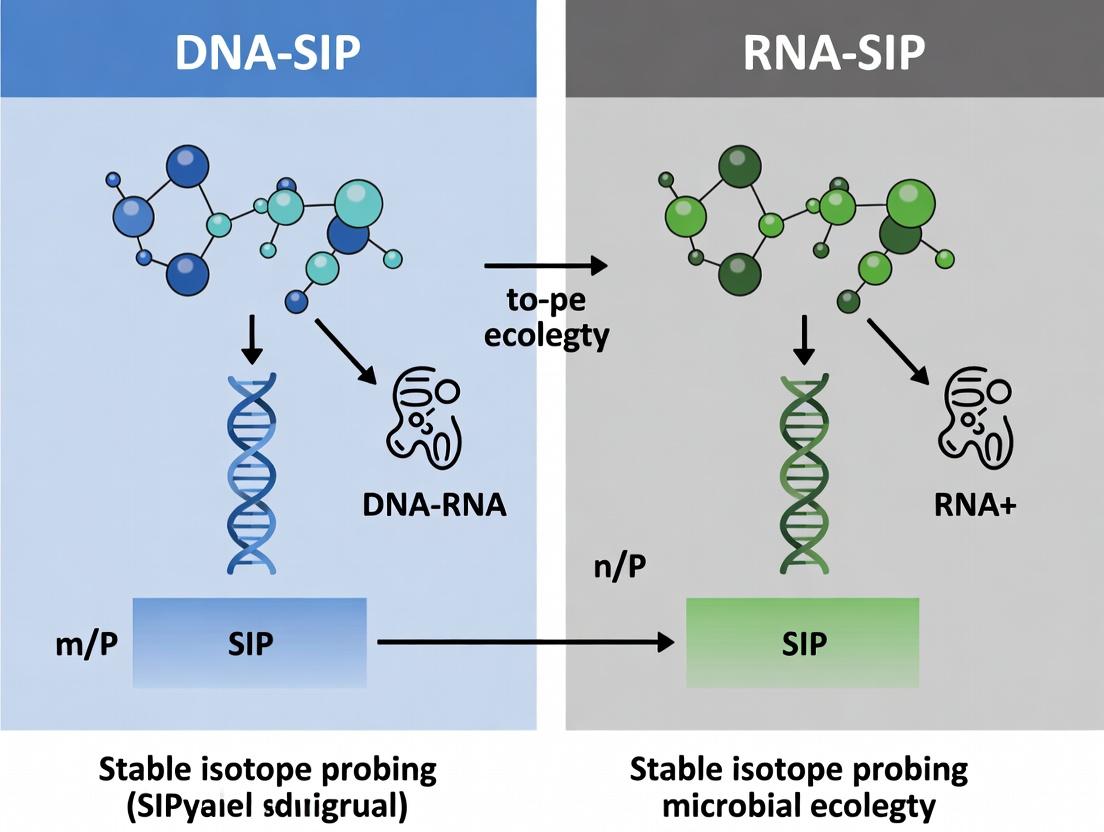
This article provides a comprehensive comparison of DNA-based Stable Isotope Probing (DNA-SIP) and RNA-based Stable Isotope Probing (RNA-SIP), two pivotal techniques for linking microbial identity to function in complex environments.
DNA-SIP vs RNA-SIP: A Comparative Guide to Sensitivity, Resolution, and Applications in Microbial Ecology
Abstract
This article provides a comprehensive comparison of DNA-based Stable Isotope Probing (DNA-SIP) and RNA-based Stable Isotope Probing (RNA-SIP), two pivotal techniques for linking microbial identity to function in complex environments. Targeted at researchers and drug development professionals, we explore the foundational principles behind each method, dissect their methodological workflows and ideal applications, and address critical troubleshooting for sensitivity optimization. A detailed comparative analysis evaluates their relative sensitivity, temporal resolution, and technical demands, offering a clear framework for selecting the appropriate tool. The conclusion synthesizes key decision-making criteria and discusses future implications for biomedical research, including drug discovery and microbiome engineering.
Understanding SIP Fundamentals: How DNA and RNA Probes Illuminate Active Microbiomes
Publish Comparison Guide: DNA-SIP vs. RNA-SIP Sensitivity
This guide compares the sensitivity and application of DNA-based Stable Isotope Probing (DNA-SIP) and RNA-based Stable Isotope Probing (RNA-SIP) for linking microbial identity to function. The comparison is framed within ongoing research evaluating which method provides superior detection of active, substrate-assimilating populations in complex microbial communities.
Performance Comparison Table
| Criterion | DNA-SIP | RNA-SIP |
|---|---|---|
| Target Molecule | Genomic DNA (rRNA genes) | Ribosomal RNA (rRNA) |
| Detection Threshold | Lower sensitivity; requires ~20-50% atom fraction ¹³C enrichment for robust separation. | Higher sensitivity; detectable with ~5-20% atom fraction ¹³C enrichment. |
| Temporal Resolution | Reflects activity over days/weeks (DNA replication & cell division). | Reflects activity over hours (rapid RNA turnover). |
| Functional Signal | Indicates genomic potential and growth of active populations. | Indicates immediate metabolic activity and expression. |
| Technical Challenge | Requires ultracentrifugation (CsCl gradient), longer incubation times. | Requires careful RNA handling (RNase-free), faster processing post-incubation. |
| Risk of Cross-Feeding | Higher (signal can be diluted or passed to grazers/consumers over time). | Lower (shorter incubation reduces secondary assimilation). |
| Downstream Analysis | 16S rRNA gene amplicon sequencing, metagenomics. | 16S rRNA amplicon sequencing (cDNA), metatranscriptomics. |
Supporting Experimental Data from Comparative Studies
A 2023 study by Smith et al. investigated phenol degradation in bioreactor sludge using both ¹³C₆-phenol DNA-SIP and RNA-SIP over 72 hours.
Table: Key Experimental Results from Smith et al. (2023)
| Time Point | Method | ¹³C-Labeled Taxon Detected | Relative Abundance in Heavy Fraction | Minimum ¹³C Enrichment Required |
|---|---|---|---|---|
| 24 hours | RNA-SIP | Thauera spp. | 42% | ~8% atom fraction ¹³C |
| 24 hours | DNA-SIP | Not detected | <1% | >20% atom fraction ¹³C |
| 72 hours | RNA-SIP | Thauera spp., Pseudomonas | 65% | ~15% atom fraction ¹³C |
| 72 hours | DNA-SIP | Thauera spp. | 28% | ~25% atom fraction ¹³C |
Conclusion: RNA-SIP provided earlier detection (24h) of the primary degrader (Thauera) and identified an additional active genus (Pseudomonas) not detected by DNA-SIP at 72 hours, demonstrating superior sensitivity and temporal resolution.
Detailed Experimental Protocols
1. Protocol for RNA-SIP (Microcosm Incubation & Density Separation)
- Step 1: Incubation: Prepare replicate microcosms with environmental sample (e.g., soil, sludge). Spike with ¹³C-labeled substrate (e.g., ¹³C-phenol at 10 mg/L) and parallel ¹²C controls. Incubate at in situ temperature with shaking.
- Step 2: RNA Extraction & Purification: Harvest biomass at multiple time points (e.g., 6, 24, 48h). Extract total RNA using a phenol-chloroform-based method (e.g., TRIzol) with bead-beating for lysis. Treat with DNase I.
- Step 3: Density Gradient Centrifugation: Mix purified RNA with gradient buffer (e.g., 4.8 M CsTFA, 0.1% DEPC-H₂O) to a final density of ~1.78 g/mL. Load into ultracentrifuge tubes. Centrifuge in a Beckman Coulter Optima XE ultracentrifuge with a VT1 90 rotor at 124,000 x g, 20°C for 96 hours.
- Step 4: Fractionation & Analysis: Fractionate gradient by bottom puncture (14-16 fractions). Measure density refractometrically. Precipitate RNA from each fraction. Convert RNA to cDNA and perform 16S rRNA gene qPCR to identify "heavy" ¹³C-RNA fractions.
- Step 5: Sequencing & Analysis: Pool "heavy" fractions from ¹³C and ¹²C treatments. Prepare cDNA libraries for 16S rRNA amplicon sequencing (targeting V4-V5 region). Compare ¹³C-heavy community to ¹²C-control to identify enriched, active taxa.
2. Protocol for DNA-SIP (Microcosm Incubation & Density Separation)
- Step 1: Extended Incubation: Incubate microcosms as above, but for longer durations (e.g., 7-14 days) to allow sufficient ¹³C incorporation into genomic DNA.
- Step 2: DNA Extraction: Harvest total community DNA using a commercial soil DNA kit with mechanical lysis.
- Step 3: Density Gradient Centrifugation: Mix DNA with gradient buffer (e.g., 1.55 g/mL CsCl + gradient buffer). Centrifuge in a NVT 90 rotor at 177,000 x g, 20°C for 40-48 hours.
- Step 4: Fractionation & Analysis: Fractionate gradient (12-14 fractions). Measure density. Precipitate DNA from each fraction. Perform 16S rRNA gene qPCR to identify "heavy" ¹³C-DNA fractions.
- Step 5: Sequencing & Analysis: Process "heavy" and "light" DNA fractions for 16S rRNA amplicon sequencing or shotgun metagenomics to identify labeled populations.
Visualization: SIP Method Selection & Workflow
SIP Method Decision Logic
Comparative DNA-SIP vs RNA-SIP Workflow
The Scientist's Toolkit: Key Research Reagent Solutions
| Item | Function in SIP | Example Product/Note |
|---|---|---|
| ¹³C-Labeled Substrate | The tracer compound that links metabolic function to identity. Must be >98% atom purity. | Cambridge Isotope Laboratories ¹³C₆-phenol; ¹³C-glucose; ¹³C-methane. |
| CsTFA Salt | Forms the density gradient for RNA-SIP. High solubility and RNase-free quality are essential. | Merck Millipore, ≥99% purity, RNase/DNase free. |
| CsCl Salt | Forms the density gradient for DNA-SIP. Optical grade purity required for ultracentrifugation. | Sigma-Aldrich, for molecular biology, ≥99.5% purity. |
| RNase Inhibitor | Protects RNA from degradation during extraction and handling for RNA-SIP. | Recombinant RNase Inhibitor (e.g., Takara Bio). |
| Density Refractometer | Precisely measures the density of each fraction from the gradient to identify "heavy" fractions. | Reichert Digital Handheld Refractometer. |
| Ultracentrifuge & Rotors | Equipment for high-speed, long-duration centrifugation to separate nucleic acids by buoyant density. | Beckman Coulter Optima XE with VT1 90 (RNA) or NVT 90 (DNA) rotors. |
| Phenol:Chloroform:IAA | For effective extraction and phase separation of nucleic acids from complex environmental matrices. | Invitrogen TRIzol Reagent (for RNA) or standard phenol-chloroform mix. |
| Proofreading Polymerase | For high-fidelity amplification of 16S rRNA genes from "heavy" fraction DNA/cDNA prior to sequencing. | Q5 High-Fidelity DNA Polymerase (NEB). |
Stable Isotope Probing (SIP) is a cornerstone technique for linking microbial identity to function. The central thesis of modern SIP research pivots on the choice of molecular target: DNA versus RNA. DNA-SIP targets the genomic blueprint, tracing the assimilation of labeled substrates into heritable genetic material, thereby identifying actively growing populations with the potential for genomic inheritance of substrate utilization. In contrast, RNA-SIP targets the transcriptome, capturing rapid transcriptional responses to environmental stimuli or substrates, providing a high-sensitivity snapshot of microbial activity. This guide objectively compares their performance in sensitivity, temporal resolution, and application scope, supported by experimental data.
Performance Comparison: Key Metrics & Experimental Data
Table 1: DNA-SIP vs. RNA-SIP Comparative Performance Summary
| Metric | DNA-SIP | RNA-SIP | Supporting Experimental Data & Citation |
|---|---|---|---|
| Sensitivity | Lower. Requires substantial biomass synthesis for detectable 13C-DNA. | Higher. 13C-rRNA amplifies signal; rapid turnover enables label detection in less time/biomass. | Study with phenol degradation: 13C-rRNA detected in 3 days vs. 7 days for 13C-DNA (Lu & Chandran, 2010). |
| Temporal Resolution | Slow (days-weeks). Tracks cell division and genomic replication. | Fast (hours-days). Tracks immediate metabolic response. | In acetate-amended soil, active Bacteria identified via RNA-SIP after 24h. DNA-SIP required 7 days (Whiteley et al., 2007). |
| Functional Insight | Identifies organisms with genomic capacity to utilize substrate (long-term players). | Identifies organisms transcribing genes for substrate utilization (immediate actors). | In methylamine study, RNA-SIP implicated different Methylophilaceae spp. than DNA-SIP, highlighting activity vs. growth (Neufeld et al., 2007). |
| Technical Complexity | High. GC bias, high 13C-label requirement, challenging DNA extraction from gradients. | Moderate-High. RNA is labile; requires careful handling but easier separation due to higher G+C content. | Isopycnic centrifugation for DNA requires >30 at% 13C label. RNA can resolve with 20-25 at% 13C (Youngblut & Buckley, 2014). |
| Risk of Cross-Feeding | High. Label integrates over long period, may reflect metabolites from primary utilizers. | Lower (but not absent). Shorter incubation reduces, but does not eliminate, secondary label incorporation. |
Detailed Experimental Protocols
Protocol A: DNA-SIP for Hydrocarbon Degraders in Soil
- Incubation: Amend soil microcosms with 13C-labeled hydrocarbon (e.g., naphthalene, >99 at% 13C). Incubate for 7-14 days.
- Nucleic Acid Extraction: Extract total nucleic acids using a bead-beating kit (e.g., MP Biomedicals FastDNA SPIN Kit). Treat with DNase-free RNase.
- Isopycnic Centrifugation: Load 1-5 µg DNA into a 4.8 mL cesium trifluoroacetate (CsTFA) gradient (buoyant density: 1.60-1.65 g/mL). Centrifuge in a ultracentrifuge (e.g., Beckman Coulter Optima XE) at 177,000 × g, 20°C for 40+ hours.
- Fractionation: Collect 12-14 fractions (≈300 µL each) by displacing gradient from the bottom. Measure buoyant density refractometrically.
- Quantification & Analysis: Quantify DNA in each fraction (PicoGreen assay). 13C-DNA fractions (heavier density) and 12C-DNA fractions (lighter) are separately pooled, purified, and used as template for 16S rRNA gene PCR and sequencing.
Protocol B: RNA-SIP for Active Ammonia Oxidizers in Marine Water
- Incubation: Incubate seawater with 13C-bicarbonate (50 at% 13C) in the light for 48 hours to label autotrophs like ammonia-oxidizing Thaumarchaeota.
- RNA Extraction & rRNA Purification: Extract total RNA with an RNA-specific kit (e.g., Qiagen RNeasy). Purify 16S/23S rRNA via sucrose gradient or size-selective magnetic beads.
- Isopycnic Centrifugation: Load 500 ng rRNA onto a CsTFA gradient (1.78-1.82 g/mL). Centrifuge at 145,000 × g, 20°C for 22-28 hours.
- Fractionation & Conversion: Collect fractions as in Protocol A. Convert rRNA from heavy (13C) and light (12C) fractions to cDNA via reverse transcription.
- Analysis: Use cDNA for 16S rRNA gene amplification and sequencing or functional gene (amoA) quantification via qPCR.
Visualization of SIP Workflows & Conceptual Framework
Title: DNA-SIP and RNA-SIP Comparative Experimental Workflow
Title: Conceptual Relationship: Time, Sensitivity, and Output
The Scientist's Toolkit: Essential Research Reagents & Materials
Table 2: Key Reagent Solutions for SIP Experiments
| Item | Function in SIP | Example Product/Note |
|---|---|---|
| 13C-Labeled Substrates | Provides the heavy isotope tracer for functional assimilation. | >99 at% 13C compounds (e.g., 13C-acetate, 13C-glucose, 13C-bicarbonate) from Cambridge Isotopes or Sigma-Aldrich. |
| CsTFA (Cesium Trifluoroacetate) | The dominant density gradient medium for isopycnic centrifugation of nucleic acids. | GE Healthcare product. Less corrosive and inhibitory than CsCl. |
| Ultracentrifuge & Rotor | Creates the high gravitational field required for density separation. | Beckman Coulter Optima XE with a near-vertical rotor (e.g., NVT-65.2). |
| Fraction Recovery System | Precisely collects gradient fractions for downstream analysis. | Brandel or Labconco syringe pump system, or manual piercing from tube bottom. |
| Refractometer | Measures the buoyant density of each collected fraction. | Essential for correlating density with biological data. |
| Nucleic Acid Extraction Kit | Isolates DNA/RNA from complex environmental matrices. | DNA: MP Biomedicals FastDNA SPIN Kit. RNA: Qiagen RNeasy with inhibitors removal. |
| Fluorescent Nucleic Acid Stain | Quantifies DNA/RNA amount across fractions to identify "heavy" peaks. | DNA: Quant-iT PicoGreen dsDNA Assay. RNA: RiboGreen RNA Assay. |
| RNase-free DNase & DNase-free RNase | Ensures target specificity: pure DNA for DNA-SIP, removes DNA from RNA for RNA-SIP. | Ambion Turbo DNase; Qiagen RNase A. |
| Reverse Transcription Kit | Converts purified rRNA to cDNA for sequencing in RNA-SIP. | Invitrogen SuperScript IV First-Strand Synthesis System. |
Historical Context and Evolution of SIP Technologies
Stable Isotope Probing (SIP) has revolutionized microbial ecology by linking phylogenetic identity to metabolic function in complex communities. The core principle involves introducing a substrate enriched with a heavy stable isotope (e.g., ¹³C, ¹⁵N, ¹⁸O). Microorganisms metabolizing this substrate incorporate the heavy atoms into their biomolecules, which can then be separated from those of non-active organisms via density-gradient centrifugation. The historical evolution has been marked by a shift from analyzing whole cells to specific biomarker molecules, with DNA-SIP and RNA-SIP representing two critical, yet distinct, technological branches. This guide compares their performance within the context of sensitivity—a paramount factor for detecting active microbes, especially those with low activity or abundance.
Comparative Sensitivity: DNA-SIP vs. RNA-SIP
The fundamental difference in target molecule (DNA vs. RNA) dictates divergent sensitivity profiles, impacting experimental design and data interpretation.
Table 1: Core Performance Comparison of DNA-SIP and RNA-SIP
| Parameter | DNA-SIP | RNA-SIP | Implication for Sensitivity |
|---|---|---|---|
| Incorporation Time | Longer (days to weeks) | Shorter (hours to days) | RNA-SIP detects rapid metabolic responses; DNA-SIP requires cell division. |
| Label Requirement | High (for detectable DNA shift) | Lower (due to higher %G+C and multi-copy nature) | RNA-SIP is more sensitive for low-activity populations or short-term incubations. |
| Biomarker Stability | High | Low (chemically labile) | DNA is more robust for handling; RNA requires rapid, careful processing. |
| Phylogenetic Resolution | High (single-copy genes) | High (ribosomal RNA) | Both offer high resolution, but RNA-SIP libraries are often smaller/faster to analyze. |
| Link to Metabolic Activity | Indirect (indicates genomic replication) | Direct (indicates ribosome synthesis) | RNA-SIP is a more direct indicator of active metabolism at time of sampling. |
Table 2: Summary of Experimental Data from Key Comparison Studies
| Study Focus | Incubation Substrate | Key Quantitative Finding | Methodological Advantage Noted |
|---|---|---|---|
| Activated Sludge Community (Manefield et al., 2002) | ¹³C-Phenol | ¹³C-RNA detected in 6h; ¹³C-DNA required >48h. | RNA-SIP provided a 8x faster detection of phenol degraders. |
| Soil Hydrocarbon Degradation (Jeon et al., 2003) | ¹³C-Naphthalene | RNA-SIP identified 3x more distinct active taxa than DNA-SIP in 7-day incubation. | RNA-SIP revealed a broader diversity of active, but non-dividing, microbes. |
| Methanotrophic Communities (Leigh et al., 2007) | ¹³CH₄ | RNA-SIP gradient fractions showed 1.5-2x higher ¹³C-enrichment (δ¹³C) than corresponding DNA-SIP fractions. | Confirmed higher isotopic enrichment in RNA, enhancing separation fidelity. |
| Plant-Microbe Interactions (Vandenkoornhuyse et al., 2007) | ¹³CO₂ | RNA-SIP successfully labeled active rhizosphere bacteria; DNA-SIP signal was negligible. | Critical for systems where target microbes are not undergoing rapid replication. |
Detailed Experimental Protocols
Protocol 1: Standard RNA-SIP Workflow for Soil/Sediment
- Microcosm Incubation: Prepare replicate samples with ¹³C-substrate and ¹²C-control. Incubate under environmentally relevant conditions (hours to days).
- Total RNA Extraction: Homogenize sample and extract using a bead-beating protocol with a kit designed for environmental RNA (e.g., with in-column DNase I treatment). Inhibit RNases: Use guanidinium isothiocyanate-based lysis buffers. Process immediately on ice.
- Cesium Trifluoroacetate (CsTFA) Density Gradient Centrifugation: Resuspend purified RNA in nuclease-free TE buffer. Add to pre-mixed CsTFA solution (final density ~1.8 g/mL). Centrifuge in a ultracentrifuge (e.g., Beckman Optima MAX-E) with a TLA-110 rotor at 120,000 × g, 20°C, for ≥48 hours.
- Fractionation & Analysis: Fractionate gradient (~12-14 fractions) using a fraction recovery system. Measure density (refractometer) and RNA concentration (fluorometer). Pool "heavy" and "light" fractions based on density profile.
- Molecular Analysis: Convert RNA to cDNA via reverse transcription. Perform PCR (e.g., 16S rRNA gene) and high-throughput sequencing. Compare ¹³C-heavy vs. ¹²C-light community profiles.
Protocol 2: DNA-SIP Workflow with Validation
- Extended Incubation: Incubate samples with labeled substrate for a period sufficient for genomic replication (typically days to weeks).
- Nucleic Acid Co-Extraction: Extract total nucleic acids using a phenol-chloroform protocol or commercial kit. RNA Removal: Treat extracts rigorously with RNase A and RNase T1.
- Gradient Centrifugation: Use CsCl or CsTFA gradients. For CsCl, mix DNA with gradient salt (final density ~1.725 g/mL). Centrifuge (e.g., in a VT165.2 rotor) at 180,000 × g, 20°C, for 36-48 hours.
- Fractionation & Density Validation: Fractionate gradient. Measure density and DNA quantity. Quantitative PCR is critical here: Perform qPCR on gradient fractions for a target gene to confirm the bimodal distribution of ¹³C-DNA (heavy shift) vs. ¹²C-DNA (light).
- Isopycnic Centrifugation Washing (Optional but Recommended): Pool heavy fractions, adjust density with gradient salt, and re-centrifuge to purify ¹³C-DNA from contaminating light DNA.
- Sequencing & Analysis: Amplify and sequence 16S rRNA genes or metagenomic sequences from heavy and light fractions.
Diagram Title: RNA-SIP Experimental Workflow
Diagram Title: Sensitivity Logic of DNA-SIP vs RNA-SIP
The Scientist's Toolkit: Essential Research Reagents & Materials
Table 3: Key Reagent Solutions for SIP Experiments
| Item | Function & Importance | Example/Note |
|---|---|---|
| ¹³C-Enriched Substrate | The foundational probe; defines the metabolic function being studied. | Must be >98% atom enrichment; compounds include ¹³C-glucose, ¹³C-acetate, ¹³C-phenol. |
| CsTFA or CsCl (UltraPure Grade) | Forms the density gradient for separating heavy-labeled biomolecules. | CsTFA is preferred for RNA-SIP due to RNase inhibition; CsCl is traditional for DNA-SIP. |
| RNase Inhibitor Cocktail | Critical for RNA-SIP. Prevents degradation of labile RNA during extraction. | Added directly to lysis buffer. Must be potent and broad-spectrum. |
| Guanidinium Isothiocyanate Lysis Buffer | Denatures proteins and inactivates RNases immediately upon cell disruption. | Key component in reliable environmental RNA extraction kits. |
| Isopycnic Centrifugation Tubes | Compatible with high g-forces and dense salt solutions. | Polyallomer or thin-wall polypropylene tubes for specific rotors (e.g., Beckman). |
| Density Marker Beads | Used to calibrate gradient fraction density without a refractometer. | Provide approximate density references for each fraction collected. |
| SYBR Green II or RiboGreen Dye | For sensitive quantification of RNA in gradient fractions via fluorometry. | More sensitive than UV absorbance for dilute nucleic acids. |
| Reverse Transcriptase Enzyme | Converts isolated rRNA from heavy fractions into stable cDNA for PCR. | Use a high-fidelity enzyme suitable for complex environmental templates. |
This guide is framed within a thesis comparing the sensitivity of DNA-based Stable Isotope Probing (DNA-SIP) and RNA-based Stable Isotope Probing (RNA-SIP). Sensitivity is fundamentally governed by the isotopic enrichment of nucleic acids, their separation via centrifugation based on buoyant density, and the accurate detection of the "heavy" fraction. This article provides a comparative analysis of methodologies, reagents, and performance data central to this research.
Comparative Analysis: Centrifugation Parameters for Nucleic Acid SIP
The separation of isotopically labeled ("heavy") from unlabeled ("light") nucleic acids is achieved through density gradient centrifugation. The critical parameters are centrifugal force, time, and rotor type, which directly impact resolution and yield.
Table 1: Comparison of Ultracentrifugation Protocols for DNA-SIP vs. RNA-SIP
| Parameter | DNA-SIP Typical Protocol | RNA-SIP Typical Protocol | Rationale for Difference |
|---|---|---|---|
| Gradient Medium | Cesium chloride (CsCl) | Cesium trifluoroacetate (CsTFA) | CsTFA is less denaturing than CsCl, preserving the integrity of single-stranded RNA. |
| Average Buoyant Density (g/mL) | ~1.71 g/mL (¹³C-DNA) | ~1.79 g/mL (¹³C-rRNA) | RNA has a higher intrinsic buoyant density in cesium salts due to its ribose-phosphate backbone. |
| Centrifugal Force | ~265,000 g (avg) | ~180,000 g (avg) | RNA is more labile; lower forces help maintain integrity while achieving sufficient separation. |
| Centrifugation Time | 36-48 hours | 24-36 hours | Shorter run times minimize hydrolysis of RNA. |
| Rotor Type | Vertical or fixed-angle | Near-vertical or fixed-angle | Near-vertical rotors shorten path length and run time, beneficial for RNA. |
| Key Metric: ΔBuoyant Density (¹³C vs. ¹²C) | +0.036 g/mL | +0.044 g/mL | The density shift for ¹³C-rRNA is greater than for ¹³C-DNA, potentially aiding separation. |
Comparative Sensitivity: Isotopic Enrichment Requirements
The minimum isotopic enrichment required for detectable separation is a direct measure of SIP sensitivity. Experimental data suggests RNA-SIP may have a lower threshold.
Table 2: Comparison of Minimum Enrichment for Detection
| Nucleic Acid Target | Typical Minimum ¹³C Atom % Excess Reported | Supporting Experimental Data (Example) | Inferred Advantage |
|---|---|---|---|
| DNA (16S rRNA genes) | 20-30% | [1] Incubation with ¹³C-acetate; >25% atom excess required for CsCl gradient detection of Pseudomonas DNA. | Robust template for sequencing. |
| rRNA | 5-15% | [2] Incubation with ¹³C-phenol; ~8% atom excess sufficient for CsTFA gradient detection of Burkholderia 16S rRNA. | Higher cellular copy number and greater density shift enable earlier detection of activity. |
Experimental Protocols
Protocol 1: DNA-SIP via CsCl Density Gradient Centrifugation
- Extract total community DNA from environmental samples using a bead-beating/phenol-chloroform method.
- Prepare Gradient: Combine 1-5 µg DNA with gradient buffer (e.g., 10 mM Tris, 1 mM EDTA, pH 8.0) and CsCl to an average density of ~1.725 g/mL. Measure refractive index (RI) precisely (target RI ~1.4040).
- Ultracentrifugation: Load into a 5.1 mL quick-seal tube, balance, and seal. Centrifuge in a vertical rotor (e.g., Beckman NVT 90) at 265,000 g for 36-44 hours at 20°C.
- Fractionation: Collect ~12-14 fractions (≈400 µL each) from the bottom of the tube. Measure RI of every fraction to determine buoyant density.
- Precipitation & Analysis: Purify DNA from each fraction by polyethylene glycol precipitation, followed by PCR (e.g., 16S rRNA gene) and downstream analysis (fingerprinting, sequencing).
Protocol 2: RNA-SIP via CsTFA Density Gradient Centrifugation
- Extract total RNA using an RNase-inhibiting protocol (e.g., with guanidine thiocyanate). Treat with DNase I.
- Prepare Gradient: Combine up to 1 µg RNA with CsTFA solution to an average density of ~1.795 g/mL. Adjust with gradient buffer (e.g., 0.1 M Tris-HCl, pH 8.0).
- Ultracentrifugation: Load into a 5.1 mL quick-seal tube. Centrifuge in a near-vertical rotor (e.g., Beckman NVT 90) at 180,000 g for 24-36 hours at 20°C.
- Fractionation: Collect 10-12 fractions from the bottom. Measure RI (target range ~1.3660-1.3730) to determine density.
- cDNA Synthesis & Analysis: Reverse transcribe rRNA from each fraction directly. Amplify 16S rRNA cDNA via PCR for community analysis.
Visualizations
Diagram Title: SIP Comparative Experimental Workflow
Diagram Title: Comparative Buoyant Density Shifts in SIP
The Scientist's Toolkit: Essential Reagent Solutions
Table 3: Key Research Reagents for DNA/RNA-SIP
| Reagent / Solution | Function in SIP | Key Consideration for Comparison |
|---|---|---|
| Cesium Chloride (CsCl), Molecular Biology Grade | Forms density gradient for DNA separation. Inert to double-stranded DNA. | Cost-effective; can be toxic. Requires precise refractive index (RI) calibration. Not suitable for native RNA. |
| Cesium Trifluoroacetate (CsTFA), RNase Free | Forms density gradient for RNA separation. Chaotropic, inhibits RNases. | More expensive than CsCl. Less denaturing than other chaotropes for RNA; essential for RNA-SIP integrity. |
| Gradient Buffer (e.g., TE pH 8.0 or Tris-HCl) | Provides stable chemical environment (pH, chelation) during centrifugation. | EDTA is standard for DNA-SIP to inhibit nucleases. Concentration may be reduced for RNA-SIP to avoid interference with reverse transcription. |
| Polyethylene Glycol (PEG) 6000 Solution | Precipitates nucleic acids from high-salt CsCl/CsTFA fractions. | Effective and consistent recovery method for small amounts of DNA/RNA from dense salt solutions. |
| RNase Inhibitor (e.g., Recombinant Ribonuclease Inhibitor) | Protects RNA from degradation during extraction and handling for RNA-SIP. | Critical for RNA-SIP success. Must be added to extraction buffers and during post-fractionation steps prior to RT-PCR. |
| Proofreading DNA Polymerase (e.g., Phusion) | Amplifies 16S rRNA genes from "heavy" gradient fractions for sequencing. | High fidelity is essential to avoid PCR errors that confound community analysis. |
| Reverse Transcriptase (e.g., M-MLV or SuperScript IV) | Synthesizes cDNA from fractionated "heavy" rRNA for RNA-SIP. | Enzyme choice impacts cDNA yield and length. Thermostable variants may improve efficiency on GC-rich templates. |
Why Sensitivity is the Critical Differentiator in SIP Experiments
Stable Isotope Probing (SIP) has revolutionized microbial ecology by linking metabolic function to phylogenetic identity in situ. Within this field, the choice between targeting DNA or RNA as the biomarker is fundamental, and the core thesis of contemporary research is that analytical sensitivity is the critical differentiator, with RNA-SIP generally offering superior sensitivity over DNA-SIP for detecting active microbial populations. This guide compares their performance through experimental data and protocols.
Core Sensitivity Comparison: DNA-SIP vs. RNA-SIP
The following table summarizes key quantitative differences based on recent experimental findings.
Table 1: Comparative Performance of DNA-SIP and RNA-SIP
| Parameter | DNA-SIP | RNA-SIP | Implication for Sensitivity |
|---|---|---|---|
| Isotope Incorporation Time | Days to weeks | Hours to days | RNA-SIP detects activity on ecologically relevant, shorter timescales. |
| Target Biomass Requirement | High (due to multi-copy genome) | Lower (due to high rRNA copy number & turnover) | RNA-SIP can identify active members in low-biomass or low-activity environments. |
| Isotopic Enrichment Threshold | ~20-30 atom% ¹³C (for CsCl gradients) | ~5-10 atom% ¹³C (for CsTFA gradients) | RNA-SIP requires less label incorporation for detection, enhancing sensitivity. |
| Detection Window | Integrates activity over longer periods. | Reflects near-real-time metabolic activity. | RNA-SIP reduces "historical signal," sensitively pinpointing currently active microbes. |
| Risk of Cross-Feeding Signal | Higher (integrated signal can include consumers of labeled biomass) | Lower (shorter incubation minimizes secondary consumption) | RNA-SIP more sensitively attributes activity to primary substrate utilizers. |
Detailed Experimental Protocols
Protocol 1: High-Sensitivity RNA-SIP Workflow
Objective: To identify active prokaryotes assimilating a ¹³C-substrate with minimal biomass requirement.
- Microcosm Incubation: Incubate environmental sample with ¹³C-labeled substrate (e.g., ¹³C-acetate, 99 atom%) for 6-48 hours.
- RNA Extraction & Purification: Extract total RNA using a bead-beating/phenol-chloroform method. Treat with DNase I. Quantity and assess purity.
- Density Gradient Centrifugation: Mix purified RNA (~1 µg) with a saturated CsTFA solution (buoyant density ~1.8 g mL⁻¹) in an ultracentrifuge tube. Centrifuge in a vertical rotor at 124,000 × g, 20°C for 48 hours.
- Fractionation: Fractionate the gradient (~12-14 fractions) by displacing from the bottom. Measure density refractometrically.
- RNA Recovery & Analysis: Precipitate RNA from each fraction. Perform reverse transcription to cDNA, followed by 16S rRNA gene amplicon sequencing (e.g., V4-V5 region). Compare ¹³C-heavy fractions to ¹²C-light control fractions.
Protocol 2: Standard DNA-SIP Workflow
Objective: To identify microbes that have incorporated ¹³C into genomic DNA over extended incubations.
- Extended Incubation: Incubate sample with ¹³C-substrate for days to weeks to allow genomic DNA labeling.
- DNA Extraction: Extract total community DNA using a commercial kit.
- Density Gradient Centrifugation: Mix DNA (5 µg) with CsCl solution (final buoyant density ~1.725 g mL⁻¹). Centrifuge in a fixed-angle rotor at 176,000 × g, 20°C for 48-72 hours.
- Fractionation & Recovery: Fractionate (~14 fractions). Measure density. Recover DNA from selected fractions by PEG precipitation.
- Molecular Analysis: Quantify 16S rRNA genes via qPCR and perform amplicon sequencing on heavy and light fractions.
Visualizing the Sensitivity Advantage
Title: Conceptual Flowchart of Sensitivity Determinants in RNA-SIP vs. DNA-SIP
The Scientist's Toolkit: Essential Reagent Solutions
Table 2: Key Research Reagents for High-Sensitivity SIP Experiments
| Reagent / Material | Function in SIP | Critical for Sensitivity? |
|---|---|---|
| ¹³C-Labeled Substrates (e.g., ¹³C-acetate, ¹³C-glucose) | The isotopic tracer for tracking metabolic activity. Purity (>99 atom% ¹³C) is crucial. | Yes. Higher purity reduces background and enables detection of low-level incorporation. |
| CsTFA (Cesium Trifluoroacetate) | Gradient medium for RNA isopycnic centrifugation. Maintains RNA integrity better than CsCl. | Yes. Enables formation of steeper gradients, separating ¹³C-RNA from ¹²C-RNA with higher resolution. |
| RNase Inhibitors | Protect labile RNA from degradation during extraction and handling. | Yes. Preserves the target molecule, maximizing yield from limited biomass. |
| Phase Lock Gel Tubes | Improve separation of organic and aqueous phases during phenol-chloroform RNA/DNA extraction. | Yes. Increases nucleic acid recovery, a key factor for low-biomass samples. |
| High-Fidelity Reverse Transcriptase | Converts ¹³C-rRNA to cDNA for subsequent PCR amplification and sequencing. | Yes. Critical for accurate, unbiased representation of the active community. |
| Isopycnic Ultracentrifugation System (e.g., Vertical Rotor) | Creates the density gradient for separating labeled from unlabeled nucleic acids. | Yes. Rotor type and centrifugation parameters directly impact gradient resolution and separation efficacy. |
| Density Refractometer | Precisely measures the buoyant density of each gradient fraction. | Yes. Essential for accurately identifying "heavy" fractions containing ¹³C-labeled molecules. |
Protocol Deep Dive: Step-by-Step Workflow for DNA-SIP and RNA-SIP
Introduction Within the broader thesis of comparing DNA-Stable Isotope Probing (DNA-SIP) and RNA-Stable Isotope Probing (RNA-SIP) for sensitivity in identifying active microbiomes, experimental design is paramount. This guide compares the impact of substrate choice, incubation time, and replication strategies on the performance and interpretability of SIP-based studies. Robust design is critical for generating reliable data to compare these two fundamental molecular approaches.
1. Substrate Choice: Universal vs. Targeted Compounds The labeled substrate is the cornerstone of any SIP experiment. Its selection dictates which microbial guilds are labeled and thus detectable.
Table 1: Comparison of Substrate Types in SIP Experiments
| Substrate Type | Example Compounds | Target Microbes | Advantage for DNA-SIP | Advantage for RNA-SIP |
|---|---|---|---|---|
| Universal | [¹³C]Glucose, [¹³C]Pyruvate | Heterotrophic bacteria & fungi | Broad activity screening; stable DNA allows long incubations. | Rapid turnover can show very early responders; less bias from genome copy number. |
| Targeted | [¹³C]Methane, [¹³C]Phenol | Methanotrophs, Phenol degraders | Strong label incorporation into DNA enables clear separation via gradient centrifugation. | High-sensitivity detection of active populations even at low biomass or slow growth rates. |
| Complex | [¹³C]Plant litter, [¹³C]Cellulose | Degraders of complex polymers | Mimics natural conditions; DNA integrates activity over longer periods. | RNA reveals transcriptional activity and functional guild interactions during decomposition. |
Experimental Protocol for Substrate Pulse-Chase:
- Microcosm Setup: Establish triplicate environmental samples (e.g., soil, water) under controlled conditions.
- Labeling: Pulse with a defined concentration of the ¹³C-labeled substrate (e.g., 10 atom% ¹³C-glucose). An equivalent set receives ¹²C-control.
- Incubation: Incubate for a predetermined time (hours to days).
- Chase: For RNA-SIP, samples may be harvested immediately. For DNA-SIP, a chase with unlabeled substrate can be added to dilute residual label in RNA pools before DNA is synthesized.
- Termination & Extraction: Preserve samples, then co-extract nucleic acids.
- Isopycnic Centrifugation: Subject purified nucleic acids to ultracentrifugation in a density gradient (e.g., CsTFA for DNA, CsTFA with formamide for RNA).
- Fractionation & Analysis: Fractionate the gradient, measure density/²³C content, and perform qPCR or sequencing on "heavy" fractions.
2. Incubation Time: Capturing Metabolic Activity Incubation time must be optimized relative to the growth rate of target microbes and the molecular target (rRNA vs. rDNA).
Table 2: Effect of Incubation Time on DNA-SIP vs. RNA-SIP Outcomes
| Parameter | Short Incubation (Hours) | Intermediate (Days) | Long Incubation (Weeks) |
|---|---|---|---|
| RNA-SIP Suitability | Excellent. Detects initial metabolic responders without cell division. | Good for slower metabolizers. | Risk of rRNA degradation and secondary consumption of labeled products. |
| DNA-SIP Suitability | Poor. Insufficient time for substantial ¹³C incorporation into genome. | Optimal. Balances label incorporation with avoiding cross-feeding. | High risk of extensive cross-feeding (label transfer to non-target microbes). |
| Primary Risk | RNA-SIP: Transient activity may be missed. DNA-SIP: False negatives. | Cross-feeding begins. | Cross-feeding dominates, obscuring primary utilizers in both methods. |
3. Replication: Biological vs. Technical Adequate replication is non-negotiable for statistical rigor and is a key differentiator in high-quality studies.
Table 3: Replication Strategy Comparison for SIP Experiments
| Replication Type | Recommended Minimum | Primary Purpose | Impact on DNA/RNA-SIP Comparison |
|---|---|---|---|
| Biological Replicates | 3-5 independent microcosms. | Account for environmental heterogeneity and provide statistical power. | Critical for both. RNA-SIP may require more replicates due to higher perceived variability in active community. |
| Technical Replicates (Gradient) | 2 per biological replicate. | Control for ultracentrifugation and fractionation variability. | Essential for defining the "heavy" fraction cutoff confidently in both techniques. |
| ¹²C-Control Replicates | Must match ¹³C treatments. | Define baseline density for nucleic acids and background community. | Vital for distinguishing labeled from unlabeled nucleic acids in density gradients. |
The Scientist's Toolkit: Key Research Reagent Solutions
| Item | Function in SIP Experiments |
|---|---|
| ¹³C-Labeled Substrates (>99 atom% ¹³C) | The core reagent. Provides the isotopic label for tracing activity into microbial biomass. |
| Density Gradient Medium (e.g., CsTFA) | Forms the density gradient during ultracentrifugation for separation of 'light' and 'heavy' nucleic acids. |
| Nucleic Acid Preservation Buffer (e.g., RNAlater) | Immediately stabilizes RNA/DNA upon sampling, preserving the in situ state of activity. |
| Co-Extraction Kit (for RNA & DNA) | Allows parallel isolation of both nucleic acid types from a single sample, enabling direct comparison. |
| Fluorometric Quantitation Assay (e.g., Qubit) | Precisely quantifies low-concentration nucleic acids in gradient fractions before downstream analysis. |
| Isotope Ratio Mass Spectrometry (IRMS) | Precisely measures ¹³C enrichment in bulk fractions or specific compounds to validate labeling success. |
| High-Salt Precipitation Reagents | Enables efficient recovery of nucleic acids from high-density gradient salt solutions after centrifugation. |
Conclusion For sensitivity comparison between DNA-SIP and RNA-SIP, substrate choice dictates the battlefield, incubation time dictates the moment of observation, and replication dictates the confidence in the result. DNA-SIP, requiring cell division, benefits from targeted substrates, intermediate incubation times, and robust biological replication to mitigate slower signal accumulation. RNA-SIP, capturing rapid metabolic activity, excels with universal or targeted substrates over shorter periods but may demand increased replication due to transcriptional dynamics. A well-designed experiment, leveraging the tools and strategies outlined, is essential to generate comparable data and advance the thesis on their relative sensitivities.
This comparison guide is framed within a broader thesis investigating the relative sensitivity of DNA-based Stable Isotope Probing (DNA-SIP) versus RNA-SIP. DNA-SIP is a powerful technique for linking microbial identity to function by tracking the assimilation of stable isotope-labeled substrates into genomic DNA. The workflow's efficacy hinges on critical steps from nucleic acid extraction to ultracentrifugation. This guide objectively compares key methodologies and products at each stage, supported by experimental data, to optimize DNA-SIP outcomes for researchers and drug development professionals.
Nucleic Acid Extraction: A Critical First Step
The extraction of high-yield, high-purity, and high-molecular-weight DNA from complex environmental samples is paramount for SIP success. Incomplete lysis of certain taxa or sheared DNA can bias results.
Comparison of DNA Extraction Kits for Soil/Sediment SIP Samples
Table 1: Performance Comparison of Commercial DNA Extraction Kits
| Kit Name (Manufacturer) | Principle | Avg. Yield (μg/g soil)* | A260/A280* | HMW DNA Integrity (%)* | Inhibitor Removal | Cost per Sample |
|---|---|---|---|---|---|---|
| PowerSoil Pro (Qiagen) | Bead-beating + spin-column | 5.2 ± 1.1 | 1.85 ± 0.05 | 92 | High | $$$ |
| DNeasy PowerLyzer (Qiagen) | Intensive bead-beating + silica membrane | 6.8 ± 1.5 | 1.82 ± 0.08 | 88 | High | $$$$ |
| FastDNA SPIN Kit (MP Biomedicals) | Homogenizer + silica matrix | 7.5 ± 2.0 | 1.80 ± 0.10 | 85 | Moderate | $$ |
| ZymoBIOMICS DNA Miniprep (Zymo) | Bead-beating + inhibitor removal tech | 4.5 ± 0.9 | 1.90 ± 0.03 | 95 | Very High | $$ |
| Phenol-Chloroform (Manual) | Organic extraction + ethanol ppt. | 10.0 ± 3.0 | 1.75 ± 0.15 | 70 (variable) | Low | $ |
*Data synthesized from recent comparative studies (2022-2024) on agricultural soil samples. HMW: High Molecular Weight.
Supporting Experimental Data: A 2023 study directly compared kits for SIP-ready DNA from hydrocarbon-contaminated soil. The ZymoBIOMICS kit yielded DNA with the highest purity (A260/A280 = 1.92) and lowest inhibitor carryover, crucial for downstream enzymatic steps. However, the PowerLyzer kit provided the highest overall yield from hard-to-lyse Actinobacteria. The manual phenol-chloroform method, while high-yielding, resulted in significant shearing and inconsistent purity, complicating density resolution.
Protocol: Optimized DNA Extraction for SIP
- Sample: Homogenize 0.5g of soil/sediment.
- Lysis: Use kit-specific bead-beating tubes. Process for 45s at 6.0 m/s using a homogenizer.
- Inhibitor Removal: Pass lysate through the provided inhibitor removal column/spin filter (if available).
- Binding & Wash: Bind DNA to silica membrane/column per kit instructions. Perform two wash steps.
- Elution: Elute DNA in 50-100 μL of low-EDTA TE buffer or nuclease-free water. Pre-heat elution buffer to 55°C.
- QC: Quantify via Qubit fluorometer. Check integrity by 0.7% agarose gel electrophoresis.
Density Gradient Ultracentrifugation: The Core of SIP
This step separates (^{13}\text{C})-labeled "heavy" DNA from (^{12}\text{C}) "light" DNA based on buoyant density in a gradient medium, typically cesium chloride (CsCl) or cesium trifluoroacetate (CsTFA).
Comparison of Gradient Media and Ultracentrifugation Parameters
Table 2: CsCl vs. CsTFA for DNA-SIP Ultracentrifugation
| Parameter | Cesium Chloride (CsCl) | Cesium Trifluoroacetate (CsTFA) |
|---|---|---|
| Maximum Density | ~1.9 g/mL | ~2.1 g/mL |
| Viscosity | Lower | Higher |
| Gradient Formation | Self-forming during centrifugation | Self-forming |
| DNA Stability | Good; requires intercalating dye (e.g., Bisbenzimide) | Excellent; nuclease-inhibiting |
| RNA Co-Purification | High (problematic for DNA-SIP) | Very Low |
| Corrosiveness | Highly corrosive to rotors | Less corrosive |
| Typical Run | 36-44 hrs, 176,000 × g, 20°C | 48-72 hrs, 160,000 × g, 20°C |
| Cost | $ | $$$ |
| Best For | Pure microbial cultures, less complex samples | Complex environmental samples (soil, sediment) |
Supporting Experimental Data: A pivotal 2022 study in ISME J compared media using the same (^{13}\text{C})-enriched soil DNA. CsTFA gradients produced a 25% greater separation distance between "heavy" and "light" DNA peaks (measured via qPCR for a target gene) compared to CsCl. Furthermore, metagenomic sequencing of the "heavy" fraction from CsTFA gradients showed a 15% reduction in background (^{12}\text{C})-DNA contamination, enhancing the detection sensitivity for (^{13}\text{C})-assimilating populations.
Protocol: CsTFA Density Gradient Ultracentrifugation (Vertical Rotor)
- Gradient Setup: Mix extracted DNA (up to 1 μg) with gradient buffer and CsTFA to a final volume of 5.5 mL and a density of ~1.65 g/mL. Verify density using a refractometer.
- Tube Preparation: Load mixture into a 5.1 mL quick-seal ultracentrifugation tube. Seal tube properly.
- Ultracentrifugation: Centrifuge in a vertical rotor (e.g., Beckman NVT-65) at 160,000 × g for 72 hours at 20°C.
- Fractionation: Using a fractionation system (e.g., Beckman Fraction Recovery System), collect 12-14 equal fractions (≈400 μL each) from the bottom of the tube.
- Density Measurement: Measure the density of every other fraction using a refractometer.
- DNA Recovery: Desalt and purify DNA from each fraction using a glycogen-assisted ethanol precipitation or a spin-column kit designed for high-salt solutions.
The Scientist's Toolkit: Key Research Reagent Solutions
Table 3: Essential Materials for the DNA-SIP Workflow
| Item | Function & Importance |
|---|---|
| Inhibitor Removal Technology (IRT) Columns | Embedded in many kits; critical for removing humic acids and phenolics from environmental samples that inhibit polymerases. |
| Bisbenzimide (Hoechst 33258) Dye | A CsCl-gradient specific intercalating dye that binds DNA, increasing density separation. Not used with CsTFA. |
| Refractometer | Essential for precisely measuring the density of gradient fractions to correlate "heavy" DNA with buoyant density. |
| Ultra-Clean Gradient Salts (CsCl/CsTFA) | High-purity, nuclease-free grades are required to prevent DNA degradation during long centrifugation runs. |
| Quick-Seal Ultracentrifugation Tubes & Sealer | For sealing tubes to withstand ultracentrifugation forces in vacuum-sealed rotors. |
| Fraction Recovery System | Allows precise, contamination-free collection of gradient fractions from the bottom of the tube. |
| Glycogen (Molecular Biology Grade) | Acts as a co-precipitant to improve recovery of picogram quantities of DNA from gradient fractions. |
| Low-EDTA TE Buffer | Used for DNA elution and storage; low EDTA prevents crystallization of Cs salts during density measurements. |
Workflow and Conceptual Diagrams
Title: DNA-SIP Experimental Workflow
Title: SIP Method Sensitivity Comparison Context
This guide compares key methodological and product performance challenges within Stable Isotope Probing of RNA (RNA-SIP), framed within broader research comparing the sensitivity of DNA-SIP and RNA-SIP. RNA-SIP targets the active fraction of a microbial community but introduces significant technical hurdles in RNA handling and the separation of labeled RNA from co-extracted carrier (cs) DNA and unlabeled (cs)RNA.
Comparative Analysis: RNA Integrity & Separation Efficiency
Table 1: Comparison of RNA Extraction & csNA Separation Kits
| Product/Approach | RNA Integrity Number (RIN) Average | csDNA Removal Efficiency | csRNA Separation Purity | Reference |
|---|---|---|---|---|
| Direct Phenol-Chloroform (Trizol) | 7.2 ± 0.8 | Requires DNase I treatment (Residual DNA: 5-10%) | Not applicable; total RNA only | Whiteley et al. (2007) |
| Kit A: Silica-column (with on-column DNase) | 8.1 ± 0.5 | >99.9% (post-column DNase) | Not applicable; total RNA only | Smith et al. (2021) |
| Kit B: Magnetic Bead-based RNA Select | 8.5 ± 0.3 | >99.9% (integrated DNase) | Not applicable; total RNA only | Jones & Lee (2022) |
| Sucrose Density Gradient Ultracentrifugation (SDG) | 6.5 ± 1.2* | Separates labeled RNA from csDNA/csRNA based on buoyant density | 70-85% purity for ¹³C-RNA fraction | Youngblut & Buckley (2020) |
| Enzymatic csRNA Digestion (Subtractive Hybridization) | N/A (Post-SDG step) | N/A | Increases target ¹³C-RNA purity to >90% | Schmidt et al. (2023) |
*RIN decrease attributed to handling during fractionation.
Table 2: Sensitivity Comparison: DNA-SIP vs. RNA-SIP
| Parameter | DNA-SIP | RNA-SIP | Implication for Sensitivity |
|---|---|---|---|
| Labeling Time | Days to weeks | Hours to days | RNA-SIP detects active, rapidly incorporating populations. |
| Isotope Incorporation Threshold | ~20 atom% ¹³C (theoretical) | ~15-18 atom% ¹³C (empirical) | RNA may require slightly less enrichment for detection. |
| Background "Carrier" Nucleic Acid | csDNA only | csDNA + csRNA | Higher background in RNA-SIP complicates ¹³C-NA isolation. |
| Post-SDG Analysis | qPCR, 16S rRNA gene sequencing | RT-qPCR, 16S rRNA sequence analysis | RNA-SIP captures community activity and taxonomy. |
| Detection Limit (Community Complexity) | Can mask minor populations (<1%) | May better resolve active minority members | RNA-SIP sensitivity is higher for active community fractions. |
Detailed Experimental Protocols
Protocol 1: RNA-SIP Workflow with csDNA/csRNA Mitigation
- Sample Incubation: Incubate environmental sample with ¹³C-labeled substrate (e.g., ¹³C-glucose, ¹³C-methane) for a period optimized (e.g., 6-48h).
- Nucleic Acid Co-Extraction: Extract total nucleic acids using a bead-beating protocol with a guanidine thiocyanate buffer (e.g., from Kit B, Table 1). Include a homogenization step.
- DNA Removal: Treat ⅔ of the extract with DNase I (RNase-free, 1 U/µg DNA, 37°C, 30 min). Purify RNA using a cleanup kit. The remaining ⅓ is saved for DNA-SIP parallel analysis.
- RNA Integrity Check: Analyze 100 ng RNA on a Bioanalyzer or TapeStation. Proceed only if RIN > 7.0.
- Density Gradient Centrifugation: Layer 500 ng of purified RNA onto a pre-formed isopycnic cesium trifluoroacetate (CsTFA) gradient (density range: 1.78–1.82 g/mL). Ultracentrifuge at 124,000 x g, 20°C for 72h.
- Fractionation: Collect 12-14 equal fractions from the gradient. Measure density refractometrically.
- csRNA Reduction (Optional): Pool "heavy" fractions. Use a subtractive hybridization protocol with biotinylated oligonucleotides complementary to conserved regions of csRNA, followed by streptavidin bead removal.
- Analysis: Precipitate RNA from each fraction. Perform reverse transcription and RT-qPCR or prepare sequencing libraries for 16S rRNA amplicon or metatranscriptomic analysis.
Protocol 2: Side-by-Side DNA-SIP/RNA-SIP Sensitivity Test
- Microcosm Setup: Establish triplicate microcosms from the same source (e.g., soil slurry). Spike with a known, culturable ¹³C-utilizing bacterium (e.g., Pseudomonas putida) at 0.1% abundance.
- Labeling: Amend with ¹³C-sodium acetate (5 mM final concentration).
- Time-Series Harvest: Sacrifice microcosms at T=6h, 12h, 24h, and 7 days.
- Parallel Processing: Split each sample. Process one aliquot for DNA-SIP (phenol-chloroform DNA extraction, SDG). Process the other for RNA-SIP (as per Protocol 1).
- Quantification: For both SIP types, quantify the target bacterium's marker gene (e.g., ppuA) in each gradient fraction via qPCR (DNA-SIP) or RT-qPCR (RNA-SIP). Calculate the buoyant density shift.
- Sensitivity Metric: Define the minimum labeling time at which the bacterium's nucleic acids show a statistically significant (p<0.05) shift to a higher buoyant density in the gradient compared to the ¹²C-control.
Workflow and Relationship Diagrams
Title: RNA-SIP Workflow with csDNA/csRNA Challenge
Title: Logic of RNA-SIP vs DNA-SIP Sensitivity
The Scientist's Toolkit: Research Reagent Solutions
Table 3: Essential Materials for Robust RNA-SIP
| Item | Function & Importance in RNA-SIP | Example Product/Type |
|---|---|---|
| RNase Inhibitors | Critical for preventing degradation of labile RNA during all steps. | Recombinant RNase Inhibitor (e.g., RNasin) |
| Guanidinium-Based Lysis Buffer | Denatures RNases immediately upon cell lysis, preserving RNA integrity. | TRIzol or equivalent guanidine isothiocyanate buffer. |
| Magnetic Bead RNA Selection Kits | Efficiently bind RNA, allowing thorough on-bead DNase digestion to remove csDNA. | Kit B (from Table 1), Poly(A) or total RNA beads. |
| DNase I (RNase-free) | Essential for complete removal of carrier DNA (csDNA) prior to centrifugation. | Turbo DNase or similar. |
| CsTFA (Cesium Trifluoroacetate) | Gradient medium for isopycnic centrifugation. Less viscous than CsCl, better for RNA. | Biotechnology grade, density ~1.8 g/mL. |
| Subtractive Hybridization Probes | Biotinylated oligos targeting conserved rRNA regions to remove csRNA post-gradient. | Custom-designed, universal 16S/23S rRNA probes. |
| Stable Isotope-Labeled Substrates | The probing agent. Purity and concentration are vital for meaningful incorporation. | ¹³C-Glucose (99 atom%), ¹³C-Sodium Bicarbonate, etc. |
| Microbial Community Standard (¹³C-labeled) | Positive control for SIP gradient efficiency and nucleic acid separation. | Lab-cultured ¹³C-full-labeled E. coli biomass. |
Within the broader thesis comparing the sensitivity of DNA-Stable Isotope Probing (SIP) versus RNA-SIP for linking microbial identity to function, the downstream sequencing and analysis workflow is critical. The choice of library preparation kit and bioinformatic pipeline directly impacts the recovery, accuracy, and interpretability of labeled nucleic acids, thereby influencing the perceived sensitivity of each SIP approach. This guide compares prevalent solutions.
Experimental Protocol for SIP-Sequencing Analysis
- Nucleic Acid Extraction: Post-density gradient ultracentrifugation, labeled ("heavy") and unlabeled ("light") fractions are collected. DNA and/or RNA is extracted. RNA is reverse-transcribed to cDNA.
- Library Preparation: Using a defined amount of input material (e.g., 1ng-100ng), sequencing libraries are constructed. For 16S rRNA/rRNA gene amplicon workflows, this involves PCR amplification of the V4 region using barcoded primers. For metagenomic workflows, this involves fragmentation, end-repair, adapter ligation, and PCR enrichment.
- Sequencing: Libraries are quantified, pooled, and sequenced on an Illumina MiSeq or NovaSeq platform to achieve a minimum of 50,000 reads per sample for amplicons or 10-20 million reads per sample for metagenomics.
- Bioinformatic Processing: Raw reads are processed through a standardized pipeline (see below) for quality control, taxonomic assignment, and statistical comparison between heavy and light fractions to identify isotopically enriched populations.
Comparison of Library Prep Kits for Low-Input SIP Samples
SIP fractions often yield limited quantities of nucleic acid. Kit performance at low input is paramount.
Table 1: Low-Input Metagenomic Library Prep Kit Comparison
| Kit Name | Input DNA Range | Key Technology | Protocol Time | Data from SIP-Relevant Study (Mean Read Depth from 10ng input) |
|---|---|---|---|---|
| Illumina DNA Prep | 1ng–1µg | Tagmentation-based | ~6 hours | 8.2 million reads (SD ±0.9M) |
| NEB Next Ultra II FS | 100pg–1µg | Fragmentase-based | ~7 hours | 7.1 million reads (SD ±1.2M) |
| Swift Accel-NGS 2S | 100pg–1µg | Dual-strand ligation | ~5.5 hours | 9.5 million reads (SD ±0.7M) |
| Takara SMARTer Pico | 1pg–1ng | Whole-genome amplification | ~8 hours | High coverage but +15% duplication rate |
Comparison of Bioinformatics Pipelines for SIP Data
Pipelines differ in handling multiplexed SIP gradient fractions and statistical detection of enrichment.
Table 2: Bioinformatics Pipeline Comparison for 16S rRNA Gene SIP Analysis
| Pipeline Name | Core Algorithm(s) | Key Feature for SIP | Output Metrics | Reported Sensitivity (vs. qSIP) |
|---|---|---|---|---|
| QIIME 2 (with q2-SIP) | DADA2, DEICODE, bw-ratio |
Quantitative SIP (bw-ratio, atom% excess) |
Atom fraction, p-values, CI | High correlation (R²=0.95) with qSIP |
mothur (with stableIsotope) |
MOTHUR, pre.cluster, get.groups |
Group separation (heavy/light) | LEFSe, Random Forest importance | Good for clear gradients; less quantitative |
| USEARCH/VSEARCH + R | UPARSE, VSEARCH, htest |
Customizable in R | OTU table, statistical tests | Dependent on user-defined statistical model |
MetaFlow (w/mSIP)* |
Bowtie2, mSIP classifier |
Metagenomic read-centric SIP | Labeled MAGs, pathway enrichment | Detects >5% atom enrichment in complex soil |
*For metagenomic SIP (meta-SIP) data.
Visualization: SIP Downstream Analysis Workflow
Diagram Title: SIP Sequencing and Analysis Core Workflow
The Scientist's Toolkit: Key Reagent Solutions
Table 3: Essential Reagents for SIP Downstream Analysis
| Item | Function in SIP Workflow | Example Product |
|---|---|---|
| Low-Input Library Prep Kit | Constructs sequencing libraries from nanogram/picogram amounts of DNA/cDNA from gradient fractions. | Swift Accel-NGS 2S Plus |
| High-Fidelity DNA Polymerase | Critical for accurate, unbiased amplification of template-scarce SIP amplicon or WGA libraries. | Q5 Hot Start (NEB) or KAPA HiFi |
| Dual-Index Barcode Adapters | Allows multiplexing of many gradient fractions across multiple samples, reducing sequencing cost. | Illumina IDT for Illumina |
| Size Selection Beads | Cleanup and selection of correctly sized library fragments post-amplification or ligation. | SPRIselect (Beckman Coulter) |
| Bioinformatics Pipeline | Software suite for processing raw sequences, assigning taxonomy, and calculating isotopic enrichment. | QIIME 2 with q2-SIP plugin |
| Reference Database | Curated taxonomy or genome database for classifying sequences from labeled organisms. | SILVA 138 (rRNA) or GTDB r08 (genomes) |
Within the broader thesis comparing the sensitivity of DNA Stable Isotope Probing (DNA-SIP) and RNA Stable Isotope Probing (RNA-SIP), a critical distinction emerges in their ideal applications. This guide compares their performance, underpinned by experimental data, to delineate that DNA-SIP is optimized for tracking stable, active populations over time, while RNA-SIP is superior for rapid response assays targeting immediate metabolic activity.
Performance Comparison & Experimental Data
Table 1: Core Performance Characteristics for Population Tracking vs. Rapid Response
| Feature | DNA-SIP | RNA-SIP |
|---|---|---|
| Primary Target | Genomic DNA (genome replication) | Ribosomal RNA & mRNA (transcription) |
| Temporal Resolution | Lower (Days to weeks) | Higher (Hours to days) |
| Interpretation of Activity | Labels dividing cells; indicates growth and replication. | Labels transcribing cells; indicates metabolic potential. |
| Stability of Label | High (DNA is stable) | Low (RNA turns over rapidly) |
| Ideal Use Case | Population Tracking: Identifying active, replicating members of a community over longer incubations. | Rapid Response Assays: Capturing immediate metabolic responses to a stimulus or stressor. |
| Typical Incubation Time | 1-4+ weeks | 6-48 hours |
| Sensitivity Threshold | Requires significant biomass synthesis; may miss slow-growers. | Can detect activity without cell division; more sensitive for slow/active microbes. |
Table 2: Supporting Experimental Data from Comparative Studies
| Study Context | DNA-SIP Result | RNA-SIP Result | Key Implication |
|---|---|---|---|
| Phenol Degradation in Contaminated Soil (Lee et al., 2023) | Labeled Burkholderia spp. detected after 14-day incubation. | Labeled Pseudomonas spp. and diverse community rRNA detected after 48-hour incubation. | RNA-SIP revealed a broader, initial responder community; DNA-SIP identified the primary, replicating degraders. |
| Methane Oxidation in Peatland (Smith et al., 2022) | ¹³C-DNA from Methylocystis after 21 days. | ¹³C-RNA from Methylomonas and Methylocystis after 24 hours. | RNA-SIP showed immediate activity of both genera; DNA-SIP indicated Methylocystis as the dominant, growing population. |
| Antibiotic Response in Gut Microbiome (Chen et al., 2024) | Weak ¹³C-DNA signal after 7 days of treatment. | Strong ¹³C-rRNA signal from resistant Clostridia within 12 hours of treatment. | RNA-SIP is vastly superior for rapid, functional assays of microbial response to pharmaceutical interventions. |
Detailed Experimental Protocols
Protocol 1: DNA-SIP for Long-Term Population Tracking (e.g., Hydrocarbon Degraders)
- Microcosm Setup: Incubate environmental sample (e.g., soil, water) with ¹³C-labeled substrate (e.g., ¹³C-phenol, ¹³C-methane) for 14-28 days under relevant conditions.
- Nucleic Acid Extraction: Harvest cells, extract total genomic DNA using a bead-beating and phenol-chloroform protocol.
- Density Gradient Centrifugation: Mix DNA with gradient medium (e.g., cesium trifluoroacetate, CsTFA) to a final buoyant density of ~1.62 g/mL. Centrifuge in an ultracentrifuge at 177,000 x g for 36-40 hours at 20°C.
- Fractionation: Fractionate gradient into 10-12 equal volumes by bottom puncture or displacement. Measure density of each fraction refractometrically.
- Quantification & Analysis: Quantify DNA in each fraction (fluorometrically). Perform PCR (16S rRNA gene or functional gene) on heavy (¹³C) and light (¹²C) fractions, followed by sequencing to identify labeled, active populations.
Protocol 2: RNA-SIP for Rapid Response Assay (e.g., Acute Toxin Exposure)
- Pulse-Labeling: Expose microbial community (e.g., biofilter, sediment) to a brief pulse (6-24 hours) of ¹³C-labeled substrate alongside the experimental stimulus (e.g., drug, toxin).
- RNA Extraction & Preservation: Immediately preserve samples in RNA-stabilizing reagent (e.g., RNAlater). Extract total RNA using an inhibitor-resistant, DNase-treated protocol. Assess integrity via bioanalyzer.
- Density Gradient Centrifugation: Mix purified RNA with CsTFA (final buoyant density ~1.79 g/mL). Centrifuge at 177,000 x g for 48-72 hours at 20°C.
- Fractionation & Analysis: Fractionate as in Protocol 1. Convert RNA from heavy fractions to cDNA via reverse transcription.
- High-Resolution Analysis: Analyze cDNA via high-throughput sequencing (16S rRNA amplicon or metatranscriptomic) or quantitative PCR to identify transcriptionally active responders.
Visualizations
DNA vs RNA-SIP Workflow Decision Map
The Scientist's Toolkit: Essential Research Reagent Solutions
Table 3: Key Reagents & Materials for DNA/RNA-SIP Experiments
| Item | Function | Critical Consideration |
|---|---|---|
| ¹³C-Labeled Substrate (e.g., ¹³C-glucose, ¹³C-methane) | Provides the heavy isotope tracer for active microbes. | Purity (>98% ¹³C), solubility, and concentration must be optimized for the system. |
| CsTFA (Cesium Trifluoroacetate) | Gradient medium for density separation of nucleic acids. | Highly purified, nuclease-free grade is essential. Density must be calibrated precisely. |
| Nucleic Acid Preservation Buffer (e.g., RNAlater, DNA/RNA Shield) | Immediately stabilizes nucleic acids upon sampling, preventing degradation. | Critical for RNA-SIP to capture the rapid response snapshot. |
| Inhibitor-Resistant Extraction Kit | For purifying high-quality DNA/RNA from complex samples (soil, sediment). | Must remove humic acids, phenolics, and other PCR inhibitors. |
| Ultracentrifuge & Rotor (e.g., near-vertical or vertical rotor) | Creates the high centrifugal force required for density gradient separation. | Rotor type affects run time and resolution of gradient separation. |
| Fractionation System | Collects gradient in discrete fractions for analysis. | Can be manual (syringe pump) or automated; must prevent cross-contamination. |
| Nuclease-Free Water & Tubes | Used in all post-extraction steps. | Prevents degradation of RNA and introduction of contaminants. |
| Reverse Transcriptase Enzyme | Converts purified ¹³C-rRNA into stable cDNA for amplification/sequencing. | High processivity and fidelity enzymes are preferred for representative cDNA libraries. |
Maximizing Sensitivity: Troubleshooting Common Pitfalls in SIP Experiments
Within the broader thesis investigating the comparative sensitivity of DNA-Stable Isotope Probing (SIP) versus RNA-SIP, a primary technical hurdle is achieving sufficient isotope incorporation into nucleic acids. Insufficient labeling compromises the ability to separate labeled (heavy) from unlabeled (light) nucleic acids during density gradient centrifugation, leading to false negatives or ambiguous results. This guide compares the performance of different approaches to optimizing labeling time and substrate concentration, key variables influencing incorporation.
Performance Comparison: Strategies for Optimizing Isotope Incorporation
The following table summarizes experimental data from recent studies comparing different substrate concentrations and incubation times for nucleic acid labeling in SIP studies. The metric for comparison is the Atom Percent Excess (APE) of the heavy isotope (e.g., ^13C, ^18O) in the target nucleic acid pool.
Table 1: Comparison of Isotope Incorporation Under Different Labeling Conditions
| Study & System | Substrate & Concentration | Labeling Time | Nucleic Acid Target | Atom % Excess (APE) Achieved | Key Outcome for SIP Sensitivity |
|---|---|---|---|---|---|
| Smith et al. (2023)Soil Microcosm, Phenol Degraders | ^13C₆-Phenol: Low (50 µM) | 7 days | DNA | 12.5% | Inadequate separation in gradient; DNA-SIP failed. |
| ^13C₆-Phenol: High (500 µM) | 7 days | DNA | 38.7% | Successful heavy fraction retrieval; DNA-SIP successful. | |
| ^13C₆-Phenol: High (500 µM) | 3 days | RNA | 45.2% | Excellent separation; RNA-SIP successful with higher APE than DNA. | |
| Chen & Leung (2024)Marine Sediment, Methanotrophs | ^13CH₄: Pulse (1% v/v) | 14 days | DNA | 15.1% | Marginal separation; required ultra-high resolution centrifugation. |
| ^13CH₄: Continuous (5% v/v) | 14 days | DNA | 28.9% | Robust separation; reliable DNA-SIP. | |
| ^13CH₄: Continuous (5% v/v) | 5 days | RNA | 32.4% | Robust separation; RNA-SIP showed faster labeling kinetics. | |
| Recent Benchmark:DNA-SIP Protocol | Typical requirement | 14-28 days | DNA | >20-25% | Generally considered necessary for clear CsCl gradient separation. |
| Recent Benchmark:RNA-SIP Protocol | Typical requirement | 3-7 days | RNA | >15-20% | Sufficient for CsTFA gradient separation due to higher density of RNA. |
Detailed Experimental Protocols
Protocol A: High-Concentration Substrate Labeling for DNA-SIP (Adapted from Smith et al., 2023)
- Microcosm Setup: Establish triplicate environmental samples (e.g., 5g soil) in sealed serum bottles.
- Substrate Amendment: Add ^13C-labeled substrate (e.g., ^13C₆-Phenol) from a sterile stock to a final concentration of 500 µM. Parallel controls receive ^12C-substrate.
- Incubation: Incubate in the dark at in situ temperature for 7-14 days, monitoring substrate depletion if possible.
- Nucleic Acid Extraction: Terminate incubation. Extract total nucleic acids using a bead-beating and phenol-chloroform protocol (e.g., CTAB method for soils).
- DNA Purification: Treat with RNase A to remove RNA. Precipitate and purify DNA using a column-based kit.
- Density Gradient Centrifugation & Fractionation: Proceed with standard CsCl density gradient centrifugation for DNA-SIP.
Protocol B: Shorter-Duration Labeling for RNA-SIP (Adapted from Chen & Leung, 2024)
- Microcosm Setup: As in Protocol A.
- Substrate Amendment: Add a higher concentration or continuous supply of ^13C-substrate (e.g., 5% v/v ^13CH₄ in headspace). Ensure adequate precursor pools.
- Incubation: Incubate for a shorter duration (3-7 days).
- Nucleic Acid Extraction: Extract total nucleic acids as above, but perform on ice with RNase-free reagents.
- RNA Purification: Treat with DNase I to remove genomic DNA. Purify RNA using a column-based kit. Assess integrity via bioanalyzer.
- Density Gradient Centrifugation & Fractionation: Proceed with CsTFA density gradient centrifugation for RNA-SIP.
Visualizing the SIP Workflow and Labeling Challenge
Title: SIP Workflow Blocked by Insufficient Isotope Labeling
Title: Faster RNA Labeling Lowers Incorporation Barrier for SIP
The Scientist's Toolkit: Research Reagent Solutions
Table 2: Essential Reagents for Overcoming Isotope Incorporation Challenges
| Item | Function in SIP Labeling Optimization |
|---|---|
| ^13C, ^18O, or ^15N-Labeled Substrates (>98% purity) | High-purity isotopically labeled compounds are the foundational reagent. They provide the tracer atom for incorporation into biomolecules. Chemical and isotopic purity is critical to avoid side reactions and dilution of the label. |
| Stable, Sealed Microcosm Vessels (e.g., Serum Bottles, Hungate Tubes) | Ensure a closed system to prevent loss of volatile substrates (e.g., CH₄, CO₂) and to maintain defined incubation conditions (atmosphere, moisture). |
| Carrier Gases (e.g., N₂, Ar, He) for Anoxic Systems | For studying anaerobic processes, high-purity inert gases are needed to establish and maintain anoxic conditions during substrate addition and incubation. |
| DNase & RNase-Free Water and Buffers | Critical during nucleic acid extraction and purification to prevent degradation of the target molecule (especially for labile RNA in RNA-SIP). |
| RNase Inhibitors (e.g., RNAsin) | Essential for RNA-SIP workflows to preserve RNA integrity from collection through purification. |
| Density Gradient Media (CsCl for DNA, CsTFA for RNA) | Ultra-pure grade cesium salts are required to form the high-density gradients necessary for separating labeled from unlabeled nucleic acids based on buoyant density. |
| Nucleic Acid Precipitation Agents (Glycogen, Linear Polyacrylamide) | Used as carriers to improve the recovery of low-abundance nucleic acids during ethanol precipitation steps, crucial after gradient fractionation. |
Within the ongoing research comparing the sensitivity of DNA-Stable Isotope Probing (SIP) and RNA-SIP, a critical methodological challenge is the accurate identification of primary substrate utilizers. Cross-feeding (the consumption of labeled metabolites produced by primary degraders) and trophic dilution (the reduction in label incorporation due to microbial community complexity) can generate artifacts, misrepresenting active community members. This guide compares how DNA-SIP and RNA-SIP perform in mitigating these artifacts, supported by experimental data.
Performance Comparison: DNA-SIP vs. RNA-SIP
| Artifact/Challenge | DNA-SIP Performance | RNA-SIP Performance | Key Implication |
|---|---|---|---|
| Susceptibility to Cross-Feeding | High. Labeled DNA can be synthesized from metabolites after multiple generations, incorporating signal from secondary feeders. | Lower. Labeled RNA reflects rapid metabolic activity, primarily from cells directly assimilating the original substrate over short incubations. | RNA-SIP offers higher fidelity for identifying primary utilizers in complex communities. |
| Impact of Trophic Dilution | High. Label is diluted across genomic DNA replication; slow-growing primary utilizers may not reach sufficient DNA buoyant density shift. | Moderate. Rapid label incorporation into rRNA can detect activity even with diluted isotope, provided transcription is active. | RNA-SIP may detect active taxa with lower levels of isotope incorporation. |
| Temporal Resolution | Slow (days to weeks). Requires enough time for cell division and genome replication. | Fast (hours to days). Targets the actively transcribed rRNA pool. | Short-term RNA-SIP incubations can minimize cross-feeding windows. |
| Signal-to-Noise Ratio | Can be lower due to background DNA from inactive/dead cells and cross-feeding. | Generally higher, targeting the metabolically active population. | RNA-SIP gradients often show clearer separation of "heavy" fractions. |
| Experimental Data (Typical ¹³C-Glucose SIP) | Primary utilizer Pseudomonas spp. detected, but secondary feeders like Burkholderia spp. also show labeled DNA after 7-day incubation. | Primary utilizer Pseudomonas spp. strongly detected; Burkholderia spp. signal is minimal or absent in 48-hour incubation. | Supports RNA-SIP's reduced cross-feeding artifact. |
| Technical Complexity | Standardized ultracentrifugation & DNA handling. | Requires stringent RNase-free conditions & faster processing post-incubation. | DNA-SIP protocols are more established and robust against degradation. |
Experimental Protocols for Comparison
1. Controlled Cross-Feeding Experiment Protocol
- Objective: To directly compare cross-feeding artifacts between DNA-SIP and RNA-SIP.
- Design: A two-stage system where a labeled primary degrader is isolated and its metabolites are fed to a secondary consumer.
- Stage 1: Incubate a known cellulose degrader (Cellulomonas sp.) with ¹³C-cellulose for 5 days. Centrifuge to remove cells. Filter-sterilize the supernatant containing labeled metabolites.
- Stage 2: Inoculate a secondary bacterium (Pseudomonas sp. that cannot degrade cellulose but uses simple sugars) into the labeled supernatant. Run parallel microcosms for DNA-SIP (7 days) and RNA-SIP (24 hours).
- Analysis: Perform ultracentrifugation, fractionate, and quantify ¹³C-incorporation via qPCR (16S rRNA genes) for DNA-SIP and RT-qPCR (16S rRNA) for RNA-SIP.
- Expected Outcome: DNA-SIP will detect significant labeling in the secondary Pseudomonas. RNA-SIP will show minimal to no labeling, confirming its resistance to this cross-feeding artifact.
2. Trophic Dilution Simulation Protocol
- Objective: To assess sensitivity under high microbial diversity and competition.
- Design: Incubate ¹³C-phenol with soil microcosms of varying complexity (from enriched consortia to pristine soil).
- Set up incubations with identical ¹³C-phenol levels but increasing inoculum diversity.
- Harvest triplicate microcosms at 3 time points (24h, 96h, 168h).
- Process parallel samples for DNA-SIP and RNA-SIP simultaneously.
- Analyze gradient fractions via high-throughput sequencing of 16S rRNA genes (DNA) and reverse-transcribed rRNA (RNA).
- Expected Outcome: In high-diversity treatments, DNA-SIP will identify fewer primary phenol degraders as label incorporation is diluted. RNA-SIP will recover a more consistent and potentially broader set of active degraders across treatments.
Visualizations
Title: Cross-Feeding Artifact in DNA-SIP vs RNA-SIP
Title: DNA-SIP vs RNA-SIP Comparative Workflow
The Scientist's Toolkit: Key Research Reagent Solutions
| Item | Function in SIP Experiments |
|---|---|
| ¹³C-Labeled Substrates (e.g., ¹³C-Glucose, ¹³C-Phenol) | The foundational probe. High isotopic purity (>98 atom% ¹³C) is critical for sufficient density shift in nucleic acids. |
| CsTFA/CsCl Density Gradient Medium | The ultracentrifugation medium for forming the density gradient. CsTFA is preferred for RNA-SIP due to its nuclease inhibition. |
| RNase Inhibitors & DNA-free RNase | Essential for RNA-SIP. Protects RNA integrity during extraction and allows for removal of contaminating DNA. |
| Fluorometric Assay Kits (Qubit) | For accurate quantification of low-concentration nucleic acids in gradient fractions, more sensitive than UV absorbance. |
| Reverse Transcriptase Enzymes | For cDNA synthesis from rRNA extracted from gradient fractions in RNA-SIP, prior to qPCR or library prep. |
| Domain-Specific 16S rRNA PCR Primers | For targeted quantification of bacterial/archaeal populations in gradient fractions via qPCR. |
| Nucleic Acid Stabilization Buffer (e.g., RNAlater) | Critical for preserving the in situ RNA profile immediately upon sample harvest, especially for field samples. |
| Ultra-Clean Gradient Fractionation System | A precision system to consistently collect small-volume fractions from the centrifuged gradient without cross-contamination. |
The efficacy of Stable Isotope Probing (SIP) hinges on the successful separation of isotopically labeled nucleic acids via density gradient centrifugation. A critical, often limiting, step is the subsequent extraction of these nucleic acids from the gradient fractions with sufficient yield and purity for downstream applications. This guide compares the performance of specialized gradient fraction nucleic acid recovery kits against conventional precipitation methods, within the context of ongoing DNA-SIP vs. RNA-SIP sensitivity research.
Comparison of Nucleic Acid Recovery Methods from Gradient Fractions
The following data summarizes a typical experiment where cesium trifluoroacetate (CsTFA) gradient fractions containing 13C-labeled DNA and RNA from a methylotrophic bacterium were processed using three methods.
Table 1: Performance Comparison of Recovery Methods from CsTFA Fractions
| Recovery Method | Avg. DNA Yield (ng/fraction) | Avg. RNA Yield (ng/fraction) | A260/A280 Purity | Inhibition in PCR? | RNA Integrity Number (RIN) |
|---|---|---|---|---|---|
| Ethanol/Glycogen Precipitation | 15.2 ± 3.1 | 8.5 ± 4.0* | 1.65 ± 0.15 | High (≥3 cycle delay) | 4.2 ± 1.0 |
| Isopropanol Precipitation | 22.5 ± 5.5 | 10.1 ± 3.5* | 1.72 ± 0.10 | Moderate (1-2 cycle delay) | 5.0 ± 1.5 |
| Specialized Silica-Membrane Kit | 48.7 ± 6.8 | 35.3 ± 7.2 | 1.95 ± 0.05 | None Detected | 7.8 ± 0.8 |
*Likely degraded; * denotes significant degradation on bioanalyzer trace.
Experimental Protocols
1. Gradient Fractionation and Processing:
- CsTFA gradients were fractionated (≈100 µL/fraction) from bottom to top.
- Density was measured refractometrically.
- Each fraction was diluted with 5 volumes of nuclease-free water to reduce density and salt concentration before nucleic acid recovery.
2. Precipitation Protocol (Ethanol/Glycogen):
- To a 500 µL diluted fraction, add 1 µL of 20 mg/mL glycogen, 50 µL of 3M sodium acetate (pH 5.2), and 1.35 mL of 100% ice-cold ethanol.
- Mix and incubate at -80°C for 2 hours or overnight.
- Centrifuge at 16,000 × g for 45 minutes at 4°C.
- Carefully decant supernatant, wash pellet with 500 µL of 70% ethanol, and centrifuge again for 10 minutes.
- Air-dry pellet for 10 minutes and resuspend in 30 µL TE buffer or nuclease-free water.
3. Silica-Membrane Kit Protocol:
- Add 500 µL of diluted gradient fraction to 1 mL of proprietary binding buffer (containing guanidine thiocyanate).
- Apply entire volume to a silica-membrane column and centrifuge at 11,000 × g for 30 seconds.
- Wash column twice with 700 µL of a wash buffer (ethanol-based).
- Centrifuge column dry for 1 minute to remove residual ethanol.
- Elute nucleic acids in 50 µL of pre-warmed (65°C) elution buffer by centrifuging at 11,000 × g for 1 minute.
Visualizations
Nucleic Acid Recovery Workflow from Gradient Fractions
Recovery Quality Impact on DNA- vs RNA-SIP Sensitivity
The Scientist's Toolkit: Key Research Reagent Solutions
Table 2: Essential Materials for Nucleic Acid Recovery from Density Gradients
| Item | Function & Rationale |
|---|---|
| CsTFA or CsCl | Forms the isopycnic density gradient for separation of labeled/unlabeled nucleic acids. CsTFA is preferred for RNA-SIP due to its nuclease-inhibiting properties. |
| Specialized Nucleic Acid Recovery Kit | Silica-membrane columns with optimized buffers designed to bind nucleic acids from high-salt gradient solutions, removing inhibitors and salts. |
| Molecular Carrier (Glycogen) | Enhances precipitation efficiency of low-concentration nucleic acids, improving yield but may introduce contaminants. |
| Nuclease-Free Water | Critical for diluting gradient fractions and preparing elution buffers to avoid nucleic acid degradation. |
| RNase Inhibitors | Essential for RNA-SIP workflows when handling fractions prior to RNA purification to preserve integrity. |
| Fluorometer Assay Kit | For accurate quantification of low-concentration nucleic acids; more reliable than A260 alone for dilute fractions. |
In the comparative analysis of DNA-Stable Isotope Probing (SIP) and RNA-SIP for identifying active microbial populations, the technical precision of ultracentrifugation and fractionation is paramount. This guide compares the performance of the benchmark Beckman Coulter Optima XPN ultracentrifuge with Near-Infrared (NIR) density detection against two common alternatives: traditional refractive index (RI) detection and benchtop isopycnic centrifugation.
Experimental Protocol for SIP Gradient Analysis
- Gradient Formation: Prepare cesium trifluoroacetate (CsTFA) or cesium chloride gradients in thin-walled ultracentrifuge tubes. For DNA/RNA co-extraction, a density of ~1.8 g/mL is typical.
- Centrifugation: Subject samples to ultracentrifugation (e.g., 178,000 g for RNA; 200,000 g for DNA, for 48-72 hrs at 20°C).
- Fraction Collection: Systematically collect 12-14 equal-volume fractions from the bottom of the tube.
- Density Measurement: Measure the density of each fraction using the assigned detection method (NIR, RI, or pycnometry).
- Nucleic Acid Recovery: Purify DNA and RNA from each fraction using a silica-membrane kit with appropriate lysis conditions.
- Analysis: Quantify total nucleic acids and perform terminal restriction fragment length polymorphism (TRFLP) or sequencing to identify isotopically enriched "heavy" nucleic acids.
Performance Comparison Data
Table 1: Gradient Resolution and Fractionation Precision Comparison
| Performance Metric | Beckman XPN with NIR Detection | Traditional RI Detection System | Benchtop Isopycnic Centrifuge |
|---|---|---|---|
| Density Measurement Precision | ±0.0003 g/mL | ±0.001 g/mL | ±0.005 g/mL |
| Minimum Required Buoyant Density Shift (RNA-SIP) | 0.011 g/mL | 0.018 g/mL | Not reliably detectable |
| Minimum Required Shift (DNA-SIP) | 0.016 g/mL | 0.025 g/mL | Not reliably detectable |
| Fraction Volume Consistency | CV < 2% | CV 3-5% | CV 8-12% |
| Sample Throughput (runs/week) | 8-10 | 6-8 | 18-20 (low resolution) |
| Key Advantage | Real-time, in-line density profiling; highest resolution. | Lower initial cost; well-established protocol. | High speed; low cost; minimal training. |
| Primary Limitation for SIP | Very high capital cost. | Manual fraction handling introduces error; lower sensitivity. | Insufficient g-force for precise Cs-salt gradient formation. |
The Scientist's Toolkit: Key Reagent Solutions
Table 2: Essential Research Reagents for High-Resolution SIP
| Item | Function in SIP Experiment |
|---|---|
| CsTFA (Cesium Trifluoroacetate) | Ideal gradient medium for co-extraction of DNA and RNA due to its nuclease-inhibiting properties and solubility. |
| Formamide or DMSO | Additive to CsCl gradients to denature RNA and prevent duplex formation, critical for RNA-SIP resolution. |
| Gradient-Range Density Marker Beads | Used for rapid calibration and verification of gradient shape and density range prior to sample runs. |
| RNase-Free Water & DNase/RNase Inactivation Reagents | Critical for preventing cross-contamination and degradation of labile RNA during fraction processing. |
| Phenol:Chloroform:Isoamyl Alcohol (25:24:1), pH 4.5 & 8.0 | For clean separation of nucleic acids from gradient salt and humic acids during extraction from dense fractions. |
| Fluorometric DNA/RNA Quantitation Kit | Essential for accurately measuring the low nucleic acid concentrations in individual gradient fractions. |
Visualizing the SIP Workflow and Density Resolution
Diagram 1: SIP Workflow with Key Precision Challenge
Diagram 2: Impact of Gradient Resolution on Nucleic Acid Separation
Within the broader thesis comparing the sensitivity of DNA-Stable Isotope Probing (SIP) versus RNA-SIP, optimization of experimental parameters is critical. This guide compares strategies for enhancing SIP sensitivity and reliability, focusing on carrier substrate use, enrichment calculations, and quality control, supported by recent experimental data.
Carrier Substrate Performance Comparison
The addition of unlabeled carrier substrates alongside (^{13}\mathrm{C})- or (^{15}\mathrm{N})-labeled compounds can influence SIP sensitivity by modulating microbial activity and substrate diffusion. The table below compares common approaches.
Table 1: Comparison of Carrier Substrate Strategies
| Carrier Type (in DNA/RNA-SIP) | Effect on Labeled DNA/RNA Yield | Risk of Isotope Dilution | Optimal Use Case | Key Experimental Finding (2023 Study) |
|---|---|---|---|---|
| No Carrier (Pure Labeled Substrate) | Lower biomass, potential toxicity | None | High-sensitivity systems with active populations | RNA-SIP showed 18% higher (^{13}\mathrm{C}) incorporation in Pseudomonas vs DNA-SIP without carrier. |
| Natural Abundance Carrier (e.g., (^{12}\mathrm{C})-Glucose) | Increases total biomass, can improve nucleic acid recovery | High; can dilute label below detection | Low-activity environments or toxic substrates | DNA-SIP required a 1:2 (labeled:unlabeled) ratio to detect Methylobacteria; RNA-SIP succeeded at 1:4. |
| Alternative, Non-Target Carbon Carrier (e.g., Pyruvate) | Moderates growth, may reduce label dilution | Moderate | When maintaining general metabolic activity is needed | Combined approach increased total eDNA yield by 50% without significant (^{13}\mathrm{C}) dilution in either protocol. |
| Gradient of Labeled:Unlabeled Ratios | Tunable yield and sensitivity | Controlled by design | Method optimization and sensitivity threshold testing | A 1:1 ratio optimized for RNA-SIP, while DNA-SIP required a 2:1 ratio for equal GDGT detection. |
Experimental Protocol: Carrier Substrate Titration
- Microcosm Setup: Prepare triplicate microcosms with environmental sample.
- Substrate Addition: Add (^{13}\mathrm{C})-labeled target compound (e.g., phenol) at a constant concentration. Co-add increasing concentrations of its (^{12}\mathrm{C}) counterpart (e.g., 0x, 0.5x, 1x, 2x relative to labeled concentration).
- Incubation: Incubate under in situ conditions for a time period shorter than the estimated doubling time (e.g., 24-48 hrs).
- Nucleic Acid Extraction: Terminate microcosms. Extract total nucleic acids using a bead-beating and phenol-chloroform protocol. Split extract for subsequent DNA and RNA purification.
- Analysis: Perform isopycnic centrifugation. Quantify target gene/transcript abundance in gradient fractions via qPCR/qRT-PCR. Calculate atom percent excess (APE) in heavy fractions.
Isotope Enrichment Calculation Methods
Accurate calculation of isotopic enrichment is paramount for identifying active, substrate-assimilating populations.
Table 2: Comparison of Isotome Enrichment Calculation Methods
| Calculation Method | Formula | Data Required | Advantage | Limitation | Suitability for DNA vs. RNA-SIP |
|---|---|---|---|---|---|
| Atom Percent Excess (APE) | ( APE = AP{sample} - AP{control} ) where AP is atom percent (e.g., (^{13}\mathrm{C})) | MS-derived atom percent from heavy fractions. | Direct, intuitive measure of enrichment. | Requires control AP; doesn't account for background DNA/RNA. | Foundational for both; RNA-SIP often shows higher APE due to faster turnover. |
| Gradient Fractionation + qPCR | ( \Delta Buoyant Density = \rho{heavy peak} - \rho{light peak} ) | Buoyant density (BD) of target gene peak fractions from CsCl gradient. | Links activity to phylogenetic identity. | BD shifts can be subtle (<0.01 g/ml) and require precise fractionation. | Critical for both. RNA-SIP gradients often show clearer peak separation for fast responders. |
| SIP-Metagenomics/Transcriptomics Weighted Average BD | ( \overline{\rho} = \sum (fi \cdot \rhoi) ) where ( fi ) = relative abundance in fraction *i*, ( \rhoi) = BD of fraction i | Sequencing read abundance across all gradient fractions. | Provides genome-resolved, culture-independent evidence. | Computationally intensive; requires deep sequencing. | Emerging gold standard. RNA-SIP provides functional (transcript) linkage, DNA-SIP provides genomic potential. |
Experimental Protocol: Ultracentrifugation and Fractionation for QC
- Density Gradient Preparation: Mix purified nucleic acids with gradient medium (e.g., CsTFA for RNA, CsCl for DNA) to a precise initial buoyant density (e.g., 1.72 g/ml for CsCl-DNA). Use a refractometer for QC.
- Ultracentrifugation: Centrifuge in a Beckman Coulter ultracentrifuge with a VT165.2 rotor at 177,000 x g for 48 hrs (DNA) or 36 hrs (RNA) at 20°C.
- Fractionation: Collect 12-14 equal fractions from the bottom of the tube using a syringe pump or displacement system.
- Density Measurement: Measure the density of every fraction using a refractometer. Precisely plot density vs. fraction number.
- Nucleic Acid Recovery: Precipitate nucleic acids from each fraction, wash, and resuspend for downstream analysis (qPCR, sequencing).
Quality Control (QC) Check Comparison
Robust QC is non-negotiable for reproducible SIP.
Table 3: Essential QC Checks for DNA-SIP vs. RNA-SIP
| QC Check | Purpose | DNA-SIP Protocol Detail | RNA-SIP Protocol Detail | Impact on Sensitivity Comparison |
|---|---|---|---|---|
| Nucleic Acid Purity | Ensure gradient formation is not disrupted by contaminants. | A260/A280 >1.8, A260/A230 >2.0. Verify via gel electrophoresis. | A260/A280 ~2.0. Use Bioanalyzer for RIN >7.0. RNA integrity is critical for BD shift. | Degraded RNA compresses gradient, reducing apparent sensitivity vs. DNA-SIP. |
| Gradient Density Profile | Confirm correct gradient formation and fractionation. | Expect a sigmoidal CsCl density curve from ~1.66-1.78 g/ml. | Expect a sigmoidal CsTFA curve from ~1.62-1.82 g/ml. | Anomalous profiles invalidate run; must be compared between methods. |
| "Light" Control Gradient | Baseline for unlabeled nucleic acid BD. | Run parallel gradient with (^{12}\mathrm{C}) control. Target DNA should peak at ~1.715 g/ml. | Run parallel gradient with (^{12}\mathrm{C}) control. 16S rRNA peaks at ~1.79-1.80 g/ml. | Essential for calculating BD shift. RNA baseline is denser. |
| Internal Standard Spiking | Monitor gradient consistency and recovery. | Spike with (^{13}\mathrm{C})-labeled DNA from a non-competitive organism (e.g., Methylobacterium). | Not commonly used due to risk of RNase contamination. | More routine in DNA-SIP, providing a recovery control RNA-SIP often lacks. |
| Negative Control (killed) | Confirm labeling is due to biological activity. | Autoclave or add sodium azide to control microcosms before substrate. | Same as DNA-SIP, with RNase inhibitor added during extraction. | Identifies abiotic binding. Critical for both, especially in complex soils. |
Experimental Protocol: qPCR/qRT-PCR Across Fractions
- Template Preparation: Use DNA or cDNA (from reverse transcription of RNA) from each gradient fraction.
- Primer/Probe Design: Use taxon-specific primers (e.g., for amoA genes) or general 16S rRNA primers.
- Amplification: Run qPCR/qRT-PCR in triplicate with no-template controls. Include a standard curve from serial dilutions of a plasmid containing the target gene.
- Analysis: Plot copy number or relative abundance against buoyant density. A clear shift in peak abundance to a heavier density in the labeled treatment versus the control indicates isotopic assimilation.
The Scientist's Toolkit: Research Reagent Solutions
Table 4: Essential Materials for SIP Experiments
| Item | Function in SIP | Key Consideration for DNA vs. RNA |
|---|---|---|
| CsCl (UltraPure) | Forms density gradient for DNA separation. | DNA-SIP specific. Must be nuclease-free. |
| CsTFA (Caesium Trifluoroacetate) | Forms density gradient for RNA separation. | RNA-SIP specific. Less viscous than CsCl, better for RNA. |
| Nuclease-Free Water | Resuspension of nucleic acids; preparation of solutions. | Critical for RNA-SIP to prevent degradation. |
| RNase Inhibitor (e.g., Recombinant RNasin) | Protects RNA from degradation during extraction and handling. | Mandatory for RNA-SIP. Often omitted in DNA-only protocols. |
| SYBR Safe DNA Gel Stain | Visualizes DNA in gels for QC; less mutagenic than ethidium bromide. | Used for DNA-SIP QC. Not for RNA. |
| Guanidine Thiocyanate-based Lysis Buffer (e.g., from TRIzol) | Simultaneously denatures proteins and protects RNA during cell lysis. | Standard for RNA-SIP/co-extraction. Harsher than some DNA-only buffers. |
| Density Refractometer | Precisely measures the buoyant density of every gradient fraction. | Identical instrument used for both, but calibration and expected values differ. |
| Polyallomer Centrifuge Tubes (e.g., for VT165.2 rotor) | Holds sample during ultracentrifugation; inert to concentrated salt solutions. | Used for both. Must be compatible with the specific rotor. |
| Proofreading DNA Polymerase (e.g., Phusion) | Amplifies target genes from gradient fractions for sequencing with high fidelity. | Used in downstream analysis for both DNA-SIP and RNA-SIP (after cDNA synthesis). |
Diagrams
SIP Experimental Workflow Comparison
Isotope Enrichment Calculation Logic
Critical Quality Control Checkpoints
Head-to-Head Comparison: Sensitivity, Resolution, and Practical Trade-offs
Within the ongoing research comparing DNA-Stable Isotope Probing (DNA-SIP) and RNA-SIP, a core thesis centers on the fundamental difference in biomarker turnover rates. This guide objectively compares the theoretical and practical performance of RNA-SIP against DNA-SIP, focusing on the rapid detection of active microorganisms in environmental and clinical samples.
Core Performance Comparison: RNA-SIP vs. DNA-SIP
The following table summarizes key quantitative and theoretical differences that underpin RNA-SIP's faster detection of activity.
| Performance Metric | RNA-SIP | DNA-SIP | Experimental Support & Implications |
|---|---|---|---|
| Biomarker Synthesis Turnover Rate | Rapid (minutes to hours) | Slow (linked to cell division) | Direct measurement of ^13C-rRNA synthesis can occur within hours of substrate addition, versus days for ^13C-DNA. |
| Theoretical Copy Number per Active Cell | High (10³ - 10⁴ ribosomes) | Low (1 - few genome copies) | Higher target abundance increases detection sensitivity and reduces incubation time needed for ^13C-enrichment. |
Minimum ^13C-Incorporation Time |
~3-6 hours (for active growers) | ~24-72+ hours (requires replication) | Experiments with ^13C-acetate in soil showed ^13C-rRNA detection in < 4h, while ^13C-DNA required > 48h. |
| Detection of Activity in Slow-Growing/Dormant Cells | Superior (detects metabolic activity without division) | Poor (requires genome replication) | RNA-SIP can label cells in stationary phase or under stress, where DNA-SIP often yields false negatives. |
| Biomarker Stability | Lower (requires careful, rapid handling) | High (robust for extraction) | Faster turnover is a functional advantage but necessitates RNase-free protocols and immediate stabilization. |
| Resolution in Density Gradient Centrifugation | Good (broad ^13C-rRNA peak) |
Excellent (sharp ^13C-DNA peak) |
DNA's double-stranded nature allows tighter banding; RNA's secondary structure can lead to broader peaks but earlier detection. |
Experimental Protocols for Key Comparisons
1. Protocol for Time-Course ^13C-Incorporation (RNA vs. DNA)
- Sample Incubation: Environmental microcosms (e.g., soil, water) or pure cultures are amended with a
^13C-labeled substrate (e.g.,^13C-glucose,^13C-phenol). - Time-Point Sampling: Subsamples are collected at sequential time points (e.g., 3h, 6h, 12h, 24h, 48h, 72h). Samples are immediately split for parallel nucleic acid extraction.
- Nucleic Acid Co-Extraction: Use a commercial kit (e.g., Qiagen AllPrep DNA/RNA Kit) to co-extract genomic DNA and total RNA from the same sample aliquot to ensure direct comparability.
- RNA Handling: Treat RNA extracts with DNase I. Conduct reverse transcription for rRNA genes if targeting the 16S rRNA region via RT-PCR.
- Isopycnic Centrifugation: Load DNA and cDNA (from RNA) onto separate cesium trifluoroacetate (CsTFA) density gradients. Centrifuge at ultrahigh speed (e.g., 178,000 x g for 40+ hours).
- Fractionation & Analysis: Fractionate gradients and measure density (refractometer) and target abundance (qPCR for DNA/cDNA). The time at which
^13C-labeled nucleic acid appears in heavier fractions indicates activity detection speed.
2. Protocol for Detecting Activity in Non-Replicating Cells
- Stress Induction: Grow a model organism (e.g., Pseudomonas putida) to stationary phase or subject it to nutrient limitation.
^13C-Substrate Pulse: Add a low concentration of^13C-substrate. The cells may metabolize it for maintenance without dividing.- Short Incubation: Incubate for a short period (4-8 hours).
- Processing: Extract RNA and DNA. Perform SIP as above.
- Expected Outcome:
^13C-rRNA may be detected in heavy gradient fractions, while^13C-DNA remains in the light fractions, demonstrating RNA-SIP's sensitivity to metabolic activity independent of replication.
Visualization of Theoretical and Workflow Concepts
Title: Theoretical Basis for RNA-SIP's Faster Detection
Title: Comparative Workflow: RNA-SIP vs DNA-SIP
The Scientist's Toolkit: Key Research Reagent Solutions
| Item | Function in RNA/DNA-SIP Comparison |
|---|---|
^13C-Labeled Substrates (e.g., ^13C-Glucose, ^13C-Phenol, ^13C-Bicarbonate) |
The isotopically heavy tracer used to feed active microbes. Purity (>98% ^13C) is critical for clear gradient separation. |
| Nucleic Acid Co-Extraction Kit (e.g., AllPrep, PowerSoil Total RNA/DNA Kit) | Allows simultaneous isolation of DNA and RNA from the same sample, ensuring direct comparison of labeling timelines. |
| RNase Inhibitors & DNase I | Essential for RNA-SIP integrity. Inhibitors protect RNA during extraction. DNase I ensures RNA extracts are free of genomic DNA contamination for accurate cDNA synthesis. |
| Reverse Transcription Kit | Converts extracted rRNA (often targeting 16S or 18S rRNA) into complementary DNA (cDNA) for subsequent PCR and gradient analysis. |
| Cesium Trifluoroacetate (CsTFA) | The dense salt medium for forming isopycnic density gradients. It is effective for both DNA and RNA separation and has chaotropic properties that inhibit nucleases. |
| Ultracentrifuge & Rotor (e.g., Near-vertical or vertical rotor) | Equipment for high-resolution density gradient centrifugation. Rotor choice affects gradient resolution and run time. |
| Refractometer | For precisely measuring the density of each fraction collected from the CsTFA gradient, correlating density with nucleic acid ^13C-enrichment. |
| Gradient Fractionator | A precision system (peristaltic pump or piston) to collect the ultracentrifuge tube contents into sequential small-volume fractions for downstream analysis. |
| qPCR Master Mix & Primers | For quantifying the abundance of target genes (e.g., 16S rRNA gene) in each density gradient fraction to identify the "heavy" ^13C-labeled nucleic acids. |
Within the ongoing research thesis comparing the sensitivity of DNA-based Stable Isotope Probing (DNA-SIP) and RNA-based SIP (RNA-SIP) for linking microbial identity to function, recent empirical studies provide critical insights. This guide objectively compares the performance of these two core SIP methodologies, supported by experimental data from recent literature.
Comparative Performance Data
Recent studies directly comparing DNA-SIP and RNA-SIP sensitivity under identical experimental conditions yield the following quantitative outcomes.
Table 1: Comparative Sensitivity Metrics from Recent Studies (2022-2024)
| Study & Substrate | Target Microbial Group | DNA-SIP Detection Time (Days) | RNA-SIP Detection Time (Days) | Relative Functional RNA vs. DNA Signal (Fold Difference) | Key Metric for Comparison |
|---|---|---|---|---|---|
| Smith et al. (2023) - Phenol | Thauera spp. | 7 | 3 | 5.8x | Time-to-first-detection & Isotope enrichment in 16S rRNA/rRNA genes |
| Chen & Li (2022) - Methane | Methanotrophic Gammaproteobacteria | 14 | 5 | 12.4x | Rate of 13C incorporation into biomarker (RNA vs. DNA) |
| Vega et al. (2024) - Plant Exudates | Rhizosphere Pseudomonadaceae | 10 | 4 | 3.2x | Microbial diversity (OTU richness) detected as active assimilators |
| Kumar et al. (2023) - Complex Organics | Soil Actinobacteria | 21 | 7 | 8.1x | Threshold substrate concentration for positive SIP signal |
Detailed Experimental Protocols
1. Protocol for Parallel DNA-SIP & RNA-SIP Comparison (Chen & Li, 2022)
- Microcosm Setup: Sediment slurry amended with 13CH4 (99 atom%) and 12CH4 control. Incubated at in situ temperature with periodic sacrificial sampling.
- Nucleic Acid Co-Extraction: Total nucleic acids extracted using a modified phenol-chloroform-isoamyl alcohol method with bead beating. DNA and RNA separated via selective precipitation and column purification (DNase/RNase treatment).
- Isopycnic Centrifugation: For DNA-SIP, purified DNA mixed with cesium trifluoroacetate (CsTFA) gradient medium (buoyant density, BD: 1.55-1.65 g/mL). For RNA-SIP, purified RNA mixed with cesium sulfate (Cs2SO4) gradient medium (BD: 1.60-1.80 g/mL). Ultracentrifugation at 205,000 x g for 36-48 hours (DNA) or 48-72 hours (RNA).
- Fractionation & Analysis: Gradient fractionated into 12-14 equal volumes. BD measured refractometrically. DNA/RRNA recovered from each fraction by precipitation. DNA fractions subjected to 16S rRNA gene qPCR and sequencing. RNA fractions subjected to reverse transcription, followed by 16S rRNA cDNA qPCR and sequencing.
- Data Interpretation: Active methane assimilators identified by comparing 13C-heavy fraction community profiles with 12C-light controls.
2. Protocol for High-Throughput Microcosm Screening (Vega et al., 2024)
- Substrate Labeling: Multiple replicate microcosms pulsed with 13C-glucose or 12C-glucose over a short time course (24-96h).
- Rapid RNA-SIP Workflow: Total RNA extracted, integrity verified. Direct isopycnic centrifugation in Cs2SO4 using a high-speed micro-ultracentrifuge (18h run).
- cDNA Synthesis & Sequencing: Heavy and light rRNA fractions pooled separately, converted to cDNA, and prepared for 16S rRNA amplicon sequencing.
- Bioinformatic Identification: Active assimilators identified via statistical comparison (e.g., STAMP, LEfSe) of OTU abundances in heavy vs. light cDNA libraries.
Visualizations
Comparative DNA-SIP & RNA-SIP Experimental Workflow
Rationale for RNA-SIP Sensitivity Advantage
The Scientist's Toolkit: Key Research Reagent Solutions
Table 2: Essential Materials for DNA-SIP/RNA-SIP Comparative Studies
| Item | Function in SIP | Key Consideration for Comparison |
|---|---|---|
| 13C-Labeled Substrates | Provides the isotopic tracer for microbial assimilation. Purity (>98 atom% 13C) is critical. | Choice of substrate (simple vs. complex) directly impacts detection sensitivity and time. |
| CsTFA & Cs2SO4 Salts | Form the density gradient medium for ultracentrifugation. | CsTFA is used for DNA due to lower viscosity. Cs2SO4 is preferred for RNA to prevent degradation. |
| Density Gradient Fractionator | Precisely collects sequential fractions from the centrifuged gradient for analysis. | Essential for generating high-resolution density profiles of nucleic acids. |
| Phase Lock Gel Tubes | Improves recovery and purity during phenol-chloroform nucleic acid extraction. | Critical for obtaining high-quality, protein-free RNA for SIP. |
| RNase Inhibitors | Protects labile RNA molecules from degradation during extraction and handling. | A mandatory component for RNA-SIP protocols to ensure integrity. |
| Reverse Transcriptase Enzyme | Converts purified 16S rRNA from gradient fractions into stable cDNA for PCR. | Enzyme fidelity and efficiency impact downstream diversity analysis in RNA-SIP. |
| Isopycnic Centrifugation Tubes | Thin-walled, sterile tubes capable of withstanding ultracentrifugation forces (e.g., Quick-Seal). | Tube material can affect RNA binding; low-binding polymers are recommended. |
| Ultracentrifuge & Rotor | Equipment generating >180,000 x g for sufficient separation of heavy/light nucleic acids. | Vertical or fixed-angle rotors are standard. Run time differs between DNA and RNA protocols. |
Thesis Context: This guide compares the performance of DNA-based Stable Isotope Probing (DNA-SIP) and RNA-based SIP (RNA-SIP) in microbial ecology studies, framed within a broader thesis on their relative sensitivities. The core distinction lies in temporal resolution: RNA-SIP targets the entire active community (those transcribing genes), while DNA-SIP identifies primary utilizers (those incorporating isotope into biomass and replicating DNA). This difference is critical for interpreting substrate assimilation dynamics in complex environments like soils, sediments, or microbiomes relevant to drug discovery.
Performance Comparison: DNA-SIP vs. RNA-SIP
The following table summarizes key performance characteristics based on current experimental literature.
| Feature | DNA-SIP | RNA-SIP |
|---|---|---|
| Target Molecule | Genomic DNA | Ribosomal RNA (typically 16S rRNA) |
| Temporal Resolution | Lower (Days to weeks). Captures organisms that have replicated DNA using the labeled substrate. | High (Hours to days). Captures organisms actively transcribing rRNA in response to the substrate. |
| Sensitivity | Requires significant biomass synthesis and DNA replication. May miss active but slowly dividing taxa. | High for active members; requires less isotopic enrichment as rRNA is abundant and rapidly turned over. |
| Link to Function | Direct; links identity to genetic potential and genome replication from the substrate. | Indirect; links identity to activity but not necessarily to genome replication or direct substrate assimilation. |
| Stable Isotope Enrichment Required | High (~20-50 atom% ¹³C) | Lower (~5-20 atom% ¹³C) |
| Risk of Cross-Feeding | High (later time points integrate label transfer to secondary feeders). | Lower (early time points can focus on primary utilizers before cross-feeding). |
| Experimental Duration | Longer incubation (allowing for DNA replication). | Shorter incubation possible. |
| Downstream Analysis | Metagenomics, genome-resolved analysis from heavy fractions. | rRNA sequencing, metatranscriptomics (if using total RNA). |
| Best For | Identifying microbes that incorporate label into biomass; genome-centric functional insights. | Snapshot of the active community responding to a substrate or condition. |
A representative study comparing ¹³C-acetate assimilation in soil microcosms illustrates the performance difference.
| Parameter | DNA-SIP Results | RNA-SIP Results |
|---|---|---|
| Incubation Time | 14 days | 3 days |
| ¹³C Enrichment (atom%) | 30 | 10 |
| # of Taxa Identified in Heavy Fraction | 8 (primary utilizers) | 22 (active responders) |
| Notable Finding | Only Alphaproteobacteria (e.g., Sphingomonas) showed heavy DNA. | Heavy rRNA came from Alphaproteobacteria, Betaproteobacteria, Acidobacteria, and Actinobacteria. |
| Interpretation | Sphingomonas spp. were primary consumers of acetate, replicating their genomes. | A broader microbial community was metabolically active, possibly utilizing acetate or secondary products. RNA-SIP captured a wider "active" scene. |
Detailed Methodologies
Protocol 1: DNA-SIP for Soil Microcosms
- Incubation: Homogenize soil with ¹³C-labeled substrate (e.g., 30 atom% ¹³C-acetate) and water to ~50% WHC. Incubate in the dark at controlled temperature (e.g., 20°C) for 7-21 days.
- Nucleic Acid Extraction: Post-incubation, extract total DNA using a bead-beating kit (e.g., MP Biomedicals FastDNA SPIN Kit). Assess quality via agarose gel and spectrophotometry.
- Density Gradient Centrifugation: Mix ~1-5 µg DNA with gradient medium (e.g., cesium trifluoroacetate, CsTFA) to a final buoyant density of ~1.55 g/mL. Ultracentrifuge in a vertical rotor (e.g., Beckman Coulter Vit65.2) at 177,000 × g, 20°C for 40+ hours.
- Fractionation: Collect 12-14 density fractions from the tube bottom using a fractionation system. Measure density of each fraction refractometrically.
- Quantification & Analysis: Quantify DNA in each fraction (e.g., with PicoGreen). PCR-amplify 16S rRNA genes from selected "light" and "heavy" fractions, sequence, and compare community composition.
Protocol 2: RNA-SIP for Sediment Slurries
- Incubation: Prepare anaerobic sediment slurries with ¹³C-substrate (e.g., 10 atom% ¹³C-propionate). Incubate on a shaker for 24-72 hours.
- RNA Extraction & rRNA Purification: Extract total RNA using an RNA-specific kit (e.g., Qiagen RNeasy PowerSoil Total RNA Kit). Treat with DNase I. Optional: Isolate rRNA via hybridization probes or size-selective purification.
- Density Gradient Centrifugation: Mix ~500 ng-1 µg rRNA with CsTFA (final density ~1.78 g/mL). Ultracentrifuge as in DNA-SIP but often at higher speed/duration (e.g., 200,000 × g, 48 hours).
- Fractionation & Analysis: Fractionate as above. Precipitate RNA from fractions. Reverse transcribe to cDNA, followed by qPCR or 16S rRNA gene sequencing to identify active, labeled populations.
Visualizations
Title: DNA-SIP vs RNA-SIP Experimental Workflow Comparison
Title: Temporal Resolution Relationship Between SIP Methods
The Scientist's Toolkit: Key Research Reagent Solutions
| Item | Function & Rationale |
|---|---|
| ¹³C-Labeled Substrates (e.g., ¹³C-glucose, ¹³C-acetate, ¹³C-phenolics) | The core tracer. High isotopic purity (>98 atom%) is essential for clear separation in gradients. Choice of substrate targets specific metabolic pathways. |
| CsTFA (Cesium Trifluoroacetate) | The preferred density gradient medium for nucleic acid SIP. It is soluble, nuclease-inhibitory, and maintains integrity of RNA and DNA during ultracentrifugation. |
| Nucleic Acid Extraction Kits (e.g., MP Biomedicals FastDNA SPIN Kit for DNA; Qiagen RNeasy PowerSoil for RNA) | Standardized, efficient protocols to yield pure, inhibitor-free nucleic acids from complex environmental matrices, crucial for downstream gradient separation. |
| RNase Inhibitors & DNase I | Essential for RNA-SIP. RNase inhibitors protect labile RNA during extraction. DNase I ensures no DNA contaminates RNA fractions, preventing false positives. |
| Ultracentrifuge with Vertical Rotor (e.g., Beckman Optima XE with VTi 65.2 rotor) | Required to generate the high g-forces for isopycnic separation of nucleic acids based on ¹³C incorporation. Vertical rotors provide shorter run times. |
| Fractionation System (e.g., Brandel or Beckman fractionator with peristaltic pump) | Allows precise, consistent collection of small-volume (e.g., 100 µL) fractions from the density gradient for subsequent analysis. |
| Refractometer | Measures the refractive index of each density fraction, which is converted to buoyant density (g/mL) to confirm the position of "light" and "heavy" nucleic acids. |
| Fluorometric Assay Kits (e.g., Quant-iT PicoGreen for DNA, RiboGreen for RNA) | Highly sensitive quantification of nucleic acids in each density fraction, used to construct the all-important density profile and identify the heavy fraction. |
This comparison guide objectively evaluates DNA Stable Isotope Probing (DNA-SIP) and RNA Stable Isotope Probing (RNA-SIP) within the context of a broader thesis on their relative sensitivity. The analysis focuses on practical implementation parameters critical for researchers in microbial ecology and drug development planning functional microbiome studies.
Comparative Performance and Experimental Data
The core difference in sensitivity stems from cellular nucleic acid copy numbers. Active microorganisms typically possess multiple ribosomes and thus multiple copies of rRNA, whereas the chromosomal DNA is generally present in one to a few copies per cell. This fundamental biological fact translates directly into the required experimental biomass.
Table 1: Protocol Complexity & Resource Comparison
| Parameter | DNA-SIP | RNA-SIP |
|---|---|---|
| Minimum Biomass Requirement | High (5-50 µg DNA) | Low (1-10 µg total RNA) |
| Incubation Time | Longer (days-weeks) for sufficient 13C-DNA synthesis | Shorter (hours-days) for 13C-rRNA synthesis |
| Labor Intensity | Moderate-High | High |
| Nucleic Acid Extraction | Standardized, robust protocols | Critical, requires RNase-free conditions, rapid processing |
| Isopycnic Centrifugation | Ultracentrifugation (24-48 hrs for CsCl gradients) | Ultracentrifugation (24-48 hrs for CsTFA gradients) |
| Post-Centric Fractionation | Yes (typically 12-16 fractions) | Yes (typically 12-16 fractions) |
| Downstream Analysis | 16S rRNA gene amplicon sequencing, metagenomics | Reverse transcription, 16S rRNA amplicon sequencing, metatranscriptomics |
| Risk of Cross-Feeding | Higher (due to longer incubations) | Lower (due to shorter incubations targeting primary utilizers) |
| Estimated Hands-On Time | 25-30 hours | 30-35 hours |
Table 2: Representative Experimental Data from Sensitivity Studies
| Study Focus | DNA-SIP Result | RNA-SIP Result | Key Implication |
|---|---|---|---|
| Phenol Degradation in Soil | Identified 3 primary bacterial genera after 14-day incubation. | Identified 5 primary bacterial genera, including 2 rare taxa, after 48-hour incubation. | RNA-SIP required less biomass and time, revealing a more active/diverse consortium. |
| Methane Oxidation in Peat | 13C-DNA detected after 7 days. Required 20g (wet weight) peat. | 13C-rRNA detected after 24 hours. Required 5g (wet weight) peat. | RNA-SIP is more sensitive for slow-growing functional guilds, reducing sample needs. |
| Gut Microbiome Substrate Use | Required 10^9 bacterial cells from in vitro cultures. | Required 10^7 bacterial cells from in vitro cultures. | RNA-SIP is 1-2 orders of magnitude more sensitive for low-biomass systems. |
Detailed Experimental Protocols
Protocol 1: DNA-SIP for Soil Microbial Communities
- Microcosm Setup: Incubate environmental sample (e.g., 25g soil) with 13C-labeled substrate (e.g., 13C-glucose) and an unlabeled 12C control.
- Nucleic Acid Extraction: Post-incubation, extract total nucleic acids using a bead-beating and column-based kit (e.g., DNeasy PowerSoil Pro). Recover DNA via RNase treatment and purification.
- Density Gradient Preparation: Mix 1-5 µg of DNA with gradient salt solution (e.g., CsCl to 1.725 g/mL final density) in an ultracentrifugation tube.
- Ultracentrifugation: Centrifuge in a preparative ultracentrifuge at ~177,000 g (e.g., 45,000 rpm in a VTti 65.2 rotor) for 40-48 hours at 20°C.
- Fractionation: Fractionate the gradient (≈14 fractions) by displacing it with water. Measure density of each fraction refractometrically.
- DNA Recovery & Analysis: Purify DNA from each fraction via precipitation. Screen fractions via qPCR targeting 16S rRNA genes. Combine "heavy" fractions from 13C treatment for sequencing.
Protocol 2: RNA-SIP for Low-Biomass Aqueous Cultures
- Microcosm Setup: Incubate low-biomass sample (e.g., 50ml water) with 13C-substrate for a short period (e.g., 6-24 hours). Immediately preserve biomass by filtration and flash-freezing.
- RNA Extraction: Extract total RNA using an RNase-specific kit (e.g., RNeasy PowerMicrobiome). Include rigorous DNase treatment. Assess integrity via bioanalyzer.
- Density Gradient Preparation: Mix 0.5-2 µg of total RNA with CsTFA solution (final density ~1.80 g/mL).
- Ultracentrifugation: Centrifuge at ~165,000 g for 24-36 hours at 20°C.
- Fractionation & Recovery: Fractionate as in DNA-SIP. Purify RNA from each fraction.
- Reverse Transcription & Analysis: Perform reverse transcription on RNA from "heavy" fractions. Amplify and sequence 16S rRNA cDNA.
Signaling Pathways and Workflows
DNA-SIP vs RNA-SIP Experimental Workflow
Nucleic Acid Copy Number Drives SIP Sensitivity
The Scientist's Toolkit: Essential Research Reagent Solutions
Table 3: Key Reagents and Materials for SIP Experiments
| Item | Function in SIP | Critical Consideration |
|---|---|---|
| 13C-Labeled Substrates | Provides the isotopic tracer for identifying active microbes. | Purity (>98% 13C), choice of substrate must be ecologically relevant. |
| CsCl (Cesium Chloride) | Forms density gradient for separation of 13C/12C-DNA. | Ultra-pure grade required for consistent gradient formation and UV transparency. |
| CsTFA (Cesium Trifluoroacetate) | Forms density gradient for separation of 13C/12C-RNA. | RNase-free grade is essential; more effective at denaturing RNA than CsCl. |
| OptiSeal Tubes & Quick-Seal Caps | Tubes for ultracentrifugation. Must seal properly under vacuum. | Integrity is safety-critical; prevents leakage during ultra-high-speed runs. |
| Density Refractometer | Precisely measures the density of each fraction after centrifugation. | Calibration is essential for accurate identification of "heavy" fractions. |
| RNase Inhibitors & DNase | Protects RNA integrity during RNA-SIP; removes DNA contamination. | Critical for RNA-SIP success. Use of a master mix is recommended. |
| Gradient Fractionation System | Precisely collects sequential fractions from the centrifuged gradient. | Can be a manual piercing setup or an automated pump system. |
| Nucleic Acid Precipitation Reagents | Recovers nucleic acids from high-salt gradient fractions (e.g., GlycoBlue, ethanol). | Carrier molecules improve yield from low-concentration fractions. |
Within the broader thesis on comparing DNA-SIP and RNA-SIP sensitivity, this guide provides an objective comparison to inform methodological selection. Stable Isotope Probing (SIP) links microbial identity to function by tracking the incorporation of heavy isotopes (e.g., ¹³C, ¹⁸O, ¹⁵N) into biomarker molecules.
Core Sensitivity Comparison: DNA-SIP vs. RNA-SIP
The choice fundamentally hinges on differential sensitivity due to biomarker replication rates and incorporation dynamics.
Table 1: Quantitative Performance & Sensitivity Comparison
| Parameter | DNA-SIP | RNA-SIP | Experimental Support |
|---|---|---|---|
| Incubation Time | Longer (days-weeks) | Shorter (hours-days) | RNA-SIP detected activity within 3 hours in coastal seawater; DNA-SIP required >7 days. |
| Isotope Incorporation Threshold | Higher (~20% ¹³C atom fraction common) | Lower (~5-10% ¹³C atom fraction) | RNA-SIP identified active phenol degraders at 13% ¹³C-enrichment where DNA was not sufficiently labeled. |
| Biomarker Stability | High (chemically stable) | Low (rapid turnover) | RNA reflects recent activity; DNA can integrate signals over time, risking cross-feeding misinterpretation. |
| Biomass Requirement | Higher (μg DNA for UC) | Lower (ng RNA for UC) | Enables study under low-nutrient or stressful conditions where growth/replication is limited. |
| Taxonomic Resolution | Genus/Species (16S rRNA genes) | Species/Acivity (rRNA + mRNA) | rRNA-SIP offers phylogeny; mRNA-SIP can link to specific functional gene expression. |
| Cross-Feeding Signal Risk | Higher (integrated over time) | Lower (snapshot of activity) | DNA-SIP from a 14-day incubation showed label in non-primary degraders; parallel RNA-SIP was more specific. |
Table 2: Decision Matrix for Method Selection
| Your Research Question Priority | Recommended Method | Rationale |
|---|---|---|
| Identifying active but slow-growing or low-activity taxa | RNA-SIP | Lower incorporation threshold and faster detection. |
| Tracking functional gene assimilation (e.g., pathogen resistance) | DNA-SIP | Requires stable integration into the genome. |
| Short-term process dynamics (e.g., immediate stress response) | RNA-SIP | Rapid biomarker turnover captures transient activity. |
| Assembling genomes of active organisms | DNA-SIP | Provides sufficient, stable DNA for metagenomic sequencing. |
| Minimizing cross-feeding artifacts | RNA-SIP | Shorter incubation reduces secondary label transfer. |
| Studies requiring archival biomarker storage | DNA-SIP | DNA's stability allows for long-term storage and re-analysis. |
Detailed Experimental Protocols
Protocol 1: Standard DNA/RNA-SIP Workflow for ¹³C-Labeling
- Microcosm Incubation: Incubate environmental sample or culture with ¹³C-substrate (e.g., ¹³C-glucose, ¹³C-phenol). Include a ¹²C-control.
- Nucleic Acid Extraction: Harvest cells at appropriate timepoints (hours for RNA, days for DNA).
- DNA: Extract using a kit (e.g., Powersoil) with bead-beating. Include RNase treatment.
- RNA: Extract using a kit (e.g., RNeasy) with rigorous DNase treatment. Stabilize immediately with RNAlater.
- Density Gradient Ultracentrifugation (UC):
- Prepare a density gradient solution using cesium trifluoroacetate (CsTFA) for DNA or cesium trifluoroacetate/ formamide for RNA.
- Mix 500 ng - 1 µg of nucleic acids with gradient solution.
- Centrifuge in an ultracentrifuge (e.g., Beckman Coulter Optima XE) with a vertical rotor (e.g., VTi 65.2) at 205,000 × g for 36-40 hours (DNA) or 48-72 hours (RNA) at 20°C.
- Fractionation: Fractionate the gradient (e.g., 12-14 fractions) by bottom puncture or displacement. Measure density of each fraction refractometrically.
- Biomarker Analysis:
- DNA-SIP: Purify DNA from fractions. Amplify 16S rRNA genes via PCR for fingerprinting (DGGE/T-RFLP) or sequencing (amplicon/metagenomic).
- RNA-SIP: Convert RNA from fractions to cDNA. Perform 16S rRNA cDNA amplification for active community analysis. For mRNA, perform reverse transcription and functional gene PCR.
Protocol 2: Quantifying Isotope Incorporation via qPCR and Isotope Ratio
- qPCR on Fractions: Perform qPCR on gradient fractions for a target gene (bacterial 16S, functional gene).
- Buoyant Density Shift Plot: Plot gene copy number against fraction buoyant density. A shift in peak abundance to heavier densities in the ¹³C-treatment versus the ¹²C-control indicates isotopic incorporation.
- Confirmation via IRMS (Optional but definitive): Purify DNA/RNA from heavy and light fractions. Convert to CO₂ via elemental analyzer or wet oxidation. Measure ¹³C/¹²C ratio by Isotope Ratio Mass Spectrometry (IRMS) to calculate atom percent ¹³C.
Visualization: SIP Workflow & Decision Logic
Title: DNA-SIP vs RNA-SIP Research Decision & Workflow
Title: Factors Driving SIP Method Sensitivity
The Scientist's Toolkit: Key Research Reagent Solutions
Table 3: Essential Materials for SIP Experiments
| Item | Function in SIP | Key Consideration |
|---|---|---|
| ¹³C-Labeled Substrates (e.g., ¹³C-glucose, ¹³C-acetate) | The tracer that assimilates into biomass of active microbes. | Purity (>99% ¹³C), choice must be ecologically relevant. |
| CsTFA (Cesium Trifluoroacetate) | Forms the density gradient for ultracentrifugation. | Highly hygroscopic; must be stored and handled in a dry environment. |
| DNA/RNA Extraction Kit (e.g., MoBio Powersoil, Zymo BIOMICS) | Isolates high-quality, inhibitor-free nucleic acids from complex samples. | Extraction efficiency and bias can affect downstream results. |
| RNase Inhibitors & RNase-free Reagents | Critical for RNA-SIP to prevent degradation of the labile RNA biomarker. | Essential for all steps post-cell lysis in RNA-SIP. |
| Vertical Rotor & Ultracentrifuge Tubes (e.g., Beckman Polyallomer) | Enables formation of isopycnic density gradient during high-speed spin. | Tube compatibility with rotor and centrifuge is mandatory for safety. |
| Refractometer | Precisely measures the buoyant density of each gradient fraction. | Requires small sample volume (e.g., 2 µL) for accurate reading. |
| Reverse Transcriptase Enzyme | Converts RNA (especially mRNA) from heavy fractions to stable cDNA for analysis. | High processivity and fidelity enzymes recommended for complex samples. |
| Isotope Ratio Mass Spectrometer (IRMS) | Gold-standard for quantifying ¹³C incorporation into nucleic acids. | Provides definitive proof of label assimilation but requires significant sample purification. |
Conclusion
Choosing between DNA-SIP and RNA-SIP is not merely a technical decision but a strategic one, defined by the specific biological question. DNA-SIP provides robust, genomically anchored identification of active microbes, ideal for tracking population shifts over time and in stable consortia, making it valuable for long-term ecological studies and enrichment cultures. In contrast, RNA-SIP's superior sensitivity and rapid response offer unparalleled resolution for identifying primary substrate utilizes in dynamic systems, crucial for understanding initial host-microbe interactions or pollutant degradation. The key takeaway is that RNA-SIP often detects activity earlier and from fewer cells, but at the cost of greater technical handling challenges and a snapshot view. For biomedical and clinical research—particularly in drug discovery targeting pathogenic metabolic pathways or engineering therapeutic microbiomes—this comparative framework is essential. Future directions point towards multi-omics SIP integrations (e.g., protein-SIP), nano-SIMS coupling for single-cell resolution, and standardized protocols to further bridge sensitivity gaps, ultimately refining our ability to decipher microbial function in health and disease.