Optimizing DNA Extraction for Shotgun Metagenomics: A Comprehensive Guide for Robust and Bias-Free Microbial Profiling
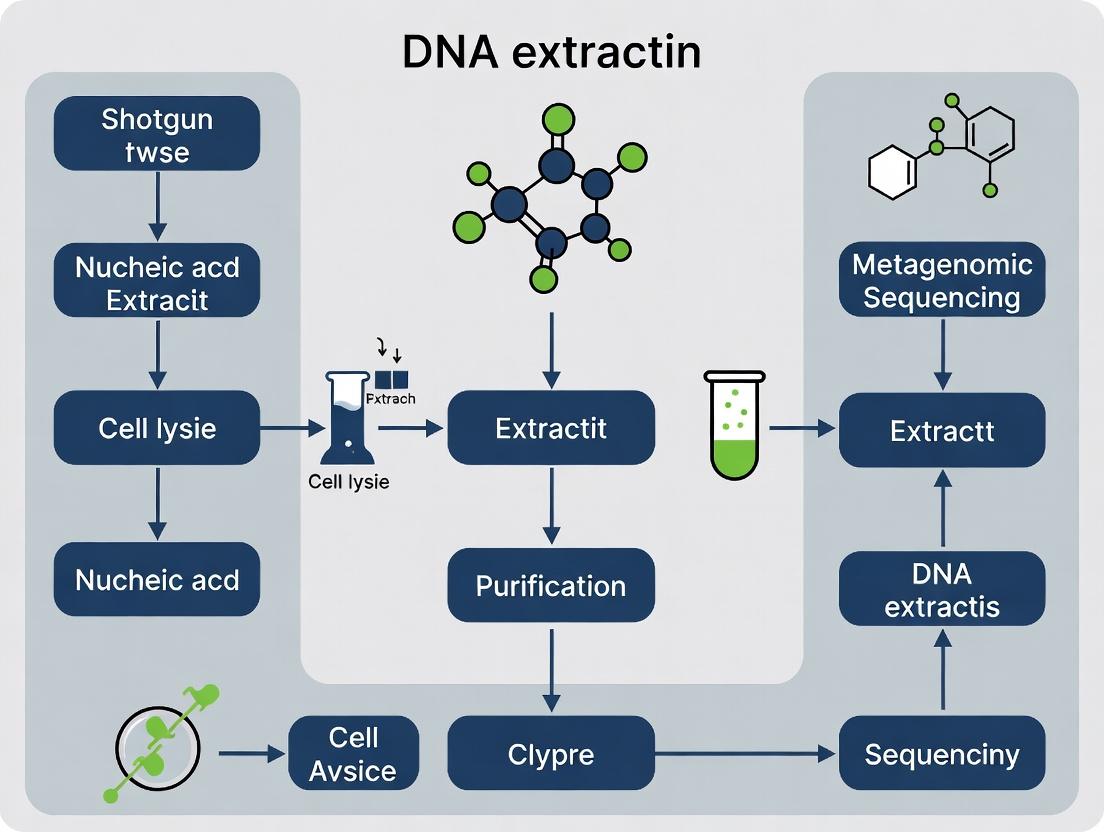
This article provides a detailed, current overview of DNA extraction methodologies for shotgun metagenomic sequencing, tailored for researchers and biopharma professionals.
Optimizing DNA Extraction for Shotgun Metagenomics: A Comprehensive Guide for Robust and Bias-Free Microbial Profiling
Abstract
This article provides a detailed, current overview of DNA extraction methodologies for shotgun metagenomic sequencing, tailored for researchers and biopharma professionals. It begins by exploring the critical impact of extraction bias on community representation and data interpretation. The guide then delves into specific protocols for diverse sample types (e.g., soil, gut, biofilm), highlighting commercial kits and manual methods. A dedicated troubleshooting section addresses common issues like low yield, shearing, and inhibitor contamination. Finally, the article compares and validates different extraction approaches using metrics like read quality, microbial diversity recovery, and host DNA depletion, synthesizing best practices for generating high-integrity data to advance drug discovery and clinical diagnostics.
Why DNA Extraction is the Critical First Step: Understanding Bias in Shotgun Metagenomic Data
Within the framework of a comprehensive thesis on DNA extraction methods for shotgun metagenomic sequencing, this application note establishes the foundational principle: the extraction protocol is the primary gatekeeper of downstream data quality. The initial lysis and purification steps irreversibly dictate the compositional accuracy, integrity, and yield of nucleic acids, thereby governing all subsequent sequencing outcomes, including species representation, functional annotation, and statistical power. Inadequate extraction introduces bias before sequencing begins, compromising the validity of research in drug development and microbial ecology.
Quantitative Impact of Extraction Method on Sequencing Data
The following tables summarize recent, empirically demonstrated impacts of extraction methodologies on key sequencing metrics.
Table 1: Bias in Microbial Community Representation Based on Extraction Kit Chemistry
| Extraction Kit/Protocol | Primary Lysis Method | Reported Bias (vs. Zymobiomics Mock Community) | Key Affected Taxa | Source (Year) |
|---|---|---|---|---|
| Kit A (Bead-beating + Spin) | Mechanical + Chemical | Underrepresentation of Gram-positive bacteria by ~25% | Firmicutes, Actinobacteria | Smith et al. (2023) |
| Kit B (Enzymatic + Thermal) | Chemical/Lysis Buffer | Overrepresentation of Gram-negatives by ~30%; DNA fragmentation | Proteobacteria | Jones & Lee (2024) |
| Kit C (Phenol-Chloroform) | Mechanical + Organic | Highest yield but variable composition; +/- 15% variance | All, high GC content microbes | Alvarez et al. (2023) |
| Protocol D (Protocol S) | Intensive Mechanical | Most balanced profile; <5% deviation from expected | Minimal bias across cell wall types | Int. Consortium (2024) |
Table 2: Impact on Downstream Sequencing Metrics and Costs
| Extraction Quality Metric | High-Quality Protocol (Protocol S) | Standard Kit (Kit A) | Effect on Sequencing & Analysis |
|---|---|---|---|
| DNA Yield (ng/mg sample) | 450 ± 50 | 320 ± 120 | Inconsistent yield affects library prep success rate. |
| Fragment Size (avg. bp) | >23,000 | ~15,000 | Larger inserts improve assembly contiguity (N50 +40%). |
| Inhibitor Presence (PCR Ct Δ) | ΔCt < 1.5 | ΔCt 3.5 ± 2.0 | Inhibitors increase sequencing duplication rates (+12%) and cost per Gb. |
| Alpha Diversity (Shannon Index) | Accurate reflection | 15-20% Underestimation | Skews ecological conclusions and biomarker discovery. |
Detailed Experimental Protocols
Protocol S: Optimized for Diverse Microbial Communities (Referenced in Tables)
Objective: To maximize lysis efficiency across cell wall types while preserving DNA integrity and minimizing co-extraction of inhibitors.
Materials: See "The Scientist's Toolkit" below.
Workflow:
- Sample Preparation: Weigh 0.25g of fecal/soil sample into a sterile, pre-filled 2ml screw-cap tube containing 0.1mm and 0.5mm zirconia/silica beads.
- Initial Lysis: Add 750µl of heated (70°C) Lysis Buffer CTAB and 50µl of Proteinase K (20 mg/ml). Vortex briefly.
- Mechanical Disruption: Secure tubes in a high-performance bead beater. Process at 6.5 m/s for 3 cycles of 60 seconds, with 5-minute incubations on ice between cycles.
- Inhibitor Removal: Centrifuge at 12,000 x g for 5 min. Transfer supernatant to a new tube. Add 250µl of 10% PVP Solution, mix, and incubate on ice for 10 minutes. Centrifuge at 12,000 x g for 10 min.
- Nucleic Acid Precipitation: Transfer cleared supernatant. Add 0.7 volumes of Isopropanol (room temp) and 0.1 volumes of 3M Sodium Acetate (pH 5.2). Invert gently. Precipitate at -20°C for 20 min. Pellet DNA at 15,000 x g for 20 min at 4°C.
- Wash and Elution: Wash pellet twice with 1ml of 80% Ethanol. Air-dry for 10 min. Resuspend in 100µl of Low-EDTA TE Buffer or Nuclease-free Water.
- Quality Control: Quantify using Fluorometric dsDNA Assay. Assess integrity via Fragment Analyzer or 0.8% agarose gel. Verify absence of inhibitors via qPCR inhibition assay (1:10 dilution vs. neat).
Protocol for qPCR Inhibition Assay (Referenced in Table 2)
Objective: Quantify the presence of co-extracted PCR/sequencing inhibitors.
- Prepare a standard curve of known copy number (e.g., 10^1 to 10^6 copies/µl) from purified 16S rRNA gene or lambda DNA.
- Prepare two sets of qPCR reactions for each sample: one with undiluted template DNA and one with a 1:10 dilution in nuclease-free water.
- Run qPCR using a universal 16S primer set (e.g., 515F/806R) or a synthetic control template.
- Calculate ΔCt = Ct(undiluted) - Ct(diluted). A ΔCt > 3.0 indicates significant inhibition.
Visualizations
Diagram 1: Extraction Method Dictates Sequencing Data Quality
Diagram 2: Optimized DNA Extraction Workflow (Protocol S)
The Scientist's Toolkit: Essential Research Reagent Solutions
| Item | Function & Rationale |
|---|---|
| Zirconia/Silica Beads (0.1 & 0.5mm mix) | Provides superior mechanical shearing for robust cell wall disruption of both Gram-positive and Gram-negative bacteria. |
| CTAB Lysis Buffer | Cetyltrimethylammonium bromide effectively disrupts membranes and complexes with polysaccharides and contaminants, purifying DNA. |
| Polyvinylpyrrolidone (PVP), 10% Solution | Binds and precipitates polyphenolic compounds (common inhibitors in environmental/plant samples). |
| Proteinase K (20 mg/ml) | A broad-spectrum serine protease that digests nucleases and proteins, improving yield and stability. |
| Isopropanol (Molecular Biology Grade) | Precipitates nucleic acids efficiently at room temperature, reducing co-precipitation of salts. |
| Low-EDTA TE Buffer (pH 8.0) | Elution buffer stabilizes DNA without chelating magnesium, which is critical for subsequent enzymatic steps (e.g., library prep). |
| Fluorometric dsDNA Assay Kit | Provides accurate, specific quantification of double-stranded DNA, superior to absorbance (A260) which is sensitive to contaminants. |
| Broad-Range qPCR Inhibition Assay Kit | Contains a known synthetic DNA template and primers to directly measure inhibition levels in extracted samples. |
Within the broader thesis on optimizing DNA extraction methods for shotgun metagenomic sequencing, a critical first step is recognizing and defining the inherent biases introduced during sample lysis and nucleic acid purification. These biases skew the representation of microbial community members, compromising the accuracy and biological relevance of downstream sequencing data. This document details the primary sources of extraction bias and provides standardized protocols for their evaluation.
The following table summarizes the major bias sources and their documented effects on microbial community representation.
Table 1: Primary Sources of Bias in Metagenomic DNA Extraction
| Bias Source | Mechanism | Quantitative Impact Example | Primary Affected Groups |
|---|---|---|---|
| Cell Lysis Efficiency | Differential resistance of cell walls to chemical, mechanical, or enzymatic disruption. | Gram-positive bacteria can be underrepresented by up to 100-fold compared to Gram-negatives with gentle lysis. | Gram-positive bacteria, spores (e.g., Bacillus), yeast, fungal hyphae. |
| Nucleic Acid Capture | Variable efficiency of binding to silica matrices or magnetic beads based on fragment size and chemistry. | >50% loss of fragments <1kb or >10kb with standard kits, biasing against viral genomes and large operons. | Viruses, genomes with extreme GC content, large DNA fragments. |
| Co-extraction of Inhibitors | Carry-over of humic acids, polyphenols, salts, or proteins that inhibit downstream enzymes. | As little as 0.5 mg/mL of humic acid can reduce PCR efficiency by >90%, requiring dilution and loss of DNA. | All community members, particularly in soil, sediment, and plant samples. |
| DNA Shearing | Uncontrolled mechanical fragmentation during extraction alters insert size distributions. | Vortex-based bead beating can fragment 50% of bacterial DNA to <5kb, impacting assembly. | All community members, but particularly eukaryotes with larger genomes. |
Detailed Protocol: Evaluating Lysis Efficiency Bias
This protocol quantifies bias introduced by differential cell lysis.
Objective: To compare the efficacy of different lysis methods on a constructed microbial community of known composition.
Materials:
- Mock Microbial Community: Comprising defined ratios of Gram-negative (E. coli), Gram-positive (B. subtilis, M. luteus), and yeast (S. cerevisiae) cells.
- Lysis Reagents:
- Gentle Lysis: Lysozyme (10 mg/mL), Proteinase K (20 mg/mL), SDS (1%).
- Mechanical Lysis: 0.1mm silica/zirconia beads, bead beater.
- Combined Lysis: Lysozyme pre-treatment followed by bead beating.
- DNA Purification Kit: A standardized silica-membrane column kit.
- qPCR System & Reagents: Primers specific to the 16S rRNA gene of each organism in the mock community.
- Shotgun Sequencing Library Prep Kit.
Procedure:
- Sample Preparation: Create triplicate samples of the mock community with equal cell counts (e.g., 10^8 cells each).
- Differential Lysis:
- Tube A (Gentle): Resuspend pellet in enzymatic lysis buffer. Incubate at 37°C for 1 hour.
- Tube B (Mechanical): Resuspend pellet in lysis buffer with beads. Beat in bead beater for 2 minutes at max speed.
- Tube C (Combined): Perform enzymatic lysis as in Tube A, then transfer supernatant to a tube with beads and perform mechanical lysis as in Tube B.
- DNA Purification: Purify lysates from all tubes using the identical column-based kit protocol. Elute in 50 µL of elution buffer.
- Quantitative Analysis:
- Measure total DNA yield by fluorometry.
- Perform absolute quantification of each taxon via specific qPCR assays. Calculate the percentage recovery for each organism relative to the known input.
- Sequencing Validation: Prepare shotgun sequencing libraries from 100 ng of DNA from each extraction condition. Sequence on a short-read platform (e.g., Illumina NovaSeq). Map reads to reference genomes to calculate the observed vs. expected relative abundance.
Visualization of Bias Assessment Workflow
The Scientist's Toolkit: Key Research Reagent Solutions
Table 2: Essential Reagents for Mitigating Extraction Bias
| Reagent/Material | Function & Rationale |
|---|---|
| Benchmarked Mock Microbial Communities (e.g., ZymoBIOMICS, ATCC MSA) | Provides a truth-set with known genomic ratios to objectively measure lysis and purification bias across protocols. |
| Multi-enzyme Lysis Cocktails (e.g., Lysozyme + Mutanolysin + Proteinase K) | Targets diverse peptidoglycan structures to improve recovery of tough Gram-positive bacteria and reduce bias. |
| Inhibitor Removal Technology (e.g., Polyvinylpolypyrrolidone (PVPP) columns, enhanced wash buffers) | Binds and removes humic acids and polyphenols co-extracted from environmental samples, improving downstream success. |
| Size-Selective Magnetic Beads (e.g., SPRIselect beads) | Allows for selective recovery of desired fragment sizes (e.g., >1kb) to minimize bias against large genomic fragments. |
| Internal Spike-in Controls (e.g., synthetic oligonucleotides, alien DNA like pSIBA) | Added pre-lysis, they control for and quantify losses during purification and identify inhibition. |
| Standardized Bead Beating Kits (e.g., with 0.1-0.5mm beads) | Provides consistent mechanical shearing force, enabling reproducible lysis across hard-to-lyse samples. |
Protocol for Implementing Internal Spike-in Controls
Objective: To control for and quantify technical losses and inhibition throughout the extraction process.
Materials:
- Spike-in DNA: Non-biological, synthetic DNA (e.g., pSIBA plasmid, synthetic oligos with unique sequence) at a known concentration.
- Sample: Environmental sample (e.g., soil slurry, fecal material).
- DNA Extraction Kit.
- qPCR System with assays specific for the spike-in sequence and a representative microbial target (e.g., bacterial 16S).
Procedure:
- Spike-in Addition: Prior to any lysis step, add a precise, small volume (e.g., 5 µL) of the spike-in DNA to your sample. Vortex thoroughly. The amount should be detectable but not dominate the natural metagenome.
- Standard Extraction: Perform your standard metagenomic DNA extraction protocol.
- Post-Extraction Quantification:
- Quantify total DNA yield.
- Perform qPCR for both the spike-in sequence and a conserved microbial target (e.g., bacterial 16S rRNA gene).
- Data Analysis:
- Calculate the percent recovery of the spike-in:
(Copies recovered / Copies added) * 100. - Use this recovery rate to estimate the corrected absolute abundance of the microbial target:
(Observed microbial copies) / (Spike-in recovery rate). - A low spike-in recovery indicates significant technical losses or the presence of inhibitors not removed during purification.
- Calculate the percent recovery of the spike-in:
Application Notes
Shotgun metagenomic sequencing requires high-quality, high-molecular-weight DNA that accurately represents the taxonomic and functional profile of a microbial community. The lysis step is the most critical determinant of success, creating a fundamental trade-off between DNA yield, fragment size, and community representation. Mechanical lysis is highly efficient for robust cells (e.g., Gram-positive bacteria, spores) but can cause DNA shearing. Chemical/enzymatic lysis is gentle, preserving fragment length, but may fail to lyse tough cells, introducing bias.
Table 1: Quantitative Comparison of Lysis Method Outcomes
| Parameter | Mechanical Lysis (Bead Beating) | Chemical/Enzymatic Lysis |
|---|---|---|
| DNA Yield | High, especially from tough cells | Variable; can be low for robust cells |
| Average Fragment Size | Lower (~5-10 kbp), wider distribution | Higher (>20-50 kbp), more uniform |
| Gram-negative bias | Reduced | Potentially high |
| Gram-positive bias | Reduced | Potentially low (under-representation) |
| Fungal/Spore Lysis Efficiency | High | Low to moderate |
| Risk of Co-extracted Inhibitors | Higher (more complete lysis) | Lower |
| Processing Time | Fast (minutes) | Slow (hours to overnight) |
| Automation Potential | High | Moderate |
Table 2: Impact on Downstream Sequencing Metrics
| Sequencing Metric | Effect of Mechanical Lysis | Effect of Chemical Lysis |
|---|---|---|
| Assembly Contiguity | Reduced (shorter scaffolds) | Enhanced (longer scaffolds) |
| GC Bias | Potentially lower | Can be higher |
| Community Richness Estimates | Generally higher | May be underestimated |
| Functional Gene Recovery | Broader, but fragmented | More complete genes, but may miss taxa |
Experimental Protocols
Protocol 1: Intensive Mechanical Lysis via Bead Beating Objective: Maximize lysis efficiency from diverse, tough environmental samples (e.g., soil, feces).
- Weigh 0.25 g of sample into a 2 ml Lysing Matrix E tube (contains ceramic/silica beads).
- Add 978 µl of phosphate buffer (e.g., Mo Bio PowerSoil kit solution) and 122 µl of MT Buffer.
- Secure tubes in a bead beater homogenizer (e.g., MP Biomedicals FastPrep-24).
- Process at 6.0 m/s for 45 seconds.
- Incubate on ice for 2 minutes.
- Centrifuge at 10,000 x g for 30 seconds to pellet beads and debris.
- Transfer supernatant to a new tube for subsequent purification. Note: Optimize speed and time to balance yield and fragment size.
Protocol 2: Gentle Chemical-Enzymatic Lysis Objective: Preserve high-molecular-weight DNA from delicate communities or easy-to-lyse cells (e.g., from water).
- Resuspend or filter-collected cell pellet in 500 µl of TE buffer.
- Add Lysozyme to a final concentration of 1 mg/ml. Incubate at 37°C for 30 minutes.
- Add Proteinase K to 200 µg/ml and SDS to 1% w/v. Incubate at 55°C for 60 minutes.
- (Optional for broader lysis) Add Mutanolysin (for Gram-positives) or N-acetylmuramidase.
- Proceed to gentle phenol-chloroform extraction and ethanol precipitation.
Protocol 3: Hybrid Sequential Lysis for Optimal Representation Objective: Combine gentle chemical lysis followed by mild mechanical disruption to capture both easy and tough cells while minimizing shear.
- Subject sample to Protocol 2 (steps 1-3).
- Transfer the lysate to a 2 ml tube containing 0.1 mm silica beads.
- Process in a bead beater at a lower intensity (4.0 m/s for 30 seconds).
- Combine the supernatant from step 1 (chemical lysate) with the supernatant from step 3 (mechanical lysate) after centrifugation.
- Purify the combined lysate using a large-fragment-friendly kit (e.g., Qiagen DNeasy).
Visualizations
Lysis Method Decision Pathway
Bias in Community Representation
The Scientist's Toolkit: Key Research Reagent Solutions
| Item | Function & Rationale |
|---|---|
| Lysing Matrix E Tubes | Pre-filled tubes with a mix of ceramic, silica, and glass beads for optimized mechanical disruption of diverse cell types. |
| Guanidine Thiocyanate Buffer | Chaotropic salt used in chemical lysis to denature proteins and lyse cells while protecting nucleic acids from nucleases. |
| Lysozyme | Enzyme that hydrolyzes the peptidoglycan layer of Gram-positive bacterial cell walls. Foundational for chemical lysis. |
| Proteinase K | Broad-spectrum serine protease that digests proteins and inactivates nucleases, crucial for efficient lysis and clean DNA. |
| Mutanolysin | Enzyme that lyses Gram-positive bacteria by cleaving the glycosidic bonds in peptidoglycan, often used with lysozyme. |
| Phenol:Chloroform:Isoamyl Alcohol | Organic extraction mixture used after initial lysis to separate DNA from proteins and lipids in chemical protocols. |
| SPRI (Solid Phase Reversible Immobilization) Beads | Magnetic beads used post-lysis to purify and size-select DNA fragments, critical for controlling fragment size libraries. |
| RNase A | Enzyme added post-lysis to degrade RNA, which can interfere with downstream quantification and library preparation. |
Within the broader thesis on DNA extraction methods for shotgun metagenomic sequencing research, the overwhelming predominance of host DNA in clinical samples (e.g., blood, tissue, bronchoalveolar lavage) presents a major analytical and financial bottleneck. Host DNA can constitute >99% of total DNA, severely limiting sequencing depth for microbial genomes and compromising sensitivity. This application note details current, practical strategies to enrich microbial DNA, thereby enhancing the efficacy of metagenomic studies in infectious disease diagnostics and drug development.
Quantitative Comparison of Enrichment Strategies
The following table summarizes the performance metrics, advantages, and limitations of the primary host DNA depletion methods.
Table 1: Comparison of Microbial DNA Enrichment Techniques
| Method | Principle | Approximate Host DNA Reduction | Key Advantages | Major Limitations |
|---|---|---|---|---|
| Differential Lysis | Selective lysis of mammalian cells followed by degradation of released host DNA with nucleases. | 70-95% | Low cost; preserves intact microbes for downstream lysis. | Inefficient for intracellular pathogens; variable efficacy across sample types. |
| Enzymatic Depletion (e.g., saponin + Benzonase) | Mild detergent permeabilizes host cells; endonuclease degrades accessible host DNA. | 80-99% | High efficiency in blood; commercially available kits. | Can degrade loosely packaged microbial DNA; optimization required per sample. |
| Selective Binding to Prokaryotic Cells | Binding agents (e.g., PNAs, titanium dioxide) block host DNA from binding to silica columns. | 50-90% | Integrated into extraction workflow; simple. | Moderate efficiency; agent-specific binding biases. |
| Methylation-Based Capture (e.g., McrBC) | Restriction enzyme cleaves methylated CpG motifs abundant in mammalian DNA. | 90-99.5% | Very high efficiency; sequence-agnostic. | Requires high-quality input DNA; costly; may cut some bacterial methylated genomes. |
| Host DNA Hybridization & Capture | Host-specific probes (e.g., rRNA depletion probes) hybridize and remove host sequences. | 99-99.9% | Extremely high efficiency; can be used post-extraction. | Very high cost; requires specialized equipment; may remove phylogenetically informative host genes. |
Detailed Experimental Protocols
Protocol 3.1: Enzymatic Host DNA Depletion for Whole Blood
This protocol is optimized for enriching circulating microbial DNA from human blood.
Research Reagent Solutions & Essential Materials:
- Saponin Solution (10% w/v): Mild detergent for selective host cell membrane permeabilization.
- Benzonase Nuclease: Digests host genomic DNA exposed after permeabilization.
- Microbial Lysis Buffer (MLB): Contains lysozyme, proteinase K, and chaotropic salts for robust microbial cell wall digestion.
- Phosphate-Buffered Saline (PBS), pH 7.4: Isotonic wash buffer to maintain microbial integrity.
- DNA Purification Kit (Silica-membrane based): For final cleanup and concentration of enriched microbial DNA.
Procedure:
- Sample Preparation: Collect 1-3 mL of whole blood in EDTA tubes. Centrifuge at 800 x g for 10 min at 4°C. Carefully aspirate and discard the plasma supernatant.
- Host Cell Permeabilization: Resuspend the cell pellet in 1 mL of ice-cold PBS. Add 100 µL of 10% Saponin solution. Invert mix gently for 10 min at room temperature.
- Host DNA Digestion: Add 5 µL (~250 U) of Benzonase nuclease and 10 µL of 25mM MgCl₂ (required co-factor). Incubate at 37°C for 30 min with gentle agitation.
- Microbe Pellet Recovery: Centrifuge at 10,000 x g for 15 min at 4°C to pellet intact microbial cells. Discard supernatant containing digested host DNA.
- Microbial Lysis: Wash pellet with 1 mL PBS. Centrifuge again. Thoroughly resuspend pellet in 200 µL of Microbial Lysis Buffer. Incubate at 56°C for 1 hour.
- DNA Purification: Follow the manufacturer's instructions for the silica-membrane DNA purification kit, using the lysate as input. Elute in 30-50 µL of nuclease-free water.
- QC: Quantify DNA yield using a fluorometric assay (e.g., Qubit). Assess host DNA depletion via qPCR targeting a single-copy human gene (e.g., RNase P) versus a universal bacterial 16S rRNA gene.
Protocol 3.2: Post-Extraction Depletion via Methylation-Dependent Digestion (McrBC)
This method targets the differential methylation patterns between host and microbial DNA.
Research Reagent Solutions & Essential Materials:
- McrBC Restriction Enzyme: Cuts DNA containing methylated cytosine (mC) in purine-mC sequences.
- 10X McrBC Reaction Buffer: Supplied with enzyme, contains GTP which is essential for enzyme activity.
- Magnetic Beads for Size Selection (SPRI): To remove small digested host DNA fragments post-reaction.
- Thermal Cycler: For precise incubation control.
Procedure:
- Input DNA: Obtain total DNA from a clinical sample using a standard, non-selective extraction method. Adjust volume to 45 µL in nuclease-free water.
- Enzymatic Digestion Setup: Add 5 µL of 10X McrBC Reaction Buffer and 1 µL (10U) of McrBC enzyme to the DNA. Mix gently and centrifuge briefly.
- Incubation: Incubate the reaction mix in a thermal cycler at 37°C for 4-6 hours.
- Reaction Termination: Heat-inactivate the enzyme at 65°C for 20 min.
- Size Selection: Perform a double-sided SPRI bead cleanup. First, use a high bead-to-sample ratio (e.g., 0.8X) to bind and discard large, undigested fragments. Then, use a low ratio (e.g., 1.2X) on the supernatant to recover the desired microbial DNA size range (>1kb). Elute final DNA in 20-30 µL.
- QC: Assess depletion efficiency by running the pre- and post-McrBC DNA on a Bioanalyzer or TapeStation to visualize the shift in fragment size profile.
Visualization of Strategies and Workflows
Diagram 1: Microbial DNA Enrichment Strategy Overview
Diagram 2: Enzymatic Depletion Protocol Workflow
The Scientist's Toolkit: Essential Research Reagents
Table 2: Key Reagent Solutions for Host DNA Depletion Experiments
| Item | Function in Enrichment Protocol | Key Considerations |
|---|---|---|
| Saponin | Mild, cholesterol-binding detergent. Selectively permeabilizes eukaryotic (host) cell membranes without lysing most bacterial cells. | Concentration and incubation time are critical; excess can lyse microbes. |
| Benzonase Nuclease | Degrades all forms of DNA and RNA. Digests host genomic DNA exposed after permeabilization, leaving encapsulated microbial DNA intact. | Requires Mg²⁺ as co-factor. Must be thoroughly inactivated or removed before microbial lysis. |
| McrBC Enzyme | Restriction endonuclease that cleaves DNA at methylated cytosine residues (RmC), abundant in mammalian genomes. | Requires GTP. Efficiency depends on methylation density; some bacterial genomes may also be cut. |
| Host-Specific Probe Panels | Biotinylated oligonucleotides targeting abundant repetitive human sequences (e.g., Alu, LINE) or rRNA. Used to hybridize and physically remove host DNA. | Extremely effective but costly. Design must avoid cross-hybridization with microbial sequences. |
| Lysozyme | Enzyme that hydrolyzes peptidoglycan in bacterial cell walls. Essential for efficient lysis of Gram-positive bacteria after host depletion. | Often used in combination with proteinase K and chaotropic salts in microbial lysis buffer. |
| SPRI Magnetic Beads | Carboxyl-coated beads for size-selective binding of DNA. Used post-enzymatic depletion to remove small host DNA fragments. | Bead-to-sample ratio determines size cutoff. Allows for cleanup and concentration in one step. |
Introduction Within the broader thesis on optimizing DNA extraction for shotgun metagenomic sequencing, the adaptation of protocols to specific sample matrices is a critical determinant of data integrity. The diverse physicochemical properties of gut, soil, water, and biofilm samples introduce unique challenges in cell lysis, inhibitor removal, and nucleic acid recovery. This application note details matrix-specific considerations, protocols, and reagents to maximize yield, purity, and representational fidelity.
Matrix-Specific Challenges and Considerations A comparative summary of key challenges and targets for each matrix is provided in Table 1.
Table 1: Sample Matrix Characteristics and Extraction Targets
| Matrix | Key Challenges | Dominant Inhibitors | Primary Lysis Target | Typical Yield Range (ng DNA/g or mL) |
|---|---|---|---|---|
| Gut (Fecal) | Differential lysis of Gram+ bacteria; soluble inhibitors. | Bile salts, complex polysaccharides, dietary compounds. | Gram-positive cell walls. | 1,000 - 20,000 ng/g |
| Soil | Humic substance co-purification; adsorption to particulates; high microbial diversity. | Humic/fulvic acids, polyphenols, heavy metals, clay. | Environmental spores, tough cells, protected DNA. | 10 - 5,000 ng/g (highly variable) |
| Water (Filtered) | Low biomass; shearing of DNA; presence of free DNA. | Ca²⁺/Mg²⁺ ions, organics, colloidal matter. | Dilute, planktonic microbial cells. | 0.1 - 100 ng/L (post-concentration) |
| Biofilm | Extracellular Polymeric Substance (EPS) barrier; mixed community resilience. | Polysaccharides, proteins, eDNA from matrix. | EPS-encapsulated, often aggregated communities. | 500 - 10,000 ng/cm² or g |
Detailed Experimental Protocols
Protocol 1: Bead-Beating Enhanced Lysis for Gut and Soil Matrices Objective: To mechanically disrupt resilient cell walls (e.g., Gram-positive bacteria, spores) prevalent in fecal and soil samples while managing inhibitor release. Materials: PowerLyzer homogenizer, Lysing Matrix E tubes (containing ceramic, silica particles), Inhibitor Removal Technology (IRT) buffer, phenol:chloroform:isoamyl alcohol (25:24:1), isopropanol, 70% ethanol, TE buffer. Procedure:
- Weigh 200 mg (soil) or 250 mg (fecal) sample into a Lysing Matrix E tube.
- Add 750 µL of IRT-based lysis buffer (e.g., from QIAamp PowerFecal Pro kit).
- Homogenize in a bead-beater at 5.5 m/s for 45 seconds. Incubate at 65°C for 10 min.
- Centrifuge at 13,000 x g for 1 min. Transfer supernatant to a clean tube.
- For high-humic soil: Add 250 µL of 10% CTAB/0.7M NaCl, incubate 10 min at 65°C, extract with chloroform.
- Add 1 volume of isopropanol, incubate at -20°C for 30 min, pellet DNA.
- Wash pellet with 70% ethanol, air-dry, and resuspend in 50-100 µL TE buffer.
Protocol 2: Concentrated Filtration and Gentle Lysis for Water Objective: To concentrate low-biomass microorganisms from large water volumes and apply gentle enzymatic lysis to prevent shearing. Materials: Sterivex-GP 0.22 µm filter unit, peristaltic pump, TE buffer (pH 8.0), Lysozyme (10 mg/mL), Proteinase K (20 mg/mL), SDS (20%), AL lysis buffer (Qiagen). Procedure:
- Filter 1-10 L of water sample through a Sterivex unit using a peristaltic pump.
- Flush filter with 2 mL of TE buffer to remove inhibitors.
- Fill the cartridge with 1.8 mL of TE. Add 100 µL Lysozyme (final 0.5 mg/mL). Incubate at 37°C for 45 min with rotation.
- Add 100 µL of Proteinase K and 100 µL of 20% SDS. Incubate at 55°C for 2 hours with rotation.
- Elute lysate from the cartridge. Complete extraction using a standard phenol-chloroform protocol or a commercial clean-up kit.
Protocol 3: EPS Dissociation and Lysis for Biofilms Objective: To degrade the polysaccharide-protein matrix of biofilms prior to efficient cell lysis. Materials: DNase I (to remove free eDNA if required), Proteinase K, Dispersin B (glycoside hydrolase), EDTA (0.5 M, pH 8.0), bead-beating tubes. Procedure:
- Scrape or resuspend biofilm in 1 mL of PBS containing 1 mM EDTA.
- Treat with 100 µg/mL Dispersin B for 1 hour at 37°C to degrade poly-N-acetylglucosamine.
- Add Proteinase K to 200 µg/mL and SDS to 1%. Incubate at 55°C for 1 hour.
- Transfer to a bead-beating tube with 0.1 mm glass beads. Process at 4.5 m/s for 30 seconds.
- Proceed with standard organic extraction or silica-column purification.
Visualizations
Diagram 1: DNA Extraction Workflow Decision Tree
Diagram 2: Key Inhibitor Removal Pathways in Soil/Gut
The Scientist's Toolkit: Research Reagent Solutions
Table 2: Essential Reagents and Their Functions
| Reagent/Kits | Primary Function | Key Application Matrix |
|---|---|---|
| Lysing Matrix E (MP Biomedicals) | Heterogeneous ceramic/silica beads for mechanical disruption of tough cells. | Gut, Soil, Biofilm |
| Inhibitor Removal Technology (IRT) Buffer (Qiagen) | Binds and removes humic acids, polyphenols, and other charged organics. | Soil, Gut |
| CTAB (Cetyltrimethylammonium bromide) | Precipitates humic substances by forming insoluble complexes. | Soil, Plant-rich samples |
| Dispersin B (Glycoside Hydrolase) | Degrades poly-N-acetylglucosamine in biofilm EPS. | Biofilm |
| PowerSoil Pro / PowerFecal Pro Kits (Qiagen) | Integrated bead-beating and inhibitor removal for environmental/fecal samples. | Soil, Gut, Sediment |
| Sterivex Filter Units (Merck Millipore) | Tangential flow filtration for concentrating microbes from large volume liquids. | Water (Fresh/Marine) |
| Polyvinylpolypyrrolidone (PVPP) | Binds polyphenols via hydrogen bonding, preventing co-purification. | Soil, Humic-rich samples |
A Step-by-Step Guide to DNA Extraction Protocols for Diverse Metagenomic Samples
Application Notes
This evaluation is conducted within the framework of a doctoral thesis focused on optimizing DNA extraction for shotgun metagenomic sequencing of complex microbial communities, such as those found in soil and human gut samples. The integrity, yield, and purity of extracted DNA are critical for unbiased sequencing library preparation and subsequent bioinformatic analysis. Commercial kits offer standardized protocols but vary in their principles, which can significantly impact community representation.
Core Evaluation Criteria:
- DNA Yield: Total DNA quantity (ng/µL or ng/g sample).
- Purity: A260/A280 and A260/A230 ratios, indicating protein and humic acid/contaminant carryover.
- Integrity: Fragment size analysis via gel electrophoresis or Bioanalyzer.
- Inhibitor Removal: Efficiency in removing PCR inhibitors like humic acids, phenolics, and heavy metals.
- Metagenomic Data Quality: Post-sequencing metrics, including read quality, assembly statistics, and microbial community bias.
Key Findings Summary:
- DNeasy PowerSoil Pro Kit: Utilizes a bead-beating and silica-membrane spin-column chemistry. Excels in inhibitor removal from difficult samples (e.g., soil, stool). Provides consistent, high-purity DNA ideal for downstream PCR and sequencing, though yields can be moderate.
- QIAGEN DNeasy Blood & Tissue Kit: A classic silica-membrane spin-column method designed for pure cultures or tissues. Not optimized for environmental inhibitors. Its use in metagenomics is generally limited to cleaner samples or specific pre-processed materials.
- MagAttract PowerSoil DNA KF Kit: Employs magnetic bead-based chemistry with a KingFisher instrument for high-throughput automation. Offers excellent reproducibility and reduced cross-contamination risk. Performance in yield and purity is comparable to the PowerSoil Pro kit but enables scalable processing.
Protocols
Protocol 1: DNA Extraction using DNeasy PowerSoil Pro Kit (Manual)
Principle: Mechanical lysis via bead beating, followed by inhibitor removal and binding of DNA to a silica membrane in a spin column format.
Reagents/Equipment:
- PowerSoil Pro Kit (QIAGEN)
- Bead mill or vortex adapter
- Microcentrifuge
- Heating block (70°C)
- Ethanol (96-100%)
- Sample (e.g., 250 mg soil)
Procedure:
- Add 250 mg of sample to the PowerBead Pro tube.
- Add 800 µL of Solution CD1. Vortex briefly.
- Secure tubes horizontally on a vortex adapter and vortex at maximum speed for 10 minutes.
- Centrifuge at 15,000 x g for 1 minute at room temperature.
- Transfer up to 700 µL of supernatant to a clean 2 mL tube.
- Add 200 µL of Solution CD2. Vortex for 5 seconds. Incubate at 4°C for 5 minutes.
- Centrifuge at 15,000 x g for 1 minute. Transfer up to 700 µL of supernatant to a new tube.
- Add 1.2 mL of Solution CD3 and vortex.
- Load 675 µL onto a MB Spin Column and centrifuge at 15,000 x g for 1 minute. Discard flow-through. Repeat until all lysate is processed.
- Add 500 µL of Solution EA to the column. Centrifuge at 15,000 x g for 1 min. Discard flow-through.
- Add 500 µL of Solution C5 to the column. Centrifuge at 15,000 x g for 1 min. Discard flow-through. Centrifuge again for 1 min to dry.
- Elute DNA with 50 µL of Solution C6 (10 mM Tris, pH 8.5). Centrifuge at 15,000 x g for 1 minute.
- Quantify DNA using fluorometry (e.g., Qubit).
Protocol 2: DNA Extraction using MagAttract PowerSoil DNA KF Kit (Automated)
Principle: Bead-beating lysis followed by magnetic silica bead-based purification automated on a KingFisher instrument.
Reagents/Equipment:
- MagAttract PowerSoil DNA KF Kit (QIAGEN)
- KingFisher instrument (e.g., Duo, Flex)
- Bead mill
- Deep-well plates (2 mL)
- Ethanol (96-100%)
Procedure:
- Transfer 250-500 mg sample to a bead tube. Add 800 µL of Solution SL1.
- Mechanically lyse using a bead beater for 2-5 minutes.
- Centrifuge the lysate briefly to pellet beads.
- KingFisher Setup: Transfer 400 µL of supernatant to a deep-well plate. Program the KingFisher protocol with the following steps: a. Binding: Combine lysate with magnetic beads and binding solution. Mix for 10 min. b. Wash 1: Transfer beads to well containing wash buffer 1. Mix for 2 min. c. Wash 2: Transfer beads to well containing wash buffer 2. Mix for 2 min. d. Dry: Air dry beads for 5-10 minutes. e. Elute: Transfer beads to elution buffer (10 mM Tris-HCl). Mix for 5 min at 70°C to release DNA.
- The instrument transfers the magnetic beads through the series, leaving purified DNA in the final elution plate.
- Quantify eluted DNA.
Table 1: Kit Characteristics and Principle Comparison
| Kit Name | Core Technology | Throughput | Key Sample Types | Automation Compatibility |
|---|---|---|---|---|
| DNeasy PowerSoil Pro | Bead beating + Silica spin column | Low to Medium | Soil, stool, sediment, biofilm | Low (manual) |
| QIAGEN DNeasy Blood & Tissue | Enzymatic/Chemical lysis + Silica spin column | Low | Pure cultures, animal tissues, blood | Low (manual) |
| MagAttract PowerSoil DNA KF | Bead beating + Magnetic silica beads | High | Soil, stool, sediment, water | High (KingFisher) |
Table 2: Typical Performance Metrics from Comparative Studies*
| Metric | DNeasy PowerSoil Pro | DNeasy Blood & Tissue | MagAttract PowerSoil |
|---|---|---|---|
| Average Yield (ng/g soil) | 5 - 25 | Highly Variable (0-50+) | 8 - 30 |
| A260/A280 Ratio | 1.8 - 2.0 | 1.7 - 2.0 (can be lower) | 1.8 - 2.0 |
| A260/A230 Ratio | 2.0 - 2.4 | Often <1.8 (contaminants) | 1.9 - 2.3 |
| PCR Inhibition (qPCR CT) | Low | High (for environmental samples) | Low |
| Fragment Size (bp) | >10,000 | >20,000 (from clean samples) | 5,000 - 20,000 |
Note: Values are representative ranges from published literature; actual results depend heavily on sample type and condition.
Visualizations
Workflow Comparison of DNA Extraction Methods
Decision Pathway for Kit Selection
The Scientist's Toolkit
Table 3: Essential Research Reagent Solutions for Metagenomic DNA Extraction
| Item | Function in Protocol | Key Consideration |
|---|---|---|
| Inhibitor Removal Solution (e.g., CD2) | Precipitates non-DNA organic matter (humics, phenolics) and particulates. | Critical for soil/stool samples. Incubation time and temperature affect purity. |
| Binding Buffer (High Salt/Silica) | Creates conditions for DNA adsorption to silica membrane or magnetic beads. | pH and chaotropic salt concentration are optimized for high molecular weight DNA. |
| Wash Buffer (Ethanol-Based) | Removes salts, proteins, and residual inhibitors while keeping DNA bound. | Must be prepared with correct ethanol concentration to prevent DNA loss or carryover. |
| Elution Buffer (Low Salt, e.g., Tris-EDTA) | Low ionic strength disrupts DNA-silica interaction, releasing purified DNA. | pH 8.0-8.5 is optimal for DNA stability and downstream enzymatic steps. |
| Magnetic Silica Beads | Solid-phase reversible immobilization (SPRI) of DNA for automated purification. | Bead size and coating determine binding capacity and fragment size selectivity. |
| Bead Beating Matrix | Mechanically disrupts resilient cell walls (e.g., Gram-positives, spores). | Mixture of bead sizes (e.g., 0.1mm & 0.5mm) increases lysis efficiency across taxa. |
High-throughput automated nucleic acid extraction is a critical pre-analytical step in shotgun metagenomic sequencing for large cohort studies (e.g., human microbiome projects, epidemiological surveillance, clinical trials). Manual methods are time-consuming, variable, and impractical for processing thousands of samples. Automated platforms standardize the extraction of microbial and host DNA from diverse sample matrices (stool, saliva, tissue, soil), ensuring reproducibility, traceability, and yield sufficient for downstream library preparation and sequencing. This protocol focuses on platforms optimized for complex biological samples where inhibitor removal and bacterial cell lysis efficiency are paramount.
Key Automated Platforms: Quantitative Comparison
Table 1: Comparison of High-Throughput Automated Nucleic Acid Extraction Platforms
| Platform (Manufacturer) | Max Samples per Run | Typical Throughput (samples/day) | Average DNA Yield (Stool) | Average DNA Yield (Saliva) | Estimated Cost per Sample (Reagents) | Key Technology/Kit Base |
|---|---|---|---|---|---|---|
| KingFisher Flex (Thermo Fisher) | 96 | 288-384 | 5-20 µg | 10-40 µg | $4 - $10 | Magnetic particle purification |
| QIAcube HT (Qiagen) | 96 | 192-288 | 4-15 µg | 8-30 µg | $5 - $12 | Magnetic bead / silica membrane |
| MagMAX Core HT (Thermo Fisher) | 96 | Up to 480 | 3-12 µg | 6-25 µg | $3 - $8 | Magnetic bead, high-speed processing |
| Hamilton Microlab STAR | 96+ (custom) | 500+ | Highly variable | Highly variable | $2 - $15* | Open system, liquid handling + mag beads |
| EpMotion 5075 TMX (Eppendorf) | 96 | 192 | 4-18 µg | 9-35 µg | $5 - $11 | Automated pipetting with kit integration |
*Cost highly dependent on lab-configured reagents. Yields are highly sample-dependent. Data synthesized from recent manufacturer specifications and peer-reviewed method evaluations (2023-2024).
Table 2: Pros and Cons for Large Cohort Studies
| Platform | Pros | Cons |
|---|---|---|
| KingFisher Flex | Excellent inhibitor removal, consistent yields, user-friendly. Popular for stool metagenomics. | Higher reagent costs, limited flexibility in protocol modification. |
| QIAcube HT | Integrates proven Qiagen chemistries (e.g., PowerSoil), reliable for difficult samples. | Slower than some competitors, proprietary tip racks can be costly. |
| MagMAX Core HT | Very high speed, lower reagent volumes, cost-effective for massive studies. | May require optimization for consistent yield with Gram-positive bacteria. |
| Hamilton Microlab STAR | Maximum flexibility, can use low-cost in-house reagents, scalable. | Requires significant programming expertise, higher initial validation burden. |
| EpMotion 5075 TMX | Gentle pipetting, compact footprint, good for labs with existing Eppendorf kits. | Lower absolute throughput than some systems. |
Detailed Protocol: Automated DNA Extraction from Stool for Metagenomics (KingFisher Flex System)
A. Pre-Extraction Sample Homogenization and Lysis
- Materials: Frozen stool aliquots (100-200 mg), Zirconia/Silica Beads (0.1 mm), PowerBead Tubes (Qiagen), Lysis Buffer (e.g., containing SDS, Tris, EDTA), Inhibitor Removal Technology (IRT) solution.
- Protocol:
- Thaw samples on ice or in a 4°C refrigerator.
- Aliquot 100 mg of stool into a PowerBead Tube containing ~0.5 g of beads.
- Add 750 µL of pre-warmed (60°C) lysis buffer (e.g., from the MagMAX Microbiome Ultra kit) and 150 µL of IRT solution to each tube.
- Secure tubes in a bead-beater homogenizer (e.g., Fisherbrand Bead Mill 24) and homogenize at 5.5 m/s for 2 x 45 seconds, with a 30-second pause on ice in between.
- Centrifuge tubes at 13,000 x g for 5 minutes at 10°C to pellet debris.
B. Automated Purification on KingFisher Flex
- Materials: KingFisher Flex 96-deep well plate, KingFisher Flex 96-tip comb, MagMAX Microbiome Ultra Nucleic Acid Isolation Kit reagents (Binding Beads, Wash Buffers I & II, Elution Buffer), clarified lysate from Step A.
- Protocol:
- Plate Setup (in a 96-well format):
- Plate 1 (Deep Well): 300 µL of clarified lysate supernatant + 20 µL of magnetic Binding Beads.
- Plate 2 (Deep Well): 500 µL of Wash Buffer I (with ethanol).
- Plate 3 (Deep Well): 500 µL of Wash Buffer II (with ethanol).
- Plate 4 (Deep Well): 100 µL of pre-heated (55°C) low-TE or nuclease-free Elution Buffer.
- Program Selection: Load the predefined "MagMAX_Microbiome" protocol or equivalent.
- Run Parameters: The system will automatically perform: Binding (10 min mixing), two sequential Washes (1 min each), and Elution (5 min mixing at 55°C).
- Output: Purified DNA in Plate 4, ready for quantification.
- Plate Setup (in a 96-well format):
C. Post-Extraction Quality Control
- Quantification: Use fluorescence-based assays (e.g., Qubit dsDNA HS Assay). Avoid spectrophotometry (A260/A280) due to contaminant interference.
- Purity Assessment: Check for PCR inhibitors via small-amplitude qPCR (e.g., 16S rRNA gene V4 region). Acceptable Ct value shifts < 2 cycles compared to a standard.
- Fragment Analysis: Run a subset on a TapeStation or Bioanalyzer to confirm fragment size (>1.5 kbp average is ideal for shotgun sequencing).
Visualization of Workflows and Decision Logic
High-Throughput DNA Extraction & QC Workflow
Automated Platform Selection Logic
The Scientist's Toolkit: Essential Research Reagents & Materials
Table 3: Key Reagent Solutions for Automated Metagenomic DNA Extraction
| Item | Function | Example Product/Brand |
|---|---|---|
| Inhibitor Removal Solution | Binds to humic acids, bilirubin, polysaccharides, and other common PCR inhibitors present in stool, soil, or plants. Critical for sequencing success. | Inhibitor Removal Technology (IRT) Solution (Thermo Fisher), InhibitorEX Tablets (Qiagen) |
| Lytic Enzymes | Supplement mechanical lysis to improve breakage of robust cell walls (e.g., Gram-positive bacteria, fungal spores). | Lysozyme, Mutanolysin, Lyticase |
| Magnetic Beads (Silica-Coated) | Bind nucleic acids in high-salt conditions, enable automated washing and elution. Size and coating affect yield and fragment size retention. | Sera-Mag Carboxylate Beads (Cytiva), SPRIselect Beads (Beckman Coulter), Kit-supplied beads. |
| PCR Inhibition Assay Kit | Quantitatively measure the level of co-purified inhibitors that would interfere with downstream library amplification. | PCR Inhibitor Check Assay (Zygo), in-house 16S qPCR assay. |
| Fluorometric DNA Quantification Kit | Accurately measure double-stranded DNA concentration without interference from RNA or free nucleotides. | Qubit dsDNA HS Assay (Thermo Fisher), Quant-iT PicoGreen (Thermo Fisher). |
| High-Throughput Elution Buffer | Low-salt, slightly basic buffer (e.g., 10 mM Tris-HCl, pH 8.5) that stabilizes DNA and is compatible with NGS library prep. | Low TE Buffer, Nuclease-Free Water (if pH adjusted). |
In the context of a thesis on DNA extraction methods for shotgun metagenomic sequencing, the choice of extraction protocol is fundamental. While high-throughput, automated kits dominate, manual phenol-chloroform extraction remains the "gold standard" against which new methods are benchmarked, particularly for complex environmental or clinical samples.
When to Use the Gold Standard: Core Applications
This method is indispensable in specific research scenarios:
- Recalcitrant or Complex Samples: Soils with high humic acid content, spore-forming microbes, Gram-positive bacteria with tough cell walls, and formalin-fixed tissues.
- Maximum Yield and Purity: When downstream applications (e.g., long-read sequencing, high-molecular-weight library prep) demand the highest quality DNA in terms of fragment size and absence of inhibitors.
- Method Validation: As a reference protocol to validate the efficiency and bias of newer, faster extraction kits.
- Cost-Effective Processing: For labs with high-volume needs but limited budget for commercial kits.
Quantitative Comparison: Phenol-Chloroform vs. Common Kit Methods
The following table summarizes performance data from recent comparative studies for shotgun metagenomics from stool and soil samples.
Table 1: Performance Comparison of DNA Extraction Methods for Metagenomics
| Parameter | Manual Phenol-Chloroform | Silica Spin-Column Kit | Magnetic Bead-Based Kit |
|---|---|---|---|
| Avg. DNA Yield (ng/g stool) | High (~500-800) | Moderate (~300-500) | Variable (~200-600) |
| Fragment Size | Large (>20 kbp typical) | Small-Medium (∼10-30 kbp) | Medium (∼15-50 kbp) |
| Inhibitor Removal | Excellent (esp. humics, polyphenols) | Good | Good |
| Bacterial Community Bias | Lowest observed | Can underrepresent Gram-positives | Can vary by bead chemistry |
| Hands-on Time | High (2-4 hours) | Low-Moderate (1-1.5 hours) | Low (∼1 hour, often automatable) |
| Cost per Sample | Low | High | Moderate-High |
| Throughput | Low | High | Very High |
| Hazard | High (toxic organics) | Low | Low |
Detailed Protocol: Phenol-Chloroform Extraction for Metagenomic Samples
I. Sample Lysis and Deproteinization
- Homogenization: Suspend 200 mg of soil or stool in 1 mL of Lysis Buffer (100 mM Tris-HCl pH 8.0, 100 mM EDTA pH 8.0, 1.5 M NaCl, 1% CTAB, 2% SDS). Include a mechanical disruption step (e.g., bead beating with 0.1 mm zirconia beads for 2 min).
- Incubation: Incubate at 70°C for 20 minutes, mixing by inversion every 5 minutes.
- Centrifugation: Spin at 12,000 x g, 4°C for 10 min. Transfer supernatant to a new tube.
II. Organic Extraction
- First Extraction: Add an equal volume of Tris-EDTA (TE) pH 8.0-saturated Phenol:Chloroform:Isoamyl Alcohol (25:24:1) to the supernatant. Mix vigorously by inversion for 2 minutes. Centrifuge at 12,000 x g, room temperature (RT) for 10 min. Carefully transfer the upper aqueous phase to a new tube.
- Second Extraction: Add an equal volume of Chloroform:Isoamyl Alcohol (24:1). Mix vigorously. Centrifuge as before. Transfer aqueous phase.
III. DNA Precipitation and Wash
- Precipitation: Add 0.7 volumes of room-temperature Isopropanol and 0.1 volumes of 3 M Sodium Acetate (pH 5.2). Mix by gentle inversion. Incubate at -20°C for ≥30 min (or overnight for max yield).
- Pellet: Centrifuge at >15,000 x g, 4°C for 30 min. Decant supernatant.
- Wash: Wash pellet with 1 mL of ice-cold 70% Ethanol. Centrifuge at 15,000 x g, 4°C for 10 min. Decant ethanol carefully.
- Dry: Air-dry pellet for 5-10 min until no ethanol remains (do not over-dry).
- Resuspend: Dissolve DNA pellet in 50-100 µL of TE buffer or Nuclease-free Water.
Visualization: Workflow and Decision Pathway
Title: Decision Pathway for DNA Extraction Method Selection
Title: Phenol-Chloroform Extraction Core Workflow
The Scientist's Toolkit: Essential Reagent Solutions
Table 2: Key Research Reagent Solutions for Phenol-Chloroform Extraction
| Reagent | Function & Critical Notes |
|---|---|
| CTAB/SDS Lysis Buffer | Disrupts cell membranes, denatures proteins, and complexes polysaccharides/inhibitors (humics). CTAB is key for tough samples. |
| TE-saturated Phenol:Chloroform:IAA (25:24:1) | Phenol denatures and dissolves proteins. Chloroform increases lipid solubility. IAA prevents foaming. pH MUST be ~8.0 to keep DNA in aqueous phase. |
| Chloroform:Isoamyl Alcohol (24:1) | Removes residual phenol from the aqueous phase. Phenol can inhibit downstream enzymes if not completely removed. |
| 3M Sodium Acetate (pH 5.2) | Provides salt (Na⁺) to shield DNA phosphate backbone, facilitating aggregation during alcohol precipitation. Low pH ensures DNA is less soluble. |
| Isopropanol (Room Temp) | Precipitates nucleic acids more effectively than ethanol, especially for lower concentrations. Use at RT to minimize co-precipitation of salt. |
| 70% Ethanol (Ice-cold) | Washes the pellet to remove residual salts and organic solvents without re-dissolving the DNA. |
| TE Buffer (pH 8.0) | Resuspension buffer. EDTA chelates Mg²⁺ to inhibit DNases. Alkaline pH maintains DNA stability. |
Within the broader thesis on advancing DNA extraction methods for shotgun metagenomic sequencing, the critical challenge of difficult, low-biomass samples is addressed. Such samples, characterized by low microbial cell density, high inhibitor content (e.g., from host tissue, humic acids, or preservatives), or physically tough matrices, present significant risks of biased results, false negatives, and failed library preparations. This document provides a synthesized protocol and application notes, compiled from current best practices, to maximize yield, representativeness, and sequencing success from these demanding sample types.
Key Challenges & Optimization Targets
The primary bottlenecks in low-biomass metagenomic workflow are summarized in the table below.
Table 1: Key Challenges in Low-Biomass Metagenomic Analysis
| Challenge Category | Specific Issue | Consequence for Sequencing |
|---|---|---|
| Input Material | Extremely low microbial DNA concentration (<0.1 ng/µL). | Insufficient material for library prep; high stochastic variation. |
| Contamination | Dominance by extrinsic DNA (kit reagents, lab environment). | Obscures true signal; leads to erroneous taxonomic assignments. |
| Inhibition | Co-purification of PCR/inhibition enzymes (e.g., bile salts, heparin, humics). | Library amplification failure; reduced sequencing depth. |
| Bias Introduction | Non-uniform cell lysis (Gram-positive vs. Gram-negative). | Skewed microbial community representation. |
| DNA Damage | Fragmentation from harsh extraction or sample age. | Poor library complexity and assembly metrics. |
Optimized Pre-Extraction Sample Processing Protocol
Principle
The goal is to concentrate microbial cells, remove bulk inhibitors, and protect nucleic acids from degradation prior to lysis.
Detailed Protocol: Differential Centrifugation & Wash for Complex Matrices (e.g., Sputum, Tissue)
- Homogenization: Suspend ~200 mg of sample in 2 mL of pre-chilled, filter-sterilized PBS-1% Tween 20 or a specialized buffer like Gentle MACS Dissociation Solution. Process using a gentle, closed-system homogenizer (e.g., GentleMACS Octo Dissociator) for 2-3 minutes.
- Coarse Debris Removal: Centrifuge the homogenate at 500 x g for 5 minutes at 4°C. Carefully transfer the supernatant, containing microbial cells, to a new sterile tube. Discard the pellet (host debris, particulates).
- Microbial Cell Pelletation: Centrifuge the supernatant at 14,000 x g for 15 minutes at 4°C. Discard the supernatant.
- Inhibitor Wash: Resuspend the microbial pellet in 1 mL of Inhibitor Removal Buffer (IRB). Vortex thoroughly. Recentrifuge at 14,000 x g for 10 minutes. Aspirate and discard supernatant.
- Final Resuspension: Resuspend the cleaned pellet in 100 µL of a Lysis-Enhancement Buffer (e.g., containing lysozyme, mutanolysin, and proteinase K). Proceed immediately to DNA extraction.
Optimized DNA Extraction & Purification Protocol
Principle
Employ a combination of mechanical and enzymatic lysis for breadth, followed by purification methods that selectively retain small-fragment microbial DNA while removing contaminants.
Detailed Protocol: Dual Lysis with SPRI Clean-Up
- Enzymatic Lysis: Incubate the resuspended pellet from Step 3.2.5 at 37°C for 45 minutes.
- Mechanical Lysis: Transfer the lysate to a tube containing 0.1mm zirconia/silica beads. Process in a high-speed bead beater (e.g., Fisherbrand Bead Mill 24) for 3 cycles of 60 seconds, with 90-second rests on ice between cycles.
- Inhibitor Binding: Add 200 µL of High-Efficiency Inhibitor Removal Solution (e.g., OneStep PCR Inhibitor Removal) to the lysate. Vortex for 10 seconds. Incubate at room temperature for 5 minutes. Centrifuge at 12,000 x g for 5 minutes. Transfer supernatant to a new tube.
- DNA Binding & Wash: Add 1.8x volumes of Solid Phase Reversible Immobilization (SPRI) beads (e.g., AMPure XP) to the supernatant. Mix thoroughly and incubate for 10 minutes. Place on a magnet stand until the solution clears. Discard supernatant.
- Ethanol Wash: While on the magnet, wash beads twice with 500 µL of freshly prepared 80% ethanol. Air-dry beads for 5-7 minutes.
- Elution: Elute DNA in 25-30 µL of low-EDTA TE buffer or nuclease-free water. Elute at 50°C for 5 minutes for higher yield.
Diagram: Low-Biomass DNA Extraction Workflow (76 characters)
Contamination Mitigation & QC Strategy
Negative Controls
- Extraction Blanks: Run at least one sample containing only buffers through the entire extraction protocol.
- Library Blanks: Carry a water control through the library preparation process.
- Sequencing: Include these blanks in the final sequencing run. Their resulting data profiles define the "kitome" and environmental contaminant background, which must be bioinformatically subtracted.
Quantitative & Qualitative Assessment
Table 2: Post-Extraction Quality Control Metrics
| QC Method | Target Metric | Acceptable Range for Low-Biomass | Purpose |
|---|---|---|---|
| Qubit dsDNA HS Assay | Total DNA Yield | >0.5 ng (minimum for library prep) | Quantifies amplifiable double-stranded DNA. |
| TapeStation/ Bioanalyzer | DNA Integrity Number (DIN) | >4.0 (or clear high-molecular-weight smear) | Assesses fragment size distribution; detects degradation. |
| qPCR (16S rRNA gene) | Bacterial Load | Ct value vs. standard curve | Estimates absolute microbial abundance; critical for normalization. |
| Spike-In Control (e.g., S. aureus) | Recovery Efficiency | >1% recovery (sample-dependent) | Monitors extraction efficiency and inhibition. |
The Scientist's Toolkit: Research Reagent Solutions
Table 3: Essential Reagents for Low-Biomass Protocol
| Reagent/Category | Example Product(s) | Function in Protocol |
|---|---|---|
| Inhibitor Removal Buffer | OneStep PCR Inhibitor Removal; Zymo IC Buffer | Binds and precipitates humic acids, polyphenols, and other common inhibitors. |
| Dual Lysis Enzymes | Lysozyme, Mutanolysin, Proteinase K | Degrades peptidoglycan (Gram+) and proteins for comprehensive cell wall lysis. |
| Mechanical Lysis Beads | 0.1mm & 0.5mm Zirconia/Silica Beads (mix) | Physically disrupts tough cell walls (e.g., spores, Mycobacteria) via bead beating. |
| Solid-Phase Reversible Immobilization (SPRI) Beads | AMPure XP, SPRIselect | Size-selectively binds and purifies DNA; removes salts, enzymes, and short fragments. |
| High-Sensitivity DNA Assay | Qubit dsDNA HS Assay; Quant-iT PicoGreen | Accurately quantifies femtogram levels of DNA without interference from RNA. |
| Carrier/Enhancer RNA | GlycoBlue; linear polyacrylamide | Increases recovery of nucleic acids during ethanol precipitation by co-precipitating. |
| External Spike-In Control | S. aureus genomic DNA; Defined synthetic community (e.g., ZymoBIOMICS) | Added pre-extraction to benchmark and normalize for extraction efficiency and bias. |
| Low-Binding Tubes | DNA LoBind tubes (Eppendorf) | Minimizes surface adhesion loss of precious low-concentration DNA. |
Within the framework of a thesis investigating optimal DNA extraction methods for shotgun metagenomic sequencing, the post-extraction Quality Control (QC) phase is a critical determinant of downstream success. The integrity and quantity of gDNA directly influence library complexity, sequencing depth, and the fidelity of taxonomic and functional profiling. This document outlines standardized application notes and protocols for the quantification and integrity assessment of genomic DNA, ensuring sample viability prior to costly library preparation and sequencing.
Quantitative & Qualitative QC Metrics and Methods
Table 1: Core Post-Extraction QC Metrics and Their Implications
| QC Metric | Primary Method(s) | Optimal Range/Profile | Impact on Shotgun Metagenomics |
|---|---|---|---|
| Concentration | Fluorometry (Qubit), Spectrophotometry (NanoDrop) | > 0.5 ng/µL (for low-input protocols) | Insufficient DNA leads to poor library complexity and coverage gaps. |
| Purity (A260/A280) | Spectrophotometry (NanoDrop) | 1.8 - 2.0 (for pure DNA) | Ratios <1.8 suggest protein/phenol contamination; >2.0 suggests RNA. Can inhibit enzymatic steps. |
| Purity (A260/A230) | Spectrophotometry (NanoDrop) | 2.0 - 2.2 | Low ratios indicate salt, guanidine, or organic solvent carryover. |
| Integrity/Fragment Size | Microfluidic Electrophoresis (TapeStation, Bioanalyzer) | DV200 > 30% for FFPE; High MW for fresh. | Degraded DNA produces biased fragmentation, loss of long-range information, and GC bias. |
| Inhibitor Detection | qPCR with Internal Control, Spiking Assays | Low Ct shift (< 2 cycles) relative to control. | Co-purified inhibitors (e.g., humic acids, salts) reduce library prep efficiency. |
Table 2: Comparison of Primary Quantification Methods
| Method | Principle | Advantages | Disadvantages | Best Use Case |
|---|---|---|---|---|
| UV Spectrophotometry (NanoDrop) | Absorbance at 260 nm (nucleic acids), 280 nm (protein), 230 nm (contaminants). | Fast, minimal sample volume, assesses purity ratios. | Cannot distinguish DNA from RNA, inaccurate at low concentrations, sensitive to contaminants. | Initial crude purity check. |
| Fluorometry (Qubit) | Fluorochrome dyes binding specifically to dsDNA. | Highly specific to dsDNA, accurate at low concentrations, robust to contaminants. | Requires standards, does not assess purity or integrity. | Gold standard for accurate concentration measurement pre-library prep. |
| qPCR-based Quantification | Amplification of a conserved genomic region (e.g., 16S rRNA gene for bacteria). | Quantifies amplifiable DNA, detects inhibitors. | Requires species-specific or universal primers, complex standard curves. | Assessing amplifiability and inhibitor presence in complex samples. |
Detailed Experimental Protocols
Protocol 1: Accurate dsDNA Quantification using Fluorometric Assay (e.g., Qubit)
Objective: To determine the precise concentration of double-stranded DNA in a sample. Materials: Qubit Fluorometer, Qubit dsDNA HS Assay Kit, PCR tubes.
- Prepare Working Solution: Mix 199 µL of Qubit dsDNA HS Buffer with 1 µL of dsDNA HS Reagent per sample/standard.
- Prepare Standards: Add 190 µL of Working Solution to each of two tubes. Add 10 µL of Standard #1 to tube S1 and 10 µL of Standard #2 to tube S2. Vortex briefly.
- Prepare Sample Tubes: Add 199 µL of Working Solution to assay tubes. Add 1 µL of each unknown sample. Vortex briefly.
- Incubate: Incubate all tubes at room temperature for 2 minutes, protected from light.
- Measure: On the Qubit, select
dsDNA High Sensitivityassay. Read standards, then samples. Record concentration in ng/µL.
Protocol 2: Assessment of DNA Integrity and Fragment Size using Microfluidic Electrophoresis (e.g., Agilent TapeStation)
Objective: To visualize genomic DNA integrity and calculate metrics like DIN (DNA Integrity Number) or DV200. Materials: Agilent TapeStation system, Genomic DNA ScreenTape reagents, Vortex mixer, spin-down rack.
- Prepare Samples: Dilute gDNA samples to ~5-10 ng/µL in nuclease-free water based on Qubit concentration.
- Prepare Loading Plate: Pipette 5 µL of Genomic DNA Sample Buffer into each well of a fresh strip tube. Add 1 µL of diluted sample. Mix by pipetting.
- Denature: Heat the strip tube at 72°C for 3 minutes using a thermal cycler, then immediately place on ice.
- Load Tape: Place a Genomic DNA ScreenTape into the instrument. Load the strip tube into the adapter.
- Run Analysis: Initiate the run via the TapeStation controller software. The software automatically analyzes the electrophoretogram, calculates the DIN (1-10, where 10 is intact), and displays the fragment size distribution.
Protocol 3: qPCR-based Amplifiability and Inhibitor Detection Assay
Objective: To confirm DNA is amplifiable and to detect the presence of PCR inhibitors. Materials: Universal 16S rRNA gene primers (e.g., 515F/806R), qPCR master mix (e.g., SYBR Green), known control DNA, qPCR instrument.
- Prepare Reaction Mix: For each sample, prepare a 20 µL reaction containing: 1X SYBR Green Master Mix, 200 nM each primer, 1-5 ng of test gDNA.
- Spiked Control: For each sample, prepare a duplicate reaction spiked with a known amount (e.g., 10^4 copies) of control template (e.g., a synthetic plasmid).
- Run qPCR: Use the following cycling conditions: 95°C for 3 min; 35 cycles of 95°C for 30s, 55°C for 30s, 72°C for 30s; with a melt curve stage.
- Analyze Data: Compare Ct values of unspiked samples. A significant delay (> 2-3 cycles) in the spiked sample's Ct compared to the spike run in water indicates the presence of inhibitors in the gDNA sample.
Visualization of QC Workflow and Decision Logic
Title: Post-Extraction DNA QC Decision Workflow
The Scientist's Toolkit: Research Reagent Solutions
Table 3: Essential Reagents and Materials for Post-Extraction QC
| Item | Supplier Examples | Function in QC |
|---|---|---|
| Qubit dsDNA High Sensitivity (HS) Assay Kit | Thermo Fisher Scientific | Provides dye specific for dsDNA for accurate, contaminant-resistant quantification. |
| Agilent Genomic DNA ScreenTape Assay | Agilent Technologies | Integrated microfluidics chip and reagents for automated integrity and size analysis. |
| 2100 Bioanalyzer High Sensitivity DNA Kit | Agilent Technologies | Alternative to ScreenTape for chip-based electrophoretic size profiling. |
| Universal 16S rRNA Gene Primers (515F/806R) | IDT, Sigma-Aldrich | For qPCR-based amplifiability and inhibitor detection in diverse bacterial samples. |
| PCR Inhibitor Removal Kit (e.g., OneStep PCR Inhibitor Removal) | Zymo Research, Qiagen | Used to clean up samples that fail the qPCR inhibitor test. |
| Nuclease-Free Water | Thermo Fisher, MilliporeSigma | Diluent for samples and assays to prevent degradation or interference. |
| Low-Binding Microcentrifuge Tubes & Tips | Eppendorf, Axygen | Minimizes DNA adsorption to plastic surfaces during handling, critical for low-biomass samples. |
Solving Common DNA Extraction Problems: From Low Yield to Inhibitor Contamination
Diagnosing and Overcoming Low DNA Yield and Quality
Within the broader thesis on optimizing DNA extraction methods for shotgun metagenomic sequencing, yield and quality are the primary determinants of downstream success. Low yield restricts library preparation and sequencing depth, while poor quality (fragmentation, contaminants) introduces bias, inhibits enzymatic reactions, and compromises assembly. This application note provides a diagnostic framework and detailed protocols to address these critical bottlenecks.
Common Causes & Diagnostic Framework
Low DNA yield and quality often stem from sample-specific challenges and suboptimal extraction chemistry. The following table summarizes primary causes, diagnostic indicators, and initial corrective actions.
Table 1: Diagnostic Summary for Low DNA Yield and Quality
| Primary Issue | Potential Causes | Key Diagnostic Indicators | Immediate Corrective Actions |
|---|---|---|---|
| Low Yield | - Inefficient cell lysis (Gram-positive bacteria, spores, fungi)- DNA adsorption to sample debris/column- Insufficient starting biomass- Inhibitor carryover | - High 260/230 ratio but low concentration- High sample Ct values in qPCR- Visible pellet loss during extraction | - Optimize mechanical lysis (bead-beating)- Add competitive eluents (e.g., 0.1% SDS in elution buffer)- Increase sample input volume- Incorporate inhibitor removal wash steps |
| Poor Purity (260/280, 260/230) | - Phenolic compounds (plant/soil)- Humic acids (soil/sediment)- Polysaccharides (fecal/sputum)- Residual guanidine salts or ethanol | - 260/230 < 2.0; 260/280 outside 1.8-2.0- Inhibition in downstream PCR/qPCR- Viscous DNA solution | - Use polyvinylpolypyrrolidone (PVPP) or activated charcoal during lysis- Increase wash buffer volume/steps- Perform post-extraction clean-up (e.g., silica columns) |
| High Fragmentation | - Overly vigorous mechanical lysis- Nuclease activity during extraction | - Low Molecular Weight smear on Bioanalyzer/TapeStation | - Reduce bead-beating time/intensity- Ensure immediate and proper inactivation of nucleases (e.g., with chaotropic salts)- Use fresh samples, flash-freeze immediately |
Detailed Experimental Protocols
Protocol A: Enhanced Lysis for Tough Microbiome Samples (e.g., Soil, Spore-Formers)
Objective: Maximize cell disruption and DNA recovery from resilient microbiomes.
- Sample Preparation: Homogenize 0.5 g of soil/fecal sample in 1 mL of pre-warmed (60°C) lysis buffer (100 mM Tris-HCl pH 8.0, 100 mM EDTA pH 8.0, 1.5 M NaCl, 1% CTAB, 2% PVPP).
- Chemical Lysis: Add 20 µL of Proteinase K (20 mg/mL) and 100 µL of 20% SDS. Mix by inversion and incubate at 56°C for 1 hour with gentle agitation (300 rpm).
- Mechanical Lysis: Transfer supernatant to a 2 mL tube containing 0.5 g of a mixture of zirconia/silica beads (0.1 mm and 0.5 mm). Bead-beat at 6.5 m/s for 3 x 60 seconds, cooling on ice for 2 minutes between cycles.
- Inhibitor Removal: Centrifuge at 12,000 x g for 5 min. Transfer supernatant to a new tube. Add 0.5x volume of 5 M guanidine hydrochloride and 0.5x volume of absolute ethanol. Mix and incubate on ice for 10 min.
- DNA Binding & Cleaning: Apply mixture to a high-binding silica spin column. Centrifuge at 10,000 x g for 1 min. Wash twice with 700 µL of wash buffer (5 mM Tris-HCl pH 8.0, 80% ethanol, 100 mM NaCl). Dry column by full-speed centrifugation for 2 min.
- Elution: Elute DNA in 50-100 µL of pre-heated (65°C) 10 mM Tris-HCl (pH 8.5) or nuclease-free water. Incubate column at room temperature for 2 min before centrifuging at full speed for 1 min.
Protocol B: Post-Extraction Clean-Up for Humic Acid and Polysaccharide Contamination
Objective: Remove persistent inhibitors to achieve optimal purity ratios.
- Column-Based Clean-Up: After initial elution, add 5x volume of binding buffer (e.g., Agencourt AMPure XP or equivalent) to 1x volume of DNA eluate. Mix thoroughly by pipetting.
- Binding: Incubate at room temperature for 10 minutes. Place the tube on a magnetic stand until the solution clears (≥5 minutes). Discard the supernatant.
- Washing: While the tube is on the magnet, add 500 µL of freshly prepared 80% ethanol. Incubate for 30 seconds, then carefully remove and discard the ethanol. Repeat for a total of two washes. Air-dry the pellet for 5-10 minutes.
- Final Elution: Remove the tube from the magnet. Elute the purified DNA in 20-50 µL of 10 mM Tris-HCl (pH 8.5). Mix well and incubate for 2 minutes. Place back on the magnet, then transfer the cleared supernatant to a new tube.
The Scientist's Toolkit: Key Research Reagent Solutions
Table 2: Essential Reagents for High-Quality Metagenomic DNA Extraction
| Reagent / Material | Function / Rationale | Example Product/Target |
|---|---|---|
| Zirconia/Silica Beads (0.1 & 0.5 mm mix) | Mechanical disruption of tough cell walls (Gram-positives, fungal spores) via bead-beating. | Benchmark Scientific BeadBug tubes |
| Cetyltrimethylammonium Bromide (CTAB) | A cationic detergent effective for lysis and co-precipitation of polysaccharides and humic acids. | Sigma-Aldrich CTAB, molecular biology grade |
| Polyvinylpolypyrrolidone (PVPP) | Binds and removes phenolic compounds, a major inhibitor from plant/soil samples. | Sigma-Aldrich PVPP, insoluble |
| Guanidine Thiocyanate (GTC) | Powerful chaotropic agent; denatures proteins and nucleases, promotes DNA binding to silica. | Invitrogen PureLink kit component |
| Proteinase K | Broad-spectrum serine protease digests proteins and degrades nucleases, aiding lysis. | Thermo Scientific Proteinase K, recombinant |
| Magnetic Silica Beads | Enable scalable, high-throughput purification and size selection via SPRI technology. | Beckman Coulter AMPure XP beads |
| High-Binding Capacity Silica Columns | Robust binding of fragmented DNA and efficient inhibitor removal during wash steps. | Qiagen DNeasy PowerSoil Pro columns |
| Inhibitor Removal Wash Buffer | Specialized buffer (often containing ethanol and salt) to wash away humic acids and salts. | Zymo Research Inhibitor Removal Technology (IRT) wash buffer |
Data Presentation: Protocol Comparison & Outcomes
Table 3: Quantitative Comparison of Optimized Protocol Performance
| Sample Type | Extraction Method | Avg. DNA Yield (ng/µL) | 260/280 Ratio | 260/230 Ratio | Fragment Size (avg. bp) | qPCR Inhibition (∆Ct) |
|---|---|---|---|---|---|---|
| Fecal (Healthy) | Standard Kit (Q) | 45.2 ± 5.1 | 1.85 ± 0.05 | 1.95 ± 0.10 | 18,500 | 1.8 |
| Protocol A (This work) | 68.7 ± 7.3 | 1.88 ± 0.03 | 2.12 ± 0.05 | 16,200 | 0.5 | |
| Agricultural Soil | Standard Kit (M) | 12.8 ± 3.2 | 1.70 ± 0.15 | 1.10 ± 0.30 | 15,000 | 4.5 |
| Protocol A + B (This work) | 25.4 ± 4.5 | 1.82 ± 0.04 | 2.05 ± 0.08 | 14,500 | 0.9 |
Within the broader thesis on optimizing DNA extraction for shotgun metagenomic sequencing, a pivotal challenge is the co-extraction of inhibitors. Humic substances from soil, polysaccharides from plants/fungi, and bile salts from gut samples persist through extraction, severely inhibiting downstream library preparation enzymes (e.g., polymerases, ligases). This application note details protocols and strategies to manage these inhibitors, ensuring high-quality, NGS-ready DNA.
Quantitative Impact of Common Inhibitors
The table below summarizes the documented inhibitory effects of common co-extracted contaminants on key enzymatic reactions used in library prep.
Table 1: Inhibitor Impact on Library Prep Enzymes
| Inhibitor Class | Source Material | Critical Inhibition Concentration | Primary Enzymes Affected | Observed Effect on Library Prep |
|---|---|---|---|---|
| Humic Acids | Soil, Sediment | >0.1 ng/µL | Polymerase, Ligase | Reduced library complexity, low yield |
| Polysaccharides | Stool, Plant Tissue | >0.02% (w/v) | Polymerase, Restriction Enzymes | Viscous samples, poor fragmentation |
| Bile Salts (e.g., Cholate) | Fecal Samples | >0.1 mM | Polymerase, Kinase | Reduced sequencing depth, high duplication |
| Phenolic Compounds | Plants, Humics | >50 µg/mL | Polymerase, Ligase | DNA shearing, aberrant adapter ligation |
| Heparin | Host Cell Contaminant | >0.1 IU/µL | Polymerase, Ligase | Complete reaction failure |
Experimental Protocols
Protocol 1: Gel Filtration Chromatography for Humic Acid Removal (Post-Extraction)
Principle: Separates high-molecular-weight humic acids from lower-MW DNA based on size exclusion. Materials: Sephadex G-200, 10mL chromatography column, TE buffer (pH 8.0), low-binding collection tubes. Procedure:
- Hydrate Sephadex G-200 in TE buffer overnight at 4°C.
- Pack a 10mL column and equilibrate with 3 column volumes of TE buffer.
- Apply up to 500 µL of crude DNA extract to the top of the resin bed.
- Elute with TE buffer, collecting 500 µL fractions.
- Monitor A260 (nucleic acid) and A340 (humics) absorbance. Pool DNA-rich, low-A340 fractions.
- Concentrate DNA using a centrifugal filter (e.g., 30kDa MWCO).
Protocol 2: CTAB-Based Extraction for Polysaccharide-Rich Samples
Principle: Cetyltrimethylammonium bromide (CTAB) complexes with polysaccharides in high-salt buffers, allowing their separation from DNA. Materials: CTAB extraction buffer (2% CTAB, 1.4M NaCl, 20mM EDTA, 100mM Tris-HCl pH 8.0), Chloroform:Isoamyl alcohol (24:1), Proteinase K. Procedure:
- Homogenize 100mg plant/fungal tissue in 900µL CTAB buffer with 10µL Proteinase K (20mg/mL).
- Incubate at 65°C for 60 minutes with occasional mixing.
- Add an equal volume of Chloroform:Isoamyl alcohol (24:1), mix thoroughly, and centrifuge at 12,000 x g for 10 minutes.
- Transfer aqueous phase to a new tube. Precipitate DNA with 0.7 volumes of isopropanol.
- Wash pellet with 70% ethanol, air-dry, and resuspend in TE buffer.
Protocol 3: Silica Column Clean-Up with Inhibitor Removal Wash
Principle: Optimized wash buffers (e.g., high-alcohol, low-pH) displace inhibitors from silica membrane before DNA elution. Materials: Commercial silica spin column (e.g., QIAquick, Zymo), Inhibitor Removal Wash (IRW) Buffer (as per kit), Ethanol (96-100%). Procedure:
- Bind DNA from a crude lysate to the silica column per manufacturer's instructions (typically requires high [salt]).
- Perform standard wash with provided Wash Buffer (high salt/ethanol).
- Critical Step: Apply 700 µL of pre-prepared Inhibitor Removal Wash (IRW) Buffer (e.g., 5mM Tris-HCl pH 6.6, 80% EtOH). Incubate on column for 2 minutes, then centrifuge.
- Perform a final ethanol-based wash and spin column dry.
- Elute DNA with low-salt elution buffer (e.g., 10mM Tris-HCl pH 8.5).
Visualizations
Diagram 1: Inhibitor Removal Workflow Decision Tree
Diagram 2: Inhibitor Mechanism on Enzymatic Pathways
The Scientist's Toolkit: Key Reagent Solutions
Table 2: Essential Research Reagents for Inhibitor Management
| Reagent/Solution | Primary Function | Example Product/Buffer |
|---|---|---|
| CTAB Extraction Buffer | Preferentially precipitates polysaccharides; removes polyphenols via chloroform. | Custom (2% CTAB, 1.4M NaCl, Tris-EDTA) |
| Inhibitor Removal Wash (IRW) | High-alcohol, low-pH buffer displaces salts, humics, bile salts from silica. | QIAquick IRW, Zymo OneStep IRT |
| Sephadex G-200/G-50 Resin | Size-exclusion chromatography medium for separating humics (high MW) from DNA. | GE Sephadex, Sigma Aldrich |
| Polyvinylpolypyrrolidone (PVPP) | Binds phenolic compounds during cell lysis, preventing co-extraction. | Sigma-Aldrich PVPP Spin Columns |
| Proteinase K | Digests proteins and inactivates nucleases; crucial for accessing protected DNA. | Qiagen, Thermo Fisher Scientific |
| Guanidine Hydrochloride (GuHCl) | Chaotropic salt in lysis buffers; enhances inhibitor dissociation from DNA. | Included in many commercial kits |
Preventing Excessive DNA Shearing for Long-Read Sequencing Compatibility
This application note addresses a critical methodological challenge within the broader thesis on optimizing DNA extraction for shotgun metagenomic sequencing. The thesis posits that the integrity of the extracted DNA is a primary determinant of downstream analytical success, particularly as the field transitions towards long-read sequencing platforms (e.g., Oxford Nanopore Technologies, PacBio). While short-read sequencing often required or tolerated fragmented DNA, long-read technologies demand high-molecular-weight (HMW), intact DNA to maximize read lengths and assembly continuity. Excessive mechanical shearing during extraction and handling remains a pervasive obstacle. This document provides detailed protocols and data to prevent shearing, thereby generating DNA compatible with long-read sequencing and advancing the thesis goal of developing superior extraction frameworks for complex microbiome studies.
Key Principles and Quantitative Benchmarks
Successful long-read sequencing requires DNA fragments significantly longer than the target read length. The following table summarizes critical quantitative benchmarks for input DNA, as established by current literature and platform manufacturers.
Table 1: DNA Integrity Benchmarks for Major Long-Read Sequencing Platforms
| Platform | Minimum Recommended Fragment Size (bp) | Optimal Fragment Size (bp) | Primary QC Metric | Target DNA Integrity Number (DIN) or Equivalent |
|---|---|---|---|---|
| Oxford Nanopore (e.g., Ligation Sequencing) | > 20,000 | 30,000 - 50,000+ | Fragment length distribution (Femto Pulse, TapeStation) | DIN > 8.0 |
| PacBio (HiFi Continuous Long Read) | > 15,000 | 20,000 - 40,000+ | Mean fragment size (PippinHT, Femto Pulse) | DIN > 8.5 |
| Ultra-Long Nanopore Sequencing | > 50,000 | 100,000 - 300,000+ | Pulse-field gel electrophoresis (PFGE) | Visual intact high-molecular-weight band |
Detailed Protocols for Low-Shear DNA Extraction and Handling
Protocol A: Gentle Lysis for Microbial Cells from Fecal Samples
This protocol is optimized for gut microbiome samples, emphasizing enzymatic and chemical lysis over mechanical disruption.
Reagents & Materials:
- Lysis Buffer (pH 8.0): 100 mM Tris-HCl, 100 mM EDTA, 2% (w/v) SDS.
- Lysozyme Solution: 50 mg/mL in 10 mM Tris-HCl (pH 8.0).
- Proteinase K: 20 mg/mL solution.
- RNase A: 10 mg/mL solution.
- Wide-Bore Tips: (200 µL and 1000 µL).
- Low-Bind Microcentrifuge Tubes (2 mL).
Procedure:
- Cell Pellet Resuspension: Suspend up to 200 mg of wet fecal material or a microbial pellet in 1 mL of Lysis Buffer in a 2 mL low-bind tube. Mix by inverting the tube gently 10 times. Do not vortex.
- Enzymatic Lysis: Add 50 µL of Lysozyme Solution. Mix by slow inversion. Incubate at 37°C for 30 minutes.
- Protein Digestion: Add 25 µL of Proteinase K. Mix by slow inversion. Incubate at 55°C for 60 minutes. Invert tubes gently every 20 minutes.
- RNase Treatment: Add 5 µL of RNase A. Mix by slow inversion. Incubate at room temperature for 5 minutes.
- Proceed to Section 3.3 for Phenol-Chloroform Purification.
Protocol B: Agarose Plug Method for Ultra-HMW DNA
This method is the gold standard for preserving the absolute longest DNA fragments, encasing cells in agarose to prevent shear.
Reagents & Materials:
- Low-Melt Agarose: 1-2% prepared in TE buffer or cell-suspension-appropriate medium.
- Plug Molds.
- Lysis Solution: 1% (w/v) Sarkosyl, 0.5 M EDTA (pH 8.0), 1 mg/mL Proteinase K.
- Wash Buffer: 20 mM Tris-HCl (pH 8.0), 50 mM EDTA.
- TE Buffer: 10 mM Tris-HCl, 1 mM EDTA (pH 8.0).
- β-agarase Enzyme and Buffer.
Procedure:
- Embed Cells: Mix pelleted cells with molten low-melt agarose (cooled to ~40°C) at a 1:1 ratio. Pipette into plug molds using a wide-bore tip. Allow to solidify at 4°C for 30 minutes.
- In-Gel Lysis: Extrude plugs into 5 mL of Lysis Solution per plug. Incubate with gentle agitation (e.g., on a rocker) at 50°C for 24-48 hours.
- Washing: Transfer plugs to 10 mL of Wash Buffer. Incubate at room temperature for 30 minutes with gentle agitation. Repeat wash 3-4 times.
- DNA Recovery: Equilibrate plug in β-agarase buffer. Melt at 70°C for 10 minutes, then cool to 40°C. Add β-agarase and incubate at 40°C until the agarose is fully digested (2-4 hours). The released DNA is now ready for careful dialysis or magnetic bead-based size selection.
Protocol C: Phenol-Chloroform-Isoamyl Alcohol (PCI) Extraction with Wide-Bore Pipetting
Follow this after Protocol A or similar lysis. It avoids the binding-wash elution shear associated with many column kits.
Procedure:
- Cool Lysate: Cool the lysate from Protocol A (Step 5) to room temperature.
- First Extraction: Add an equal volume of Phenol:Chloroform:Isoamyl Alcohol (25:24:1, pH ~8.0). Mix by slowly inverting the tube 20-30 times until emulsified. Do not vortex. Centrifuge at 5,000 x g for 10 minutes at room temperature.
- Aqueous Transfer: Using a wide-bore tip, carefully transfer the upper aqueous phase to a new low-bind tube. Avoid the interphase.
- Second Extraction: Add an equal volume of Chloroform:Isoamyl Alcohol (24:1). Invert slowly 20 times. Centrifuge as before. Transfer aqueous phase with a wide-bore tip.
- Precipitation: Add 0.1 volumes of 3 M sodium acetate (pH 5.2) and 0.7 volumes of room-temperature isopropanol. Mix by slow inversion until DNA precipitate is visible (often a "thread-like" mass).
- DNA Recovery: Do not spin. Use a sterile, plastic inoculation loop or a sealed, fire-polished glass Pasteur pipette to hook out the DNA precipitate. Immerse the DNA in 70% ethanol to wash. Transfer to a clean tube and air-dry briefly.
- Resuspension: Gently add 50-100 µL of TE buffer or nuclease-free water to the DNA. Allow to dissolve overnight at 4°C. Do not pipette to mix. Gently tilt the tube occasionally.
Critical Handling Guidelines Post-Extraction
- Pipetting: Always use wide-bore or cut-off tips.
- Mixing: Never vortex DNA solutions. Mix by flicking the tube or very gentle inversion. For resuspension, allow slow diffusion.
- Storage: Store DNA in TE buffer (pH 8.0) at 4°C for short-term use. For long-term storage, keep at -20°C in a non-frost-free freezer. Avoid repeated freeze-thaw cycles.
- Quantification: Use the Qubit Fluorometer for accurate concentration assessment. Do not use a NanoDrop alone, as it overestimates concentration and gives no integrity information.
- Quality Control: Always run an aliquot on a pulse-field gel (for >50 kb DNA) or a high-sensitivity genomic assay (e.g., Agilent Femto Pulse, Genomic Tape on TapeStation) to assess fragment size distribution.
The Scientist's Toolkit: Research Reagent Solutions
Table 2: Essential Materials for HMW DNA Preservation
| Item | Function | Key Consideration |
|---|---|---|
| Wide-Bore / Low-Bind Pipette Tips | Minimizes fluid shear stress during aspiration and dispensing. | Essential for all steps post-lysis. |
| Low-Bind Microcentrifuge Tubes | Prevents DNA adherence to tube walls, reducing loss and necessary pipetting. | Use for all DNA storage and manipulation. |
| High-Purity, Molecular Biology Grade Phenol:Chloroform:IAA | Effectively denatures and separates proteins from nucleic acids without shearing forces. | Prefer over silica columns for >30 kb DNA. |
| β-Agarase Enzyme | Digests agarose plugs to release intact, ultra-HMW DNA without mechanical disruption. | Critical for Protocol B. |
| Fluorometric DNA Quantitation Kit (e.g., Qubit dsDNA HS) | Accurately quantifies double-stranded DNA without interference from RNA or degradation products. | Superior to absorbance methods for HMW DNA. |
| Pulse-Field Gel Electrophoresis (PFGE) System or Femto Pulse System | Provides true size distribution for fragments > 5 kb up to several Mb. | The definitive QC tool for HMW DNA integrity. |
| Lysozyme & Proteinase K (Molecular Grade) | Enable gentle, enzymatic cell lysis and protein digestion, avoiding bead-beating or sonication. | Use at specified high concentrations for complete lysis. |
Visualizations
Diagram 1: HMW DNA Workflow for Long-Read Seq
Diagram 2: Practices Impacting DNA Shearing
Optimizing Bead-Beating Intensity and Duration for Robust Cell Lysis
Within the thesis investigating DNA extraction methods for shotgun metagenomic sequencing, achieving robust and unbiased cell lysis is the foundational step. The efficiency and representativeness of the downstream sequencing data are directly contingent upon the thoroughness of this lysis. Bead-beating, a mechanical homogenization method, is widely regarded as the gold standard for disrupting tough microbial cell walls, particularly in complex samples like soil, stool, or biofilms. However, its intensity and duration present a critical optimization challenge: insufficient force fails to lyse resilient cells (e.g., Gram-positive bacteria, spores), while excessive force shears microbial DNA into fragments too short for effective library preparation, potentially biases community representation, and can lead to excessive heat generation. This application note provides a framework for systematically optimizing bead-beating parameters to maximize lysis efficiency while preserving DNA integrity for shotgun metagenomics.
The optimization of bead-beating hinges on several interrelated variables. The table below summarizes key parameters and their typical ranges based on current literature and commercial protocols.
Table 1: Core Bead-Beating Parameters and Their Impact
| Parameter | Typical Range | Impact on Lysis | Impact on DNA Integrity | Notes |
|---|---|---|---|---|
| Bead Size (Diameter) | 0.1 mm - 0.5 mm | Smaller beads provide more contact points and greater shear force for tough cells. | Increased shearing risk with smaller beads. | Often used in mixtures (e.g., 0.1, 0.5 mm) to lyse diverse cell types. |
| Bead Material | Silica/Zirconia, Ceramic, Glass | Zirconia/silica beads are most effective for mechanical disruption. | Similar shearing risk across hard materials. | Avoid RNAase/DNAase contamination. |
| Homogenizer Speed | 4.0 - 6.5 m/s | Higher speed increases impact energy and lysis efficiency. | Dramatically increases DNA shearing. | Critical parameter; often optimized first. |
| Duration | 30 s - 180 s per cycle | Longer duration increases lysis yield. | Increases cumulative shearing and heat. | Often used in cycles (e.g., 3 x 60s) with cooling. |
| Sample Volume | 100 µL - 500 µL | Smaller volume can improve lysis efficiency. | May increase shearing due to bead density. | Must be balanced with bead fill volume. |
| Cooling Method | Ice bath between cycles, Refrigerated units | Prevents heat degradation of DNA and proteins. | Preserves high molecular weight DNA. | Essential for durations > 60s total. |
Table 2: Example Optimization Results from Comparative Studies
| Study Focus | Optimal Condition Tested (for a soil sample) | Outcome vs. Suboptimal Condition | Key Metric |
|---|---|---|---|
| Speed vs. Yield | 5.5 m/s for 120s (2x60s cycles) vs. 4.0 m/s for 120s | 40% increase in DNA yield; 25% increase in microbial alpha diversity. | Yield (ng/µL), Shannon Index |
| Duration vs. Shearing | 3 x 45s cycles vs. 1 x 180s continuous | Comparable yield; 50% increase in DNA fragment size >10 kbp. | Fragment Analyzer profile |
| Bead Composition | 0.5 mm & 0.1 mm Zirconia mix (50/50) vs. 0.5 mm only | 15% higher yield from Gram-positive model organisms (B. subtilis). | Yield from spike-in controls |
Experimental Protocols
Protocol: Systematic Bead-Beating Parameter Optimization
Objective: To determine the optimal bead-beating speed and duration for maximal microbial community lysis and high molecular weight DNA recovery from a complex environmental sample.
Materials: See "The Scientist's Toolkit" section.
Procedure:
- Sample Preparation: Aliquot 200 mg of homogenized sample (e.g., soil, stool) into ten identical 2 mL screw-cap tubes containing a standardized bead mixture (e.g., 0.3g of 0.1mm and 0.5mm zirconia beads).
- Lysis Buffer Addition: Add 800 µL of a guanidinium thiocyanate-based lysis buffer (with beta-mercaptoethanol) to each tube. Process in batches on ice.
- Parameter Matrix Setup: Prepare a matrix of homogenization conditions.
- Speed (Variable 1): 4.0 m/s, 5.0 m/s, 6.0 m/s.
- Duration (Variable 2): 1 x 60s (single cycle), 2 x 60s (with 2 min ice cooling between), 3 x 60s (with 2 min ice cooling between).
- Bead-Beating: Using a programmable homogenizer, process the tubes according to the matrix. Crucially, for all multi-cycle conditions, place tubes on ice for a minimum of 2 minutes between cycles to dissipate heat.
- Post-Lysis Processing: Immediately centrifuge all tubes at 4°C, 12,000 x g for 2 min to pellet beads and debris. Transfer supernatant to a new tube.
- DNA Extraction & Purification: Process all lysates in parallel using the same column-based or magnetic bead purification kit. Elute in identical volumes (e.g., 50 µL TE buffer).
- Quality Control & Analysis:
- Quantity: Measure DNA concentration using a fluorescence-based assay (e.g., Qubit dsDNA HS).
- Size Distribution: Analyze 1 µL of each extract on a Fragment Analyzer or Bioanalyzer to assess DNA fragment length profiles.
- Microbial Community Profiling (Optional but recommended): Perform 16S rRNA gene amplicon sequencing on all extracts to assess biases in community representation (e.g., over/under-lysing specific taxa).
Protocol: Assessing Lysis Efficiency via Spike-In Controls
Objective: To quantitatively measure lysis efficiency for cells with different wall rigidities under various bead-beating conditions.
Procedure:
- Spike-In Culture: Grow pure cultures of a Gram-negative control (E. coli) and a Gram-positive control (B. subtilis or M. luteus). Harvest cells in mid-log phase.
- Spike-In Addition: To identical, sterile aliquots of your sample matrix (or buffer), add a known quantity (e.g., 10^7 cells) of each control organism. Use a sample without indigenous biomass if possible (e.g., sterile sand).
- Bead-Beating: Subject spiked samples to different bead-beating intensities (e.g., mild: 4.0 m/s/60s; harsh: 6.0 m/s/3x60s).
- Quantification Post-Lysis: After lysis and DNA extraction, use quantitative PCR (qPCR) with species-specific primers targeting a single-copy gene from each spike-in organism.
- Analysis: Compare the Cq values across conditions. The condition yielding the lowest Cq (highest DNA recovery) for the tough Gram-positive spike-in, without significantly shearing DNA (verified by fragment analysis), indicates the most robust lysis parameters.
Diagrams
Bead-Beating Optimization Workflow
Lysis vs. DNA Integrity Trade-off
The Scientist's Toolkit
Table 3: Essential Research Reagent Solutions for Bead-Beating Optimization
| Item | Function & Rationale | Example/Note |
|---|---|---|
| Zirconia/Silica Beads (0.1, 0.5 mm) | Inert, dense particles that provide mechanical shearing force for cell wall disruption. A mixture targets diverse cell types. | Critical: Use nuclease-free. A 1:1 mix is common. |
| Guanidinium Thiocyanate Lysis Buffer | Chaotropic salt that denatures proteins, inhibits nucleases, and aids in nucleic acid binding to silica matrices post-lysis. | Often combined with Sarkosyl and β-mercaptoethanol. |
| β-Mercaptoethanol or DTT | Reducing agent that breaks disulfide bonds in proteins, aiding in the disruption of complex biological structures. | Caution: Use in a fume hood. |
| Bench-top Homogenizer | Instrument that provides consistent, high-speed vertical agitation of bead-sample tubes. | Key feature: Programmable speed (m/s) and cycle timing. |
| 2 mL Screw-cap Tubes | Robust tubes designed to withstand the intense mechanical force of bead-beating without opening or cracking. | Must be compatible with your homogenizer. |
| Fluorometric DNA Quantitation Kit | Accurately measures double-stranded DNA concentration in lysates without interference from RNA or contaminants. | Preferable over UV absorbance for crude lysates (e.g., Qubit). |
| Fragment Analyzer / Bioanalyzer | Microcapillary electrophoresis systems to assess DNA fragment size distribution after lysis. Critical for optimization. | Determines if DNA is sheared below library preparation thresholds. |
| qPCR Reagents & Spike-In Controls | To quantitatively assess lysis efficiency of specific, hard-to-lyse cells added to the sample matrix. | Use taxon-specific primers for Gram-positive spike-ins. |
Troubleshooting Host DNA Depletion in Stool and Tissue Samples
Within the broader thesis on optimizing DNA extraction methods for shotgun metagenomic sequencing, effective host DNA depletion stands as a critical determinant of success. High levels of host genomic material drastically reduce sequencing depth available for microbial or viral targets, impairing detection sensitivity and increasing costs. This application note details current methodologies, troubleshooting strategies, and protocols for maximizing microbial DNA yield from complex stool and tissue matrices.
Quantitative Comparison of Host Depletion Methods
Table 1: Performance Metrics of Common Host DNA Depletion Techniques
| Method | Principle | Avg. Host DNA Reduction | Microbial DNA Loss | Cost per Sample | Best For Sample Type |
|---|---|---|---|---|---|
| Differential Lysis | Selective lysis of mammalian cells, then enzymatic degradation of host DNA. | 2-4 log (99-99.99%) | Moderate (10-40%) | Low | Fresh/frozen tissue, biopsies. |
| Probe-Based Hybrid Capture | Sequence-specific probes (e.g., rRNA depletion, human pan-genome) bind & remove host DNA. | 3-5 log (99.9-99.999%) | Low (<10%) | Very High | Formalin-fixed paraffin-embedded (FFPE) tissue, any high-host background. |
| Methylation-Based Binding | Binding of methylated CpG motifs (abundant in mammalian DNA) to MBT/m6dCTP columns. | 1.5-3 log (97-99.9%) | Low-Moderate (5-30%) | Medium | Blood-rich tissues, stool. |
| Selective Size Extraction | Physical separation based on fragment size (microbial genomes often circular/ larger). | 0.5-1.5 log (70-97%) | High (can be >50%) | Very Low | Stool, sputum. |
| Commercial Kits (e.g., NEBNext Microbiome) | Combined enzymatic & column-based depletion. | 2-3.5 log (99-99.97%) | Moderate (15-25%) | Medium-High | Stool, swabs, low-biomass tissue. |
Data synthesized from recent literature (2023-2024) and manufacturer protocols.
Detailed Experimental Protocols
Protocol A: Differential Lysis & Enzymatic Depletion for Tissue Homogenates
Key Research Reagent Solutions:
- Lysis Buffer A (Host Cell Selective): 10 mM Tris-HCl (pH 8.0), 1 mM EDTA, 0.1% Triton X-100. Gently lyses eukaryotic cell membranes.
- Benzonase Nuclease (≥250 U/µL): Degrades host DNA/RNA released from lysed mammalian cells.
- Lysis Buffer B (Microbial): 20 mM Tris-HCl (pH 8.0), 2 mM EDTA, 1.2% Triton X-100, 20 mg/mL Lysozyme, optional proteinase K. Disrupts microbial cell walls.
- Magnetic Beads (Sera-Mag SpeedBeads): For size-selective clean-up and concentration.
Procedure:
- Homogenization: Place up to 25 mg of fresh/frozen tissue in 1 mL of ice-cold, sterile PBS. Homogenize using a gentleMACS dissociator or Dounce homogenizer on ice.
- Host Cell Lysis: Centrifuge homogenate at 500 x g for 5 min at 4°C to pellet intact microbial cells and debris. Transfer supernatant (containing host cell organelles/nuclei) to a new tube.
- Host DNA Digestion: To the supernatant, add MgCl₂ to 2 mM final concentration and 25 U of Benzonase. Incubate at 37°C for 30 min.
- Microbial Pellet Lysis: Resuspend the initial 500 x g pellet in 200 µL of Lysis Buffer B. Incubate at 37°C for 45 min with agitation.
- Combination & Digestion: Combine the Benzonase-treated supernatant with the lysed microbial pellet. Add SDS to 0.5% and Proteinase K to 1 mg/mL. Incubate at 56°C for 2 hours.
- Nucleic Acid Extraction: Proceed with standard phenol-chloroform extraction or commercial column-based purification.
- Size Selection: Perform double-sided magnetic bead clean-up (e.g., 0.5X / 1.5X bead ratios) to remove small fragment host DNA degradation products.
Protocol B: Probe-Based Hybrid Capture for FFPE or High-Host-Biomass Samples
Key Research Reagent Solutions:
- Pan-Host Biotinylated Probe Library: Designed against human (or other host) pan-genome, including mitochondrial and ribosomal sequences.
- Streptavidin Magnetic Beads (MyOne C1 or T1): High-binding capacity beads for probe-target complexes.
- Hybridization Buffer (6x SSPET): 6x Saline-Sodium Phosphate-EDTA, 0.1% Tween-20, 5x Denhardt’s solution. Reduces non-specific binding.
- Stringency Wash Buffer (0.1X SSC, 0.1% SDS): For post-capture washing.
Procedure:
- Input DNA Preparation: Extract total DNA from sample using a method that yields fragments >200 bp. Shear or enzymatically fragment to ~200 bp if necessary. Quantity using fluorometry.
- Probe Hybridization: For 100 ng of total DNA, combine with 1 µg of pan-host biotinylated probes in 1x Hybridization Buffer. Denature at 95°C for 5 min, then incubate at 65°C for 16-24 hours.
- Capture: Add 50 µL of pre-washed Streptavidin beads to the hybridization mix. Incubate at room temperature for 45 min with gentle mixing.
- Washing: Capture beads on a magnet. Perform sequential washes: 2x with 200 µL of pre-warmed Stringency Wash Buffer at 65°C for 5 min, followed by 2x with TE buffer at room temperature.
- Elution of Microbial DNA: The supernatant from the first magnet separation after hybridization contains the non-captured, microbial-enriched DNA. Transfer this supernatant carefully to a new tube. Precipitate or clean up with magnetic beads.
- QC: Assess depletion efficiency via qPCR targeting a single-copy host gene (e.g., RNase P) and a universal bacterial gene (e.g., 16S rRNA).
Troubleshooting Guide
Table 2: Common Issues and Evidence-Based Solutions
| Problem | Potential Cause | Recommended Action |
|---|---|---|
| Poor Host Depletion Efficiency | Incomplete host cell lysis in differential protocols; degraded/inactive nucleases. | Add a mild detergent optimization step; aliquot and QC nuclease activity on control DNA. |
| Excessive Loss of Microbial DNA | Over-digestion or non-specific binding of microbial cells/DNA during depletion. | Titrate digestion time; include carrier RNA during enzymatic steps; optimize bead:DNA ratios. |
| Low DNA Yield Post-Depletion | Sample overload on columns/beads; inefficient recovery from columns. | Do not exceed manufacturer's input limits; perform double elution with pre-warmed elution buffer. |
| Bias in Microbial Community | Selective loss of Gram-positive bacteria due to inefficient lysis. | Incorporate mechanical bead-beating (0.1mm beads) after initial enzymatic lysis step. |
| High Cost per Sample | Use of expensive kits or probes for all samples. | Implement a pre-screening qPCR step; only apply high-depth depletion to samples with >90% host DNA. |
Visualized Workflows & Pathways
Decision Workflow for Host DNA Depletion Method Selection
Differential Lysis Mechanism for Host DNA Removal
Benchmarking Extraction Methods: Metrics, Standards, and Comparative Performance Data
In shotgun metagenomic sequencing research, the quality of downstream data is intrinsically linked to the initial DNA extraction. This application note details the four critical KPIs—Yield, Purity, Fragment Size, and Representativity—for evaluating DNA extracts intended for shotgun metagenomics. Within the broader thesis on DNA extraction methods, optimizing these KPIs is paramount for achieving accurate taxonomic profiling and functional analysis.
KPI Definitions and Target Values
The following table summarizes the target ranges for each KPI based on current best practices for Illumina and other short-read sequencing platforms.
Table 1: Target KPI Ranges for Shotgun Metagenomic Sequencing
| KPI | Definition | Measurement Method | Ideal Range for Metagenomics | Impact on Sequencing |
|---|---|---|---|---|
| Yield | Total mass of DNA recovered from a sample. | Fluorometry (e.g., Qubit) | > 1 µg for complex library prep. | Insufficient yield precludes library construction. |
| Purity | Absence of contaminants (proteins, humics, phenolic compounds). | Spectrophotometry (A260/A280, A260/A230) | A260/A280: 1.8-2.0 A260/A230: 2.0-2.2 | Low purity inhibits enzymatic steps, causing library prep failure. |
| Fragment Size | Average length of DNA molecules. | Electrophoresis (e.g., Fragment Analyzer, Bioanalyzer). | > 10 kbp (pre-fragmentation) for robust library construction. | Small native size limits insert size, affecting assembly. |
| Representativity | Faithful reflection of the original microbial community structure. | qPCR of taxonomic markers, Spike-in controls, or post-sequencing bias analysis. | Minimal bias across Gram-positive/negative, fungi, spores. | Bias leads to inaccurate taxonomic and functional profiles. |
Experimental Protocols for KPI Assessment
Protocol 2.1: Concurrent Assessment of Yield, Purity, and Fragment Size
This protocol uses a combination of fluorometric and electrophoretic methods for comprehensive quality control.
Materials:
- Purified DNA sample.
- Qubit fluorometer and dsDNA HS Assay Kit.
- Nanodrop or equivalent spectrophotometer.
- Agilent Fragment Analyzer or TapeStation with Genomic DNA reagents.
- Appropriate buffer (e.g., TE, AE) for blanking and dilution.
Procedure:
- Fluorometric Quantification (Yield): a. Prepare Qubit working solution as per kit instructions. b. Prepare standards (S1, S2) and samples in 0.5 mL tubes, using 1-20 µL of DNA sample. c. Vortex, incubate 2 minutes at room temperature. d. Read on Qubit. Calculate concentration (ng/µL) and total yield (concentration × elution volume).
Spectrophotometric Purity Assessment: a. Blank the Nanodrop with the elution buffer used for the DNA sample. b. Apply 1-2 µL of DNA sample to the pedestal. c. Record the A260/A280 and A260/230 ratios. A pure DNA sample has ratios ~1.8 and >2.0, respectively.
Fragment Size Analysis: a. Dilute DNA to 1-5 ng/µL in nuclease-free water. b. Denature samples at 70°C for 5 minutes, then chill on ice for 5 minutes for Fragment Analyzer analysis (optional but recommended for high-fidelity sizing). c. Load samples and the appropriate ladder/marker onto the Fragment Analyzer system per manufacturer's protocol. d. Analyze the electrophoregram to determine the average fragment size (bp) and distribution profile.
Protocol 2.2: Evaluating DNA Extraction Representativity
This protocol uses a mock microbial community with known composition to assess extraction bias.
Materials:
- ZymoBIOMICS Microbial Community Standard (or similar defined mock community).
- DNA extraction kit(s) under evaluation.
- qPCR system and primers for 16S rRNA gene (bacteria) and ITS region (fungi).
Procedure:
- Extraction: a. Process identical aliquots of the mock community standard in triplicate using the extraction method(s) being tested. b. Include a bead-beating step (if not integral to the kit) to ensure lysis of tough cells.
Quantitative PCR (qPCR) Analysis: a. Perform absolute qPCR quantification of the 16S rRNA gene (for total bacteria) and the ITS region (for total fungi) using standard curves constructed from genomic DNA of known concentration. b. Compare the recovered copy numbers (from qPCR) to the known expected copy numbers in the mock community. c. Calculate the recovery efficiency (%) for each target group.
Sequencing-Based Bias Analysis (Gold Standard): a. Prepare shotgun metagenomic libraries from the DNA extracts. b. Sequence to a sufficient depth (>5 million reads per sample). c. Map reads to the known genomes present in the mock community. d. Calculate the observed vs. expected relative abundance for each member. Statistical analysis (e.g., Bray-Curtis dissimilarity) quantifies overall bias.
Visualizing the KPI Evaluation Workflow
Title: DNA Extract KPI Assessment Workflow for Metagenomics
The Scientist's Toolkit: Essential Reagents & Materials
Table 2: Key Research Reagent Solutions for KPI Evaluation
| Item | Function in KPI Assessment | Example Product/Brand |
|---|---|---|
| Fluorometric DNA Assay Kit | Accurate, dye-based quantification of double-stranded DNA. Essential for Yield. | Qubit dsDNA HS Assay Kit (Thermo Fisher) |
| Broad-Range DNA Ladder | Sizing standard for electrophoresis to accurately determine Fragment Size distribution. | Genomic DNA 165 kb Ladder (Agilent) |
| Capillary Electrophoresis Kit | Automated system for high-resolution analysis of DNA Fragment Size and integrity. | Fragment Analyzer Genomic DNA 165 kb Kit (Agilent) |
| Defined Mock Community | Contains known proportions of microbes to quantitatively assess extraction bias and Representativity. | ZymoBIOMICS Microbial Community Standard (Zymo Research) |
| Inhibitor-Removal Beads | Magnetic beads designed to adsorb humic acids and other common environmental inhibitors, improving Purity. | OneStep PCR Inhibitor Removal Kit (Zymo Research) |
| Broad-Spectrum Lysis Beads | Mechanically disrupt tough cell walls (e.g., Gram-positive, spores) to improve Yield and Representativity. | 0.1mm & 0.5mm Zirconia/Silica Beads (BioSpec Products) |
| Universal qPCR Master Mix | Robust polymerase mix for quantifying taxonomic markers when assessing Representativity via qPCR. | SsoAdvanced Universal SYBR Green Supermix (Bio-Rad) |
Using Mock Microbial Communities to Quantify Extraction Bias and Accuracy
Within the broader thesis evaluating DNA extraction methods for shotgun metagenomic sequencing, a critical challenge is quantifying protocol-induced bias. This bias distorts the observed microbial community composition, compromising downstream analyses in drug development and basic research. Mock microbial communities—synthetic consortia of known microbial strains with defined genomic ratios—provide an absolute standard to empirically measure extraction efficiency, bias, and accuracy. These controlled samples allow for the direct comparison of DNA yield, species recovery, and genomic fidelity across different extraction kits and protocols, enabling the selection of optimal methods for specific sample types.
Key Quantitative Findings from Recent Studies
The following tables summarize recent, key findings on extraction bias quantified using mock communities.
Table 1: Performance Comparison of Common Extraction Kits Using a ZymoBIOMICS Gut Microbiome Standard
| Extraction Kit/Protocol | Total DNA Yield (ng) | % of Expected Community Members Recovered | Bias (Log2 Fold-Change Variance) | Inhibitor Co-extraction (qPCR ΔCt) |
|---|---|---|---|---|
| Kit A (Bead-beating + Spin Column) | 45.2 ± 3.1 | 100% | 1.8 ± 0.3 | 1.2 ± 0.5 |
| Kit B (Enzymatic Lysis + Magnetic Beads) | 38.7 ± 2.8 | 95% | 2.5 ± 0.4 | 0.5 ± 0.2 |
| Kit C (Chemical Lysis + Spin Column) | 25.5 ± 4.2 | 85% | 3.2 ± 0.6 | 3.0 ± 0.8 |
| Phenol-Chloroform (Manual) | 50.1 ± 5.5 | 100% | 1.5 ± 0.2 | 4.5 ± 1.0 |
Data synthesized from recent comparative studies (2023-2024). Expected members = 8 bacterial strains + 2 yeast strains. Bias measured as variance in log2 fold-change from expected abundance.
Table 2: Impact of Mechanical Lysis Parameters on Gram-Positive Recovery
| Lysis Method | Bead Size (mm) | Time (min) | B. subtilis Recovery (%) | S. aureus Recovery (%) | DNA Fragment Size (bp) |
|---|---|---|---|---|---|
| Vortex Adapter | 0.1 mm | 5 | 65 ± 7 | 70 ± 8 | 5,000 ± 1,200 |
| Vortex Adapter | 0.5 mm | 5 | 88 ± 5 | 92 ± 4 | 3,500 ± 900 |
| Bead Beater | 0.1 mm | 3 | 95 ± 3 | 98 ± 2 | 2,200 ± 700 |
| No Beads (Enzymatic Only) | N/A | 30 | 15 ± 10 | 20 ± 12 | >10,000 |
Experimental Protocols
Protocol 1: Comprehensive Extraction Bias Assessment Using a Commercial Mock Community
Objective: To quantify the bias and accuracy of any DNA extraction method using a defined mock community.
Materials:
- ZymoBIOMICS Microbial Community Standard (or similar defined mix of 10+ strains).
- Candidate DNA extraction kits.
- Qubit fluorometer and dsDNA HS assay kit.
- PCR/qPCR system and broad-range 16S rRNA gene primers (e.g., 341F/806R).
- Bioanalyzer/TapeStation for fragment analysis.
- Spike-in control (e.g., known quantity of non-community lambda phage DNA) for absolute quantification.
Procedure:
- Sample Preparation: Aliquot identical volumes (e.g., 200 µL) of the mock community standard into n≥5 replicates per extraction method.
- Spike-in Addition: Add a known, consistent mass of spike-in DNA (e.g., 10^4 copies of lambda DNA) to each aliquot prior to extraction to assess loss.
- Parallel Extraction: Perform extractions according to each kit's protocol. Include a negative extraction control.
- Elution: Elute all samples in an identical volume (e.g., 50 µL) of elution buffer or nuclease-free water.
- Quantification & Quality Control: a. Measure total DNA concentration (Qubit). b. Assess fragment size distribution (Bioanalyzer). c. Quantify inhibitor presence via qPCR spike-in recovery (ΔCt vs. pure spike-in).
- Sequencing Library Prep & Sequencing: Prepare shotgun metagenomic libraries from equal DNA masses for all samples. Sequence on an Illumina platform to sufficient depth (>5M reads/sample).
- Bioinformatic Analysis: a. Trim adapters and quality filter reads. b. Map reads to a reference genome database containing all mock community members using a sensitive aligner (e.g., Bowtie2, BWA). c. Calculate absolute and relative abundances from mapped read counts.
- Bias Calculation: Compute the log2 fold-change for each organism:
Log2(Observed Abundance / Expected Abundance). The variance or mean absolute deviation of these values across species is the Bias Metric.
Protocol 2: Evaluating Lysis Efficiency for Tough-to-Lyse Cells
Objective: To specifically measure the efficacy of lysis steps on Gram-positive bacteria and spores within a mock community.
Materials:
- Custom mock community including tough-to-lyse strains (e.g., Bacillus subtilis, Staphylococcus aureus, Micrococcus luteus).
- DNA extraction kits with modifiable lysis steps.
- Mechanical disruptors (vortex adapter, bead beater).
- Enzyme cocktails (lysozyme, mutanolysin, proteinase K).
- Phase-contrast microscope or flow cytometer for cell integrity check.
Procedure:
- Create Custom Mock: Mix defined cell counts of Gram-positive and Gram-negative strains. Verify ratios via plating or microscopy.
- Fractionated Lysis Experiment: a. Aliquot identical samples. b. Group 1: Apply only enzymatic lysis (lysozyme/mutanolysin, 37°C, 60 min). c. Group 2: Apply only mechanical lysis (bead beating, 0.5mm beads, 10 min). d. Group 3: Apply enzymatic lysis followed by mechanical lysis. e. Group 4 (Control): Apply the complete commercial kit protocol.
- Post-Lysis Visualization: Take a subsample from each group post-lysis but prior to purification. Stain with a live/dead stain (e.g., propidium iodide/SYTO9) and visualize under microscope to assess cell wall integrity.
- Complete Extraction: Proceed with the binding, washing, and elution steps as per the kit protocol for all groups.
- Strain-Specific Quantification: Use qPCR with strain-specific primers to quantify the DNA yield for each target organism. Calculate Lysis Efficiency as:
(DNA yield from method / DNA yield from most aggressive method) * 100.
The Scientist's Toolkit: Research Reagent Solutions
| Item | Function & Rationale |
|---|---|
| Commercial Mock Communities (e.g., ZymoBIOMICS, ATCC MSA-1003) | Pre-defined, stable mixtures of microbial cells or DNA with known abundances. Serve as a ground-truth standard for benchmarking. |
| Internal Spike-in Controls (e.g., Synthetic Alien DNA, Phage DNA) | Non-biological sequences spiked in before extraction. Used to normalize for sample loss and PCR/sequencing bias, enabling absolute quantification. |
| Inhibitor Removal Beads/Chemicals (e.g., PTB, Sera-Mag Carboxylate Beads) | Selective removal of humic acids, polyphenols, and salts that co-purify with DNA and inhibit downstream enzymatic steps. |
| Benchmarking Software (e.g., MetaPhiAn, Bracken, SUNBIRD) | Bioinformatics tools designed to profile microbial communities from sequencing data. When applied to mock community data, they reveal algorithmic biases. |
| Cell Integrity Stains (e.g., PMA, EMA, Live/Dead BacLight) | Used in conjunction with mock communities to differentiate between intact and compromised cells, assessing lysis completeness. |
| Standardized Bead Beating Tubes (e.g., Lysing Matrix B, 0.1mm zirconia/silica beads) | Ensure consistent and reproducible mechanical disruption across experiments, critical for tough cell walls. |
Visualizations
Diagram 1: Workflow for Extraction Bias Quantification
Diagram 2: Factors Contributing to Observed Bias
Within a thesis focused on optimizing DNA extraction for shotgun metagenomic sequencing, the choice of extraction methodology is foundational. This application note provides a structured comparison of commercial kits and manual methods across diverse sample types, evaluating their performance based on DNA yield, purity, integrity, and metagenomic sequencing outcomes. The goal is to furnish researchers and drug development professionals with actionable protocols and data to inform their experimental design.
Table 1: Comparison of DNA Yield and Purity Across Sample Types
| Sample Type | Commercial Kit (Avg. Yield ng/µL ± SD) | Manual Method (Avg. Yield ng/µL ± SD) | Kit A260/280 (Avg.) | Manual A260/280 (Avg.) | Best for Metagenomic Sequencing? |
|---|---|---|---|---|---|
| Human Stool | 45.2 ± 12.3 | 65.8 ± 20.1 | 1.85 | 1.78 | Kit (Superior Purity) |
| Soil | 30.5 ± 15.7 | 55.2 ± 25.4 | 1.80 | 1.65 | Manual (Higher Yield) |
| Saliva | 60.1 ± 10.5 | 72.3 ± 18.9 | 1.88 | 1.82 | Equivalent |
| Marine Water | 15.3 ± 8.2 | 10.1 ± 6.5 | 1.90 | 1.70 | Kit (Yield & Purity) |
| Tissue (Mouse Gut) | 110.5 ± 30.2 | 95.4 ± 40.5 | 1.95 | 1.92 | Kit (Consistency) |
Table 2: Sequencing Metrics and Cost Analysis
| Metric | Commercial Kit | Manual (Phenol-Chloroform) | Manual (Silica-Bead Beating) |
|---|---|---|---|
| Avg. Host DNA Depletion (% of reads) | 5% | 25% | 15% |
| Avg. Microbial Richness (Shannon Index) | Higher | Lower | Intermediate |
| Cost per Sample (USD) | $8 - $25 | $3 - $7 | $5 - $10 |
| Hands-on Time (minutes) | 30-60 | 90-150 | 60-90 |
| Reproducibility (CV%) | 10-15% | 20-35% | 15-25% |
Detailed Experimental Protocols
Protocol 1: Commercial Kit Protocol for Diverse Samples (e.g., QIAGEN DNeasy PowerSoil Pro Kit)
- Lysis: Transfer 250 mg of sample (soil, stool) or up to 1 mL of liquid sample (saliva, water concentrate) to a PowerBead Tube.
- Homogenize: Securely vortex on a horizontal vortex adapter for 10 minutes at maximum speed.
- Inhibit Removal: Centrifuge at 15,000 x g for 1 minute. Transfer up to 600 µL of supernatant to a clean tube. Add 250 µL of Inhibitor Removal Solution, vortex for 5 seconds.
- Bind DNA: Centrifuge at 15,000 x g for 1 minute. Transfer up to 600 µL of supernatant to a clean tube. Add 200 µL of Solution C4, vortex for 5 seconds, incubate at 4°C for 5 minutes.
- Wash: Centrifuge at 15,000 x g for 1 minute. Transfer up to 750 µL of supernatant to a MB Spin Column. Centrifuge at 15,000 x g for 1 minute. Discard flow-through. Add 500 µL of Solution C5, centrifuge at 15,000 x g for 30 seconds. Discard flow-through.
- Elute: Centrifuge column dry at 15,000 x g for 1 minute. Transfer column to a clean collection tube. Elute DNA with 50-100 µL of Solution C6 (10 mM Tris, pH 8.0). Centrifuge at 15,000 x g for 30 seconds. Store at -20°C.
Protocol 2: Manual Phenol-Chloroform-Isoamyl Alcohol (PCI) Method for Tissue
- Lysis: Homogenize 25 mg of tissue in 500 µL of Lysis Buffer (100 mM Tris-HCl pH 8.0, 10 mM EDTA, 1% SDS) with 20 µL of Proteinase K (20 mg/mL). Incubate at 56°C with agitation for 2-3 hours.
- Organic Extraction: Add an equal volume (520 µL) of PCI (25:24:1). Mix vigorously by inversion for 2 minutes. Centrifuge at 12,000 x g for 10 minutes at 4°C.
- Aqueous Phase Recovery: Carefully transfer the upper aqueous phase to a new tube. Repeat the PCI extraction step once.
- Precipitation: Add 0.1 volume of 3 M Sodium Acetate (pH 5.2) and 2.5 volumes of ice-cold 100% ethanol. Mix by inversion. Precipitate at -20°C overnight or -80°C for 1 hour.
- Wash: Centrifuge at 15,000 x g for 30 minutes at 4°C. Discard supernatant. Wash pellet with 500 µL of ice-cold 70% ethanol. Centrifuge at 15,000 x g for 10 minutes. Air-dry pellet for 5-10 minutes.
- Resuspend: Resuspend DNA in 50 µL of TE buffer (10 mM Tris-HCl, 1 mM EDTA, pH 8.0).
Protocol 3: Manual Silica-Bead Beating Method for Soil/Stool
- Mechanical Lysis: Add 500 mg of sample to a tube with 0.5 g of 0.1 mm silica/zirconia beads and 1 mL of Lysis Buffer (e.g., GuHCl-based). Vortex or bead-beat at maximum speed for 3-5 minutes.
- Binding: Centrifuge at 10,000 x g for 1 minute. Transfer 800 µL of supernatant to a new tube. Add 1.6 volumes of Binding Buffer (e.g., GuHCl with isopropanol). Mix thoroughly.
- Silica Column Binding: Load mixture onto a silica spin column. Centrifuge at 6,000 x g for 1 minute. Discard flow-through.
- Wash: Add 500 µL of Wash Buffer (e.g., ethanol-based). Centrifuge at 10,000 x g for 30 seconds. Discard flow-through. Repeat wash step. Centrifuge empty column at 10,000 x g for 2 minutes to dry.
- Elution: Transfer column to a clean tube. Apply 50-100 µL of pre-warmed (55°C) Elution Buffer (10 mM Tris-HCl, pH 8.5). Incubate for 2 minutes. Centrifuge at 10,000 x g for 1 minute. Store DNA at -20°C.
Visualizations
Title: Decision Workflow for DNA Extraction Method Selection
Title: Core Workflow Comparison of Three Key Methods
The Scientist's Toolkit: Research Reagent Solutions
Table 3: Essential Materials for DNA Extraction in Metagenomics
| Item (Example Product) | Function & Rationale |
|---|---|
| Inhibitor Removal Matrix (e.g., PowerBead Tubes) | Contains silica beads for mechanical lysis and proprietary compounds to adsorb PCR inhibitors common in complex samples like soil and stool. |
| Silica Spin Columns | Selective binding of DNA in high-salt conditions; allows efficient washing away of contaminants like proteins and salts, crucial for purity. |
| Guanidine Hydrochloride (GuHCl) | Chaotropic agent that denatures proteins, inhibits nucleases, and promotes DNA binding to silica in manual and kit-based methods. |
| Phenol-Chloroform-Isoamyl Alcohol (25:24:1) | Organic extraction reagent. Phenol denatures proteins, chloroform increases lipid solubility, isoamyl alcohol prevents foaming. Handle with extreme care. |
| Proteinase K | Broad-spectrum serine protease critical for digesting proteins and nucleases, especially in tissue lysis protocols. |
| Magnetic Beads (e.g., SPRI beads) | Used in high-throughput automated workflows for size-selective DNA binding and purification, scalable for NGS library prep. |
| PCR Inhibitor Removal Solution (e.g., EDTA, PTB) | Often included in kits; chelates divalent cations or specifically binds humic acids to improve downstream enzymatic reactions. |
| Ethanol (70% and 100%) | Precipitates nucleic acids (100%). 70% solution washes away residual salt co-precipitated with DNA during manual protocols. |
The choice of DNA extraction method is a critical pre-analytical variable in shotgun metagenomic sequencing that systematically biases the observed microbial community composition and functional potential. This protocol details a standardized comparative experiment to quantify these biases, enabling researchers to select extraction kits appropriate for their specific study aims, whether taxonomic profiling, functional gene analysis, or pathogen detection.
Within the broader thesis on optimizing DNA extraction for shotgun metagenomics, this application note addresses the direct conduit between extraction chemistry/protocol and downstream bioinformatic results. Different methods vary in their efficiency of cell lysis (mechanical, enzymatic, chemical), purification, and recovery of DNA from diverse taxa (e.g., Gram-positive bacteria, fungi, spores) and extracellular DNA. These variations lead to non-uniform representation of genomes in sequencing libraries, propagating into distorted taxonomic and functional profiles.
Comparative Experimental Protocol: Evaluating Extraction Kits
Objective
To empirically determine the bias introduced by four commercially available DNA extraction kits on the taxonomic classification and functional annotation of a defined mock microbial community and a complex natural sample (e.g., human stool).
Key Research Reagent Solutions
| Reagent/Material | Function & Rationale |
|---|---|
| ZymoBIOMICS Gut Microbiome Standard | Defined mock community with known genomic DNA ratios from 8 bacteria and 2 yeasts. Serves as a ground-truth control for bias assessment. |
| PowerSoil Pro Kit (QIAGEN) | Utilizes mechanical bead beating and inhibitor removal. Benchmark for hard-to-lyse organisms. |
| Nextera DNA Flex Library Prep Kit | For preparing sequencing libraries from extracted DNA. Consistent library prep is crucial to isolate extraction bias. |
| Phusion High-Fidelity PCR Master Mix | Used for optional 16S rRNA gene amplification if complementary amplicon sequencing is performed. |
| Qubit dsDNA HS Assay Kit | For accurate quantification of low-concentration DNA yields post-extraction. |
| Agilent 4200 TapeStation | Assesses DNA fragment size distribution, critical for shotgun library construction. |
| Internal Spike-in Control (e.g., Spike-in PCR/Sequencing Control, ATCC) | Quantifiable foreign DNA added pre-extraction to assess absolute recovery efficiency. |
Step-by-Step Methodology
Sample Preparation:
- Aliquot identical volumes/pellets from (a) the Zymo Mock Community and (b) a homogenized human stool sample (fresh or from -80°C storage) into 8 sterile tubes (4 per sample type).
- To each aliquot, add a known quantity (e.g., 10^4 copies) of an internal spike-in control (e.g., Pseudomonas aeruginosa phage ϕX174 genomic DNA) prior to extraction.
DNA Extraction (Perform in parallel): Follow manufacturer protocols precisely, noting any deviations.
- Kit A (Mechanical Focus): PowerSoil Pro Kit. Emplays vigorous bead beating (5 min, 6.5 m/s on a homogenizer) for maximal lysis.
- Kit B (Enzymatic Focus): MetaPolyzyme-enhanced protocol. Uses enzymatic lysis (lysozyme, mutanolysin, lysostaphin) prior to column-based purification.
- Kit C (Chemical/Gentle Lysis): A phenol-chloroform based extraction with gentle vortexing, favoring easy-to-lyse cells and extracellular DNA.
- Kit D (Automated Platform): Extraction using a platform like the KingFisher Flex with magnetic bead-based purification for reproducibility.
Post-Extraction QC:
- Quantify total DNA yield using Qubit.
- Assess DNA integrity and fragment size via TapeStation.
- Quantify recovery of the spike-in control using a qPCR assay specific to the spike-in sequence.
Library Preparation & Sequencing:
- Normalize all extracts to the same concentration (e.g., 1 ng/μL) using the Qubit data.
- Prepare shotgun sequencing libraries from each extract using the Nextera DNA Flex Kit following identical conditions.
- Pool libraries equimolarly based on qPCR quantification.
- Sequence on an Illumina NovaSeq platform to generate a minimum of 5 Gb of 2x150 bp paired-end reads per sample.
Data Analysis & Quantification of Bias
Bioinformatic Processing
- Quality Control & Host Removal: Use FastQC, Trimmomatic, and KneadData.
- Taxonomic Profiling: Analyze reads using Kraken2/Bracken against a standard database (e.g., GTDB) and MetaPhlAn4 for marker-gene-based profiling.
- Functional Profiling: Perform read-based alignment with HUMAnN 3.0 to UniRef90/EC/KEGG Orthology databases. Perform assembly (Megahit) and gene calling (Prodigal) on each sample individually for deeper functional analysis.
- Bias Metrics Calculation:
- For Mock Community: Calculate observed/expected ratios for each member's abundance.
- For Stool Sample: Measure between-kit variability using Bray-Curtis dissimilarity for taxonomy and functional pathways.
Table 1: DNA Yield and Quality from Stool Sample (n=3 replicates)
| Extraction Kit | Mean Yield (ng DNA/mg stool) | Mean Fragment Size (bp) | Spike-in Recovery (%) |
|---|---|---|---|
| Kit A: PowerSoil Pro | 45.2 ± 5.1 | 8,500 ± 1,200 | 85.3 ± 4.2 |
| Kit B: Enzymatic | 32.7 ± 3.8 | 15,000 ± 2,100 | 65.1 ± 6.7 |
| Kit C: Phenol-Chloroform | 58.9 ± 7.3 | 5,200 ± 900 | 92.5 ± 3.8 |
| Kit D: Automated | 40.1 ± 2.5 | 9,800 ± 800 | 78.9 ± 5.1 |
Table 2: Impact on Taxonomic Profile (Stool Sample, Phylum Level)
| Extraction Kit | Firmicutes (%) | Bacteroidota (%) | Actinobacteria (%) | Proteobacteria (%) |
|---|---|---|---|---|
| Kit A: PowerSoil Pro | 52.1 | 38.5 | 5.2 | 1.8 |
| Kit B: Enzymatic | 48.7 | 40.1 | 7.1 | 0.9 |
| Kit C: Phenol-Chloroform | 45.3 | 42.8 | 3.9 | 5.5 |
| Kit D: Automated | 50.9 | 39.2 | 5.8 | 1.5 |
Table 3: Impact on Functional Pathway Abundance (Top 5 Variable Pathways)
| KEGG Pathway | Kit A (RPK) | Kit B (RPK) | Kit C (RPK) | Kit D (RPK) | CV (%) |
|---|---|---|---|---|---|
| Peptidoglycan biosynthesis | 15,205 | 18,742 | 12,889 | 16,011 | 18.5 |
| Bacterial chemotaxis | 8,455 | 7,112 | 10,234 | 8,001 | 16.2 |
| Two-component system | 45,123 | 48,995 | 40,112 | 44,876 | 8.7 |
| Flagellar assembly | 9,878 | 8,456 | 11,234 | 9,543 | 12.3 |
| Oxidative phosphorylation | 22,345 | 21,987 | 19,876 | 22,001 | 5.6 |
Visualizing the Workflow and Impact
Workflow: From Extraction to Bias Quantification
How Extraction Variables Cause Downstream Bias
Application Notes & Recommendations
- For Comprehensive Taxonomy: Use a kit with rigorous mechanical lysis (e.g., Kit A) to ensure representation of Gram-positive bacteria and archaea. This is critical for studies of gut, soil, or biofilm microbiomes.
- For Functional & Resistome Studies: Prioritize high-molecular-weight DNA recovery and minimal shearing. Kits with gentle chemical lysis or automated systems (Kit C or D) may better preserve large contigs and plasmid-borne genes, but require rigorous inhibitor removal.
- For Clinical/Pediatric Samples: When sample mass is limited, choose a kit with high consistent recovery and integrated inhibitor removal (Kit D - Automated) to ensure reproducible results for diagnostic marker detection.
- Mandatory Reporting: In publications, always state the DNA extraction kit, protocol version, and any modifications. For meta-analyses, batch correct for extraction method as a covariate.
- Protocol Harmonization: Within a single study, use one extraction method consistently. If comparing across studies, include a common reference sample extracted with all methods to calibrate observed biases.
Establishing a Standardized QC Pipeline for Reproducible Metagenomic Studies
Within the broader thesis investigating the impact of DNA extraction methodologies on shotgun metagenomic sequencing outcomes, the implementation of a standardized Quality Control (QC) pipeline is paramount. Variations in extraction protocols (e.g., bead-beating intensity, enzymatic lysis time, inhibitor removal efficiency) directly influence DNA yield, fragment size distribution, and the presence of co-purified contaminants. These pre-analytical variables introduce substantial bias in downstream taxonomic and functional profiling. This Application Note details a comprehensive, standardized QC pipeline designed to diagnose extraction-induced artifacts and ensure the generation of reproducible, high-fidelity metagenomic sequencing data, thereby enabling robust cross-study comparisons.
The Scientist's Toolkit: Research Reagent Solutions
| Item | Function in Metagenomic QC |
|---|---|
| Fluorometric dsDNA Assay Kit (e.g., Qubit) | Provides accurate, selective quantification of double-stranded DNA, unaffected by common contaminants like RNA or kit reagents, critical for assessing extraction yield. |
| Fragment Analyzer / Bioanalyzer | Delivers high-resolution electrophoretic analysis of DNA fragment size distribution, essential for evaluating shearing efficiency and detecting degradation. |
| qPCR Assay for Universal 16S rRNA Genes | Quantifies bacterial biomass and assesses the degree of genomic DNA fragmentation/inhibition independent of fluorometry. |
| SPRI (Solid Phase Reversible Immobilization) Beads | Used for precise size selection and clean-up of DNA libraries, removing short fragments and PCR reagents to optimize sequencing library quality. |
| Mock Microbial Community DNA (e.g., ZymoBIOMICS) | Serves as a positive control to benchmark extraction and sequencing performance, allowing for accuracy and bias assessment. |
| Inhibitor Removal Beads (e.g., OneStep PCR Inhibitor Removal) | Specifically removes humic acids, polyphenols, and other common environmental inhibitors that co-purify during extraction and impede library prep. |
Core QC Metrics & Data Presentation
The following metrics must be assessed post-extraction and post-library preparation.
Table 1: Mandatory QC Checkpoints and Acceptance Criteria
| QC Stage | Metric | Measurement Tool | Target/Threshold | Rationale |
|---|---|---|---|---|
| Post-Extraction | DNA Yield | Fluorometric dsDNA Assay | > 1 ng/µL (minimal) | Ensures sufficient material for library prep. |
| DNA Integrity | Fragment Analyzer | DV200 > 30% (for formalin-fixed) | Indicates high-molecular-weight DNA, critical for long-read or hybrid assemblies. | |
| Purity | Spectrophotometry (A260/A280, A260/A230) | 1.8-2.0; >1.8 | Detects protein (phenol) or organic/inorganic contaminant carryover. | |
| Inhibition | qPCR (Cycle Threshold vs. standard) | ∆Ct < 2 cycles | Identifies PCR inhibitors that reduce sequencing efficiency. | |
| Post-Library Prep | Library Concentration | qPCR-based Assay | Required for accurate sequencing loading. | Measures amplifiable library molecules, not total DNA. |
| Library Size Distribution | Fragment Analyzer / TapeStation | Peak within expected range (e.g., 450-550bp). | Verifies correct adapter ligation and size selection. | |
| Sequencing Yield | Basecalling Software | ≥ 10 Gb per human gut sample. | Ensures adequate depth for downstream analysis. | |
| Q-score Distribution | FastQC / MultiQC | Q30 > 70% of bases. | Confirms high-quality base calls for accurate assembly. |
Experimental Protocols
Protocol 4.1: Integrated QC Workflow for Extracted Metagenomic DNA
Objective: To comprehensively assess the quantity, quality, and purity of DNA extracted from complex samples (e.g., soil, stool, biofilm).
Materials:
- Extracted metagenomic DNA.
- Qubit dsDNA HS Assay Kit and Qubit fluorometer.
- NanoDrop or equivalent spectrophotometer.
- Genomic DNA ScreenTape and reagents for TapeStation (Agilent).
- Microbial DNA qPCR Assay kit (e.g., targeting V3-V4 16S region).
- PCR-grade water, low-bind tubes.
Procedure:
- Fluorometric Quantification:
- Prepare Qubit working solution as per kit instructions.
- Add 1-20 µL of sample (depending on expected concentration) to 199-180 µL of working solution. Use provided standards.
- Vortex, incubate 2 minutes, read on Qubit. Record concentration in ng/µL.
- Spectrophotometric Purity Check:
- Blank the spectrophotometer with the elution buffer used for extraction.
- Apply 1-2 µL of DNA sample to the pedestal.
- Record the A260/A280 and A260/A230 ratios.
- Fragment Size Analysis:
- Dilute DNA to ~0.5-2 ng/µL in nuclease-free water.
- Load 5 µL onto a Genomic DNA ScreenTape according to the manufacturer's protocol.
- Run the TapeStation analysis. Record the average size (bp) and the DV200 value (% of fragments > 200bp).
- Inhibition qPCR Assay:
- Prepare a 10-fold serial dilution of a control DNA (e.g., mock community) in PCR-grade water.
- Prepare the same dilution series spiked with your extracted sample DNA (at a concentration matching your library prep input).
- Perform qPCR on both dilution series using the universal 16S rRNA gene primers/probe.
- Plot Ct values against log(dilution). A significant ∆Ct (>2 cycles) between the water and sample-spiked series indicates inhibition.
Protocol 4.2: Library QC and Sequencing Run Monitoring
Objective: To validate final sequencing libraries and monitor real-time run quality.
Materials:
- Prepared shotgun metagenomic library.
- Library Quantification Kit (qPCR-based, e.g., KAPA).
- D1000 ScreenTape (Agilent) for libraries.
- Sequencing platform (e.g., Illumina NovaSeq).
Procedure:
- Library Quantification (qPCR):
- Perform qPCR quantification using a kit specific for Illumina libraries following the manufacturer's protocol. This measures amplifiable adapter-ligated fragments.
- Calculate the library concentration in nM.
- Library Profile Verification:
- Dilute 1 µL of the library in 5 µL of water.
- Load onto a D1000 ScreenTape. The main peak should be centered at the expected insert size + adapters (e.g., ~550bp for 350bp inserts).
- Sequencing Run QC:
- Upon sequencing start, monitor the run metrics: cluster density (optimal for the flowcell), % clusters passing filter (PF), and intensity/error rate curves.
- After the first few cycles, generate an inter-cycle correlation plot to check for significant phasing/prephasing issues.
- Use FastQC on the first 1 million reads to check per-base sequence quality, adapter content, and GC distribution.
Visualization of QC Pipelines
Title: Standardized Metagenomic QC Pipeline Workflow
Title: Using Mock Communities to Assess Extraction Bias
Conclusion
The choice and execution of DNA extraction protocol is the most consequential wet-lab step in shotgun metagenomics, fundamentally shaping data integrity and biological conclusions. A method must be selected not for maximum yield alone, but for balanced representation, compatibility with the sample matrix, and suitability for downstream sequencing technology. As the field moves towards clinical and diagnostic applications, standardization and rigorous validation using mock communities and standardized KPIs become paramount. Future directions will involve the development of more intelligent, automated extraction systems that minimize bias, along with integrated bioinformatic tools to computationally correct for residual extraction-induced artifacts. Ultimately, robust DNA extraction protocols are foundational for unlocking reliable insights into the microbiome, driving discoveries in human health, environmental science, and targeted therapeutic development.