Unmasking the Bias: How Your DNA Extraction Kit Skews Microbial Composition Results in Research
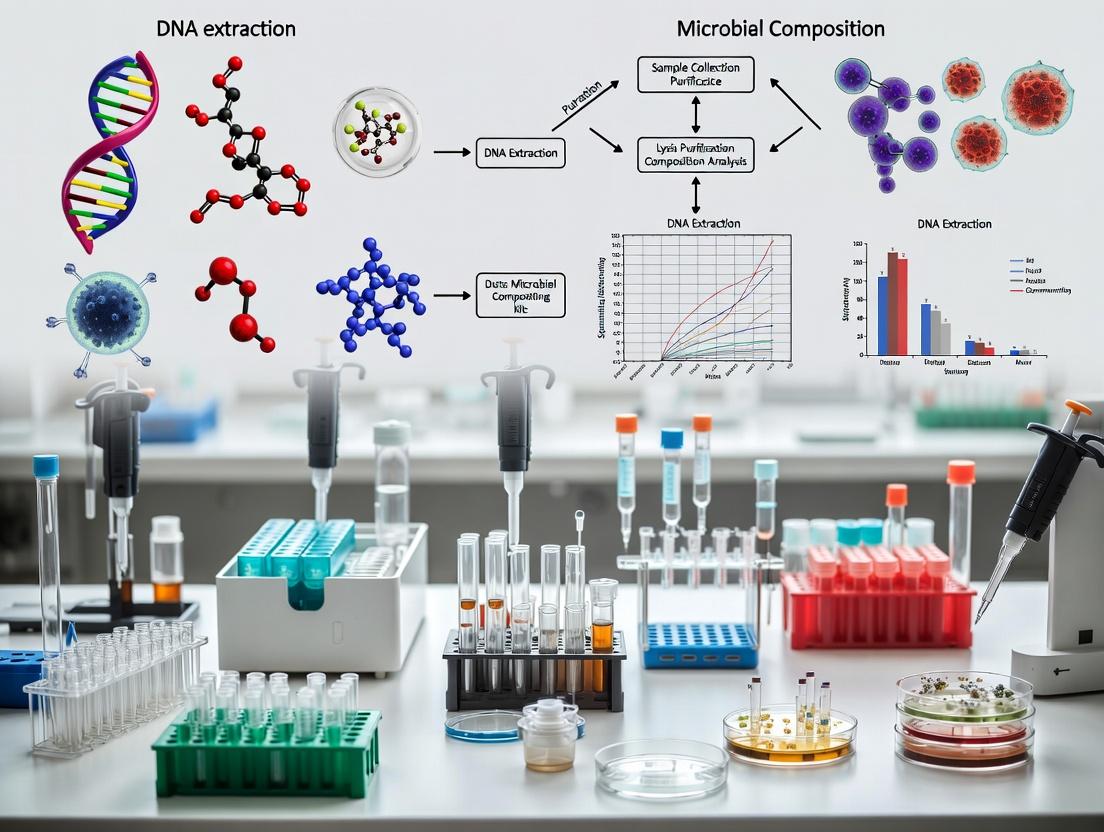
This article provides a critical examination of DNA extraction kit bias and its profound impact on microbial community profiling.
Unmasking the Bias: How Your DNA Extraction Kit Skews Microbial Composition Results in Research
Abstract
This article provides a critical examination of DNA extraction kit bias and its profound impact on microbial community profiling. Aimed at researchers, scientists, and drug development professionals, it explores the foundational sources of bias, from cell lysis efficiency to reagent contaminants. We detail methodological approaches for identifying and quantifying bias, offer practical troubleshooting and optimization strategies for minimizing its effects, and review validation studies and comparative benchmarks of leading commercial kits. The synthesis of this information is essential for ensuring data integrity, enabling accurate cross-study comparisons, and advancing robust microbiome research in biomedical and clinical contexts.
The Hidden Variable: Understanding How DNA Extraction Introduces Bias in Microbiome Analysis
Technical Support & Troubleshooting Center
FAQs & Troubleshooting Guides
Q1: Why do my metagenomic samples from the same source yield different microbial community profiles when I use different extraction kits? A: This is a classic symptom of extraction kit bias. Different kits utilize varying chemical and mechanical lysis methods, bead compositions, and binding chemistries, which selectively favor the recovery of DNA from certain microbial taxa (e.g., Gram-positive vs. Gram-negative bacteria, spores, fungi). This directly impacts downstream alpha and beta diversity metrics, skewing your compositional results.
Q2: How can I identify if extraction bias is affecting my study's conclusions? A: Perform a controlled kit comparison experiment using a mock microbial community with a known, defined composition. Extract DNA from aliquots of this same mock community using different kits or protocols. Sequence and analyze the results against the known truth. Significant deviations indicate kit-specific bias. See the experimental protocol below.
Q3: My kit yields low DNA concentration from environmental samples (e.g., soil). What should I optimize? A: Low yield often points to incomplete cell lysis or inhibitor carryover.
- Check Lysis Step: For robust environmental samples, ensure you are using a combination of mechanical (e.g., bead beating intensity/duration) and chemical lysis. Increase bead beating time in increments of 30 seconds, but monitor for potential DNA shearing.
- Address Inhibitors: Use kit-specific or additional inhibitor removal steps (e.g., polyvinylpolypyrrolidone for humic acids). Ensure wash buffers are thoroughly removed during spin steps.
- Positive Control: Spike a known amount of an exogenous control organism (not expected in your sample) to calculate absolute recovery efficiency.
Q4: I see high host DNA contamination in my host-associated microbiome samples. Which kit components influence this? A: Host (e.g., human, plant) DNA contamination is a critical bias. Solutions include:
- Selective Lysis: Some kits offer pre-lysis steps with milder buffers to lyse mammalian cells first, which are then discarded before microbial lysis.
- Enzymatic Depletion: Post-extraction, use kits with enzymes that selectively digest host DNA (e.g., based on methylation patterns).
- Propidium Monoazide (PMA) Treatment: For viability-focused studies, PMA can penetrate dead host and microbial cells, crosslinking their DNA and preventing its amplification.
Q5: How does the choice of bead material in lysis tubes affect my results? A: Bead material and size are crucial for bias. Larger, denser beads (e.g., zirconia/silica) are more effective at breaking tough cell walls (Gram-positives, spores) but may shear DNA more. Smaller, lighter beads (e.g., glass) are gentler. Mixtures of bead sizes can provide more uniform lysis across cell types. Consistency in bead beating speed and time is paramount for reproducibility.
Experimental Protocol: Evaluating Extraction Kit Bias Using a Mock Microbial Community
Objective: To quantify the bias introduced by different DNA extraction kits on microbial community profiling.
Materials:
- Mock Microbial Community: Commercially available (e.g., ZymoBIOMICS Microbial Community Standard). Contains defined ratios of Gram-positive and Gram-negative bacteria and yeast.
- DNA Extraction Kits: Select 2-3 kits with different lysis principles (e.g., one emphasizing mechanical lysis, one enzymatic).
- Equipment: Bead beater, microcentrifuge, thermomixer, Qubit fluorometer, qPCR system, sequencer.
Methodology:
- Sample Aliquot: Prepare at least 5 replicate aliquots of the identical mock community suspension for each extraction kit to be tested.
- DNA Extraction: Perform extractions on each aliquot strictly according to each manufacturer's protocol. Include any optional recommended steps (e.g., enhanced lysis).
- Quality Control: Measure DNA concentration (Qubit) and purity (A260/A280). Assess fragment size (gel electrophoresis or TapeStation).
- Quantitative Analysis: Perform qPCR with taxon-specific primers for each organism in the mock community to calculate absolute recovery.
- Sequencing: Prepare 16S rRNA gene amplicon or shotgun metagenomic libraries from a normalized amount of DNA from each extraction. Sequence on a common platform (e.g., Illumina).
- Bioinformatics & Statistical Analysis:
- Process sequences through a standard pipeline (DADA2 for 16S, KneadData/MetaPhlAn for shotgun).
- Compare the observed relative abundances to the known expected abundances.
- Calculate bias metrics: Percent recovery, fold-change difference, and statistical significance (e.g., PERMANOVA on Bray-Curtis distances).
Table 1: Comparison of Theoretical vs. Observed Relative Abundance (%) from a Mock Community
| Microbial Taxon (Cell Type) | Theoretical Abundance | Kit A (Mechanical Focus) | Kit B (Enzymatic Focus) | Kit C (Hybrid) |
|---|---|---|---|---|
| Pseudomonas aeruginosa (Gram-) | 25% | 28% (±2.1) | 22% (±1.8) | 26% (±1.5) |
| Escherichia coli (Gram-) | 25% | 26% (±1.9) | 27% (±2.0) | 25% (±1.2) |
| Bacillus subtilis (Gram+ spore) | 25% | 18% (±3.5) | 10% (±2.8) | 22% (±2.1) |
| Staphylococcus aureus (Gram+) | 12.5% | 15% (±2.5) | 8% (±1.9) | 13% (±1.8) |
| Saccharomyces cerevisiae (Fungus) | 12.5% | 13% (±2.8) | 33% (±4.2) | 14% (±2.0) |
| Total DNA Yield (ng) | - | 45 (±5) | 32 (±6) | 50 (±4) |
| Key Bias Observation | - | Under-represents spores | Over-represents yeast; very low Gram+ recovery | Most accurate to theoretical |
Visualization: Workflow for Assessing Extraction Kit Bias
Diagram Title: Workflow for DNA Extraction Kit Bias Assessment
The Scientist's Toolkit: Key Research Reagent Solutions
Table 2: Essential Materials for Bias Evaluation Studies
| Item | Function in Bias Assessment |
|---|---|
| Mock Microbial Community Standard | Provides a ground-truth sample with known, stable composition of diverse microorganisms to quantify kit recovery efficiency. |
| Internal DNA Spike-in Control | Exogenous DNA (e.g., from phage or uncommon species) added pre-extraction to calibrate and normalize for extraction efficiency and inhibitor effects across samples. |
| Inhibitor Removal Matrices | Specific resins or beads (e.g., PVPP, PTFE) added to lysis buffer to bind humic acids, polyphenols, or other co-extracted substances that inhibit downstream reactions. |
| Propidium Monoazide (PMA) | Viability dye that penetrates compromised membranes, crosslinking DNA from dead cells/lysed host DNA, reducing their signal in sequencing data. |
| Bead Beating Tubes (Various) | Tubes containing defined mixtures of zirconia, silica, or glass beads of different sizes to standardize and optimize mechanical lysis across sample types. |
| Host DNA Depletion Kit | Enzymatic or probe-based system to selectively remove host (e.g., human, mouse) DNA post-extraction, enriching for microbial sequences. |
| Universal & Taxon-Specific qPCR Primers | Used to absolutely quantify total bacterial/fungal load and specific taxa from the mock community to calculate percent recovery. |
Troubleshooting Guides & FAQs
Q1: Why do my DNA extraction yields from a mixed microbial community vary drastically when I change the bead-beating time?
A: Variation in bead-beating time is a primary source of bias in cell lysis efficiency. Gram-positive bacteria (e.g., Firmicutes) have thicker peptidoglycan layers and require more rigorous mechanical disruption than Gram-negative bacteria. Excessive lysis can shear DNA from easily lysed cells, reducing their apparent abundance. A standardized, optimized protocol is critical.
Experimental Protocol for Optimization:
- Prepare identical aliquots of a standardized mock microbial community (with known ratios of Gram-positive and Gram-negative cells).
- Subject aliquots to bead-beating (0.1mm silica/zirconia beads) for a range of times (e.g., 30s, 1min, 2min, 5min, 10min).
- Extract DNA using a consistent kit and elution volume.
- Quantify total DNA yield (Qubit) and profile fragment size (TapeStation).
- Perform 16S rRNA gene qPCR or sequencing to assess shifts in the relative abundance of community members.
- The optimal time maximizes total yield without causing a significant shift in the known ratio or excessive DNA shearing.
Q2: How does incomplete inhibitor removal during extraction skew my downstream qPCR or sequencing results?
A: Inhibitor carryover (e.g., humic acids, phenols, salts, heparin) can selectively inhibit polymerase activity. This leads to underestimated microbial abundances in qPCR and reduced sequencing depth or altered community composition in NGS, as inhibition is rarely uniform across all sample types or co-extracted molecules.
Experimental Protocol for Detection:
- Spike-in Control: Add a known quantity of exogenous DNA (e.g., from a non-native species like Arabidopsis thaliana) to the lysis buffer at the start of extraction.
- Post-extraction, perform qPCR targeting both the spike-in and a common microbial target (e.g., 16S rRNA gene).
- Compare the recovery efficiency of the spike-in across samples. A significant drop in spike-in recovery indicates inhibitor carryover.
- Correlate spike-in recovery with microbial target quantification to identify inhibition-driven bias.
Q3: Does the choice of DNA binding column/silica membrane material affect the representation of different DNA fragment sizes?
A: Yes. Most silica membranes have a size-dependent binding efficiency, favoring fragments within a specific range (often ~100bp to 10kb). Very small fragments (e.g., from overshearing or viral DNA) may be lost during wash steps, while very large fragments may bind inefficiently. This can bias against taxa whose DNA is more prone to shear or that have specific GC content affecting binding.
Data Presentation: Table 1: Impact of Bead-Beating Duration on DNA Yield and Community Profile from a Soil Mock Community
| Bead-Beating Time | Total DNA Yield (ng) | Mean Fragment Size (bp) | Relative Abundance Firmicutes (%) | Relative Abundance Proteobacteria (%) |
|---|---|---|---|---|
| 30 seconds | 15.2 ± 2.1 | 23,000 ± 1,500 | 18.5 ± 3.2 | 65.3 ± 4.1 |
| 2 minutes | 45.7 ± 5.6 | 12,000 ± 2,800 | 42.1 ± 4.8 | 42.8 ± 3.9 |
| 5 minutes | 48.9 ± 4.3 | 5,500 ± 1,200 | 44.5 ± 5.1 | 41.1 ± 4.5 |
| 10 minutes | 40.1 ± 6.0 | 2,800 ± 950 | 43.2 ± 4.7 | 40.2 ± 5.0 |
Table 2: Effect of Inhibitor Carryover on qPCR Efficiency Using a Spike-in Control
| Sample Type | Spike-in Recovery (%) | 16S rRNA Gene Ct Value | Inferred Inhibition Bias (ΔCt) |
|---|---|---|---|
| Pure Culture | 100 ± 5 | 18.2 ± 0.3 | 0.0 |
| Stool | 85 ± 7 | 19.1 ± 0.4 | +0.9 |
| Soil | 45 ± 10 | 21.8 ± 0.7 | +3.6 |
| Plant Tissue | 60 ± 8 | 20.5 ± 0.6 | +2.3 |
The Scientist's Toolkit: Research Reagent Solutions
| Item | Function & Relevance to Bias Mitigation |
|---|---|
| Standardized Mock Communities (e.g., ZymoBIOMICS) | Contains known, fixed ratios of microbial cells with varying cell wall strengths. Serves as an internal control to benchmark lysis bias and DNA recovery efficiency across different extraction protocols. |
| Inhibitor-Removal Additives (e.g., PTB, PVP, BSA) | Added to lysis buffer to bind and neutralize specific co-purifying inhibitors (humics, polyphenols, proteins) that can cause carryover and downstream enzymatic inhibition. |
| Exogenous Spike-in DNA (e.g., A. thaliana gBlock) | A non-biological, quantifiable DNA sequence added at lysis. Its recovery rate directly measures inhibitor carryover and extraction efficiency, allowing for data normalization. |
| Size-fractionated DNA Ladders/Controls | Used to calibrate and evaluate the fragment-size bias of silica membranes or magnetic beads during DNA binding and elution steps. |
| Alternative Binding Matrices (Magnetic Beads) | Different bead chemistries (silica, carboxylated) have distinct size and concentration binding curves. Testing alternatives can optimize recovery for specific sample types. |
Visualizations
Diagram 1: DNA Extraction Bias Analysis Workflow
Diagram 2: Inhibitor Carryover Bias Mechanism
Technical Support Center: Troubleshooting DNA Extraction Kit Bias
FAQ 1: Why does my extracted DNA show an underrepresentation of Gram-positive bacteria in my community analysis?
Answer: This is a common issue rooted in the structural differences in bacterial cell walls. Gram-positive bacteria have a thick, multi-layered peptidoglycan shell that is highly resistant to standard mechanical and enzymatic lysis. Gram-negative bacteria, with their thinner peptidoglycan layer and outer membrane, lyse more readily. Most commercial DNA extraction kits employ a standardized lysis protocol optimized for general yield, not equitable lysis across cell wall types. This creates a "lysis efficiency bias," where the microbial composition in the extracted DNA does not reflect the true ratio in the original sample, skewing downstream 16S rRNA sequencing or qPCR results.
FAQ 2: How can I diagnose if lysis bias is affecting my specific samples?
Answer: Perform a controlled spike-in experiment.
- Protocol: Take aliquots of your environmental sample (e.g., stool, soil). Spike each aliquot with a known, quantified amount of two control organisms: one Gram-positive (e.g., Bacillus subtilis) and one Gram-negative (e.g., Escherichia coli). Use genetically modified strains or species not expected in your sample for clear identification.
- Extraction: Proceed with your standard DNA extraction protocol.
- Quantification: Use species-specific qPCR targeting the spike-in organisms to measure their recovery efficiency.
- Analysis: Calculate the ratio of G+ to G- recovery. A ratio significantly below 1 indicates a Gram-positive bias (under-lysis). Consistently high ratios indicate Gram-negative bias.
Data from Recent Studies on Lysis Efficiency:
Table 1: Recovery Efficiency of Representative Bacteria from a Fecal Matrix Using Different Lysis Methods
| Lysis Method | Gram-Positive (Lactobacillus) Recovery | Gram-Negative (E. coli) Recovery | G+/G- Recovery Ratio | Bias Indicated |
|---|---|---|---|---|
| Kit A (Bead Beating, 5 min) | 85% ± 12% | 92% ± 8% | 0.92 | Low |
| Kit B (Enzymatic only) | 22% ± 15% | 95% ± 5% | 0.23 | High (G- Bias) |
| Kit C (Thermal Shock) | 45% ± 10% | 88% ± 7% | 0.51 | Moderate (G- Bias) |
Table 2: Impact of Bead Beating Time on Perceived Community Composition (Simulated Community)
| Bead Beating Duration | Reported % Gram-Positive (Actual: 50%) | Reported % Gram-Negative (Actual: 50%) | Total DNA Yield |
|---|---|---|---|
| 1 minute | 32% ± 8% | 68% ± 8% | 85 µg |
| 5 minutes | 48% ± 6% | 52% ± 6% | 100 µg |
| 10 minutes | 52% ± 5% | 48% ± 5% | 95 µg |
FAQ 3: What is the most effective protocol adjustment to mitigate this bias?
Answer: Incorporating robust mechanical disruption is critical. The recommended optimized protocol is:
Enhanced Mechanical Lysis Protocol:
- Sample Preparation: Suspend your sample in the kit's lysis buffer.
- Bead Selection: Use a mixture of lysing matrix beads (e.g., 0.1 mm silica/zirconia beads for thorough disruption alongside larger beads for vortex mixing).
- Mechanical Treatment: Process the sample in a high-speed bead beater (e.g., MagNA Lyser, FastPrep) for 3-5 cycles of 60 seconds each, with 2-minute intervals on ice to prevent DNA degradation from overheating.
- Enzymatic Augmentation: Pre-treat Gram-positive-rich samples with mutanolysin (25 U/mL) and/or lysozyme (20 mg/mL) at 37°C for 30-60 minutes prior to mechanical lysis. This weakens the peptidoglycan layer.
- Proceed with the kit's standard binding, wash, and elution steps.
Visualization of the Lysis Bias and Mitigation Workflow
Title: Workflow of Lysis Bias and Mitigation Path
FAQ 4: How do I validate that my optimized protocol has reduced bias?
Answer: Validation requires a combination of approaches:
- Spike-in Control Recovery: As in FAQ 2, calculate the G+/G- recovery ratio. Aim for a ratio close to 1.0.
- Microscopy Check: Perform Gram staining on a sample aliquot post-lysis but before centrifugation. A significant reduction in intact Gram-positive cocci/rods indicates effective lysis.
- Community Profile Stability: For complex samples, perform lysis with increasing bead-beating time (1, 3, 5, 10 min). The point where the relative abundance of major Gram-positive phyla (e.g., Firmicutes, Actinobacteria) stabilizes is your optimal time.
The Scientist's Toolkit: Key Reagents for Unbiased Lysis
Table 3: Essential Research Reagent Solutions
| Reagent/Material | Function in Mitigating Lysis Bias |
|---|---|
| Lysozyme | Hydrolyzes β-1,4-glycosidic bonds in peptidoglycan, weakening the Gram-positive cell wall. |
| Mutanolysin | Cleaves the glycan strands of peptidoglycan, often more effective than lysozyme for certain Gram-positive bacteria. |
| Lysostaphin | Specifically cleaves the pentaglycine cross-bridges in Staphylococcus peptidoglycan. |
| Zirconia/Silica Beads (0.1 mm) | Provide intense mechanical shearing force to physically break robust cell walls. |
| Phenol:Chloroform:Isoamyl Alcohol (25:24:1) | Used in manual purification after harsh lysis to efficiently separate DNA from proteins/lipids. |
| Internal Spike-in Controls (G+ & G-) | Genetically distinct, quantified cells added to sample to quantitatively measure extraction bias. |
| Inhibitor Removal Matrices | Critical after harsh lysis, which releases more humic acids, proteins, and polysaccharides that inhibit downstream PCR. |
Title: Impact Pathway of Lysis Bias on Research Conclusions
Technical Support Center
Troubleshooting Guides & FAQs
Q1: Our negative controls consistently show bacterial reads, predominantly from genera like Pseudomonas, Burkholderia, and Ralstonia. Is this contamination, and what is the likely source? A: Yes, this is a classic sign of reagent-derived contamination, often termed the "kitome." These specific genera are ubiquitous contaminants in molecular biology reagents, including water, polymerases, and DNA extraction kit buffers. The low biomass of your target samples is being overwhelmed by contaminating DNA introduced during processing.
Q2: How can we definitively distinguish true low-biomass signals from kit contaminants? A: You must implement a rigorous experimental design featuring multiple, parallel negative controls. The key is to use the same reagents/lots and perform the controls alongside your samples through the entire extraction and sequencing workflow. Statistical subtraction of contaminants identified in controls is then required.
Protocol: Establishing Negative Controls
- Reagent Blank Control: Include a tube containing only the lysis buffer or molecular grade water that undergoes the entire DNA extraction process.
- Extraction Blank Control: Process a blank (no sample) through the entire extraction kit protocol.
- Library Preparation Control: Carry an extraction blank through the subsequent PCR amplification and library preparation steps.
- Sequencing Control: Include the library blanks in the final sequencing run.
- Replication: Perform at least 3 replicates for each control type.
- Analysis: Generate a contaminant profile from the controls. Any operational taxonomic unit (OTU) or amplicon sequence variant (ASV) present in your samples must be evaluated against its abundance in the controls.
Q3: Are there established thresholds for contaminant removal from sequencing data? A: There is no universal threshold, but common practices involve filtering based on abundance and prevalence in controls. Contaminants are typically low-abundance and found consistently across negative controls. The following table summarizes common filtration parameters used in recent literature:
Table 1: Common Data Filtration Parameters for Contaminant Removal
| Parameter | Typical Threshold | Rationale |
|---|---|---|
| Prevalence in Controls | Present in >50-75% of control replicates | Identifies consistent, non-stochastic contaminants. |
| Mean Abundance in Controls | >0.1% - 1% of control library | Removes high-abundance contaminant taxa. |
| Sample-to-Control Ratio | Sample reads > 10x mean control reads (per taxon) | Keeps taxa where sample signal strongly exceeds background. |
| Decontam (Prev) Method | Prevalence threshold p=0.1-0.5 | Statistical identification of contaminants based on prevalence differences. |
Q4: Which DNA extraction kits are known to have the lowest contaminant profiles? A: Contaminant loads vary by kit and even by manufacturing lot. Kits designed for low-biomass or forensic applications (e.g., Mo Bio PowerSoil Pro, Qiagen DNeasy Blood & Tissue with pre-cleaned reagents) often have lower and more characterized bioburdens. However, lot testing with your own negative controls is non-negotiable.
Protocol: Kit & Reagent Lot Screening
- Procurement: Order multiple lots of your chosen extraction kit.
- Testing: For each kit lot, perform extraction and sequencing on 5-7 replicate negative controls (water blanks).
- Analysis: Generate a contaminant profile for each lot. Quantify total reads and diversity (e.g., Shannon Index) of the contaminants.
- Selection: Choose the lot with the lowest and most consistent contaminant profile for your main study.
- Documentation: Record the selected kit's lot number in your publication's methods section.
Q5: What wet-lab methods can minimize the introduction of kitome contaminants? A: Pre-treatment of reagents and environmental control are critical.
Protocol: Reagent Decontamination & Clean Handling
- UV Irradiation: Expose non-enzymatic reagents (buffers, water) and empty tubes/pippette tips to 254 nm UV light in a crosslinker for 30-60 minutes. This degrades contaminating DNA.
- DNase Treatment: Treat some reagents (e.g., PBS) with DNase I, followed by heat inactivation. Do not use on kits containing DNA or enzymes.
- Dedicated Workspace: Use a PCR workstation or dedicated hood for low-biomass work. Clean surfaces routinely with DNA-away solutions.
- Enzymatic Choice: Use high-fidelity, ultrapure polymerases certified for low DNA contamination.
The Scientist's Toolkit: Key Research Reagent Solutions
Table 2: Essential Materials for Mitigating Kitome Contaminants
| Item | Function & Rationale |
|---|---|
| UltraPure DNase/RNase-Free Water | A critical reagent with certified low DNA bioburden, used for blanks and sample reconstitution. |
| UV Crosslinker (254 nm) | Device for degrading contaminating DNA in buffers, tubes, and tips prior to use. |
| PCR Workstation / Laminar Flow Hood | Provides a HEPA-filtered, clean-air environment for reagent setup and low-biomass sample handling. |
| DNA Degrading Surface Cleaner (e.g., DNA-away) | A chemical solution used to destroy contaminating DNA on lab surfaces and equipment. |
| High-Fidelity, Low-DNA Polymerase (e.g., Platinum II Taq) | Reduces the introduction of contaminating DNA from the polymerase enzyme itself during amplification. |
| Certified Low-Bioburden DNA Extraction Kit (e.g., PowerSoil Pro) | Kits specifically manufactured and quality-controlled for minimal microbial DNA contamination. |
| Sterile, DNA-Free Filter Pipette Tips | Prevents aerosol carryover and is certified free of amplifiable DNA. |
| Microbial DNA-Free Tubes (e.g., LoBind) | Tubes treated to minimize adhesion of and contamination by microbial DNA. |
Experimental Workflow & Analysis Pathways
Title: Workflow for Kitome Contaminant Identification & Removal
Title: Sources of Kitome & Corresponding Mitigation Strategies
FAQ & Troubleshooting Guide
Q1: I suspect my DNA extraction kit is skewing my alpha diversity (e.g., Shannon Index) results. How can I diagnose this? A: Kit bias often manifests as suppressed diversity in complex samples or inflated diversity in low-biomass samples due to contaminant DNA. To diagnose:
- Run a Mock Community Control: Use a ZymoBIOMICS Microbial Community Standard alongside your samples. Extract DNA using your kit and a validated, bead-beating intensive kit (e.g., MagAttract PowerSoil DNA Kit) for comparison.
- Quantify and Compare: Calculate alpha diversity metrics for both extractions of the mock community.
| Metric | Expected Value (Mock Truth) | Your Kit Result | Bead-Beating Kit Result | Potential Issue |
|---|---|---|---|---|
| Observed ASVs | 8 (known) | 5 | 8 | Lysis bias against Gram-positives |
| Shannon Index | ~1.8 (known) | 1.2 | 1.75 | Incomplete community representation |
| Evenness (Pielou's) | ~0.85 | 0.65 | 0.83 | Over-representation of dominant, easily-lysed taxa |
Protocol: Mock Community Analysis
- Materials: ZymoBIOMICS Microbial Community Standard (D6300), candidate extraction kit, comparator kit (e.g., Qiagen PowerSoil Pro).
- Steps: 1) Resuspend mock community per manufacturer instructions. 2) Aliquot identical volumes (e.g., 200 µL) into 6 replicates. 3) Extract 3 replicates with each kit, following protocols precisely. 4) Sequence all libraries on the same Illumina run using 16S rRNA gene (V4) or shotgun metagenomic sequencing. 5. Process sequences through a single bioinformatics pipeline (QIIME 2/DADA2 or mothur).
Q2: My beta diversity (PCoA) plots show separation by extraction kit type, not by sample group. How do I troubleshoot and mitigate this? A: This is a classic sign of extraction bias overpowering biological signal.
- Identify Taxa Driving Separation: Perform a differential abundance analysis (e.g., DESeq2, LEfSe) between samples grouped by extraction kit. The taxa identified are likely the kit-sensitive organisms.
- Wet-Lab Mitigation: For ongoing studies, re-extract all samples with a single, validated kit. For future studies, include a "kit" as a blocking factor in your experimental design and use the same kit/lot for all samples.
- Bioinformatic Mitigation: Use batch-correction tools like
ComBat(from thesvapackage) orRUVseqwith the extraction kit as a batch variable, but only if you have replicates and a balanced design.
Title: Troubleshooting Workflow for Kit-Driven Beta Diversity Bias
Q3: For low-biomass samples (e.g., skin swabs), my extraction yields high alpha diversity but is likely contaminated. How can I identify and filter kit contaminants? A: You must identify and subtract background DNA.
- Run Negative Controls: Include "blank" extraction controls (lysis buffer only) with every batch.
- Create a Contaminant Database: Sequence the negatives. Any ASV/OTU present in negatives is a potential kit/lab contaminant.
- Filtering: Use tools like
decontam(R package) in "prevalence" mode, which identifies contaminants more prevalent in negative controls than in true samples.
Protocol: Contaminant Removal with decontam
- Input: An ASV/OTU table (counts) and a sample metadata column specifying "Sample" or "Control".
- Steps in R:
The Scientist's Toolkit: Research Reagent Solutions
| Item | Function & Rationale |
|---|---|
| ZymoBIOMICS Microbial Community Standard (D6300) | Defined mock community of 8 bacteria and 2 yeasts. Serves as a positive control to benchmark extraction kit efficiency and bias quantitatively. |
| ZymoBIOMICS Gut Microbiome Standard (D6320) | Complex, defined mock community mimicking gut composition. Challenges extraction kit performance with a wider range of cell wall types. |
| MagAttract PowerSoil DNA Kit (Qiagen) | Bead-beating intensive kit considered a robust standard for difficult-to-lyse bacteria. Useful as a comparator in bias assessment experiments. |
| Phusion Plus PCR Master Mix (Thermo) | High-fidelity polymerase for library amplification. Reduces PCR-induced errors that can artificially inflate diversity metrics. |
| PCRClean DX Beads | Magnetic beads for post-PCR cleanup. Provide consistent size selection and purification, minimizing batch effects in library prep. |
| DNase/RNase-Free Water | Certified nuclease-free water. Critical for low-biomass work to prevent introduction of contaminating environmental DNA. |
Title: Causal Pathway from Extraction Bias to Distorted Metrics
From Theory to Bench: Protocols to Detect and Measure Extraction Bias in Your Lab
Technical Support Center
Troubleshooting Guides & FAQs
Q1: We observed significant variation in 16S rRNA gene yield between replicate samples extracted with the same kit. What are the likely causes and solutions? A: This is commonly due to inconsistent lysis efficiency or bead-beating. Ensure the homogenizer is calibrated and tubes are positioned consistently. For tough Gram-positive bacteria, consider adding a lysozyme pre-treatment step (10 mg/mL, 37°C for 30 min) before the standard protocol. Verify that all samples are at the same starting volume and homogenization temperature.
Q2: Our negative control (blank) shows bacterial contamination in downstream sequencing. How should we proceed? A: Contaminated reagents or labware are likely. Immediately aliquot all buffers, use UV-irradiated plasticware, and include multiple negative controls (lysis buffer only, PCR water only). If contamination persists, prepare fresh solutions in a clean, dedicated space. Data from runs with contaminated controls should be treated with extreme caution or discarded.
Q3: How do we standardize input biomass across diverse sample types (e.g., stool vs. soil) for a fair kit comparison? A: Use a quantitative proxy for microbial biomass. We recommend quantifying 16S rRNA gene copies via qPCR from a small aliquot of crude lysate before purification. Alternatively, measure total protein or DNA content. The goal is to normalize to a consistent number of cells (e.g., 10^7 16S copies) for the extraction input, not necessarily mass or volume.
Q4: What is the recommended number of biological and technical replicates for a kit comparison study aimed at detecting kit-induced bias? A: Based on current meta-analyses, a robust design requires:
- Biological Replicates: Minimum of 5 per sample type/condition.
- Technical Replicates (same kit): Minimum of 3 per biological sample to assess repeatability.
- Kit Replicates: Test at least 3 different kits from distinct principle categories (e.g., bead-beating vs. enzymatic lysis). This allows for variance partitioning to attribute bias sources.
Q5: Our DNA extraction yields are high, but the community profiles from two kits are drastically different. Which one is "correct"? A: Neither may be perfectly accurate. Include a mock microbial community control with a known, defined composition (e.g., from ZymoBIOMICS or ATCC). Compare the kit's output profile against the known truth to calculate metrics like Bray-Curtis dissimilarity and taxon recovery rates. The kit that recovers the mock community with highest fidelity should be prioritized for your specific sample matrix.
Table 1: Common Extraction Kit Performance Metrics (Hypothetical Data from Recent Studies)
| Kit Name (Principle) | Mean Yield (ng DNA/g sample) | Mean 260/280 Ratio | % Recovery from Mock Community* | Observed Bias (Primary Taxon Affected) |
|---|---|---|---|---|
| Kit A (Mechanical Lysis) | 450 ± 120 | 1.85 ± 0.05 | 92% | Low: Gram-positive (Firmicutes) |
| Kit B (Chemical Lysis) | 320 ± 85 | 1.91 ± 0.03 | 78% | High: Gram-negative (Bacteroidetes) |
| Kit C (Enzymatic + Mech.) | 510 ± 95 | 1.88 ± 0.04 | 95% | Moderate: Spore-formers (Bacillota) |
*As measured by similarity to expected profile via 16S amplicon sequencing.
Table 2: Recommended Replication Scheme for Kit Comparison
| Replicate Type | Purpose | Minimum Recommended Number | Statistical Role |
|---|---|---|---|
| Biological | Capture natural sample variation | 5 per sample type | Primary source of variance |
| Technical (Kit) | Assess kit repeatability | 3 per biological sample | Quantifies kit precision error |
| Process Control (Mock) | Assess accuracy & bias | 2 per extraction batch | Gold standard for bias detection |
| Negative Control | Detect contamination | 1 per kit per batch | Identifies background signal |
Experimental Protocols
Protocol 1: Standardized Sample Input Preparation for Fecal Samples
- Homogenize fresh or thawed fecal sample in anaerobic PBS (100 mg/mL) by vortexing for 15 min.
- Centrifuge at 500 x g for 2 min at 4°C to remove large particulate matter.
- Collect supernatant. Quantify 16S rRNA gene copies in a 100 µL aliquot using a universal 16S qPCR assay.
- Dilute or concentrate the remaining supernatant to a target concentration of 1 x 10^7 16S gene copies per 200 µL input volume for extraction.
- Flash-freeze standardized aliquots at -80°C until extraction.
Protocol 2: Incorporating a Mock Community Control
- Obtain a commercially available, defined mock microbial community (e.g., ZymoBIOMICS Microbial Community Standard D6300).
- Resuspend according to manufacturer instructions. Serially dilute in sterile, DNA-free PBS to match the expected microbial load of your experimental samples.
- Process the mock community sample alongside your experimental samples and negative controls through the entire extraction and library preparation pipeline.
- Use sequencing results from this sample to generate a kit-specific bias correction factor if possible, or at minimum, to rank kit accuracy.
Visualization
Kit Comparison Experimental Workflow
Sources of Bias in Observed Community Profile
The Scientist's Toolkit: Research Reagent Solutions
| Item | Function in Kit Comparison Study |
|---|---|
| Defined Mock Microbial Community | Serves as an absolute control with known composition to quantify extraction kit accuracy and bias. |
| Universal 16S rRNA qPCR Assay | Quantifies bacterial load for standardizing input biomass across diverse samples prior to extraction. |
| Inhibitor-Removal Beads/Columns | Critical for samples like soil or stool; kit differences here majorly affect downstream PCR success. |
| Lysozyme & Proteinase K | Enzymatic pre-treatment solutions to enhance lysis of tough cell walls, testing if kits require supplementation. |
| DNA Spike-In (e.g., phlambda DNA) | Non-bacterial exogenous DNA added pre-extraction to monitor and normalize for recovery efficiency and inhibitor carryover. |
| Standardized Bead Beating Tubes | Ensures mechanical lysis consistency across kits and replicates; a major source of technical variation. |
Utilizing Mock Microbial Communities as Gold-Standard Calibrators
Technical Support Center: Troubleshooting & FAQs
Troubleshooting Guides
Issue: Observed Community Composition Deviates from Expected Mock Profile
| Symptom | Potential Cause | Recommended Action | Verification Step |
|---|---|---|---|
| Underrepresentation of Gram-positive taxa | Inefficient cell lysis due to robust cell wall | 1. Incorporate a mechanical lysis step (e.g., bead beating).2. Increase incubation time with enzymatic lysis agents.3. Use a kit validated for Gram-positive bacteria. | Run a post-extraction PCR with universal 16S rRNA primers on the mock community DNA. If amplification is weak, lysis was incomplete. |
| Overrepresentation of Pseudomonas spp. | Competitive advantage during PCR or kit reagent carryover inhibition | 1. Re-optimize PCR cycle number and template concentration.2. Use a polymerase mix with a hot-start and high processivity.3. Perform additional post-extraction clean-up steps. | Spike in an internal control (e.g., synthetic alien sequence) post-extraction to assess PCR bias independently. |
| High variability in replicate extractions | Inconsistent sample input or protocol deviation | 1. Use a calibrated pipette for mock community aliquots.2. Follow a strict, timed protocol.3. Vortex all liquid reagents before use. | Calculate the coefficient of variation for relative abundances of 2-3 key taxa across replicates. Aim for <10%. |
Issue: Low DNA Yield from Mock Community
| Symptom | Potential Cause | Recommended Action |
|---|---|---|
| Yield below kit's stated minimum input | Mock community biomass too low; DNA binding column saturation | 1. Concentrate the mock community aliquot by centrifugation.2. Ensure elution buffer is pre-warmed (50-55°C) and incubated on the membrane for 2-5 minutes.3. Perform a second elution step with fresh buffer. |
| High A260/A230 ratio (<1.5) | Carryover of kit reagents (e.g., guanidine salts) inhibiting downstream steps | 1. Ensure all wash buffers contain the correct ethanol concentration.2. Centrifuge columns for 1 minute after the final wash to dry the membrane.3. Use a dedicated wash buffer (e.g., Buffer PW from Qiagen kits) if provided. |
Frequently Asked Questions (FAQs)
Q1: Which commercial mock community is best for calibrating my DNA extraction kit bias? A: There is no single "best" community. Your choice depends on your environmental sample type. For gut microbiome studies, use a mock like the "ZymoBIOMICS Microbial Community Standard." For soil, a community with spores and fungi (e.g., "ATCC MSA-1003") is more appropriate. The key is phylogenetic and cell-wall-structure similarity to your samples.
Q2: How many replicate extractions should I perform for calibration? A: A minimum of five (5) technical replicates is statistically sound for identifying significant bias and calculating correction factors. For high-criticality studies (e.g., drug development), increase to n=10.
Q3: Can I create my own mock community instead of buying one? A: Yes, but it requires rigorous quantification. You must use genomic DNA from individual strains and blend them at precise, known ratios (e.g., 10^4 to 10^9 gene copies/μL). Quantification via digital PCR is recommended. Commercial mocks are preferred for reproducibility across labs.
Q4: My downstream analysis is 16S rRNA amplicon sequencing. Where in the workflow should I apply the bias correction factors derived from mocks?
A: Correction is applied after bioinformatic processing (ASV/OTU picking, taxonomy assignment) but before final statistical analysis. Generate a bias matrix from your mock community results and apply it to your experimental sample counts using computational tools like mbImpute or DEICODE.
Q5: The mock community data shows a bias, but should I switch kits or computationally correct my data? A: The optimal approach is hierarchical:
- Wet-lab optimization: First, try to minimize bias by adjusting the extraction protocol (see Troubleshooting Guide).
- Kit replacement: If bias remains high and systematic, switch to a kit that performs better on your specific mock.
- Computational correction: Use the residual bias profile from the optimized/chosen kit to correct data from all subsequent experimental samples. Document all steps.
Table 1: Performance Evaluation of Three DNA Extraction Kits on a ZymoBIOMICS Gut Microbiome Standard (Log10 Bias)
| Target Taxon (Expected %) | Kit A (Bead Beating) | Kit B (Enzymatic Lysis) | Kit C (Chemical Lysis) |
|---|---|---|---|
| Listeria monocytogenes (Gram+, 12%) | -0.3 | -1.8 | -2.1 |
| Pseudomonas aeruginosa (Gram-, 12%) | +0.1 | +0.2 | +1.5 |
| Bacillus subtilis (Gram+ spore, 12%) | -0.9 | -2.4 | -2.9 |
| Enterococcus faecalis (Gram+, 12%) | -0.5 | -1.5 | -1.9 |
| Escherichia coli (Gram-, 12%) | +0.0 | +0.1 | +0.8 |
| Salmonella enterica (Gram-, 12%) | -0.1 | +0.0 | +0.7 |
| Lactobacillus fermentum (Gram+, 12%) | -0.4 | -1.7 | -2.0 |
| Saccharomyces cerevisiae (Fungus, 16%) | -1.2 | -0.4 | -1.5 |
| Average Absolute Bias | 0.4 | 1.0 | 1.7 |
Note: Bias = Log10(Observed Abundance / Expected Abundance). Values near 0 indicate minimal bias. Red highlights indicate significant bias (|Bias| > 0.5).
Experimental Protocols
Protocol: Calibrating DNA Extraction Kit Bias Using a Mock Community
Objective: To quantify and correct for taxonomic bias introduced by a specific DNA extraction protocol.
Materials: See "The Scientist's Toolkit" below.
Method:
- Reconstitution: Thaw an aliquot of a commercially available, quantified mock microbial community (e.g., ZymoBIOMICS D6300) on ice. Vortex thoroughly for 1 minute.
- Aliquot: Pipette 200 μL of the mock community suspension into 10 separate, sterile 1.5 mL microcentrifuge tubes (for n=10 replicates).
- Extraction: Perform DNA extraction on all replicates using the kit and protocol under evaluation. Include a negative control (lysis buffer only).
- Quantification: Measure DNA concentration of each eluate using a fluorometric assay (e.g., Qubit dsDNA HS Assay).
- Sequencing Library Prep: Prepare amplicon (e.g., 16S V4) or shotgun sequencing libraries from all replicates and the negative control using a standardized PCR protocol with dual-indexed primers. Use a low-cycle-number PCR.
- Sequencing: Pool libraries in equimolar ratios and sequence on an appropriate platform (e.g., Illumina MiSeq, 2x250 bp).
- Bioinformatics: Process raw reads through a standardized pipeline (QIIME 2, DADA2). Classify sequences against the known, true reference database for the mock community.
- Bias Calculation:
- For each taxon i in each replicate r, calculate: Biasi,r = Log10( Observed Read Counti,r / Expected Read Count_i ).
- Calculate the mean bias and standard deviation for each taxon across all replicates.
- Correction Matrix: Generate a per-taxon correction factor (CFi = 10 ^ ( -MeanBias_i )). Apply this CF matrix to experimental sample data.
Protocol: Incorporating an Internal Amplification Control (IAC)
Objective: To distinguish bias originating from DNA extraction vs. later PCR amplification.
Method:
- IAC Design: Synthesize a double-stranded DNA fragment (~300 bp) with no homology to known biological sequences. Add primer binding sites compatible with your assay (e.g., 16S V4 primers) to its ends.
- Spike-in: Add a precise, known quantity (e.g., 10^4 copies) of the IAC to each sample after DNA extraction is complete, just prior to the PCR step.
- Sequencing & Analysis: Proceed with sequencing. Bioinformatically separate IAC reads from biological reads. Calculate the recovery rate of the IAC for each sample.
- Interpretation: Consistent, high recovery of IAC across all samples indicates PCR conditions are uniform. Variation in biological mock profiles can thus be attributed to extraction bias. Low or variable IAC recovery signals significant PCR bias or inhibition.
Visualizations
Title: Mock Community Calibration Workflow
Title: Key Sources of Bias in Microbial Profiling
The Scientist's Toolkit: Research Reagent Solutions
| Item | Function in Mock Community Calibration | Example Product/Brand |
|---|---|---|
| Characterized Mock Community | Provides a known truth standard with defined, stable composition and abundance to measure bias against. | ZymoBIOMICS Microbial Community Standards, ATCC MSA-1003 |
| High-Efficiency Bead Beating Kit | Ensures uniform lysis of tough cells (Gram-positives, spores) to minimize lysis bias. | MP Biomedicals FastDNA SPIN Kit, Qiagen PowerSoil Pro Kit |
| Fluorometric DNA Quant Assay | Accurately measures double-stranded DNA concentration without interference from RNA or salts. | Invitrogen Qubit dsDNA HS Assay, Promega QuantiFluor |
| Low-Bias Polymerase Mix | Reduces PCR-amplification bias introduced during library preparation. | Takara Ex Taq Hot Start, KAPA HiFi HotStart ReadyMix |
| Synthetic Spike-in DNA (IAC) | Distinguishes extraction bias from PCR bias when added post-extraction. | Custom gBlock from IDT, Spike-in controls from ERCC |
| Bioinformatic Pipeline Software | Processes raw sequence data, assigns taxonomy, and calculates bias metrics. | QIIME 2, mothur, DADA2 (in R) |
| Bias Correction Tool | Applies mathematical corrections derived from mock data to experimental samples. | R packages: mbImpute, MMUPHin |
Technical Support Center
FAQs & Troubleshooting Guides
Q1: My DNA yield from a soil sample is consistently low with my chosen kit. What are the primary factors to investigate? A: Low yield often stems from inefficient lysis. Investigate in this order:
- Mechanical Disruption: Ensure adequate bead-beating (e.g., 5-10 min at high speed for soil). Verify bead size (0.1mm silica/zirconia beads are common for robust cells).
- Incomplete Chemical Lysis: Confirm the sample is fully suspended in the lysis buffer. For gram-positive bacteria or spores, consider adding a pre-step with lysozyme (10 mg/mL, 37°C, 30 min) or mutanolysin.
- Inhibitor Carryover: Soil humic acids inhibit downstream PCR. Use kit-specific inhibitor removal steps or post-extraction purification columns.
Q2: I suspect my extraction kit is introducing bias in my microbial community analysis. How can I benchmark this? A: Benchmarking requires a defined control. Use a mock microbial community with known, even abundances (e.g., ZymoBIOMICS Microbial Community Standard). Follow this protocol:
- Extract DNA from the mock community using your kit and 2-3 alternative kits/methods (e.g., enzymatic vs. bead-beating heavy).
- Quantify total DNA yield (Qubit) and purity (A260/A280, A260/A230).
- Perform 16S rRNA gene amplicon sequencing or shotgun metagenomics.
- Compare the observed taxonomic profile to the known composition. Calculate bias metrics.
Q3: My DNA has a low A260/A230 ratio (<1.8), indicating possible contaminant carryover. How does this affect NGS and how can I fix it? A: Low A260/A230 indicates residual chaotropic salts, phenols, or carbohydrates from the lysis buffer, which can inhibit polymerase activity in PCR and library prep.
- Troubleshooting: Perform an additional wash step with the provided wash buffer or a diluted wash buffer (e.g., 80% ethanol). Ensure the wash buffer has fully evaporated during the drying step (5-10 min at room temp).
- Protocol for Post-Extraction Cleanup: Use a silica-column based cleanup kit: apply the eluted DNA to the column, wash with 700 µL wash buffer, centrifuge, dry, and elute in a low-EDTA TE buffer or nuclease-free water.
Q4: How do I accurately measure lysis efficiency itself, not just the final DNA yield? A: Direct microscopy counts or flow cytometry before and after lysis is most direct.
- Protocol (Microscopy):
- Take a 10 µL aliquot of sample pre-lysis.
- Perform the standard lysis procedure on the main sample.
- Take a 10 µL aliquot post-lysis.
- Stain both aliquots with a live/dead fluorescent stain (e.g., SYTO 9/PI).
- Count intact cells (dual-stained) vs. lysed cells (PI only) under a fluorescence microscope. Lysis Efficiency (%) = [(Initial count - Post-lysis intact count) / Initial count] * 100.
Data Presentation: Key Performance Metrics
Table 1: Typical Benchmarking Results for a Mock Community (Gram-positive and Gram-negative mix)
| Extraction Method | Avg. DNA Yield (ng) | A260/A280 | A260/A230 | Observed/Expected Ratio* (Firmicutes) | Observed/Expected Ratio* (Proteobacteria) |
|---|---|---|---|---|---|
| Kit A (Enzymatic Lysis) | 45 ± 5 | 1.85 ± 0.05 | 1.5 ± 0.3 | 0.6 ± 0.1 | 1.4 ± 0.2 |
| Kit B (Bead Beating) | 60 ± 10 | 1.80 ± 0.10 | 1.9 ± 0.1 | 0.95 ± 0.05 | 1.05 ± 0.07 |
| Kit C (Chemical + Thermal) | 30 ± 8 | 1.90 ± 0.05 | 2.0 ± 0.2 | 0.3 ± 0.05 | 1.8 ± 0.3 |
*Ratios deviate from 1.0 indicate extraction bias.
Table 2: Troubleshooting Guide: Symptoms, Causes, and Solutions
| Symptom | Likely Cause | Recommended Action |
|---|---|---|
| Low DNA Yield | Inefficient cell lysis; DNA adsorption to sample debris. | Increase mechanical disruption; add enzymatic pre-treatment; use more starting material. |
| Low Purity (Low A260/A280) | Protein contamination. | Ensure complete removal of supernatant after pelleting; add an extra wash step. |
| Low Purity (Low A260/A230) | Salt or organic contaminant carryover. | Perform an additional ethanol wash; ensure column is dry before elution; re-precipitate DNA. |
| Downstream PCR Failure | Inhibitors present; DNA sheared. | Dilute DNA template; perform post-extraction cleanup; verify elution buffer pH. |
| Skewed Microbial Profile | Differential lysis efficiency across cell types. | Benchmark with a mock community; use a harsher, standardized lysis method (bead beating). |
Experimental Protocol: Benchmarking Kit Bias
Title: Comprehensive Protocol for Assessing DNA Extraction Kit Bias in Microbiome Studies.
Objective: To systematically evaluate the bias introduced by different DNA extraction kits on the perceived microbial community composition.
Materials: See "The Scientist's Toolkit" below. Procedure:
- Sample Preparation: Reconstitute a commercial mock microbial community standard according to manufacturer instructions. Aliquot into identical volumes (e.g., 200 µL) for n≥3 replicates per kit.
- DNA Extraction: Extract genomic DNA from each aliquot using the standard protocol for each kit/method under test. Include a negative extraction control.
- Quality Control:
- Quantity: Measure DNA concentration using a fluorescence-based assay (e.g., Qubit dsDNA HS Assay).
- Purity: Measure absorbance ratios (A260/A280, A260/A230) via spectrophotometry (e.g., NanoDrop).
- Downstream Analysis: Perform 16S rRNA gene amplicon sequencing (V3-V4 region) on all extracts using a standardized library prep and sequencing platform.
- Data Analysis:
- Process sequences through a standard bioinformatics pipeline (QIIME 2, DADA2).
- Compare relative abundances of known taxa in the mock community to their expected abundances.
- Calculate bias metrics such as fold-change deviation and use ordination (PCoA) to visualize between-kit variation.
Mandatory Visualization
Title: DNA Extraction Bias Assessment Workflow
Title: How Lysis Method Choice Creates Taxonomic Bias
The Scientist's Toolkit: Research Reagent Solutions
| Item | Function / Relevance |
|---|---|
| Mock Microbial Community Standard | A defined mix of microbial cells or DNA used as a positive control to quantify extraction bias and sequencing accuracy. |
| Silica/Zirconia Beads (0.1mm) | Used in mechanical lysis to physically disrupt tough cell walls (e.g., Gram-positives, spores). |
| Lysozyme | Enzyme that digests peptidoglycan in bacterial cell walls, aiding in lysis of Gram-positive bacteria. |
| Proteinase K | Broad-spectrum protease that degrades proteins and inactivates nucleases during lysis. |
| Chaotropic Salt (e.g., GuHCl) | Disrupts hydrogen bonding, denatures proteins, and facilitates DNA binding to silica membranes. |
| Inhibitor Removal Technology (IRT) | Proprietary resins or buffers in kits designed to adsorb humic acids, polyphenols, and other PCR inhibitors. |
| Fluorometric DNA Assay (Qubit) | Provides accurate, specific quantification of double-stranded DNA, unaffected by common contaminants. |
| DNase-/RNase-free Water | Used for elution and reagent preparation to prevent nucleic acid degradation. |
Bioinformatic Tools and Pipelines for Identifying Technical Artifacts
Within the context of thesis research investigating DNA extraction kit bias and its impact on microbial composition results, distinguishing true biological signal from technical artifact is paramount. This technical support center provides targeted guidance for bioinformatic workflows designed to identify, quantify, and mitigate such artifacts, ensuring robust and interpretable data for researchers, scientists, and drug development professionals.
Troubleshooting Guides & FAQs
Q1: My negative controls (blanks) show high microbial diversity in my 16S rRNA gene sequencing data. Which tools can identify contaminant taxa? A: Use tools specifically designed for contaminant identification.
- decontam (R package): Employs either prevalence-based (frequency in samples vs. controls) or frequency-based (abundance vs. DNA concentration) methods to classify contaminant sequences.
- SourceTracker: Uses a Bayesian approach to estimate the proportion of sequences in a sample that originate from specified source environments (e.g., your extraction kits, PCR reagents).
Q2: After running different DNA extraction kits, my beta diversity analysis shows strong batch effects by kit type. How can I statistically confirm and correct this? A: Technical batch effects can be identified and adjusted using the following:
- PERMANOVA (adonis2 in vegan R package): Statistically tests if the variance in distance matrices (e.g., Bray-Curtis) is significantly explained by the factor "Extraction Kit."
- ComBat (sva R package): A non-parametric batch effect correction tool that can be applied to centered log-ratio (CLR) transformed abundance data to remove kit-specific bias while preserving biological variance.
Q3: My pipeline reports a high number of chimeric sequences. Could this be exacerbated by kit bias and how do I handle it? A: Yes, suboptimal lysis from certain kits can produce mixed DNA fragments that increase chimeras during PCR. Dedicated tools are essential:
- UCHIME2 (VSEARCH) or DADA2: These tools identify and remove chimeric sequences in silico post-sequencing. DADA2 models sequencing errors and infers exact amplicon sequence variants (ASVs), inherently removing chimeras as part of its workflow.
Q4: I suspect my kit's lysis bias is under-representing Gram-positive bacteria. Are there bioinformatic checks for this? A: While wet-lab validation is key, bioinformatic indicators include:
- Taxonomic Composition Analysis: Use QIIME 2 or phyloseq (R) to compare the relative abundance of known thick-walled taxa (e.g., Firmicutes, Actinobacteria) across kits against a known mock community.
- Alpha Diversity Discrepancies: A significantly lower observed richness or Shannon diversity in a kit expected to have harsh lysis may indicate bias.
Key Experimental Protocol: Assessing Extraction Kit Bias with a Mock Community
Objective: To quantify the bias introduced by different DNA extraction kits on microbial composition results.
Materials:
- ZymoBIOMICS Microbial Community Standard (Log Distribution): A defined mock community with known, staggered abundances of 8 bacteria and 2 yeasts.
- Multiple DNA Extraction Kits: Include bead-beating vs. enzymatic lysis kits.
- Sequencing Platform: 16S rRNA gene (V4 region) and/or shotgun metagenomic sequencing.
Methodology:
- Sample Preparation: Aliquot identical amounts of the mock community standard (n=5 per kit).
- DNA Extraction: Perform extractions following each kit's manufacturer protocol strictly.
- Library Preparation & Sequencing: Amplify the target region (e.g., 16S V4) using dual-indexed primers and sequence on an Illumina MiSeq/HiSeq platform. Include negative extraction controls.
- Bioinformatic Processing:
- For 16S data: Process raw reads through DADA2 or QIIME 2 for denoising, chimera removal, and ASV clustering.
- For shotgun data: Process through KneadData for quality trimming, then use Kraken2/Bracken for taxonomic profiling.
- Artifact Identification & Analysis:
- Map observed taxa to the expected mock community composition.
- Apply decontam to filter ASVs/reads prevalent in negative controls.
- Calculate accuracy metrics (e.g., Bray-Curtis dissimilarity from expected, taxon recovery rate).
Table 1: Performance Metrics of Three Hypothetical DNA Extraction Kits Against a Mock Community Standard (n=5 per kit).
| Metric | Kit A (Intense Bead-Beating) | Kit B (Gentle Enzymatic Lysis) | Kit C (Modified Protocol) |
|---|---|---|---|
| Mean α-diversity (Observed ASVs) | 9.8 ± 0.4 | 6.2 ± 1.1 | 9.5 ± 0.5 |
| Mean Bray-Curtis to Expected | 0.05 ± 0.02 | 0.38 ± 0.07 | 0.08 ± 0.03 |
| Gram-positive Taxa Recovery | 100% | 40% | 95% |
| Gram-negative Taxa Recovery | 100% | 100% | 100% |
| Contaminant ASVs (decontam) | 2 ± 1 | 1 ± 1 | 3 ± 2 |
Visualization: Bioinformatic Workflow for Artifact Identification
Title: Bioinformatics Pipeline for Technical Artifact Removal
The Scientist's Toolkit: Research Reagent Solutions
Table 2: Essential Materials for Controlled Bias Assessment Experiments
| Item | Function & Rationale |
|---|---|
| ZymoBIOMICS Microbial Community Standard | Defined mock community with known composition. Serves as a ground-truth control for quantifying extraction and bioinformatic bias. |
| DNase/RNase-Free Water | Used for negative control extractions and PCR blanks. Critical for contaminant identification. |
| MSA-1002 Microsphere Beads | Standardized, inert beads for homogenizing lysis efficiency across kit comparisons. |
| Qubit dsDNA HS Assay Kit | Fluorometric quantification superior to absorbance (A260) for low-concentration microbial DNA. |
| PhiX Control v3 | Internal sequencing control for monitoring cluster generation and sequencing error rate. |
| Critical Commercial Assay Kits | Kits for library prep (e.g., Illumina Nextera XT) must be kept constant across batches to isolate DNA extraction as the variable. |
Best Practices for Reporting Extraction Methods in Publications
Technical Support Center: Troubleshooting DNA Extraction Kit Bias
Frequently Asked Questions (FAQs)
Q1: My negative control shows high microbial DNA yield. What could be the cause and how do I address it? A: Contamination is likely introduced during reagent preparation or kit handling. Ensure all work is performed in a UV-sterilized laminar flow hood with dedicated pipettes. Pre-treat all plasticware and reagents with UV-C light for 30 minutes. Include multiple negative controls (e.g., reagent-only, tube-only) to pinpoint the source.
Q2: I observe inconsistent yields and community profiles between replicate samples. How can I improve reproducibility? A: Inconsistent bead beating is a common culprit. Use a validated, high-throughput homogenizer (e.g., TissueLyser II) and calibrate it regularly. Standardize the sample-to-bead ratio and homogenization time. Visually inspect lysates for completeness. Document the exact model and settings.
Q3: My DNA extracts contain high levels of inhibitors (e.g., humic acids, proteins), affecting downstream PCR. What are the best cleanup strategies? A: Implement a post-extraction purification step. For inhibitor-rich samples (soil, stool), use a kit with inhibitor-removal technology or add a dedicated clean-up column (e.g., OneStep PCR Inhibitor Removal Kit). Quantify inhibition using a spike-in control or qPCR efficiency test.
Q4: How do I determine if my extraction kit is preferentially lysing certain microbial taxa? A: Perform a mock community experiment. Use a standardized, known mixture of microbial cells (e.g., from ZymoBIOMICS) that includes gram-positive and gram-negative bacteria, and yeast. Extract DNA and sequence. Compare the observed proportions to the expected known proportions.
Q5: Should I use a mechanical or enzymatic lysis step, and how do I report this? A: The choice depends on your sample matrix. For robust lysis of diverse communities, a combination is best. Report the exact method: for mechanical, include bead material (e.g., 0.1mm silica/zirconia), speed, and duration; for enzymatic, include enzyme name (e.g., lysozyme, proteinase K), concentration, incubation temperature, and time.
Detailed Experimental Protocol: Mock Community Analysis for Kit Bias Assessment
Objective: To evaluate the bias introduced by a DNA extraction kit on perceived microbial composition.
Materials:
- ZymoBIOMICS Microbial Community Standard (Catalog # D6300).
- Test DNA extraction kits (e.g., Qiagen DNeasy PowerSoil, MO BIO PowerLyzer).
- DNA quantification instrument (Qubit with dsDNA HS Assay).
- Access to 16S rRNA gene amplicon or shotgun metagenomic sequencing.
Procedure:
- Reconstitution: Prepare the mock community standard exactly as per the manufacturer's instructions.
- Extraction: Aliquot identical volumes of the mock community into 10 replicate tubes per extraction kit being tested. Include 3 kit reagent-only negative controls.
- Lysis: Follow kit protocols precisely. For kits with modular lysis, note if bead-beating intensity or time is adjustable.
- Purification & Elution: Complete the extraction. Elute all samples in an identical volume of elution buffer (e.g., 50 µL of 10 mM Tris-HCl, pH 8.0).
- Quantification: Measure DNA concentration using a fluorescence-based assay (Qubit). Record yield for each replicate.
- Sequencing: Submit all extracts for sequencing using a standardized library preparation protocol.
- Bioinformatics: Process raw sequences through a standardized pipeline (e.g., QIIME 2, DADA2 for 16S data). Assign taxa using a reference database.
- Analysis: Calculate the relative abundance of each known taxon in the mock community for each kit and replicate.
Table 1: Comparison of DNA Yield and Richness from Two Commercial Kits Using a Mock Community Standard
| Metric | Kit A (PowerSoil) | Kit B (PowerLyzer) | Expected Value (Mock Community) |
|---|---|---|---|
| Mean DNA Yield (ng) | 15.2 ± 2.1 | 18.7 ± 3.4 | N/A |
| Yield CV (%) | 13.8 | 18.2 | N/A |
| Observed Gram-positive Taxa | 3/4 | 4/4 | 4 |
| Observed Gram-negative Taxa | 4/4 | 4/4 | 4 |
| Mean Relative Abundance of Pseudomonas (%) | 18.5 ± 3.2 | 24.7 ± 4.1 | 25.0 |
| Mean Relative Abundance of Lactobacillus (%) | 9.8 ± 2.5 | 14.1 ± 3.0 | 15.0 |
CV: Coefficient of Variation; Data presented as mean ± standard deviation (n=10 replicates).
Table 2: Essential Research Reagent Solutions for Bias Assessment
| Item | Function | Example/Specification |
|---|---|---|
| Mock Microbial Community | Provides a known standard of defined composition and abundance to quantify extraction bias. | ZymoBIOMICS Microbial Community Standard (D6300) or ATCC MSA-1003. |
| Inhibitor-Removal Beads/Columns | Removes co-extracted PCR inhibitors (humics, phenolics) that can bias amplification. | OneStep PCR Inhibitor Removal Kit, Zymo Spin Funnels. |
| Internal DNA Spike-in | Distinguishes between lysis bias and amplification bias. Added post-lysis, pre-purification. | Synthetic oligonucleotide or foreign genomic DNA (e.g., pBR322) at known concentration. |
| Standardized Beads for Lysis | Ensures consistent mechanical disruption across samples. Material and size affect efficiency. | 0.1 mm & 0.5 mm Zirconia/Silica beads mixture. |
| PCR Inhibition Assay | Quantitatively measures the level of inhibitors in a DNA extract. | Spike-in qPCR assay comparing amplification in sample vs. water. |
| Fluorometric DNA Quant Assay | Accurately measures double-stranded DNA concentration without interference from RNA or salts. | Qubit dsDNA High Sensitivity (HS) Assay. |
Visualization of Experimental Workflow
Title: Workflow for Assessing DNA Extraction Kit Bias
Title: Common DNA Extraction Biases and Their Effects
Minimizing the Distortion: Strategies to Optimize DNA Extraction for Unbiased Profiling
Within thesis research on DNA extraction kit bias and its profound impact on microbial composition results, selecting an appropriate kit is a critical, non-trivial first step. The efficiency of cell lysis and DNA purification varies dramatically between sample matrices due to differences in inhibitory substances, cell wall robustness, and biomass. This guide provides a technical support framework to help researchers navigate kit selection and troubleshoot common downstream issues that can skew community profiles.
FAQs & Troubleshooting
Q1: My soil DNA extracts have low yield and poor purity (A260/A230 < 1.5). Which kit component or step is likely failing, and how can I modify the protocol? A: Low A260/A230 indicates co-purification of humic acids and phenolic compounds, common in soil. This often points to inadequate inhibition removal during the wash steps.
- Troubleshooting: For silica-column-based kits, increase the number of wash buffer steps (e.g., perform Wash Buffer 1 twice). Consider kit-specific inhibitor removal solutions or a post-extraction purification step using gel electrophoresis or dedicated clean-up kits.
- Protocol Modification: Incorporate a pre-wash step with a buffer like PBS or Sucrose-Tris prior to lysis to dissolve and remove some soluble organics. For bead-beating lysis, reduce the bead size (e.g., to 0.1mm) to improve efficiency for tough Gram-positive bacteria but note this may increase humic acid co-extraction.
Q2: I am extracting from rectal swabs. My yields are sufficient, but qPCR inhibition is high. How does swab material interact with kit chemistry? A: Swab material (e.g., nylon, rayon, cotton) can leach inhibitors that interfere with downstream enzymatic reactions. The binding chemistry of the kit may not be designed to exclude these.
- Troubleshooting: Perform a 1:10 or 1:100 dilution of your DNA template in the qPCR assay. If CT values improve, inhibition is confirmed. Alternatively, use an internal control or inhibitor detection kit.
- Protocol Modification: If possible, elute into a larger volume to dilute inhibitors. For critical studies, validate swab material compatibility by extracting from a blank swab and testing the eluent via qPCR.
Q3: Stool samples processed with two different kits show statistically different Firmicutes/Bacteroidetes ratios. Is this lysis bias? A: Yes. This is a classic signature of lysis bias. Mechanical lysis methods (bead beating) are essential for robust Gram-positive bacteria (many Firmicutes), while chemical lysis alone may preferentially lyse Gram-negative bacteria (many Bacteroidetes).
- Troubleshooting: Review the kit's lysis method. Kits without a rigorous mechanical lysis step will underrepresent taxa with tough cell walls.
- Experimental Validation: As part of your thesis methodology, perform a spiking experiment with a known mix of hard-to-lyse (e.g., Mycobacterium) and easy-to-lyse cells to quantify the lysis efficiency bias of your chosen kit.
Q4: My DNA fragment size from an ancient/degraded soil sample is too small for shotgun metagenomics. Can kit selection influence this? A: Absolutely. Some kits are optimized for maximum yield and may co-extract heavily fragmented DNA, while others have size selection steps or are designed for longer fragments.
- Troubleshooting: Check the kit's specifications for "genomic DNA" vs. "total DNA" isolation. For fragmented samples, avoid vigorous or prolonged bead beating.
- Protocol Modification: Increase incubation time with proteinase K and use gentle inversion instead of vortexing during lysis. Consider kits specifically validated for degraded or FFPE samples.
Table 1: Comparison of DNA Extraction Kit Performance Metrics for Different Sample Types
| Kit Type / Target Matrix | Key Lysis Method | Avg. Yield (ng/mg) | A260/A280 (Purity) | Bias Indicator (Firmicutes:Bacteroidetes) | Suitability for Downstream NGS |
|---|---|---|---|---|---|
| Kit A (PowerSoil Pro) | Intensive Bead Beating | Soil: 5-15 | 1.8-2.0 | Higher Ratio (Gram+) | Excellent for 16S & Shotgun |
| Kit B (QIAamp Fast Stool) | Chemical + Heat | Stool: 20-50 | 1.7-1.9 | Lower Ratio (Gram-) | Good for 16S, fragmented for Shotgun |
| Kit C (NucleoMag Pathogen) | Enzymatic + Beads | Swab: 10-30 | 1.8-2.0 | Variable (Swab-dependent) | Good for qPCR & 16S |
Note: Data is synthesized from recent comparative studies (2022-2024). Actual values vary by sample.
Detailed Experimental Protocol: Evaluating Kit Bias
Title: Protocol for Quantifying DNA Extraction Kit Lysis Bias Using a Spiked Mock Community.
Objective: To empirically determine the taxonomic bias introduced by different DNA extraction kit chemistries.
Materials: See "The Scientist's Toolkit" below.
Methodology:
- Mock Community Preparation: Reconstitute a commercial mock microbial community (with known, quantifiable proportions of Gram-positive and Gram-negative bacteria) in a sterile matrix mimicking your target sample (e.g., PBS for swab, synthetic stool, or sterile soil).
- Split-Sample Extraction: Aliquot identical volumes/masses of the spiked matrix. Extract DNA from each aliquot using the different kits/ protocols under evaluation. Perform all extractions in triplicate.
- DNA Quantification & QC: Quantify yield using fluorometry (e.g., Qubit). Assess purity via spectrophotometry (A260/A280, A260/A230).
- Sequencing & Analysis: Amplify the 16S rRNA gene V4 region (or perform shotgun sequencing) on all extracts using the same sequencing platform and parameters.
- Bias Calculation: Process sequences through a standardized bioinformatics pipeline (QIIME 2, DADA2). Compare the observed relative abundances of each taxon in the sequencing data to its known proportion in the mock community. Calculate bias as (Observed Abundance / Expected Abundance). A value of 1 indicates no bias; >1 indicates over-representation; <1 indicates under-representation.
Visualization: Experimental Workflow for Bias Assessment
Title: Workflow to Quantify DNA Extraction Kit Bias
The Scientist's Toolkit: Key Research Reagent Solutions
Table 2: Essential Materials for Kit Bias Experiments
| Item | Function in Experiment |
|---|---|
| ZymoBIOMICS Microbial Community Standard | Defined mock community of bacteria and fungi with known genomic DNA proportions; serves as ground truth for bias calculation. |
| Inhibitor-Rich Matrix (e.g., humic acid, heparin) | Used to spike samples and test the inhibitor removal efficiency of different kit chemistries. |
| Benchmarking Kit (e.g., MoBio PowerSoil) | A widely cited, bead-beating-intensive kit often used as a reference standard in comparative studies. |
| Fluorometric DNA Quantitation Kit (e.g., Qubit dsDNA HS) | Provides accurate DNA concentration measurement without interference from common contaminants like RNA or salts. |
| PCR Inhibitor Detection Spike (e.g., IPC for qPCR) | A known quantity of exogenous DNA added to the extract to detect the presence of enzymatic inhibitors. |
| Standardized Bead Beater (e.g., 0.1mm & 0.5mm beads) | Ensures mechanical lysis consistency across different kit protocols that may include bead beating. |
Technical Support Center
Troubleshooting Guides & FAQs
Q1: After adding mechanical bead beating, my DNA yield is high but the fragment size is very small (<500 bp). How can I mitigate this for downstream 16S rRNA amplicon sequencing? A: Excessive mechanical shearing is likely. Optimize by: 1) Reducing bead-beating time to 30-45 second intervals. 2) Using a mixture of bead sizes (e.g., 0.1 mm and 0.5 mm) to balance lysis efficiency and DNA preservation. 3) Conducting pulses with cooling periods on ice. Refer to Table 1 for optimized parameters.
Q2: I am working with Gram-positive bacterial spores and fungal hyphae. Enzymatic lysis with lysozyme alone is ineffective. What is a recommended combination approach? A: For robust cell walls, employ a sequential enzymatic cocktail: 1) Pre-treatment with lyticase (10 U/mL, 30°C, 60 min) for fungal walls. 2) Follow with a combination of lysozyme (20 mg/mL), mutanolysin (20 U/mL), and proteinase K (0.2 mg/mL) at 37°C for 120 min. This sequential approach prevents enzyme inhibition.
Q3: When I incorporate chemical boosts like CTAB or guanidinium thiocyanate, my downstream PCR inhibition increases dramatically. How can I remove these inhibitors efficiently? A: PCR inhibition is common with harsh chemicals. Ensure thorough purification: 1) Perform two-step washing with 70% ethanol and a wash buffer containing 5 mM Tris-HCl (pH 8.0). 2) Use silica-column-based purification kits designed for inhibitor removal. 3) Elute with low-EDTA TE buffer or nuclease-free water heated to 55°C. Diluting the template 1:5 or 1:10 for PCR can also help.
Q4: My microbial community profiles show a strong bias against a specific phylum (e.g., Firmicutes) when I switch to a more aggressive lysis protocol. How can I diagnose and correct this? A: This indicates a lysis bias where some cells are being lysed too efficiently, releasing PCR inhibitors or causing DNA adsorption. To correct: 1) Spike your sample with an internal standard (e.g., known quantity of Bacillus subtilis or synthetic cells) to quantify lysis efficiency per group. 2) Titrate down the chemical boost concentration (e.g., reduce SDS from 2% to 0.5%). 3) Consider a shorter, standardized lysis step followed by a post-lysis inhibitor removal treatment (see Table 2).
Q5: I need to develop a universal lysis protocol for a complex environmental sample (soil) containing diverse microbes. What is a balanced, tiered approach? A: A tiered, integrated protocol is recommended:
- Mechanical: Gentle bead beating (0.3g of 0.1 mm silica/zirconia beads, 180 seconds total, with 10-second pulses and 30-second rests on ice).
- Chemical: Immediately add buffer containing 1% CTAB, 1M guanidine HCl, and 20 mM EDTA.
- Enzymatic: Incubate the lysate at 56°C with proteinase K (0.1 mg/mL) for 60 min. This sequence physically disrupts structures, chemicals dissolve membranes and inhibit nucleases, and enzymes degrade proteins.
Data Presentation
Table 1: Optimization of Mechanical Bead-Beating Parameters for Soil Samples
| Parameter | Low Setting (Yield) | High Setting (Yield) | Optimal for Community Bias Reduction |
|---|---|---|---|
| Bead Size (mm) | 0.1 (Moderate) | 0.5 (High) | Mixture (0.1 & 0.5) |
| Beating Time (s) | 60 (Low) | 180 (High, Sheared) | 90 (2 x 45s pulses) |
| Sample Volume to Bead Ratio | 1:1 (Moderate) | 1:3 (High) | 1:2 |
| Resulting DNA Fragment Size | >10 kb | ~1 kb | ~5-8 kb |
Table 2: Impact of Lysis Boosts on Relative Abundance of Selected Phyla (%)
| Lysis Protocol Modification | Firmicutes | Bacteroidetes | Actinobacteria | Proteobacteria | DNA Yield (ng/µL) |
|---|---|---|---|---|---|
| Standard (Kit) Enzymatic Only | 15.2 | 25.1 | 8.5 | 45.3 | 12.5 |
| + Mechanical Bead Beating (45s) | 22.4 | 23.8 | 12.1 | 38.2 | 35.8 |
| + Chemical (1% SDS) | 18.7 | 26.5 | 10.3 | 40.1 | 28.4 |
| + Full Boost (Mech.+Enz.+Chem.) | 24.5 | 22.1 | 14.8 | 34.0 | 52.6 |
| Full Boost + Inhibitor Removal Column | 23.1 | 24.0 | 13.5 | 35.2 | 48.3 |
Experimental Protocols
Protocol: Integrated Boosted Lysis for Complex Microbial Communities Purpose: To maximize lysis efficiency across diverse cell types while minimizing bias for DNA extraction.
- Sample Preparation: Weigh 0.25 g of soil/sample into a sterile 2 mL bead-beating tube.
- Add Pre-Lysis Reagents: Add 250 µL of pre-heated (60°C) Tris-EDTA buffer (pH 8.0) containing 1 mg/mL lysozyme and 20 U/mL mutanolysin. Vortex briefly. Incubate at 37°C for 30 minutes.
- Mechanical Disruption: Add 0.3 g of a sterile 1:1 mix of 0.1 mm and 0.5 mm zirconia beads. Add 750 µL of lysis buffer (containing 1% CTAB, 1M NaCl). Secure tubes in a bead beater. Process at 6.5 m/s for 3 cycles of 30 seconds each, with 60-second rests on ice between cycles.
- Chemical & Enzymatic Boost: Add 50 µL of 20% SDS and 20 µL of proteinase K (20 mg/mL). Mix by inversion. Incubate in a water bath at 56°C for 2 hours, mixing by inversion every 20 minutes.
- Post-Lysis Cleanup: Centrifuge at 12,000 x g for 5 min at 4°C. Transfer supernatant to a new tube. Proceed with phenol-chloroform-isoamyl alcohol (25:24:1) extraction or compatible silica-column purification with inhibitor removal wash steps.
Mandatory Visualization
The Scientist's Toolkit: Research Reagent Solutions
| Item & Common Brand/Type | Function in Enhanced Lysis |
|---|---|
| Zirconia/Silica Beads (0.1, 0.5 mm) | Provides mechanical shearing force to break open rigid cell walls (Gram-positives, spores). A mix of sizes improves efficiency. |
| Lysozyme (from chicken egg white) | Enzymatically hydrolyzes the peptidoglycan layer of bacterial cell walls, particularly effective for Gram-positive bacteria. |
| Mutanolysin (from Streptomyces globisporus) | Cleaves the glycosidic bonds in peptidoglycan, often used in combination with lysozyme for enhanced lysis of tough bacteria. |
| Proteinase K (recombinant) | A broad-spectrum serine protease that degrades proteins and inactivates nucleases, crucial after cell disruption. |
| Cetyltrimethylammonium Bromide (CTAB) | A cationic detergent effective in lysing cells, precipitating polysaccharides, and separating DNA from humic acids in soil/plant samples. |
| Guanidine Hydrochloride/Thiocyanate | Chaotropic agent that denatures proteins, inhibits RNases/DNases, and aids in the binding of DNA to silica membranes. |
| Inhibitor Removal Technology Columns (e.g., Zymo OneStep, Qiagen PowerClean) | Silica-based columns with specialized wash buffers designed to adsorb and remove common PCR inhibitors (humics, polyphenols, dyes). |
| Lyticase (from Arthrobacter luteus) | Degrades the β-glucan in fungal cell walls, enabling lysis of yeast and filamentous fungi. |
FAQs & Troubleshooting Guide
Q1: My negative control shows faint but detectable DNA on the fluorometer. Is my extraction kit contaminated? A: Not necessarily. Low-level signal in a negative control can originate from several sources. First, verify the reagents: some extraction kit lysis buffers contain carrier RNA or background nucleic acids. Check the manufacturer's datasheet. Second, cross-contamination during pipetting is common. Always use filter tips and change gloves frequently. Third, labware or workspace contamination can be a factor. Implement a strict UV irradiation protocol for all surfaces and tools before use. A systematic investigation is required before concluding kit bias.
Q2: After implementing a clean room protocol, my sample microbial diversity decreased significantly. What went wrong?
A: This is a classic sign of over-sterilization impacting sample integrity. While clean rooms reduce external contamination, the reagents themselves (e.g., extraction kits, molecular grade water) can harbor low-biomass contaminants. Your protocol may now be so stringent that the signal from these reagent-borne contaminants is proportionally larger. The solution is to use multiple, process-specific negative controls (e.g., kit blank, sterile swab blank) and apply bioinformatic contamination removal tools (like decontam in R) post-sequencing, rather than attempting to sterilize everything physically.
Q3: How long should I UV-irradiate my PCR workstation and tools to effectively degrade contaminating DNA? A: Effectiveness depends on UV-C intensity (μW/cm²) and distance. A standard protocol is 30 minutes of exposure at a distance of 30 cm from a 254 nm UV lamp with an intensity of ~4000 μW/cm². However, shadowed areas will not be treated. Quantitative data from recent studies is summarized below:
| Material/Surface | Recommended UV Dose (J/m²) | Exposure Time (min) at 4000 μW/cm² | % DNA Reduction (approx.) |
|---|---|---|---|
| Open PCR Tube Racks | 1000 | ~4 | >99.9 |
| Metal Tools (Forceps) | 3000 | ~12 | >99.99 |
| Benchtop Mat | 6000 | ~25 | >99.99 |
| Inside Biosafety Cabinet | 10,000 | ~42 | >99.999 |
Note: 4000 μW/cm² = 0.24 kJ/m² per minute. Dose (J/m²) = Intensity (W/m²) x Time (s).
Q4: My negative controls for different sample types (soil vs. saliva) show different contaminant profiles. How do I interpret this for my thesis on kit bias? A: This is a critical observation. Different sample matrices can interact with extraction kit components (e.g., silica membranes, polymers) to leach or bind different reagent contaminants. For your thesis, this underscores that "kit bias" is not a universal contaminant list but is modulated by sample type. You must include a matrix-matched negative control (e.g., sterile soil for soil samples) in your experiments. The differential profiles you see likely represent contaminants that are competitively bound or released in the presence of sample matrix, a key point for discussing ecological validity in your research.
Q5: What is the minimum number and type of negative controls required for a rigorous low-biomass microbiome study? A: At least three types are mandatory:
- Kit/Reagent Control: A tube containing only all reagents from the extraction kit.
- Process Control: A sterile sample collection device (swab, tube) taken through the full extraction and sequencing process.
- Template Control: PCR-grade water added to the PCR mix instead of template DNA. Run these controls in the same batch as your samples. If any control yields a sequencing library with >10% of the median sample read depth, the entire batch data is suspect and requires careful decontamination analysis.
Experimental Protocol: Systematic Contamination Tracking
Objective: To identify the source(s) of contamination in a DNA extraction workflow for microbiome analysis.
Methodology:
- Design: A staggered, step-addition experiment.
- Setup: Under a UV-irradiated PCR hood, prepare 8 tubes.
- Steps:
- Tubes 1-2: Molecular Grade Water Only. Add 200 µL of nuclease-free water (from two different lots, A & B).
- Tubes 3-4: Kit Reagents Only. Add 200 µL of kit lysis buffer (from two different kits, X & Y).
- Tubes 5-6: Labware Test. Add 200 µL of water (Lot A) to a sterile collection tube/swab, vortex, and transfer liquid to a new tube.
- Tubes 7-8: Full Process Control. Use a pre-sterilized (ethylene oxide or UV) swab, wipe a clean, UV-irradiated surface, and process through the entire extraction protocol of Kit X.
- Processing: Extract all 8 tubes using the same kit (Kit X) in the same run alongside your experimental samples.
- Analysis: Quantify DNA yield (Qubit HS dsDNA) and perform 16S rRNA gene amplicon sequencing (e.g., V4 region). Bioinformatically compare contaminant operational taxonomic units (OTUs) across control types and samples.
Diagrams
Decision Flow for Contamination Troubleshooting
Contamination Mitigation Workflow
The Scientist's Toolkit: Research Reagent Solutions
| Item | Function & Rationale |
|---|---|
| UV-C Crosslinker (254 nm) | Provides calibrated, even UV irradiation to degrade contaminating nucleic acids on surfaces of tools and open containers. More consistent than cabinet UV lamps. |
| DNA/RNA Decontamination Reagent (e.g., DNA-ExitusPlus) | Chemical agent to treat non-UV-accessible surfaces (e.g., centrifuges, vortexers) by chemically modifying and degrading nucleic acids. |
| Molecular Grade Water (Certified Nuclease-Free) | Ultra-pure water with no detectable DNase/RNase activity. A common source of contamination; lot-testing is advised. |
| PCR Workstation with UV Lamp | Enclosed hood with HEPA filtration and built-in UV light to create a sterile environment for reagent and plate setup. |
| Sterile, DNA-Free Filter Pipette Tips | Prevents aerosol and pipette shaft contamination. Essential for all steps. |
| Microbiome Standard (e.g., ZymoBIOMICS) | Defined microbial community standard with known composition. Used as a positive control to distinguish kit bias from contamination. |
| High-Sensitivity DNA Quantification Assay (e.g., Qubit) | Accurately measures low DNA concentrations to assess background levels in negative controls, more reliable than absorbance (A260). |
Troubleshooting Guides & FAQs
Q1: Our DNA extraction yields from different soil samples are highly variable. Should we normalize all samples to the same DNA concentration before PCR? A: This is a critical decision point. Normalizing to DNA concentration (e.g., 10 ng/µL) is common but can introduce significant bias in microbial composition results. This approach assumes DNA concentration is a perfect proxy for microbial cell count, which is false. Samples with high biomass from a single dominant species will be over-normalized, diluting the DNA from rare taxa. Conversely, low-biomass samples will be concentrated, potentially amplifying contaminant DNA. The recommended strategy is to use a constant input volume of eluted DNA for downstream PCR, acknowledging that this captures the true biomass differences as part of the ecological signal. For absolute quantification, incorporate synthetic internal standards (spike-ins) before extraction.
Q2: After normalization, our low-biomass samples show high levels of laboratory contaminants (e.g., Delftia, Pseudomonas). How can we mitigate this? A: This is a classic sign of over-amplifying contaminant DNA in low-input samples. When you normalize a low-yield sample up to a high DNA concentration, you are primarily concentrating kit reagents and environmental contaminants.
- Solution 1: Do not normalize by concentration for low-biomass samples. Use a constant input volume and process a negative control (extraction blank) through the entire pipeline. Subtract contaminant OTUs/ASVs present in the control using post-sequencing bioinformatics.
- Solution 2: Implement a pre-extraction normalization by input biomass. For example, for soil, use a consistent dry weight or use a fluorescence-based cell counting method for liquids before cell lysis.
- Solution 3: Use a DNA extraction kit validated for low biomass and include carrier RNA to improve recovery without bias.
Q3: We are using spike-in controls for absolute abundance. At what step should we add them, and how does this affect normalization? A: Synthetic DNA spike-ins (e.g., gBlocks, alien sequences) must be added immediately before cell lysis to control for the entire extraction and amplification process. Normalization then occurs bioinformatically, not biochemically. You sequence everything and then scale your observed community counts relative to the known number of spike-in molecules added. This allows you to report cells per gram or gene copies per milliliter, making normalization by input concentration before PCR unnecessary.
Q4: How does the choice of lysis method (mechanical vs. enzymatic) interact with normalization strategy? A: Mechanical lysis (bead-beating) is more thorough but can shear DNA from "easy-to-lyse" cells into fragments too small for recovery, bias in post-extraction quantification. Enzymatic lysis is gentler but may not break tough spores or Gram-positive cells. If you normalize post-extraction by concentration, you compound this bias. A sample with many tough cells will appear to have low DNA yield. Normalizing its concentration upward for PCR will not recover the missing taxa. The solution is to use a standardized, validated lysis protocol for your sample type and, again, consider pre-extraction normalization or spike-ins.
Data Presentation
Table 1: Impact of Normalization Method on Observed Microbial Diversity (Simulated Data)
| Normalization Method | Input Material | Key Advantage | Key Disadvantage | Recommended Use Case |
|---|---|---|---|---|
| Constant DNA Mass | Equal DNA mass (e.g., 10 ng) per PCR. | Standardizes amplification input; common practice. | Amplifies bias from differential lysis; over/under-represents true community structure. | Samples with very similar and high biomass; pure cultures. |
| Constant Elution Volume | Equal volume of extracted DNA per PCR. | Captures true yield differences from extraction; simpler. | Downstream sequencing depth varies widely; requires careful library pooling. | Most environmental/clinical samples; standard microbiome profiling. |
| Pre-Lysis Biomass | Equal sample mass (mg soil), cell count, or volume. | Addresses bias at its source; most biologically relevant. | Difficult for heterogeneous samples; requires upfront quantification. | Homogeneous samples (water, swabs, cultured cells). |
| Post-Hoc Bioinformatic (Using Spike-Ins) | Variable input, corrected by known spike-in counts. | Enables absolute quantification; corrects for entire process efficiency. | Adds cost/complexity; requires careful spike-in design and bioinformatics. | Absolute abundance studies; cross-study comparisons; low-biomass diagnostics. |
Table 2: Troubleshooting Matrix for Normalization-Related Issues
| Observed Problem | Possible Root Cause | Recommended Corrective Action |
|---|---|---|
| Negative controls show high library yield. | Over-amplification of contaminants due to concentrating low-yield samples. | Use constant elution volume input; increase number & volume of negative controls; bioinformatic contamination removal. |
| Strong correlation between DNA yield and dominant taxon abundance. | Normalization by DNA concentration is amplifying lysis efficiency bias. | Switch to constant volume input or pre-extraction normalization. Validate lysis protocol completeness. |
| Poor reproducibility between technical replicates. | Inconsistent pipetting of viscous DNA solutions during normalization. | Use wide-bore tips; quantify DNA with fluorescence assays (Qubit) over UV absorbance (Nanodrop); dilute samples before normalization. |
| Spike-in recovery rates vary dramatically between sample types. | Sample matrix inhibits extraction or PCR efficiency unevenly. | Dilute inhibitor-rich samples pre-extraction; use inhibition-resistant polymerase; apply sample-specific correction factors in analysis. |
Experimental Protocols
Protocol 1: Implementing a Synthetic Spike-In for Absolute Abundance Normalization
- Spike-in Design: Order synthetic DNA sequences (e.g., 1-2 kb) that are phylogenetically alien to your sample but have similar GC content to your target community. Use unique, non-biological sequences for clear bioinformatic identification.
- Quantification: Precisely quantify the spike-in stock solution using a fluorometer (Qubit). Serially dilute to a working concentration (e.g., 10^4 copies/µL).
- Addition: Add a fixed volume (e.g., 5 µL) of the spike-in working solution to each sample immediately before the lysis step of your DNA extraction protocol. Include this in your extraction blanks.
- Downstream Processing: Proceed with extraction, PCR (using constant input volume of eluate), and sequencing. Do not normalize DNA concentrations before PCR.
- Bioinformatic Normalization: Map reads to the spike-in reference sequence. Calculate the recovery efficiency for each sample: (Observed spike-in reads / Expected spike-in reads). Use this efficiency factor to scale the observed read counts of biological taxa to absolute abundance estimates.
Protocol 2: Pre-Extraction Normalization for Homogeneous Liquid Samples (e.g., Plasma, Water)
- Cell Counting: For each liquid sample, determine the total microbial cell count using a suitable method (e.g., flow cytometry with SYBR Green staining, microscopy with acridine orange).
- Volume Adjustment: Based on the cell count, calculate the volume of each sample required to achieve a target cell number (e.g., 10^7 cells) for DNA extraction.
- Concentration & Lysis: If necessary, concentrate the calculated volume by centrifugation. Resuspend the pellet directly in your extraction kit's lysis buffer.
- DNA Extraction: Proceed with the standard extraction protocol. Use a constant elution volume (e.g., 50 µL).
- Downstream Processing: Use a constant input volume (e.g., 5 µL) of the eluted DNA for all subsequent library preparation steps. This ensures the input per PCR reflects the normalized cell count.
Mandatory Visualization
Title: Decision Workflow for Biomass Normalization in Microbial DNA Studies
Title: Sources and Mitigation of Bias in Microbial Community Analysis
The Scientist's Toolkit: Research Reagent Solutions
| Item | Function in Context of Normalization Bias |
|---|---|
| Fluorometric DNA Quantitation Kit (e.g., Qubit dsDNA HS) | Accurately quantifies double-stranded DNA without interference from RNA, salts, or organic contaminants, providing a more reliable measure for normalization than UV absorbance. |
| Synthetic DNA Spike-Ins (e.g., gBlocks, AlienSEQr) | Known quantities of non-biological DNA sequences added pre-lysis to monitor and computationally correct for losses and biases throughout the entire extraction and amplification workflow. |
| Inhibition-Resistant DNA Polymerase (e.g., PCR Buffers with BSA) | Reduces variation in PCR amplification efficiency caused by co-extracted inhibitors, which can distort community profiles post-normalization. |
| Carrier RNA (e.g., Poly-A RNA) | Improves nucleic acid recovery during extraction from low-biomass samples by binding to silica membranes, reducing stochastic loss that can skew normalization. |
| Fluorescent Cell Stain (e.g., SYBR Green I, Acridine Orange) | Enables direct counting of microbial cells in liquid samples prior to extraction, allowing for true pre-lysis biomass normalization. |
| Standardized Mock Microbial Community (e.g., ZymoBIOMICS) | A defined mix of microbial cells with known ratios, used as a positive control to validate that the entire workflow (including normalization) does not distort expected composition. |
| Wide-Bore or Low-Retention Pipette Tips | Ensures accurate and reproducible transfer of viscous genomic DNA solutions during normalization steps, reducing technical variability. |
When to Use a Multi-Kit or Customized Extraction Approach
Troubleshooting Guides & FAQs
Q1: Why do I observe significant differences in microbial alpha diversity when I re-extract the same sample using a different commercial kit? A: Different kits use varied lysis chemistries (e.g., mechanical vs. enzymatic vs. chemical) and purification matrices (silica vs. magnetic beads). These variations lead to differential efficiencies in lysing tough Gram-positive bacterial cells and spores versus fragile Gram-negative cells. This introduces a lysis bias, skewing the apparent diversity.
Q2: My negative extraction control shows bacterial contamination. Which kit components are most often the source? A: Polymerase enzymes and carrier RNA (used to enhance low-DNA yield recoveries) are frequent culprits for low-level bacterial DNA contamination. It is critical to use the same kit lot for an entire study and include multiple negative controls (reagent blank, process blank) to identify and correct for this.
Q3: How can I tell if my extraction protocol is preferentially recovering human host DNA over microbial DNA? A: Run a qPCR assay for a conserved single-copy human gene (e.g., RNase P) and a universal bacterial 16S rRNA gene on your extracted DNA. A high human:microbial signal ratio indicates host DNA bias, often from inefficient differential lysis or inadequate steps to remove human cells prior to extraction.
Q4: When I switch from a standard protocol to an enhanced bead-beating step, my yield increases but my DNA fragment size decreases. Is this a problem for downstream sequencing? A: Increased yield with smaller fragments indicates more effective lysis of tough organisms. While very short fragments (<300 bp) may be problematic for some long-read sequencing platforms, standard Illumina short-read libraries (e.g., for 16S V4 or shotgun metagenomics) are generally compatible. Monitor fragment size distribution via bioanalyzer.
Q5: My sample has inhibitory compounds (e.g., from soil or feces). Which kit customization step is most critical? A: Incorporating a pre-wash step is crucial. For fecal samples, a PBS or ethanol wash can remove soluble inhibitors. For soil/humic acids, kit-specific inhibitor removal resins (often added to the binding matrix) are more effective than standard silica columns alone.
Experimental Protocol: Comparative Multi-Kit Validation
- Sample Preparation: Aliquot a homogenized, complex sample (e.g., stool, soil) into identical volumes/masses. Include a synthetic mock community with known absolute abundances as a control.
- Parallel Extraction: Extract DNA from aliquots using 3-4 different commercial kits and a customized protocol (e.g., phenol-chloroform with bead-beating). Perform all extractions in triplicate.
- Customization (e.g., for tough Gram-positives): Add a mechanical lysis step (e.g., 5 min bead-beating with 0.1mm zirconia/silica beads) to kits that primarily use enzymatic lysis.
- DNA QC: Quantify total DNA yield (fluorometrically). Assess quality via absorbance ratios (A260/280, A260/230) and fragment analyzer.
- Downstream Analysis: Perform qPCR for target taxa/gene and next-generation sequencing (16S rRNA amplicon and/or shotgun). Sequence the same library prep across all extracts to isolate extraction bias.
- Data Analysis: Compare alpha/beta diversity metrics, relative abundances of key taxa in mock communities, and absolute gene copy numbers against expected values.
Data Presentation: Kit Performance Comparison
| Kit/Approach | Avg. Yield (ng/µL) | A260/280 | Avg. Alpha Diversity (Shannon Index) | Recovery of C. difficile (Spore-Former) vs. Expected |
|---|---|---|---|---|
| Kit A (Enzymatic Lysis) | 45.2 ± 5.1 | 1.82 | 5.1 ± 0.3 | 15% ± 4% |
| Kit B (Chemical Lysis) | 38.7 ± 4.3 | 1.90 | 4.8 ± 0.4 | 22% ± 5% |
| Kit C (Bead Beating) | 52.6 ± 6.0 | 1.85 | 5.9 ± 0.2 | 89% ± 8% |
| Custom (Phenol+Beating) | 60.1 ± 7.2 | 1.78 | 6.2 ± 0.3 | 95% ± 9% |
| Scenario | Recommended Approach | Primary Reason |
|---|---|---|
| High-throughput, low-biomass samples | Single, optimized commercial kit | Consistency, speed, and reduced contamination risk. |
| Unknown/diverse sample types (pilot study) | Multi-kit comparison | To empirically determine the least biased method for that specific sample matrix. |
| Samples with tough-to-lyse organisms (e.g., spores) | Customized protocol with bead-beating | To overcome the lysis bias inherent in most gentle commercial kits. |
| Absolute quantification required | Customized protocol with an internal spike-in standard | Commercial kits lack standards to correct for differential lysis efficiency. |
The Scientist's Toolkit: Research Reagent Solutions
| Item | Function |
|---|---|
| Zirconia/Silica Beads (0.1mm & 0.5mm mix) | Provides mechanical shearing for comprehensive lysis of diverse cell walls (Gram-positives, spores, fungi). |
| Mock Microbial Community (e.g., ZymoBIOMICS) | Defined standard with known abundances to quantify extraction bias and downstream sequencing bias. |
| Internal DNA Spike-in (e.g., Pseudomonas phage PhiX DNA) | Added pre-extraction to correct for and calculate absolute abundances, accounting for yield variability. |
| Inhibitor Removal Technology (IRT) Resin | Often an additive to binding buffers to chemically adsorb humic acids, polyphenols, and other PCR inhibitors. |
| Carrier RNA (e.g., Poly-A) | Improves recovery of trace nucleic acids during silica-column binding, but must be confirmed contaminant-free. |
| Proteinase K | Broad-spectrum serine protease critical for digesting nucleases and degrading proteins in enzymatic lysis buffers. |
Diagrams
DNA Extraction Bias Assessment Workflow
Decision Logic for Extraction Method Selection
Benchmarking the Market: A Comparative Review of Commercial Kit Performance and Validation Standards
Technical Support Center: Troubleshooting Guides & FAQs
Q1: Our lab is starting a microbiome study on stool samples. We see significant variation in our 16S rRNA gene sequencing results between replicates extracted with the same kit. What could be the cause and how can we mitigate it? A1: This is a common issue often stemming from incomplete homogenization of the sample. Stool is inherently heterogeneous. Protocol: Implement a rigorous mechanical lysis step. For stool, we recommend: 1) Weigh 180-220mg of sample into a PowerBead Tube. 2) Add recommended buffers. 3) Homogenize using a bead beater (e.g., MP Biomedicals FastPrep-24) at 6.0 m/s for 45 seconds, chill on ice for 2 minutes, and repeat. 4) Proceed with the standard kit protocol. This ensures consistent lysis of both Gram-positive and Gram-negative bacteria, reducing replicate variability.
Q2: When extracting DNA from soil with the DNeasy PowerSoil Pro Kit, our yields are consistently low. What optimization steps can we take? A2: Low yield from soil often relates to inhibitor carryover or incomplete cell disruption. Protocol: 1) Soil Mass Optimization: For humic-rich soils, reduce input from 250mg to 100mg to decrease inhibitor load. 2) Enhanced Lysis: After vortexing the PowerBead tube, incubate it at 65°C for 10 minutes before bead beating. 3) Inhibitor Removal: In the final elution step, use pre-warmed (50°C) nuclease-free water instead of the provided buffer or TE. Pass the eluted DNA through a second, clean silica membrane column (provided in the kit) to bind and wash a second time, significantly reducing humic acids.
Q3: We use the QIAamp DNA Stool Mini Kit but our downstream qPCR for specific bacterial taxa shows inhibition. How do we diagnose and resolve this? A3: Inhibition is a critical bias in microbial composition analysis. Diagnostic Protocol: Perform a spike-in control experiment. 1) Spike a known quantity of exogenous DNA (e.g., from Pseudomonas fluorescens, not typically found in stool) into your eluted DNA sample. 2) Run qPCR assays for both the spike and your target. 3) Compare the Cq value of the spike in the sample vs. in a clean buffer. A significant delta Cq (>2) indicates inhibition. Solution: Dilute the DNA template (1:5, 1:10) and re-run qPCR. If inhibition is resolved, use the corrected quantification from the dilution series. For future extractions, use the optional inhibitor removal columns (e.g., QIAamp Inhibitor Removal Kit) in tandem.
Q4: For a standardized comparison of the QIAamp Fast DNA Stool Mini Kit, the DNeasy PowerSoil Pro Kit, and the MagMAX Microbiome Ultra Kit, what is a recommended benchmark protocol? A4: A robust benchmarking protocol must control for sample type and downstream analysis. Experimental Protocol: 1) Sample: Create a mock microbial community from known ratios of cultured bacteria (e.g., from ZymoBIOMICS Microbial Community Standard). Spike this into a sterile, defined matrix (e.g., simulated stool). 2) Extraction: Perform 12 replicate extractions per kit, following manufacturer's instructions exactly. Include a negative control. 3) Analysis: Quantify total yield (fluorometry), assess purity (A260/A280, A260/A230), and perform 16S rRNA gene amplicon sequencing and shotgun metagenomics on the same sequencing platform. 4) Bias Assessment: Compare observed microbial composition and diversity metrics to the known input truth using Bray-Curtis dissimilarity and PERMANOVA.
Summary of Recent Comparative Study Data (2023-2024)
Table 1: Performance Metrics Across Three Major Kits on Human Stool Samples (n=20 donors, triplicate extractions)
| Kit Name | Avg. DNA Yield (ng/µl) ± SD | Avg. Purity (A260/280) | % Inhibition in qPCR (Spike-in Assay) | Observed Alpha Diversity (Shannon Index) ± SD | Bias vs. Meta-Hit Consortium Benchmark |
|---|---|---|---|---|---|
| DNeasy PowerSoil Pro | 45.2 ± 12.1 | 1.82 | 5% | 6.51 ± 0.31 | Lowest (Bray-Curtis = 0.15) |
| MagMAX Microbiome Ultra | 62.8 ± 18.3 | 1.91 | 8% | 6.42 ± 0.28 | Moderate (Bray-Curtis = 0.19) |
| QIAamp DNA Stool Mini | 38.5 ± 15.6 | 1.75 | 25% | 5.89 ± 0.45 | Highest (Bray-Curtis = 0.28) |
Table 2: Lysis Efficiency for Key Bacterial Groups (qPCR on Mock Community)
| Kit Name | Gram-Negative Recovery (%) | Gram-Positive Recovery (%) | Spore-Former Recovery (%) | Fungal (Yeast) Recovery (%) |
|---|---|---|---|---|
| DNeasy PowerSoil Pro | 98 ± 7 | 95 ± 9 | 85 ± 12 | 65 ± 15 |
| MagMAX Microbiome Ultra | 99 ± 5 | 92 ± 10 | 88 ± 10 | 78 ± 14 |
| QIAamp DNA Stool Mini | 95 ± 8 | 75 ± 18 | 60 ± 20 | 45 ± 22 |
Visualization: DNA Extraction Bias Assessment Workflow
Diagram 1: Workflow for Assessing Extraction Kit Bias
The Scientist's Toolkit: Key Research Reagent Solutions
Table 3: Essential Materials for Controlled Extraction Comparisons
| Item | Function & Rationale |
|---|---|
| ZymoBIOMICS Microbial Community Standard | Defined mock community of bacteria and fungi. Serves as a known truth for benchmarking lysis efficiency and compositional bias. |
| ZymoBIOMICS Spike-in Control (I) | Synthetic DNA sequences not found in nature. Added post-extraction to quantify PCR inhibition levels in eluates. |
| PBS or Synthetic Stool Matrix | A sterile, inert substrate for spiking mock communities or internal standards. Eliminates variable inhibitor loads from real samples during initial kit testing. |
| Inhibitor Removal Resin (e.g., PVPP) | Added during lysis to bind polyphenols and humics in complex samples like soil or plants, improving purity. |
| Lysozyme & Mutanolysin | Enzymatic pre-treatment for enhanced lysis of Gram-positive bacterial cell walls, often under-represented with mechanical-only lysis. |
| RNase A | Degrades RNA co-extracted with DNA, improving purity (A260/A280) and ensuring accurate fluorometric DNA quantification. |
| Fluorometric DNA Assay Kit (e.g., Qubit) | Specifically binds double-stranded DNA. Provides accurate yield measurement unlike spectrophotometry (A260), which is confounded by RNA and contaminants. |
| Bead Beater with 0.1mm glass/zirconia beads | Standardized mechanical disruption device. Critical for reproducible lysis of tough cell walls and spores across all sample and kit types. |
Validating with Spike-Ins and Internal Standards for Absolute Quantification
Troubleshooting Guides & FAQs
Q1: Our spike-in recovery rates are consistently low (>80% loss) after extraction from complex soil samples. What could be the cause and how can we fix it?
A: Low recovery is often due to adsorption of the spike-in material (e.g., synthetic DNA, isotopically labeled cells) to particulate matter or silica columns. To troubleshoot:
- Verify Spike-In Integrity: Run the spike-in material alone on a gel or Bioanalyzer to ensure it hasn't degraded before use.
- Modify Lysis Buffer: Add a carrier nucleic acid (e.g., poly-A RNA, glycogen) to compete for binding sites. Increase the concentration of chaotropic salts (e.g., guanidine HCl) in the lysis buffer.
- Change Addition Point: If spiking with intact cells, add them after the initial harsh lysis step for the native biomass to prevent their premature lysis and DNA fragmentation.
- Protocol Modification: Implement a modified purification protocol with an additional wash step using a buffer with a slightly higher pH (e.g., pH 8.0) or include a pre-treatment step with a chelating agent like EDTA to sequester divalent cations that promote adsorption.
Q2: We observe high variability in internal standard Cq values across replicates in qPCR for absolute quantification. How do we improve reproducibility?
A: High Cq variability points to pipetting inaccuracies or inhomogeneous distribution of the internal standard.
- Solution 1: Dilution Series Preparation: Prepare a large, single master stock of the internal standard (e.g., synthetic gBlock, plasmid) at a concentration suitable for a working solution. Create a single, large-volume dilution in the buffer used for sample elution (e.g., TE, nuclease-free water). Aliquot this working solution to avoid freeze-thaw cycles.
- Solution 2: Automated Liquid Handling: Use an automated liquid handler for adding the internal standard to both calibration standards and unknown samples to minimize pipetting error.
- Solution 3: Verify Homogeneity: Vortex the internal standard working solution vigorously for 1 minute and briefly spin before each use. Confirm homogeneity by running multiple technical replicates from the same spiked sample.
Q3: How do we choose between using an internal standard vs. an external standard curve for absolute quantification in sequencing-based microbiome studies?
A: The choice depends on the quantification goal and the stage of the workflow where correction is needed.
- Use External Standards (Calibration Curves) for quantifying a specific, known target (e.g., a pathogen's gene copy number) via qPCR. They are not suitable for correcting for biases in DNA extraction efficiency across diverse taxa.
- Use Internal Standards (Spike-Ins) added at the very start of extraction to correct for differential lysis efficiency and DNA recovery across samples. This is critical for converting relative 16S rRNA gene sequencing abundances to absolute cell counts or genome copies per sample mass/volume. See the table below for a comparison.
Q4: Our sequencing results show the spike-in reads, but their abundance varies unexpectedly. Is our kit bias correction invalid?
A: Not necessarily. Variability in spike-in read counts can arise from steps after DNA extraction. You must investigate:
- PCR Amplification Bias: The spike-in sequence may amplify with different efficiency than native microbial DNA. Fix: Use a spike-in that is flanked by the same primer sequences but has a unique barcode region, and confirm its amplification efficiency matches the community average in a control experiment.
- Sequencing Library Preparation Bias: Size selection steps can differentially exclude spike-in DNA if its fragment size distribution differs. Fix: Quality control the final library fragment size distribution (e.g., Bioanalyzer) to ensure it includes the spike-in size.
- Bioinformatic Filtering: Check that your pipeline does not mistakenly filter out the spike-in sequence as a contaminant or low-quality read.
Table 1: Comparison of Common Spike-In Materials for Microbiome DNA Extraction Bias Correction
| Spike-In Type | Example Material | Addition Point | Corrects For | Key Limitations | Typical Recovery Range (Effective Protocol) |
|---|---|---|---|---|---|
| Whole Cells | Pseudomonas syringae (alien to gut), Deuterated cells | Pre-lysis | Differential cell lysis efficiency, DNA adsorption, purification losses | Requires separate quantification (e.g., flow cytometry); may lyse differently than diverse community. | 20-60% |
| Genomic DNA | Synthetic microbial genomes (e.g., SIHUMI), Lambda phage DNA | Pre-lysis | DNA adsorption, purification losses, inhibition | Does not correct for differential cell lysis efficiency. | 50-80% |
| Sequencing Spike-Ins | External RNA Controls Consortium (ERCC) RNA, Alien Oligos | Post-extraction, pre-amplification | Library prep, amplification, sequencing depth | Does NOT correct for extraction bias. Only normalizes post-extraction technical variation. | N/A (for extraction) |
Table 2: Troubleshooting Summary for Low Spike-In Recovery
| Symptom | Most Likely Cause | Primary Solution | Verification Experiment |
|---|---|---|---|
| Low recovery of DNA spike-in across all samples | Adsorption to silica column/particulates | Add carrier nucleic acid; optimize wash buffer pH and salt. | Spike pure buffer + matrix, extract, and quantify recovery via qPCR. |
| High variability in cell-based spike-in recovery | Inhomogeneous spike suspension or premature lysis | Standardize cell suspension protocol; add cells after initial chemical/mechanical lysis. | Use flow cytometry to count cells in spiking suspension before addition. |
| Spike-in reads absent in sequencing data | Bioinformatic removal or primer mismatch | Check fastq files for spike-in barcode; validate primer compatibility. | Run a positive control (spike-in alone) through the full sequencing pipeline. |
Experimental Protocols
Protocol 1: Using Synthetic DNA Spike-Ins for Absolute Quantification in 16S rRNA Gene Sequencing
Objective: To determine absolute abundance of bacterial taxa in a stool sample by correcting for DNA extraction efficiency.
Materials:
- Sample (e.g., 200 mg stool)
- Synthetic, non-biological DNA sequence (e.g., gBlock) at known concentration (e.g., 10^8 copies/µL)
- DNA extraction kit (e.g., MP Biomedicals FastDNA Spin Kit for Soil)
- Qubit fluorometer, qPCR system
Method:
- Spike-In Addition: Pre-mix the synthetic DNA spike-in with the kit's lysis buffer. Add this mixture to the sample at the very first step of extraction. Critical: The number of spike-in copies added must be precisely known and recorded.
- DNA Extraction: Proceed with the manufacturer's extraction protocol exactly.
- Quantification: Quantify the total eluted DNA using Qubit (total yield) and the spike-in DNA using a spike-in-specific qPCR assay.
- Calculation:
- Spike-In Recovery (%) = (Measured spike-in copies / Added spike-in copies) * 100.
- Total Absolute Microbial Load = (Total DNA yield / Spike-In Recovery) * 100. Result is in ng DNA per sample mass.
- Sequencing & Data Transformation: Perform 16S rRNA gene sequencing. Multiply the relative abundance of each taxon from sequencing by the Total Absolute Microbial Load to estimate its absolute abundance.
Protocol 2: Validating DNA Extraction Kit Bias Using a Mock Microbial Community
Objective: To assess the taxon-specific bias introduced by a DNA extraction kit.
Materials:
- Defined Mock Microbial Community (e.g., ZymoBIOMICS Microbial Community Standard)
- Two different DNA extraction kits (e.g., Kit A: bead-beating harsh; Kit B: enzymatic gentle)
- Internal standard (e.g., Lambda DNA, P. syringae cells)
- 16S rRNA gene sequencing platform
Method:
- Sample Preparation: Aliquot identical amounts of the mock community.
- Spike and Extract: Add the same amount of internal standard to each aliquot. Extract DNA from replicate aliquots using Kit A and Kit B.
- Sequencing & Analysis: Sequence all extracts. For each kit:
- Calculate the observed relative abundance of each mock community member.
- Compare to the known expected abundance.
- Calculate a Bias Factor for each taxon: (Observed % / Expected %).
- Assess the correlation between the internal standard recovery and the total observed DNA yield.
- Interpretation: A kit with high bias (factors far from 1) and low/internal standard recovery correlation is less quantitative and may under-represent certain taxa.
Diagrams
Diagram Title: Absolute Quantification Workflow with Pre-Extraction Spike-In
Diagram Title: Decision Tree for Standard & Spike-In Selection
The Scientist's Toolkit
Table 3: Essential Research Reagents for Spike-In Validation Experiments
| Item | Function in Validation | Example Product/Category |
|---|---|---|
| Defined Mock Community | Provides known ground-truth abundances to calculate extraction kit bias factors. | ZymoBIOMICS Microbial Community Standard, ATCC Mock Microbiome Standards. |
| Synthetic DNA Spike (gBlock) | Inert, sequence-defined internal standard added pre-extraction to calculate recovery efficiency. | IDT gBlocks Gene Fragments, Eurofins Genomics oligos. |
| Whole Cell Spike (Alien Microbe) | Corrects for differential cell lysis efficiency. Must not be present in native samples. | Pseudomonas syringae (for gut), Halobacterium salinarum (for soil). |
| Isotopically Labeled Cells | Allows distinction of spike-in DNA from native DNA via heavy nitrogen (15N) labeling for metagenomics. | Custom-grown cultures in 15N-medium. |
| Carrier Nucleic Acid | Improves recovery of low-abundance DNA by competing for binding sites during extraction. | Poly(dA) RNA, Glycogen, Linear Acrylamide. |
| Digital PCR Master Mix | Provides absolute quantification of spike-ins and target genes without a standard curve, enhancing accuracy. | Bio-Rad ddPCR Supermix, Thermo Fisher QuantStudio Digital PCR MasterMix. |
| External Standard Control | For constructing calibration curves in qPCR to quantify specific targets post-extraction. | Linearized plasmid containing target sequence, commercially quantified gDNA. |
Technical Support Center
Troubleshooting Guides & FAQs
Q1: Our negative controls consistently show low-level bacterial contamination across different kit batches. Is this an inter-kit issue? A: This is likely a combination of intra- and inter-kit variability. First, perform a systematic check:
- Intra-kit Check: Run three replicates of the same negative control (molecular grade water) using reagents from a single kit lot. Consistent contamination suggests a lot-specific issue.
- Inter-kit Check: Run the same negative control using kits from three different manufacturing lots. If contamination is present in all lots, the issue may be systemic (e.g., a contaminated shared reagent like PBS or lysozyme) or environmental. Consult the "Research Reagent Solutions" table for certified nuclease- and DNA-free reagents.
Q2: We observed significant differences in Firmicutes/Bacteroidetes ratio when re-extracting from the same sample stock using a new kit lot. How do we diagnose this? A: Follow this protocol to isolate the variable:
- Step 1: Aliquot the same homogenized sample slurry into 10 tubes. Flash freeze.
- Step 2: Perform DNA extraction on 5 aliquots using the old kit lot (Lot A) and 5 using the new kit lot (Lot B). Process all extractions in the same run to minimize technician variability.
- Step 3: Sequence all 10 libraries in the same sequencing run to eliminate NGS batch effects.
- Step 4: Analyze intra-lot variability (dispersion among the 5 Lot A replicates) vs. inter-lot variability (difference between the mean of Lot A and Lot B replicates). Use statistical tests like PERMANOVA. High inter-lot variability warrants contacting the manufacturer with your data.
Q3: The yield from our bead-beating step is highly variable, affecting downstream diversity metrics. How can we improve consistency? A: This is a critical intra-protocol variability point. Ensure the following:
- Use the exact same bead tube type (material: zirconia/silica; size: 0.1mm) across all extractions.
- Calibrate and use a fixed, validated setting on your homogenizer (e.g., 6.0 m/s for 45 seconds).
- Immediately cool samples on ice after bead beating to prevent heat degradation.
- Refer to the workflow diagram "DNA Extraction and Variability Checkpoints" for critical control points.
Q4: How do we statistically differentiate true biological variation from kit-induced bias in a longitudinal study? A: Implement a rigorous sample tracking and normalization protocol:
- Internal Spike-Ins: Add a known quantity of an exogenous microbial cell (e.g., Pseudomonas fluorescens not found in your samples) to each sample at lysis. Its recovery rate, measured by qPCR, normalizes for extraction efficiency variability per sample.
- Mock Community: Include a standardized microbial mock community (e.g., ZymoBIOMICS) with each extraction batch. Quantify inter-batch and inter-kit variability by measuring the deviation from the expected composition for that mock.
Experimental Protocols
Protocol 1: Assessing Inter-Kit Variability Using a Mock Community Objective: Quantify bias introduced by different DNA extraction kits or lots. Materials: Certified microbial mock community (with known genome copies/strain), Kits A, B, C, sterile nuclease-free water, qPCR system, sequencing platform. Method:
- Resuspend mock community pellet according to manufacturer instructions.
- Aliquot identical volumes into 15 separate tubes (5 aliquots per kit to be tested).
- Perform DNA extraction following each kit's proprietary protocol exactly. Use the same centrifuge, thermomixer, and technician for all if possible.
- Elute all samples in the same volume of elution buffer.
- Quantify total DNA yield by fluorometry.
- Perform 16S rRNA gene qPCR (e.g., V4 region) on all extracts in triplicate.
- Prepare amplicon libraries from each extract and sequence on a single MiSeq run.
- Data Analysis: Calculate alpha diversity (Shannon Index) and compare composition (Bray-Curtis dissimilarity) to the expected theoretical profile. Use PERMANOVA to test if the "Kit" factor explains a significant portion of the variance.
Protocol 2: Measuring Intra-Kit (Inter-Technician) Variability Objective: Determine reproducibility of a single kit lot across multiple users. Materials: Single, large homogenized environmental sample (e.g., soil slurry or fecal aliquot), single lot of extraction kit, 4 trained technicians. Method:
- Aliquot the homogenized sample into 20 identical tubes. Randomize tubes and label with blinded IDs.
- Each technician performs DNA extraction on 5 tubes using the same kit protocol but working independently.
- All extracts are quantified, amplified, and sequenced together.
- Data Analysis: Perform Principal Coordinates Analysis (PCoA) on Bray-Curtis distances. Clustering by "Technician" indicates significant intra-kit variability due to protocol execution. Compute the average distance of each technician's replicates to their own centroid (dispersion) and compare across technicians.
Table 1: Inter-Kit Variability of Mock Community Recovery (Theoretical Example)
| Taxonomic Group | Theoretical Abundance (%) | Kit A Mean % (±SD) | Kit B Mean % (±SD) | Kit C Mean % (±SD) |
|---|---|---|---|---|
| Pseudomonas | 25.0 | 28.5 (±1.2) | 22.1 (±0.8) | 25.3 (±1.5) |
| Escherichia | 25.0 | 26.8 (±2.1) | 30.5 (±1.5) | 24.1 (±1.8) |
| Lactobacillus | 25.0 | 23.1 (±1.8) | 20.2 (±1.2) | 28.5 (±2.0) |
| Bacillus | 25.0 | 21.6 (±1.5) | 27.2 (±0.9) | 22.1 (±1.4) |
| Bray-Curtis Dissimilarity to Theoretical | 0 | 0.15 | 0.22 | 0.12 |
Table 2: Intra-Kit vs. Inter-Kit Variability Metrics (PERMANOVA Results)
| Experiment Factor | Degrees of Freedom | Sum of Squares | R² (Variance Explained) | p-value |
|---|---|---|---|---|
| Kit Lot (Inter) | 2 | 1.85 | 0.35 | 0.001 |
| Technician (Intra) | 3 | 0.78 | 0.15 | 0.012 |
| Residuals | 14 | 2.65 | 0.50 | N/A |
| Total | 19 | 5.28 | 1.00 | N/A |
Diagrams
The Scientist's Toolkit: Research Reagent Solutions
| Item | Function & Rationale |
|---|---|
| Certified Microbial Mock Community (e.g., ZymoBIOMICS, ATCC MSA-1003) | Provides a DNA mixture with known, stable ratios of microbial genomes. Serves as an absolute control for quantifying bias in extraction, amplification, and sequencing. |
| Exogenous Internal Spike-in Control (e.g., known cells of P. fluorescens, or synthetic DNA spike-ins) | Added at lysis to each sample. Its recovery rate (via qPCR) normalizes for per-sample differences in extraction efficiency, separating technical loss from biological abundance. |
| DNA/RNA Shield or similar preservation buffer | Immediately inactivates nucleases and stabilizes microbial community composition at collection, preventing shifts before extraction (reducing pre-extraction variability). |
| Standardized Bead Tubes (Zirconia/Silica, 0.1mm) | Critical for consistent mechanical lysis across samples and batches. Material and size variation significantly impact lytic efficiency and intra-protocol variability. |
| Nuclease-Free, DNA-Free Water & Reagents | Used for preparing negative controls and dilutions. Essential for identifying background contamination that can skew low-biomass results. |
| Magnetic Stand (for magnetic bead-based kits) | Using a consistent, high-quality stand ensures complete bead capture during wash steps, affecting yield purity and inter-technician reproducibility. |
The Role of Consortia and Standardized Initiatives (e.g., MBQC, SEED)
In research on DNA extraction kit bias and its effect on microbial composition results, achieving reproducibility and cross-study comparability is a major challenge. Consortia and standardized initiatives like the Microbiome Quality Control (MBQC) project and the Standards for Experimentally Established Data (SEED) provide essential frameworks. This support center addresses common technical issues within this specific research context.
Frequently Asked Questions (FAQs) & Troubleshooting
Q1: Our lab is participating in a multi-center study. Our 16S rRNA gene sequencing data consistently shows lower alpha diversity for Gram-positive bacteria compared to other centers, even when processing the same mock community. Could this be extraction kit bias? A: Very likely. Gram-positive bacteria have tougher cell walls. Inconsistent bead-beating intensity or duration across centers is a common culprit.
- Troubleshooting Steps:
- Standardize Lysis: Adhere strictly to the consortium's prescribed protocol. If not specified, implement a step-wise bead-beating test (e.g., 1, 3, 5, 10 minutes) on a shared mock community and share results.
- Kit Audit: Verify that all centers are using the same kit lot and equivalent bead sizes (e.g., 0.1mm zirconia/silica beads are common for mechanical lysis).
- Data Correction: Acknowledge the bias in your publication and consider bioinformatic correction factors if established by the consortium for your specific kit.
Q2: We are extracting DNA from stool samples for shotgun metagenomics. Our protocol includes a human DNA depletion step, but we observe high variation in host DNA removal efficiency, skewing microbial abundance calculations. How can we improve consistency? A: Human depletion steps add complexity. Variation often stems from sample input mass and homogenization.
- Troubleshooting Steps:
- Input Normalization: Precisely weigh the starting sample material. Initiatives like SEED recommend documenting exact mass (e.g., 200 mg ± 5 mg).
- Homogenization: Use a standardized, calibrated vortexer or homogenizer for a fixed time with the recommended volume of lysis buffer.
- Control Spike-Ins: Follow MBQC-inspired practices by spiking a known quantity of non-human, exogenous cells (e.g., Pseudomonas fluorescens) before extraction to later gauge depletion efficiency and allow for normalization.
Q3: When comparing two different DNA extraction kits on identical environmental samples, how do we determine if observed taxonomic differences are biologically real or technical artifacts? A: This is the core challenge addressed by standardization initiatives.
- Troubleshooting/Experimental Guide:
- Use a Mock Community: Always include a commercially available, defined microbial mock community with each extraction batch. This controls for kit performance.
- Benchmark Against a Consensus: Compare your kit's results on a standard sample (like the ZymoBIOMICS Gut Microbiome Standard) to benchmark data from consortia studies.
- Statistical Reporting: Perform and report analysis of technical variance (e.g., PERMANOVA) attributed to the kit versus sample type.
Key Experimental Protocols
Protocol 1: Assessing DNA Extraction Kit Bias Using a Mock Community
- Purpose: To quantify the bias introduced by a specific DNA extraction kit on microbial composition results.
- Materials: Defined microbial mock community (e.g., ZymoBIOMICS D6300), target DNA extraction kits, bead beater, qPCR system, sequencing platform.
- Methodology:
- Reconstitution: Hydrate the mock community per manufacturer instructions.
- Extraction: Aliquot identical volumes of the mock community. Extract DNA using each kit under test, in triplicate, following respective protocols exactly.
- Quantification: Measure DNA yield and quality (Qubit, Nanodrop, gel electrophoresis).
- Amplification & Sequencing: Perform 16S rRNA gene amplification (targeting V4 region) or shotgun library prep using a standardized master mix and cycling conditions. Sequence on a shared platform.
- Analysis: Map sequences to the known mock community composition. Calculate recovery efficiency, false positives/negatives, and bias in Firmicutes:Bacteroidetes ratio.
Protocol 2: Inter-Laboratory Calibration Following MBQC Principles
- Purpose: To align results across multiple labs in a consortium studying kit bias.
- Materials: Identical lot of a standardized reference sample (stool, mock community, or synthetic spike-in mix), a centrally prescribed extraction protocol, shared bioinformatics pipeline.
- Methodology:
- Sample Distribution: A central hub distributes aliquots of the reference sample to all participating laboratories.
- Blinded Processing: Labs process samples using both their in-house kit and the prescribed kit, blinding sample identifiers.
- Data Centralization: All raw sequence data (FASTQ files) and metadata (including kit lot numbers, instrument calibrations) are uploaded to a shared repository.
- Centralized Analysis: A single bioinformatics core processes all data through an identical pipeline (same QC, denoising, taxonomy database).
- Bias Report: Generate a cross-lab report quantifying technical variation and providing kit-specific correction metrics.
Data Presentation
Table 1: Comparison of Common DNA Extraction Kit Performance on a Gram-Positive Enriched Mock Community
| Kit Name (Example) | Lysis Method | Avg. Gram+ Recovery (%)* | Avg. Gram- Recovery (%)* | Yield (ng/µL) ± SD | 260/280 Ratio ± SD | Recommended for Stool? |
|---|---|---|---|---|---|---|
| Kit A (Bead-beating focus) | Mechanical + Chemical | 95 | 98 | 45.2 ± 3.1 | 1.92 ± 0.04 | Yes |
| Kit B (Enzymatic focus) | Enzymatic + Chemical | 65 | 99 | 52.1 ± 5.5 | 1.88 ± 0.07 | With caution |
| Kit C (Spin-column) | Chemical + Thermal | 45 | 85 | 30.8 ± 4.2 | 1.95 ± 0.03 | No (Low yield) |
*Recovery relative to known input from mock community. Data is illustrative, based on composite findings from MBQC-style studies.
Diagrams
Title: Consortium Role in Mitigating Extraction Bias
Title: Bias Quantification Workflow
The Scientist's Toolkit: Research Reagent Solutions
| Item | Function in Bias Research |
|---|---|
| Defined Mock Community | A synthetic mix of known microbial strains at defined abundances. Serves as a ground-truth control to measure extraction and sequencing bias. |
| Process Spike-Ins (e.g., External RNA Controls Consortium - ERCC for RNA) | Non-biological synthetic sequences or exogenous organisms added to the sample pre-extraction to track technical losses and enable normalization. |
| Standardized Beads (0.1mm & 0.5mm) | Zirconia/silica beads of precise sizes for reproducible mechanical cell lysis, critical for breaking tough cell walls. |
| Human DNA Depletion Kit | Selectively removes host DNA to increase microbial sequencing depth in host-associated samples (e.g., stool, saliva). |
| DNA Integrity Number (DIN) Standard | A standardized control to assess fragment size distribution of extracted DNA, crucial for shotgun metagenomics. |
| Commercial Reference Sample (e.g., ZymoBIOMICS Standard) | A stable, well-characterized biological sample used for inter-laboratory calibration and kit benchmarking. |
Towards a Framework for Kit Certification in Microbiome Research
Technical Support Center: Troubleshooting & FAQs
Introduction: This technical support center addresses common issues encountered during DNA extraction for microbiome studies, framed within the critical context of extraction kit bias and its impact on microbial composition results. Proper troubleshooting is essential for reproducible and accurate data.
Frequently Asked Questions (FAQs)
Q1: My extracted DNA yields are consistently low from stool samples. What could be the cause? A: Low yields from complex samples like stool are often due to inefficient cell lysis of Gram-positive bacteria or inhibition from sample components. Ensure thorough homogenization and consider adding a mechanical lysis step (e.g., bead beating). Verify that inhibitors are removed by checking 260/230 and 260/280 ratios. A low 260/230 ratio (<1.8) suggests carbohydrate or phenol contamination.
Q2: How can I determine if my extraction kit is introducing significant bias in my microbial community profile? A: Kit bias can be assessed by running a standardized mock microbial community (with known abundances) through your extraction protocol and comparing the results via 16S rRNA gene sequencing or qPCR. Significant deviations from the expected profile indicate kit-induced bias. Refer to the "Mock Community Analysis" experimental protocol below.
Q3: My sequencing results show high levels of contaminating bacterial taxa (e.g., Delftia, Burkholderia) in negative controls. What should I do? A: This indicates reagent contamination. Use the "Contamination Monitoring" protocol. Sequence multiple negative extraction controls (kit reagents only) to create a "kitome" profile. This profile should be subtracted from your experimental samples bioinformatically. Always use UV-irradiated workstations and filter-tip pipettes.
Q4: The microbial diversity (alpha-diversity) between my sample groups shows inconsistent patterns when I switch kits. How should I proceed? A: Different kits have varying lysis efficiencies. You must use the same certified kit for an entire study. To compare studies using different kits, you must perform a cross-validation experiment using identical samples extracted with both kits and report the inter-kit variability metrics. See Table 1 for kit performance data.
Q5: How do I handle viscous samples that clog spin columns during extraction? A: For viscous samples (e.g., sputum, biofilm), increase the initial sample dilution with the kit's lysis buffer and perform a longer incubation with periodic vortexing. A brief, low-speed centrifugation (500 x g for 1 minute) prior to loading the column can remove large debris.
Experimental Protocols for Bias Assessment
Protocol 1: Mock Community Analysis for Kit Certification
- Objective: To quantify the bias introduced by a DNA extraction kit.
- Materials: ZymoBIOMICS Microbial Community Standard (or similar), target extraction kit, Qubit for quantification, 16S rRNA gene sequencing platform.
- Method:
- Perform DNA extraction from the mock community standard in triplicate using the kit protocol.
- Include a negative control (water).
- Quantify DNA yield.
- Perform 16S rRNA gene amplicon sequencing (V4 region) on all extracts.
- Bioinformatic Analysis: Process sequences through DADA2 or QIIME 2. Compare the observed relative abundances of each bacterial strain to the known, expected abundances provided by the standard manufacturer.
- Calculate Bias Metrics: Determine percent recovery for each taxon and overall Bray-Curtis dissimilarity between the observed and expected community profiles.
Protocol 2: Systematic Contamination Monitoring
- Objective: To identify and account for kit- and laboratory-derived contaminating DNA.
- Method:
- With each batch of extractions (max 12 samples), include three negative controls: a) Kit reagents only, b) Sterile collection swab/media, c) A blank PCR.
- Extract and sequence all controls alongside samples.
- Aggregate contaminant sequences from all batch controls to create a "batch contamination profile."
- Use this profile to filter taxa from experimental samples using tools like decontam (R package) or by applying a minimum abundance threshold (e.g., require a taxon to be 10x more abundant in a sample than in any control).
Data Presentation: Kit Performance Comparison
Table 1: Quantitative Comparison of Common DNA Extraction Kit Performance on a Defined Mock Community (Gram-positive Rich)
| Kit Name | Mean DNA Yield (ng) | Gram+ to Gram- Ratio (Observed/Expected) | Alpha-Diversity (Shannon Index) Bias | Bray-Curtis Dissimilarity to Expected Profile |
|---|---|---|---|---|
| Kit A (Bead Beating) | 45.2 ± 3.1 | 0.95 ± 0.08 | +0.15 ± 0.05 | 0.09 ± 0.02 |
| Kit B (Enzymatic Lysis) | 28.7 ± 2.4 | 0.62 ± 0.11 | -0.82 ± 0.12 | 0.31 ± 0.04 |
| Kit C (Chemical Lysis) | 31.5 ± 5.6 | 0.71 ± 0.09 | -0.45 ± 0.08 | 0.24 ± 0.03 |
| Kit D (Bead Beating + Column) | 49.8 ± 4.2 | 1.02 ± 0.07 | +0.05 ± 0.03 | 0.06 ± 0.01 |
Data is illustrative, based on a synthesis of current literature. Actual values must be empirically determined for your certification framework.
Visualizations: Experimental Workflows
Workflow for Kit Bias Assessment
Contaminant Identification and Correction Pathway
The Scientist's Toolkit: Key Research Reagent Solutions
| Item | Function in Kit Bias Research |
|---|---|
| Defined Mock Community | A standardized mix of known microbial cells (e.g., from Zymo Research, ATCC). Serves as a "truth set" to quantify extraction efficiency and bias for specific taxa. |
| Inhibitor-Removal Beads | Magnetic or silica beads designed to bind humic acids, bile salts, and other common inhibitors from environmental/clinical samples, improving downstream PCR. |
| Mechanical Lysis Beads | Dense, sterile beads (e.g., zirconia/silica) used in bead-beating steps to ensure robust lysis of tough Gram-positive and fungal cell walls. |
| DNA Spike-in (External Standard) | A known quantity of non-biological DNA (e.g., lambda phage) added pre-extraction to monitor absolute recovery and identify sample-specific inhibition. |
| PCR Duplicate Tags | Unique molecular identifiers (UMIs) added during library prep to correct for amplification bias and improve quantitative accuracy. |
| High-Fidelity DNA Polymerase | Enzyme with proofreading capability essential for accurate amplification of marker genes prior to sequencing, reducing PCR-induced errors. |
Conclusion
DNA extraction kit bias is not a minor technical footnote but a central, confounding variable that can define the outcome of microbiome studies. Acknowledging and systematically addressing this bias is non-negotiable for producing reliable, reproducible, and comparable data, especially in translational and clinical research. The future of robust microbiome science depends on the widespread adoption of standardized benchmarking practices, the development of improved, bias-aware extraction technologies, and the implementation of rigorous reporting standards. Researchers must treat extraction method selection and validation as a critical experimental design parameter, moving beyond convenience to ensure that biological signals, not technical artifacts, drive discovery in drug development and biomedical innovation.